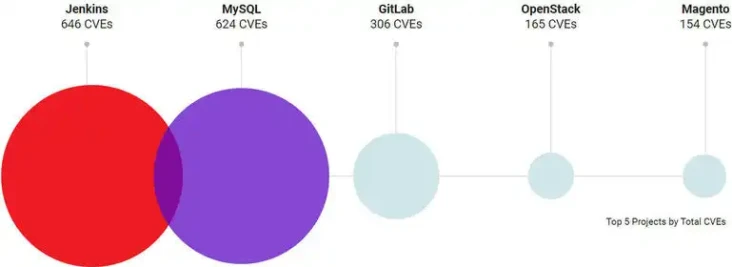
Linux admins rarely deal with one fixed system anymore. A single environment may include public-facing web apps, internal services, containers, cloud workloads, code repositories, and third-party packages pulled into production. That mix creates more...
Securing Free/Libre and open-source software (FLOSS) is a big deal and The Linux Foundation wants to know exactly how programmers are dealing with security issues. In an effort to gain insight on the topic, the Linux Foundation and Harvard have announced a new Linux and open-source contributor security survey.
Have you heard that Linus Torvalds has officially kicked off the development cycle of the upcoming Linux kernel 5.8, which he has dubbed as one of the “biggest releases of all time”?
Have you heard that CSIRO has announced the completion of the proof of implementation correctness of the open-source seL4 microkernel for the RISC-V ISA?
Have you heard about the Universal Serial Bus (USB) - a portable, flexible, and modular framework for fuzz testing USB drivers? It can be used to identify vulnerabilities in the USB driver stacks of widely used operating systems, including Linux.
Learn about leading open-source AI projects that are producing the artificial intelligence advances of the future. The focus includes machine learning, deep learning, neural network and other applications that are pushing the boundaries of ML and AI.
Microsoft is offering hackers up to $100,000 if they can break the security of the company’s custom Linux OS. The software giant built a compact and custom version of Linux last year for its Azure Sphere OS, which is designed to run on specialized chips for its Internet of Things (IoT) platform. The OS is purpose-built for this platform, ensuring basic services and apps run isolated in a sandbox for security purposes.
IBM is intensifying Linux security and privacy, and has reshaped the mainframe with an eye toward further integrating it within hybrid clouds and further securing Linux-based workloads.
The use of containers is becoming increasingly popular, and container security is more critical than ever. Luckily, there are various tools that can help keep your business safe! This article covers some popular open-source tools that your DevOps team can use to secure your container environment.
A day after researchers declared Linux having more vulnerabilities than Windows, Google now makes a free tool to be used by Linux systems to avoid potential USB keystroke attacks. The software would be running background to monitor any suspicious activities from a plugged USB, and notify a user about potential attacks. This was published by Google in its GitHub for Linux PCs.
Dave Wreski recognized the power of Open Source two decades ago. Already an established internet security expert and Network Architect at UPS, Dave was captivated by the power of open-source development. He was soon to discover that this model could be used as a vehicle for solving complex digital security needs. He recognized that the open-source model – where resources could be shared by a worldwide community – was the vehicle that would drive internet security into the 21st century.
Free and Open Source Software (FOSS) has become a prominent aspect of the new age global economy. It has been analysed that FOSS makes up about 80-90% of any particular piece of today’s software. It is to be noted that software is an increasingly-critical resource in almost all businesses, both public and private. But, there are many issues with FOSS, according to the Linux Foundation.
As another step towards tightening up the Linux kernel security, Intel's Kristen Carlson Accardi has proposed "FGKASLR" as a significant step forward for better enhancing theKernel Address Space Layout Randomization.
Interested in using hardware security keys to log into online services more securely? Well, now you can make your own from scratch, thanks to an open-source project that Google announced last week.
One of the most significant projects from the Apache Foundation has released another version of SpamAssassin. This is primarily a security release, but also includes improvements to macro document processing with OLVBMacro and a set of smaller fixes. Apache SpamAssassin is a mature, widely-deployed open source project that serves as a mail filter to identify spam. SpamAssassin uses a variety of mechanisms including mail header and text analysis, Bayesian filtering, DNS blocklists, and collaborative filtering databases. In addition, Apache SpamAssassin has a modular architecture that allows other technologies to be quickly incorporated as an addition or as a replacement for existing methods.