



Network Security security advisory networking
security advisory networking For years, IPv4 was the only proxy type that really mattered for anyone running automation off a Linux box. IPv6 was the protocol everyone said they’d migrate to, but almost nobody actually did. In 2026, that’s finally starting to shift. . The problem is that most admins stick with IPv4 out of habit. They know it; it’s what their tooling defaults to, and they don’t see a reason to change. Some are overpaying for addresses they don’t need. Others would quietly break their scrapers, scripts, or...
 Jun 09, 2026
Network Securityopen-source python
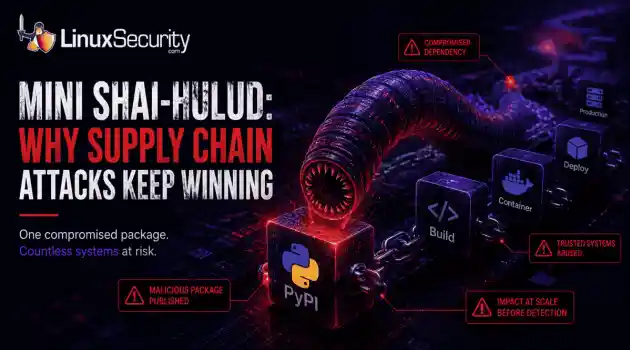
open-source python Researchers recently identified another wave of malicious packages on PyPI linked to the broader Mini Shai-Hulud campaign, a worm-like supply chain attack that spread through trusted software packages. On the surface, the packages looked no different from thousands of others published to the repository each week. . Instead of trying to break into a target network directly, the attackers hid malicious code inside software that developers were already using. A few downloads are all it takes....
Jun 09, 2026
Security Vulnerabilities malware linux
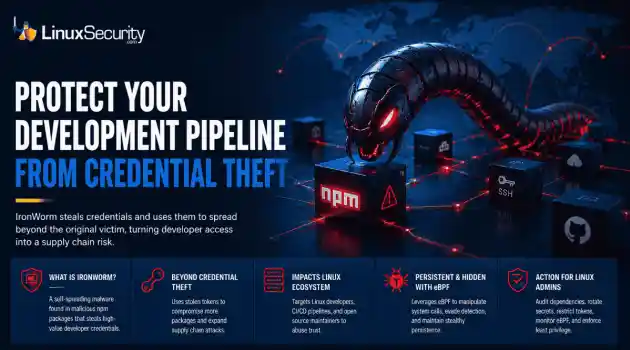
malware linux IronWorm steals credentials and uses them to spread beyond the original victim, turning developer access into a supply chain risk. . A new campaign targeting npm has evolved past simple credential theft. Researchers identified IronWorm, a self-spreading threat. It harvests high-value Linux development secrets—SSH keys, cloud tokens, package publishing credentials. One compromised workstation becomes a launchpad for downstream supply chain attacks. This is not a get-in-and-get-out operation....
Jun 08, 2026

Network Securitysystem security Linux network
system security Linux network The romanticized image of the digital nomad – a laptop on a sun-drenched balcony – rarely accounts for the actual friction of maintaining a professional development environment on the move. . The friction is amplified with Linux. We are looking for a setup that respects our kernel configurations, handles volatile network handovers, and maintains a strict security posture without the hand-holding of a consumer-grade OS – so, put simply, more than just a laptop and a sunny deck. The hardware is...
May 26, 2026

Server Securityopen-source Linux administration
open-source Linux administration Cron has existed in Unix and Linux environments for decades, handling backups, cleanup scripts, patching jobs, log rotation, monitoring tasks, and other maintenance work that administrators do not want to run manually. Most Linux servers rely on it constantly, which is exactly why attackers continue abusing it for persistence after a system has already been compromised. . Persistence through cron is not complicated. Attackers do not need a rootkit or advanced malware framework to maintain...
May 25, 2026
 Refine news
X Clear Filters
Get the latest News and Insights
Get the latest Linux and open source security news straight to your inbox.
Community Poll
What got you started with Linux?
Loading...

Explore Latest Linux Security news
We found -4 articles for you...
78
 security advisoryopen-sourcecross-platform
Multipass 1.16 critical: Linux VM management opensource
When you manage lightweight virtual machines (VMs) regularly, tools like Canonical’s Multipass are a lifesaver. It’s fast, reliable, integrates seamlessly with Ubuntu, and—until now—has had one major sticking point: not all of it has been open-source. . Sure, most of the code has carried the GNU GPLv3 license for a while now, but certain pieces—the ones running on Windows and macOS—were still locked behind closed doors. That presented a trust gap for many in IT, especially for Linux admins who prefer their software to be openly accessible and fully auditable. With the recent release candidate for Multipass 1.16, though, Canonical has officially removed that barrier. Multipass is now, for the first time, fully open-source—every line of code. So, what does that mean for sysadmins and security-focused professionals? Let’s unpack it because, frankly, this isn’t just a “nice-to-have” kind of change. It has real-world implications for security, auditability, and how admins can integrate and trust Multipass moving forward. A Unified, Open Repository: No More Walls Between Platforms One of the biggest milestones with this transition is what's being called the “One Repo To Rule Them All” model. All the proprietary code previously tied to Windows and macOS is now merged into a single, open-source repository. That means admins using Multipass across different operating systems—Linux included—can finally see and work with the entire picture instead of being confined to just pieces of it. This consolidation does more than streamline development. From an administrator’s perspective, it puts control back in your hands. Whether you’re troubleshooting a weird quirk with the Windows Hyper-V backend or wondering if macOS-specific binaries are doing something you wouldn’t expect, you no longer have to rely solely on Canonical’s assurances. You’re free to audit the codebase, make sense of it, and even contribute your fixes if needed. In an industry where opaque, black-boxsystems feel like constant landmines, this kind of transparency offers peace of mind. Why Does Open Source Matter for Security? Let’s face it: when any part of a tool’s code is proprietary, you’re taking a leap of faith. Maybe it’s secure. Maybe there’s an unchecked vulnerability sitting there, quietly waiting to be exploited. Without visibility, how would you ever know? The fully open-source nature of Multipass eliminates that blind spot entirely. Now, the Linux community—and the wider security research landscape—can pore over every single file for vulnerabilities, backdoors, or questionable practices. This level of transparency doesn’t just protect you against potential exploits; it accelerates the discovery and resolution of weaknesses. With an open-source project, flaws don’t have to wait for Canonical to notice them internally and issue a patch. Instead, security professionals worldwide can raise issues, propose solutions, and improve the software collaboratively. Better yet, they can do it without waiting for slow dependency chains or vendor processes. For admins who need stable, secure VMs to manage workloads consistently, that’s a direct advantage. And let’s not ignore the elephant in the room: proprietary code can sometimes conflict directly with your compliance mandates. Depending on your environment or industry, opaque tools often make auditors nervous. A truly open-source Multipass wipes those concerns clean. It’s easier to document how your tools interact with sensitive data, reducing the friction of passing security reviews or audits. Improvements You’ll Appreciate Right Away This shift to a fully open-source model is the headline, sure, but it’s not just the license changes that admins should pay attention to. The Multipass 1.16 release candidate also comes with tangible fixes and upgrades that affect daily workflows, especially in security and stability. For one, Canonical has fine-tuned how the Multipass daemon and backed services operate.These components are critical to managing VM lifecycles since they handle launching, controlling, and interfacing with instances. Any bugs or instabilities here can lead to failed deployments or unexpected service interruptions, which, as every admin knows, can cost hours of downtime (not to mention the stress that comes with putting out fires). By squashing vulnerabilities and improving runtime stability, Multipass is a little safer for environments where uptime and integrity matter deeply. And then there’s documentation. Let’s be honest: keeping secure configurations consistent can sometimes feel like a guess-the-flag game. Multipass's documentation should make configuring secure deployments noticeably easier, cutting down on the risks that often stem from vague or outdated guidance. This may not sound flashy, but better docs prevent misconfigurations, and in the long run, that directly protects your environments from unnecessary exposure. What Does This Mean for Multipass’s Future—and Yours? So, where does this leave admins who are already using Multipass—or those who’ve been on the fence about adopting it? First off, the transition to a fully open-source project makes it a fundamentally more attractive tool in terms of trust. The risks inherent in blind dependency on proprietary components are gone. You no longer have to ask, “What’s in there that I can’t verify myself?” You can check, tinker, and modify as needed to fit your infrastructure’s requirements. It also opens the door for the community to take a much bigger role. Previously, bug reports, feature requests, or issues with Windows-and macOS-specific components all stopped at Canonical’s doorstep. Now, as third-party developers bring their expertise to the table, we’re likely to see not just faster resolutions to issues but also broader innovations. This is a big deal for organizations that depend on Multipass in large-scale environments and want to avoid vendor bottlenecks when resolving specific platform bugs. But it’s worth noting that more control comes with added responsibility. If you’re delving into the codebase—either for audits or contributions—it may take time to familiarize yourself with the specific changes to previously proprietary components. Admins on Linux may need to pay closer attention to how these multi-OS tools work in their entirety since relying solely on Canonical’s binaries no longer has a trust gap to fall back on (which is good, but occasionally more work). Final Thoughts: A Step Forward Worth Paying Attention To For years, Multipass has been a solid tool for quickly spinning up Ubuntu environments —and for Linux administrators, its usefulness is hard to overstate. The fact that it’s now fully open-source doesn’t just improve its transparency or security posture; it deepens the trust that IT professionals can place in it. It’s no longer just Canonical’s project—it’s yours to explore, trust, and improve. From better security to smoother workflows, this isn’t just a licensing choice; it’s a step toward building a strong, collaborative ecosystem around a tool that many admins rely on daily. Whether you’re managing cloud-native workloads, running CI pipelines, or just handling development sandboxing, Multipass’s open-source future is one you’ll want to keep an eye on—or better yet, get involved with. . Sure, most of the code has carried the GNU GPLv3 license for a while now, but certain pieces—the o. manage, lightweight, virtual, machines, (vms), regularly, tools, canonical’s, multipass. . Brittany Day
 Jun 30, 2025
•
Jun 30, 2025
• Vendors/Products

Get the latest News and Insights
Get the latest Linux and open source security news straight to your inbox.
Community Poll
What got you started with Linux?
Search Topics
Powered By

Linux Security - Your source for Top Linux News, Advisories, HOWTOs and Feature Releases
QUICK LINKS
subscribe to newsletters!
Like staying secure? So do we.
Sign up for updates, tips, and alerts!
Discover faster search, smarter navigation, and deeper Linux security insights. Read More