Explore top 10 tips to secure your open-source projects now. Read More
×


What Is Vishing? And Why It’s More Dangerous Than You Think
 Apr 23, 2025
•
Apr 23, 2025
•
 MaK Ulac
4 - 7 min read

Topics Covered
Vishing, or voice phishing, is when attackers use a phone call—not malware or email—to pull off a scam. They pretend to be someone trustworthy: tech support, a bank, your CEO. The caller ID looks legit. They know your name. So, you talk.
Later, you realize: the call was fake. But by then, your password, account info, or verification code is already in someone else’s hands.
This is what makes vishing so dangerous. It doesn't look like a cyberattack. There's no link, no file, no alert from IT. Just a voice that sounds real — and a victim who doesn't think twice.
And while it doesn’t get as much coverage as ransomware or phishing, it’s one of the fastest-growing threats targeting businesses today. (learn more about vishing here)
Vishing: The Threat Hiding Behind a Phone Call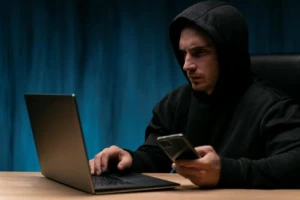
Vishing, often described as voice-based phishing, is a type of social engineering where the attacker doesn’t send a message, they make a call. By impersonating someone you’re likely to believe (a bank employee, tech support, a government official, or a company executive) they use conversation to create pressure and gain trust. And when the tone is convincing, many people let their guard down before realizing something’s off.
The goal is simple: to get you to say or do something that compromises security. Share a password. Confirm a verification code. Approve a wire transfer.
These attacks work not because the technology is advanced but because our instincts aren’t trained to treat phone calls as threats. We’re used to hearing a voice, trusting it, and responding quickly. That’s exactly what hackers exploit.
With more people working remotely and relying on digital tools to keep business moving, the conditions are ideal for attackers. A single phone call, placed at the right moment, can cut through layers of security, especially when decisions are being made quickly over Zoom, Teams, or smartphone.
How a Vishing Attack Typically Plays Out
These calls aren’t made on a whim. In most cases, the person behind the phone has done their homework. They’ve gathered names, job titles, recent company news, anything that helps make their story sound legitimate.
This information often comes from public sources like LinkedIn, press announcements, or older data leaks.
When they finally place the call, they rarely start with threats. It usually begins with a calm voice, a routine-sounding request. Maybe it’s about verifying account access or resolving a billing issue.
But as the call goes on, the tone shifts. Suddenly, there’s urgency. Something needs to be fixed immediately. Or they reference authority (a legal matter, a compliance issue), anything that nudges the person on the other end to act before they think.
Because there’s no link to click on, no suspicious attachment, and no spelling errors, many victims never realize they’ve been manipulated, until the consequences appear.
When the Target Is Your Company
Vishing isn’t just a risk for individuals managing their personal finances. In recent years, it’s become a serious threat to businesses, and the tactics are getting more advanced.
One of the most common examples is known as CEO fraud. In this scenario, a scammer poses as a senior executive and contacts someone in finance or operations, often late in the day or during a hectic period. The timing isn’t a coincidence, it’s chosen to catch people off guard, when routines are disrupted and second-guessing feels like a risk.
Another version involves fake tech support. An attacker pretends to be from an external IT service and warns of a potential malware issue. They ask the employee to install a remote access tool or follow a quick “security fix.” In reality, they’re opening the door to spyware, credential theft, or worse.
What’s especially concerning now is how realistic these voices have become. With AI and voice cloning technology, scammers can imitate the tone, cadence, and accent of real people, including your CFO, your legal counsel, or your CEO.
A request that sounds like it’s coming from the top can be hard to ignore: and that’s exactly what makes it so dangerous!
Why Traditional Cybersecurity Tools Can’t Catch a Phone Call
Unlike phishing emails or malware files, vishing attacks don’t leave much behind. There’s no code to scan, no suspicious domain to blacklist. Most voice phishing happens in real time, and unless the call is recorded and analyzed later, it disappears without a trace.
That’s what makes vishing so difficult to detect. It doesn’t rely on technical flaws — it relies on people reacting too quickly, under pressure, and without questioning what they’re being told.
Even caller ID can’t be trusted. Attackers regularly use spoofing tools to make their number appear legitimate. That “call from your bank”? It might even display the correct name.
How Companies Can Protect Themselves from Vishing
The solution isn’t just technical. It’s cultural.
Training is a starting point, but it has to go beyond generic awareness modules. Teams need to be exposed to realistic scenarios, including simulated vishing calls, to build the reflexes required in high-pressure situations. It’s not about memorizing red flags.
It’s about learning to pause, verify, and escalate when something feels off.
Verification protocols are also essential. No financial transaction, data disclosure, or password reset should occur based solely on a phone call, no matter how credible it seems. Encourage your teams to use a second channel: an email, a Slack message, or better yet, a known internal number to confirm requests.
Technology still has a part to play. Some companies now rely on AI to analyze call behavior, looking for unusual patterns that could signal a threat. Others are strengthening their telecom systems with tools designed to detect spoofed numbers or flag suspicious activity. These measures can reduce risk, but they have their limits.
A determined attacker who knows how to stay just within the boundaries of what looks “normal” can still get through.
That’s why preparation matters just as much as prevention. Every organization should know what steps to take the moment something feels off. Who needs to be alerted? How is the situation logged and escalated?
And just as important — how do you support the employee who received the call, especially if they were pressured or misled? When teams are trained to respond quickly and calmly, what could have turned into a serious breach often becomes just a close call.
Creating a Culture That Doesn’t Get Fooled
Security works best when people feel safe asking questions. That’s why leadership has to set the tone. If your employees are afraid of being blamed for raising false alarms, they won’t raise any alarms at all. It starts with culture. Teams need to know that being cautious isn’t a burden, it’s part of doing the job well. Reporting something that feels off, even if it turns out to be harmless, should be seen as a smart move, not an interruption.
Encourage people to talk about close calls. Share examples of scams that nearly worked. Brief your teams regularly, not with dry presentations, but with conversations that keep them informed and involved. And when someone catches something early? Acknowledge it. Make it visible. That kind of vigilance is what keeps incidents from escalating.
Final Thoughts
Vishing thrives on silence. It works when people hesitate to question what sounds official. The strongest defense? A workplace where raising your hand isn’t just accepted — it’s expected.
This isn’t a future threat. It’s already here, targeting businesses of every size. And what makes it dangerous is also what makes it easy to miss: it sounds like someone doing their job — confirming a payment, verifying access, offering support.
The good news? It can be stopped. Not just with software, but with habits. With clear processes. With a culture where people feel confident saying, “Let me double-check that.”
In cybersecurity, that pause is power.
 PREVIOUS

 NEXT
NEXT


Powered By

Linux Security - Your source for Top Linux News, Advisories, HOWTOs and Feature Releases
QUICK LINKS
subscribe to newsletters!
Like staying secure? So do we.
Sign up for updates, tips, and alerts!