Explore top 10 tips to secure your open-source projects now. Read More
×


Network Security network security system hardening
network security system hardening Linux runs a huge portion of today's infrastructure because it gives administrators an unusual amount of control over the system. That control extends to networking, where almost every aspect of packet flow, routing, filtering, and interface behavior can be customized. The trade-off is that very little of that hardening happens automatically. A fresh installation is usually built to communicate, not to isolate. . As environments grow, servers start exchanging data with monitoring platforms,...
 Jul 08, 2026
Network Securitynetwork security firewall management
network security firewall management Linux runs a huge portion of today's infrastructure because it gives administrators an unusual amount of control over the system. That control extends to networking, where almost every aspect of packet flow, routing, filtering, and interface behavior can be customized. The trade-off is that very little of that hardening happens automatically. A fresh installation is usually built to communicate, not to isolate. . As environments grow, servers start exchanging data with monitoring platforms,...
Jul 08, 2026
Security Vulnerabilities security advisory authentication
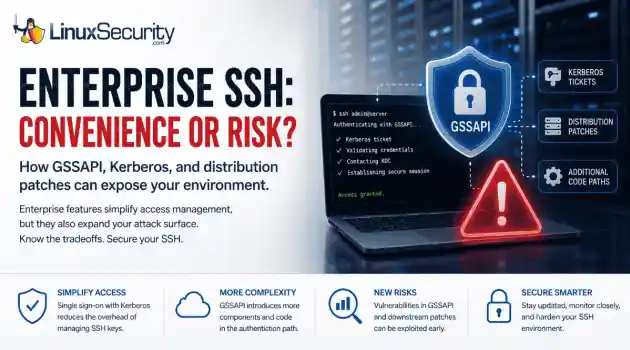
security advisory authentication We often view OpenSSH security updates through the lens of standard patch management. When a new CVE hits, we scramble to update, check our versions, and return to business as usual. But recent vulnerabilities tied to distribution-added OpenSSH GSSAPI patches are a reminder that the danger doesn't always lie in the core code; it often resides in the "convenience" features we layer on top. . These recent issues shouldn't just trigger an apt upgrade or dnf update; they should trigger a...
Jul 06, 2026

Security Trends privilege escalation Linux security
privilege escalation Linux security Linux security teams are drowning. Patches, kernel updates, new CVEs every week. SSH exposed here, an old web service there, and a forgotten cron job running as root. On top of that, SIEM dashboards blink all day with alerts that all claim to be “high priority.” . It’s no surprise that people stop paying attention. The real problem isn’t a lack of data. It’s the opposite. Too much noise, not enough signal. Security teams see huge lists of vulnerabilities and thousands of alerts, but very...
Jul 06, 2026
Security Vulnerabilities security advisory critical
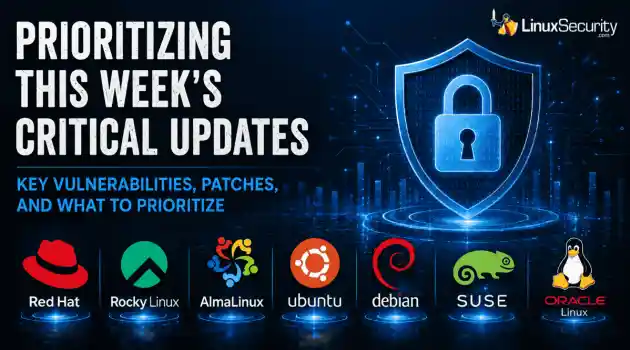
security advisory critical Before you close out the week, check what still needs to be patched. . The list is not small. Ubuntu and Red Hat pushed kernel updates. OpenVPN and OpenShift both received security fixes. Several everyday Linux components were patched too, including Vim, nginx, cifs-utils, LibVNCServer, nghttp2, and Perl. That is the kind of week administrators can easily write off as routine. It should not be. These are the updates that keep small openings from turning into real access. Why This Week Looks...
Jul 03, 2026
 Refine news
X Clear Filters
Get the latest News and Insights
Get the latest Linux and open source security news straight to your inbox.
Community Poll
Is application sandboxing truly safe?
Loading...
Explore Latest Linux Security news
We found 106 articles for you...
79
 Linux securitysecurity assessmentautomation
How AI Is Changing Open Source Penetration Testing
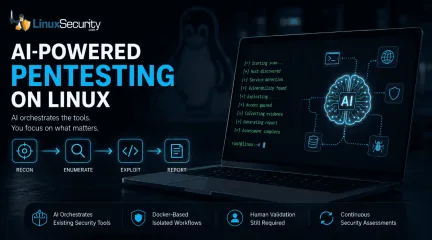
AI is beginning to reshape how penetration testing workflows are organized. For years, the penetration tester’s workflow has been a labor-intensive ritual: scan, enumerate, research, exploit, and report. But new frameworks are attempting to codify that intuition, turning the "human-in-the-loop" process into a machine-coordinated workflow. But is this a genuine evolution in how we secure Linux environments, or just a sophisticated wrapper around the same old tools? . Dark Moon is an open-source autonomous penetration testing framework that combines large language models with established offensive security tools. It supports assessments against web applications, APIs, Active Directory, Kubernetes environments, content management systems, and other common enterprise targets while orchestrating scans through Docker-based tooling. The "Conductor" Philosophy For the uninitiated, Dark Moon doesn’t aim to replace the core toolkit—tools like Nmap, sqlmap, or Nuclei—that Linux security professionals have relied on for decades. Instead, it positions itself as an "AI-powered conductor." In a traditional manual assessment, a tester has to constantly context-switch, analyzing the output of one tool to decide which flag to pass to the next. One open source implementation attempts to solve this via agentic reasoning. It doesn’t just scan; it interprets the HTTP response, determines if a CMS fingerprint is present, and proposes and executes the next stage of testing based on its reasoning model. For instance, imagine exposing a new Ubuntu web server. Traditionally, you might begin with Nmap, move to ffuf after discovering an HTTP service, fingerprint the application, then manually decide whether sqlmap or nuclei makes the most sense to run next. The Darkmoon project attempts to automate those transitions by using the output from one stage to dynamically determine what happens next. It can also consolidate findings into a structured report, sparing the operator from parsing dozens ofdisconnected tool outputs. Linux as the Working Environment for AI Security Tools One of the best things about these new security agents is that they’re built on the tools we’ve been using for years. The project leverages Docker for isolation, which is a massive win for Linux admins and DevOps folks who are already living in containers. It solves that classic "dependency hell" we’ve all dealt with—you know, trying to get some niche Python-based scanner to play nice with your system’s existing libraries. Because the framework runs everything in its own container, it keeps your host OS clean and stable while the AI manages the heavy lifting. For those of us who spend most of our day in a terminal, it’s not really about learning a whole new system. It’s more like getting an extra pair of hands to handle the repetitive, manual "grunt work" of orchestration, leaving us to actually dig into the interesting findings/ The Reality Check: Where AI Fits It is crucial to set expectations here. The AI is not a magic bullet. As noted in industry discussions on autonomous pentesting platforms , the real value lies in the reasoning layer. The AI isn’t discovering new exploits on its own; it is managing the execution of existing ones. This brings a specific set of limitations: Contextual Blindness: An AI can easily misinterpret a non-standard login portal or a specific network quirk that a human would recognize instantly. The "Hallucination" Risk: Some frameworks attempt to reduce hallucination risk by routing actions through controlled tool execution, the risk remains that the AI might prioritize the wrong path. Human Validation: The consensus among security researchers is that AI currently functions best as a "force multiplier." It handles the reconnaissance and the monotonous chaining of tools, allowing the professional to focus on the high-stakes analysis. Why It Matters for the Linux Community For sysadmins, researchers, and home-lab enthusiasts, these frameworksrepresent a shift in the security paradigm. We are moving away from "point-in-time" assessments—where you scan a network once a year—toward continuous security validation. The useful part is repeatability. The same checks can run after changes, after deployments, or against lab systems where configuration drift tends to show up first. While many people will use Dark Moon as a research or lab platform, the same orchestration model could eventually fit into CI/CD pipelines or scheduled internal assessments. It effectively turns your security posture from a static checkbox into a living component of your environment. Final Thoughts These frameworks don't replace tools like Nmap, ffuf, sqlmap, or the rest of the Linux security toolkit. Those tools remain the engines doing the work. What's changing is the orchestration layer sitting above them. As AI becomes better at interpreting results and coordinating workflows, frameworks like Dark Moon offer a glimpse of how future penetration testing may evolve while still relying on the open-source tools the Linux community has trusted for years. Whether you use it in production or just as a sandbox tool to explore the future of AI-driven red teaming, it’s a project that builds on the open-source spirit rather than trying to hide it behind a black-box paywall. Want more Linux security news, vulnerability analysis, and software supply chain updates? Subscribe to the LinuxSecurity Newsletter and get the latest threats, advisories, and expert insights delivered directly to your inbox. Related Reading Understanding Linux Privilege Escalation Patterns and Security Measures How Secure Is Linux? Exploring Security Design and User Privilege Models Optimizing Linux Security: Strategies for Modern Threats . Explore the capabilities of Dark Moon, an AI-powered framework transforming penetration testing workflows on Linux systems.. AI Penetration Testing, Automation Framework, Open Source Security, Linux Tools, Dark Moon. . MaK Ulac
 Jun 26, 2026
•
Jun 26, 2026
• Security Projects
209
 security advisorydata protectionsecurity assessment
Examining Security Weaknesses and Regulatory Shortcomings
Today, organizations rely heavily on technology for their operations, to secure important information and provide services in a digital world. Digital transformation opens up new opportunities, but also poses an increasing challenge for businesses and institutions in the field of cybersecurity. Data breaches, financial losses, reputational damage, and compliance issues are ongoing challenges for organizations in all industries due to security weaknesses and regulatory shortcomings. . With the ever-evolving nature of cyber attacks, businesses need to enhance security infrastructures and tackle regulatory weaknesses exposing vital systems to attack. Knowing about these weaknesses and shortcomings is critical to developing cybersecurity-resilient strategies and to keeping stakeholders happy. Understanding Security Weaknesses in Modern Organizations Security weaknesses are potential points of attack in systems, networks, applications, or organizational processes. Such vulnerabilities can result from old technologies, inadequate security protocols, human error, or lack of risk management. Security vulnerabilities are often not identified until after an actual security incident. Unfortunately, the hackers are out and looking for these vulnerabilities, and proactive security assessments are more critical than ever. Common Types of Security Weaknesses Multiple security flaws are frequent causes of cyber incidents, including: Weak password policies Computers and systems that are not patched. Misconfigured cloud environments Inadequate access controls Lack of cybersecurity training for employees: Insufficient network monitoring Third-party vendor vulnerabilities If these issues are not addressed by the organizations, they leave chances for unauthorized access, malware infection, ransomware attack, and data theft. Human Error Remains a Major Risk Cybersecurity risks cannot be totally removed by technology. Employees can be the biggest vulnerability in anorganization's security. Phishing, social engineering, and unintentional disclosure remain problems for all users of the internet. Regular cybersecurity awareness training is a must for organizations to ensure that their employees are well-equipped to recognize threats and follow secure practices. Creating a culture of security helps limit successful attacks. The Growing Impact of Regulatory Shortcomings Regulatory safeguards are critical to the security of data, accountability, and best cybersecurity practices. But many of the regulations have a difficult time catching up with the ever-changing technology and new cyber threats. Regulatory gaps can be caused by laws, standards, or regulatory enforcement that do not respond to today's security challenges. These gaps can make organizations vulnerable to compliance requirements and decrease cybersecurity effectiveness. Challenges Facing Current Regulatory Frameworks There are several challenges to the existing regulatory frameworks. Rapid Technological Evolution The pace of change in technology far outpaces many regulatory processes. AI, cloud technology, Internet of Things (IoT) devices, and linked health systems present novel challenges that the current regulatory framework may not adequately cover. This is why organizations can sometimes find themselves in a situation where their cybersecurity is not as good as the technology they are using. Inconsistent Global Regulations Companies with a global presence often have varying cybersecurity and data protection needs. The mismatch makes it difficult to achieve compliance and raises the complexity of operations. There are multiple legal frameworks that organizations must navigate through, and security controls can be a challenge to keep effective, creating compliance gaps. Limited Enforcement Capabilities Regulations may be present, but regulatory bodies may not have the resources or authority to ensure that these are adhered to. Ifsome organizations don't see a return on investment, then they don't invest. Weak enforcement of the rules lowers the incentive for some organizations to make cybersecurity investments. Oversight and tangible consequences promote compliance and security practices. The Relationship Between Security Weaknesses and Regulatory Gaps Vulnerabilities and shortcomings in security often compound one another in a vicious cycle. Lack of definition in regulations can lead to under-investment in security. Likewise, a high degree of susceptibility can reveal already identified weaknesses of the regulatory frameworks. As healthcare institutions handle patient information and medical apparatus, they are particularly vulnerable to cybersecurity concerns, for instance. Regulatory bodies are keeping their requirements on the rise as part of their efforts to counter these risks. An FDA cybersecurity deficiency letter may indicate that a medical device manufacturer's cybersecurity documentation, risk assessment, or cybersecurity controls need to be improved before meeting regulatory expectations. This is a prime example of the ever-increasing link between cybersecurity readiness and regulatory compliance . Finding Problems Before Someone Else Does Most organizations only stumble upon their own security holes after a painful audit or a live incident. By then, the weakness might have been an open door for years. Regular risk assessments aren't just about checking boxes; they’re about brutal honesty. You have to look at your shadow IT, your sprawling permissions, and your third-party dependencies with a skeptical eye. The real goal isn't creating another compliance report. It is figuring out where your crown jewels are, how they’re actually held together, and exactly how bad things get when the current defenses buckle. Visibility is just as vital as assessment. If you aren't monitoring your environment, you’re flying blind. Real-time logging catches the noise—the weird privilege escalation,the odd admin behavior, or the spike in traffic—long before a user reports a problem. If you can’t see the activity, you effectively don’t have a defense. Focus on the Controls That Fail Most Often Security reviews often turn up the same recurring ghosts. Access control is usually the biggest offender. Employees shift roles, contractors come and go, and "temporary" service accounts turn permanent. Because the business keeps running, nobody notices the access bloat until a breach happens. If an account with stale, excessive permissions gets hijacked, the blast radius is almost always worse than anyone anticipated. Software maintenance is equally fragile. Often, it isn't that a patch is missing; it’s that the organization has lost track of the asset. Legacy servers and "forgotten" applications often sit outside the normal update rhythm. You can’t patch what you don’t know you own. Then there is training. Annual slideshows might satisfy an auditor, but they rarely prepare a human to spot a sophisticated social engineering attempt. Effective training feels less like a corporate mandate and more like a tactical briefing—giving employees realistic scenarios and a clear, non-punitive path to report when something just doesn’t look right. Where Regulation Still Struggles Organizations aren’t the only ones playing catch-up. The reality is that regulatory frameworks move like tectonic plates, while the technology we’re building on moves like a jet engine. We’re trying to secure cloud-native architectures, fragmented supply chains, and remote-first teams using rulebooks that were written for a different era. Because of that disconnect, security teams often spend thousands of hours performing "compliance theater"—ticking boxes for an auditor—instead of actually shoring up their defenses. It’s a massive drain on resources that could be better spent on real security. What we actually need is clearer, more pragmatic guidance. Right now, when requirements are vague, it’sa guessing game. Auditors interpret things one way, security teams another, and the work devolves into busywork. Real progress happens when a regulator tells us what outcome they need, rather than forcing a checklist that was outdated three years ago. Industry collaboration is the only way out of this trap. When security practitioners, vendors, and regulators actually speak the same language—sharing what’s breaking in the trenches rather than just reciting standards—we all get smarter. It’s about learning from each other’s scars so we don’t repeat the same expensive mistakes. Accountability still matters, of course, but it’s only effective when the goalposts aren't constantly moving. When the requirements are practical and the link between good hygiene and staying in business is obvious, organizations don't just comply—they invest. Final Thoughts Most of the time, security failures aren't the result of some high-tech, movie-style "zero-day" attack. They’re usually just boring, preventable stuff: an unpatched server, an old account that should have been deleted, or a total lack of visibility into what’s happening on the network. The hardest part of this job isn't spotting the gaps; it’s finding the discipline to close them before they end up on the evening news. The teams that actually move the needle don't obsess over "perfect" security. They obsess over the fundamentals. They know exactly what assets they’re running, who has the keys to them, and they’ve set up enough monitoring to actually see when something looks off. Regulators have to hold up their end of the bargain, too. They need to ensure that compliance isn't just a hurdle but a framework that keeps pace with the tech we’re actually using today. At the end of the day, the goal isn't a flawless system—because that doesn't exist. The goal is to shrink the window of opportunity so that a small human oversight doesn't spiral into a catastrophic failure. . Organizations face ongoing cybersecuritychallenges due to security weaknesses and regulatory gaps. Discover common flaws and proactive measures.. cybersecurity risk assessment,data protection compliance,security weaknesses analysis,regulatory compliance gaps. . Anthony Pell
Jun 23, 2026
•
Security Trends

209
 fedorasecurity assessmentopen source risk
Fedora AI Contributor Incident Highlights New Open Source Risks
A Fedora contributor account recently came under scrutiny for apparently AI-generated activity that disrupted the project's bug tracker. . Questionable Bugzilla comments, flawed patches, and improperly closed or reassigned bugs forced maintainers to spend time cleaning up the fallout. There is no evidence that malware was deployed or a backdoor reached production, but the incident exposed a different problem. Open-source projects can be disrupted without compromising a single line of code. This was not a traditional breach. The real target was the workflow itself. Why This Was Not a Normal Supply Chain Scare Most supply chain incidents follow a predictable pattern. An attacker poisons a dependency or hijacks a maintainer credential to push malicious code. This situation flipped that script. The primary risk was not the software itself. It was the contamination of the systems developers use to evaluate technical reality. Maintainers had to pivot from feature development to forensics. They had to investigate buggy patches, verify the validity of technical comments, and audit a surge of automated activity. This creates an operational tax. It is not measured in compromised binaries, but in wasted developer time. Review queues swell, bug reports become unreliable, and technical discussions lose the nuance required for high-stakes work. The damage is not a backdoor. It is the erosion of the consensus that makes development possible. The Scary Part: AI Does Not Need Commit Access to Cause Damage Traditional attacks require a foothold in the built infrastructure or direct push access to a repository. AI agents have lower barriers to entry. They only need access to the social and administrative layers of a project, like issue trackers, mailing lists, or review platforms. An AI can confidently explain a false root cause, leading developers to debug the wrong subsystem. It can submit patches that look correct but introduce subtle regressions. By creating a high volume of noise, it can masklegitimate issues or force maintainers to waste cycles on hallucinations. Even without a single line of malicious code reaching a user's machine, the integrity of the project decision-making process is compromised. The attacker essentially turns the project workflow against itself. Fedora Already Has an AI Policy. That Is What Makes This More Interesting. Fedora is not blind to these risks . The project has clear rules on disclosure, identity verification, and human oversight . These policies rely on the assumption that contributors act in good faith and that maintainers can easily spot low-quality machine output. This incident proved that those assumptions are fragile. Policies can demand disclosure, but they cannot force honesty or verify that a human actually reviewed an AI suggestion. As models become more fluent, distinguishing between expert developer logic and a convincing hallucination becomes exhausting. In a high-velocity project, maintainers do not have the time to treat every patch like a security audit. Open Source Runs on Trust, and AI Agents Stress Trust. Open-source development does not just run on code. It runs on reputation. Maintainers rely on consistent history to prioritize patches and vet reviews. That trust signal is the bedrock of the entire ecosystem. AI-generated activity weaponizes that signal. An account can generate a high volume of authoritative, yet technically hollow, contributions that mimic legitimate expertise. When identity and reputation can be faked, the social infrastructure of a project becomes a vulnerability. Open source evolved to handle malicious code. It has not yet adapted to handle the automated degradation of human consensus. What Linux Teams Should Learn From This Practical defense in the AI era requires tightening the workflow, not just the code. First, projects must mandate explicit disclosure for AI-assisted contributions and enforce secondary reviews for any change touching security-critical areas like authentication orcryptography. Second, limit autonomous triage. Systems that allow mass bug closures or reassignments should require higher privilege thresholds. Monitoring for anomalies is just as important. Sudden, repetitive, or unusually high-volume activity should trigger automated scrutiny. Finally, prioritize robust rollback capabilities. If a workflow is poisoned by AI-driven triage, the project needs a way to bulk-revert those actions without manually hunting down every ticket. Why Linux Admins Should Care System administrators and DevOps engineers do not typically live in Fedora bug trackers, but they rely on the results of those discussions to secure their production stacks. Upstream processes determine the quality of the patches that eventually reach stable distributions. If maintainers are forced to spend their limited time cleaning up AI-generated noise, that is time stolen from fixing actual vulnerabilities. When trust signals degrade at the top of the chain, the impact inevitably ripples downstream into enterprise environments. A slow or confused development process is a gateway for real security gaps to persist longer than they should. The Next Supply Chain Attack May Look Helpful Defenders have spent years building tools to catch backdoors and dependency poisoning. We are primed to look for the bad actor. We are not prepared for the helpful actor who never submits malware but spends all day filling the system with garbage. The Fedora incident was a warning shot. It showed that the next generation of supply chain risk will not necessarily arrive as an exploit chain. It will arrive as a contributor who is always active, always helping, and always undermining the human judgment that keeps the code base secure. Protecting the workflow is now as critical as protecting the binary. Do you think open-source projects should implement mandatory proof-of-human verification for all code submissions, or would that hurt the inclusivity of the community? Want more Linux security news,vulnerability analysis, and software supply chain updates? Subscribe to the LinuxSecurity Newsletter and get the latest threats, advisories, and expert insights delivered directly to your inbox. Related Reading Linux Security Uncovered: Open Source, User Privilege, and Defense Tactics TARmageddon: Archive Extraction Risk in Rust async-tar on Linux In-Depth Exploration Of Buffer Overflow Risks In Linux Systems . Questionable Bugzilla comments, flawed patches, and improperly closed or reassigned bugs forced main. fedora, contributor, account, recently, under, scrutiny, apparently, ai-generated, activity. . MaK Ulac
Jun 12, 2026
•
Security Trends
79
 security assessmentsecurity testingLinux application
Boost Linux Security Using These 10 Vital Testing Tools Now
Linux admins rarely deal with one fixed system anymore. A single environment may include public-facing web apps, internal services, containers, cloud workloads, code repositories, and third-party packages pulled into production. That mix creates more places for weak points to hide. . Security testing tools help admins find those weak points before they turn into outages, data leaks, or full system compromise. Some tools scan networks. Others check code, container images, web apps, or exposed credentials. Used together, they give teams a more complete view of risk across the stack. This list covers ten security testing tools Linux admins should know for network checks, web testing, vulnerability scanning, code review, and secrets detection. Mindgard AI features are starting to show up in Linux-hosted applications. Internal automation tools, customer portals, support bots. Traditional vulnerability scanners were never designed to test how machine learning systems behave when someone intentionally feeds them hostile input. That leaves a blind spot in many security testing workflows. What It Helps Test Mindgard focuses on applications that include AI components like large language models or machine learning pipelines. A standard scanner might flag outdated packages or configuration problems, but it won’t tell you what happens when a model receives a manipulated prompt or unexpected data. This becomes important when applications pass information between models, APIs, and internal services. Weak logic anywhere in that chain can introduce security issues even when the infrastructure itself is properly hardened. Where It Fits in Modern Security Workflows Mindgard works best as a specialized layer within a broader testing process. Network scanners, web testing tools, and static analyzers still cover most traditional attack surfaces. Teams evaluating different offensive security tools often notice that many focus heavily on infrastructure and application flaws. AI behaviortesting is a newer territory. Mindgard focuses on how AI-driven features interact with software systems and user input. AI features are moving into production systems quickly. Testing how they react to hostile input is becoming part of a normal security review. Nmap Understanding what is exposed on a network is the first step in securing it. Nmap remains one of the most widely used tools for mapping systems, services, and open ports across Linux environments. Network Discovery and Attack Surface Mapping Nmap scans networks to identify live hosts, open ports, and service versions. Those results often reveal risks that configuration files alone might not show. An SSH service exposed to the internet, an outdated web server, or an unexpected management port can all signal potential trouble. In long-running environments, forgotten systems and temporary services tend to accumulate. Test machines, staging containers, or misconfigured applications may remain accessible long after their intended purpose ends. Network discovery scans make those exposures visible. How It Supports Security Assessments Nmap frequently appears at the beginning of security reviews and penetration tests. It verifies what systems are actually exposed to the network instead of relying solely on documentation or firewall rules. Once reachable systems are identified, deeper vulnerability scans or manual testing can begin. That reconnaissance step usually shapes where the rest of the assessment goes. OWASP ZAP Most web application problems don’t show up in the infrastructure. They show up in the application logic. Login forms, session cookies, API parameters, and request handling. That’s where OWASP ZAP spends its time. Instead of scanning packages or configuration files, the tool sits in the traffic path and interacts with the application directly. Detecting Weak Points in Web Applications ZAP performs dynamic application security testing. It runs against a live application and observeshow requests and responses behave. During a scan, it crawls the site, maps available endpoints, and starts sending modified requests back to the server. Parameters in forms, headers, cookies, and query strings. Anything the backend might process. Problems tend to surface there: injection flaws , broken authentication logic, missing headers, and weak session handling. Those issues rarely appear in static analysis. Flexible for Manual and Automated Testing Some teams use ZAP interactively. A tester proxies traffic through it, inspects requests, and tweaks them during the session. Other environments treat it more like a pipeline step. The scanner runs during a build or staging deployment, produces a report, and the findings land alongside the rest of the testing results before the application goes live. Nikto Nikto focuses on a narrow but useful job. Quickly identifying known issues in web server configurations. Fast Checks for Web Infrastructure The scanner looks for dangerous files, outdated server components, misconfigurations, and publicly exposed paths that should not be accessible. These checks are straightforward but often reveal problems introduced during server setup or deployment. Default files left behind after installation and unpatched components are common findings. Practical Early Warning Nikto works well as an early-stage diagnostic tool. It does not replace deeper vulnerability testing, but it frequently highlights areas that deserve closer inspection. Run it after deploying a server or moving an application. Misconfigurations tend to show up quickly. OpenVAS When environments grow beyond a handful of machines, manual vulnerability reviews become difficult to maintain. OpenVAS provides a way to scan large groups of systems for known security issues. Broad Vulnerability Coverage The scanner analyzes servers, services, applications, and network devices. Results are compared against vulnerability databases to identify knownweaknesses. Automated assessments allow teams to monitor many systems at once instead of inspecting each one individually. Supporting Vulnerability Prioritization Security teams rarely have the resources to fix every issue immediately. OpenVAS organizes scan results by severity, helping teams identify which weaknesses pose the greatest risk. Internet-facing systems, outdated services, and critical vulnerabilities usually rise to the top. That short list is where patching usually starts. Trivy Modern infrastructure rarely runs as a single server anymore. Containers, dependency chains, and infrastructure templates all sit in the stack now, and each layer brings its own security problems. Trivy focuses on scanning those layers. It checks container images, operating system packages, language dependencies, and configuration files for known vulnerabilities. An image can look clean on the surface while still carrying outdated libraries or vulnerable packages pulled in through dependencies. That tends to happen quietly during builds. A base image updates, a dependency shifts version, and suddenly a container ships with software nobody reviewed closely. Trivy catches those cases before images move into production. Metasploit Framework Finding a vulnerability in a scan report does not always mean it matters. Plenty of issues look serious on paper, but go nowhere once someone actually tries to use them. Metasploit helps answer that question. Security teams use it to simulate real attack techniques against a known weakness. If an exposed service or outdated component appears during scanning, a matching module can test whether the flaw leads anywhere useful. Sometimes it works. Sometimes it fails immediately. Either outcome tells you more than the report alone. Semgrep A lot of security problems start during development. Long before anything runs in production. Semgrep looks directly at source code instead of live systems. It scans for patterns that tend tointroduce vulnerabilities. Weak input validation, unsafe functions, and credentials hardcoded into scripts. The kind of mistakes that slip through code review when teams are moving quickly. Teams usually start with default rules and then tune them for the languages and frameworks they actually use. The rule sets tend to evolve along with the codebase. SQLMap Databases sit behind a large percentage of web applications. When input handling breaks down, SQL injection is usually close behind. SQLMap automates the testing process. It probes how applications handle user input and database queries, looking for signs that injected commands can alter the query flow. If the weakness exists, the tool can push further to test whether data extraction or modification is possible. Older applications tend to expose these issues first. Legacy database logic is often where the cracks appear. Gitleaks Not every security incident begins with an exploit. Sometimes it begins with a password sitting in a repository. Gitleaks searches code repositories for secrets. API keys, tokens, certificates, and credentials are committed during development. Automation scripts and infrastructure configuration files are common sources. Once credentials land in version control, they spread quickly through forks, clones, and cached builds. The longer they sit there, the harder the cleanup becomes. Early detection keeps the damage contained. Conclusion Linux environments used to be simpler. A few servers, maybe a database, a web service in front. The stack is wider now. Networks, containers, APIs, dependency chains, CI pipelines, internal tooling. AI features are starting to appear in some platforms as well. Each layer introduces its own failure points. Security testing tools tend to focus on different slices of that surface. Nmap maps exposed services. ZAP and SQLMap focus on application behavior. OpenVAS scans the infrastructure for known vulnerabilities. Trivy checks container images anddependency layers. Gitleaks looks for credentials that leaked into repositories. Semgrep operates earlier in the pipeline, inside the code itself. Metasploit helps verify whether a vulnerability actually leads to compromise. Mindgard enters where older tools struggle. Testing how AI-enabled features behave when someone intentionally feeds them hostile input. No single tool sees everything. Most teams end up running several together just to keep visibility across the Linux security environment. . Explore top security testing tools for Linux admins to enhance security checks and identify potential risks. Stay protected!. Linux Admin Tools, Security Testing, Vulnerability Assessment, Network Security Tools, Application Security. . MaK Ulac
Mar 13, 2026
•
Security Projects
83
 data breachcybersecuritysecurity assessment
The Rise of Cloud-Native Ransomware Threats and Prevention Strategies
Over the past few years, ransomware has evolved into a highly advanced type of malicious software, targeting individual systems and entire enterprises with increasingly sophisticated attacks. However, the most recent and worrying trend in this evolution is the advent of the cloud-native ransomware. . Unlike conventional ransomware, which targets endpoints or local servers, cloud-native versions are specifically designed to target cloud infrastructure. As more businesses shift their workloads to platforms like AWS, Azure, and Google Cloud, threat actors are adapting their strategies to keep pace. For example, SOC Managed Services have played a pivotal role in this environment, assisting organizations to track, identify, and counter these new threats in real time. The need to defend against ransomware is no longer met by the traditional approach since attackers can now exploit native cloud features and configurations. Many organizations now rely on third-party security monitoring to provide 24/7 visibility and response capabilities tailored to complex cloud environments Learning the Cloud-Native Ransomware Threat Cloud-native ransomware is created to target applications, data, and backup in a cloud environment. Such attacks do not simply encrypt the data on an individual machine, but rather exploit misconfigurations in cloud services to gain access to complete storage buckets, database instances, or containerized applications. After gaining access, such strains of ransomware can spread horizontally within cloud accounts, destroy backup snapshots, and encrypt essential resources. The stealth of this new wave of ransomware is one of its most concerning aspects. Most of these attacks never even get detected by the endpoint, since they do not use traditional file-based malware. They would rather employ APIs , automated scripts, and stolen credentials via phishing or identity theft. The attackers can go undetected until it is too late by taking advantage of the cloud infrastructuredirectly. Such a change represents a paradigm shift in the way organizations must approach security. The traditional perimeter-based endpoint and network firewall defense model does not translate well to the cloud. Identity, access management, and automation controls are the new gatekeepers in the cloud--and they are constantly under attack. The Reason Cloud Environments are a Popular Target The cloud infrastructure offers massive scalability and flexibility, but it also creates a much broader attack surface. Attackers access through misconfigured storage buckets, overly permissive roles, and weak credential hygiene, to name only a few. This is further complicated in a multi-cloud and hybrid environment where there may be significant differences in visibility and control across platforms. The second way that makes cloud environments such good targets is the use of backups and disaster recovery systems. These are intended to be the last resort for an organization. Yet, contemporary ransomware gangs are aware of this as well. Access to the control plane allows them typically to destroy or corrupt cloud backups before initiating the encryption stage of their attack. This makes organizations unable to restore data without paying the ransom, which makes a payout more likely. The risks can be mitigated through a cloud security assessment. Periodic review of configuration, access controls, and backup procedures is a good way to identify vulnerabilities before they are exploited. Security teams should also evaluate process vulnerabilities, as they may enable attackers to use automation scripts or API keys in publicly available repositories. Case Studies and Practical Influence Several high-profile cases of ransomware actors targeting cloud-native services have already occurred. Attackers have primarily used poorly configured permissions to gain access and encrypt object storage services, such as Amazon S3 or Azure Blob Storage. In others, they compromised administrative credentials, disabled security monitoring tools , and deleted system logs. Such attacks are financially devastating. In addition to the ransom itself, which may cost millions of dollars, organizations have to cope with downtime, reputational loss, and regulatory and legal risks. In controlled sectors such as healthcare or finance, the ramifications of a data breach resulting from an incident involving ransomware may include compliance fines and reputational damage. Furthermore, cloud-native attacks may be on a much bigger scale than conventional ransomware attacks. Since cloud services tend to concentrate essential data and functions, one breach can cause a chain effect on various applications and departments. The Changing Perimeter in a Cloud-First World Organizations should include a cloud-first cybersecurity strategy to keep up with these threats. This involves the incorporation of security in each phase of the cloud lifecycle, including design and deployment, maintenance, and monitoring. It also implies the automation of not only operations, but also the enforcement of security. Cloud-based security tools, such as cloud workload protection platforms (CWPP) and cloud security posture management (CSPM), as well as identity governance solutions, are increasingly critical tools in the ransomware battle. These tools help monitor the configurations, policy enforcement, and detect anomalous behavior, which could imply that an attack is in progress. Cloud teams often turn to CIEM to understand who really has access to sensitive workloads and to cut back excessive permissions before they are abused. Teams trying to reduce hidden exposure are increasingly looking to Identity Security Posture Management for better visibility into risky permissions, weak controls, and identity misconfigurations. However, it is not only the technology. A contemporary ransomware response strategy should include playbooks tailored to specific cloud events. These playbooks should be tested by the teams regularly, and the membersshould simulate their attacks to know where they are vulnerable. The presence of an escalation plan, with legal and communications strategies, would help significantly to eliminate the confusion during a real incident. The Future of Ransomware Is in the Cloud The hypothetical threat of cloud-native ransomware is not a thing. It is upon us and is transforming the scenery of cybercrime , compelling organizations to reimagine their security measures on an entirely new level. With more companies using cloud-based infrastructure, the targets are growing too, and with it, the sophistication of attacks. Although no system is immune to it, being vigilant by conducting proactive assessments, robust access controls, and constant monitoring can greatly minimize it. The advanced tooling, coupled with well-trained teams, presents the most significant possibility of defense in a world where data is no longer stored in physical vaults but is freely passed across the cloud. Organizations that will succeed in this new age are those that view security not as a reactive role, but as an ongoing, seamless component of their cloud strategy. . As cyber threats evolve, cloud-native ransomware emerges as a major risk, targeting cloud infrastructures and critical data with advanced tactics that exploit vulnerabilities. Cloud-Native Ransomware, Cybersecurity Threats, Data Breach Prevention, Cloud Infrastructure Security. . MaK Ulac
Aug 13, 2025
•
Hacks/Cracks
74
 network securitysecurity assessmentthreat management
Exploring Linux Vulnerability Scanners: Tools for Enhanced Security
The world is becoming 'smarter' and increasingly digital daily, which can only mean one thing. To ensure that all systems and applications are secure, a sound mechanism must be in place to identify security threats before malicious actors exploit them. . Cyber threats are becoming more advanced every day, which means an organization has to be on its toes to maintain its security posture. Vulnerability scanning is one of the best ways to identify and mitigate potential vulnerabilities within a system or application. In this article, I’ll explain open-source vulnerability scanning, describe the different types, and identify some of the best free, adaptable scanner options available to Linux users. What is a Vulnerability Scanner? A vulnerability scanner is a unique tool developed to model the security posture of a system, network, or application by identifying known vulnerabilities. These tools automate the security auditing process by scanning websites and cloud applications for any signs of vulnerabilities. In this respect, they assist an organization in building its defense by providing depth against hostile actors. Such scanners ensure a prioritized list of cybersecurity vulnerabilities that need to be fixed, elaborating on the nature of each and the steps required for fixing them. Advanced tools provide automated patching for seamless remediation. These vulnerabilities need to be addressed without delay. Unpatched security vulnerabilities expose a system to cyberattacks, enabling hackers to exploit these weaknesses. This can cause monumental monetary losses and reputation damage. CISA states, " Timely patching is essential to protect systems from threats." Vulnerability scanning tools utilize substantial databases of known vulnerabilities to scan systems for risks systematically. Like antivirus software and intrusion detection systems, scanners significantly maintain optimal data and network security. Type of Scanners Vulnerability scanners can fit into four broadcategories, each aiming at different areas of network security: Data-based Vulnerability Scanners Today, organizations operate in an information-intensive environment where a considerable amount of critical data must be safeguarded. Whenever sensitive information gets lost, the impacts on a strong reputation and high economic losses are unbearable. Data-based vulnerability scanners attack database vulnerabilities. They hunt for issues such as Patch deficiencies, weak passwords, and poor configurations. Furthermore, they may give the user live feeds about a possible vulnerability. As a result, these tools empower the user to adopt an immediate and combative attitude towards threats in network security. Network-based Vulnerability Scanners Organizational networks are continuously becoming interconnected, increasing the risk of security hazards. Network-based scanners assist in discovering vulnerabilities in both wired and wireless networks. They constantly monitor probable threats in real time and help organizations take essential precautions to avoid security risks before they can be exploited. Host-based Vulnerability Scanners Though security is an inherent feature in most web hosting platforms, a few bugs can still be traced. The host-based vulnerability scanners installed on every host in the system give full-fledged information about possible vulnerabilities due to insider threats or attacks from outside. By constantly monitoring each host, these scanners enable organizations to remain proactive on network security. Cloud-based Vulnerability Scanners Due to the remote work trend, cloud-based vulnerability scanners have gained immense momentum as companies become increasingly dependent on cloud services. Vulnerability Scanning cloud-based tools focus on detecting vulnerability issues in the cloud environment, including applications and web assets. Since the cloud environment is dynamic, periodic cloud security checks must be performed by an organization to reduce emergent threatfactors effectively. Understanding the Importance of Vulnerability Scanning The deployment of scanning tools to identify vulnerabilities plays a vital role in several ways: Proactive Threat Management: Vulnerability assessment and scanning enable an organization to keep identifications and patches ahead of malicious actors' exploits. Regulatory Compliance: Most industries operate under strict regulatory requirements that require periodic security assessments. In scenarios like these, applying a vulnerability scanner proves beneficial in keeping organizations compliant and negating potential penalties. Security Posture: It improves the systematic identification and one-by-one remediation of the various vulnerabilities present within an organization, ultimately enhancing its security posture and minimizing the chances of a successful cyber-attack. Cost Savings: Finding vulnerabilities earlier saves the organization millions of dollars in costs related to data breaches, regulatory fines, and reputational damage. IBM reports that the average data breach cost reached $4.45 million in 2023- a significant amount when considering the financial aspect of cybersecurity. Top Free and Open-Source Vulnerability Scanners Several excellent free and open-source vulnerability scanners are available to Linux users. Our top choices include: OpenVAS OpenVAS is a powerful open-sourced vulnerability scanner. It has broad scanning capabilities and utilizes a robust database of known vulnerabilities to conduct in-depth system assessments. The output from OpenVAS can be very detailed, thus allowing an organization to prioritize remediation efforts accordingly. Nessus Essentials Though Nessus is a commercial tool, it has a free version called Nessus Essentials. This limited version can scan up to 16 IP addresses and provides access to most of the essential functions of vulnerability scanning. In general, Nessus has an easy-to-use interface and a large vulnerabilitiesdatabase. Security experts admit it is one of the best tools for finding vulnerabilities. Nmap Nmap is not strictly a vulnerability scanner but a robust network exploration tool that can also perform security scanning. Its scripting engine allows users to develop custom scripts to identify vulnerabilities in networked systems. Nmap is widely used for network mapping and security auditing. Nikto Nikto is a web server scanner specialized in identifying vulnerabilities within web applications. The tool performs comprehensive checks against various web server configurations and finds outdated software, possible security misconfigurations, and known vulnerabilities. W3AF W3AF is an open-source web application security scanner designed to identify vulnerabilities in web applications. This tool has different plugins for deep testing and helps secure web applications against common threats like SQL injection and cross-site scripting. Arachni Arachni is a full-featured web application security scanner capable of mapping paths, input points, and topics in depth. It can perform different advanced scans and provide detailed reports that will help developers fix security issues that have been found efficiently. Our Final Thoughts on the Importance of Linux Vulnerability Scanners Open-source vulnerability scanning tools are a much-needed part of a modern cybersecurity strategy. By being informed of the tools available to Linux users and using them correctly, admins and organizations can enhance their security posture to effectively mitigate threats emanating from an increasingly complicated digital landscape. Regular vulnerability assessments are a best practice and a must in fighting criminal activities online. . In order to strengthen defense mechanisms, deploying vulnerability assessment tools for Linux is crucial in addressing sophisticated cybersecurity risks.. Linux security tools, open-source vulnerability assessment, network threat management. . Dave Wreski
Oct 23, 2024
•
Network Security
209
 security assessmentthreat mitigationlinux administration
130% Increase in Cyberattacks Targeting Linux Systems: Key Insights
Recently conducted research by Kaspersky indicates an alarming rise in cyberattacks using exploits against Linux systems. Data from Kaspersky Security Network indicates a nearly 130 percent spike in attacks targeting Linux users over the same timeframe last year compared with this quarter's timeframe. Furthermore, 65 percent more CVEs (Common Vulnerabilities and Exposures) were registered over four years, which indicates an increasing trend in Linux vulnerabilities. . These findings highlight the critical need for Linux admins to remain vigilant and prioritize system security, emphasizing proactive measures such as staying informed on potential vulnerabilities , installing patches promptly , and employing robust security solutions to protect their systems from vulnerabilities. To secure your systems from bugs in response to this alarming trend, let's explore some practical measures and tools you can employ. Let's begin by examining the threat that Linux vulnerabilities pose to system security for admins and organizations. Why Are Unpatched Vulnerabilities Such a Serious Threat to Linux Systems? Unpatched Linux vulnerabilities can have severe repercussions for organizations, from data theft and exposure to ransomware attacks . Cybercriminals may use unpatched vulnerabilities to gain persistent server access, potentially allowing them to breach entire networks and disrupt critical operations. Moreover, unpatched systems may serve as vectors for malware distribution , such as botnets or cryptocurrency miners. Unpatched Linux vulnerabilities can also lead to regulatory noncompliance that can incur significant penalties and harm an organization's reputation. For instance, CISA recently added a high-severity Linux kernel privilege elevation flaw in the netfilter: nf_tables component to its Known Exploited Vulnerabilities (KEV) catalog . Exploitation of this vulnerability ( CVE-2024-1086 ) potentially enables a local attacker to gain root-level access on impacted systems. Practical Adviceand Best Practices for Protecting against Linux Bugs With an ever-increasing prevalence of Linux vulnerabilities, employing best practices is increasingly vital to safeguard systems. Proactively protecting your systems doesn't need to be hard. Here are some simple yet effective tips for increasing Linux security: Make Use of Linux Kernel Lockdown: When enabled, Linux Kernel Lockdown restricts access to the kernel by preventing unprivileged access, loading unsigned kernel modules, and overriding secure boot restrictions, increasing system security significantly. Regular Port Audits: Conducting port audits at regular intervals helps detect and close unintentionally or accidentally left open ports, thus reducing risks such as unauthorized access and cyberattacks. Maintain Regular Security Audits: With the Linux Auditing System, administrators can conduct regular security audits on their network to capture vital system activity logs that provide valuable insight into its security and stability. Make Timely Updates to OS and Software: Keeping your OS and third-party applications updated is critical for mitigating cybersecurity vulnerabilities, addressing kernel and third-party issues, and protecting yourself against them. Regular patching/updating is necessary for mitigating cybersecurity vulnerabilities and safeguarding against kernel/third-party issues. Implementing best practices alone won't do it, though. An open-source vulnerability scanner is essential in detecting and mitigating vulnerabilities in Linux systems. Let's explore the advantages of vulnerability scanning and some tools we recommend to get you started! How Can Vulnerability Scanners Mitigate the Risks Associated With Linux Vulnerabilities? A vulnerability scanner is a software tool designed to identify, assess, and report potential security flaws within a network, infrastructure, or application. Linux administrators need a vulnerability scanner to proactively identify weaknesses or gaps in theirsystem's security posture, including outdated software, misconfiguration, or known vulnerabilities. Administrators of Linux environments can use scanning to gain valuable insight into potential security risks, enabling them to prioritize and address them before malicious actors can exploit them. As vulnerability scanners often provide detailed reports and recommendations for remediation, Linux admins can take informed actions to bolster overall system security. This proactive approach can prevent cyberattacks and ensure compliance with security standards and regulations. Our Top Open-Source Vulnerability Scanners & Assessment Tools for Linux Regarding vulnerability scanning in Linux environments, there are plenty of useful tools and scanners admins can utilize. Here are a few of our preferred choices: Aircrack-ng is a widely recognized open-source vulnerability scanning tool for identifying Wi-Fi and wireless cybersecurity flaws. With speed, accuracy, and flexibility as its hallmark features, this scanning tool makes an invaluable asset to security professionals. Support for numerous wireless hardware/protocol combinations is offered; comprehensive coverage is provided across network security issues; it integrates easily with security toolkits or cloud frameworks can also be integrated. Arachni is an open-source vulnerability scanner specialized in web application security vulnerabilities. It extensively covers SQL injection, cross-site scripting vulnerabilities , customized scanning options, and reports. Arachni also seamlessly integrates into other network security toolkits and cloud security frameworks, making it a versatile and useful asset for security professionals. Burp Suite is an extensive network security toolkit and vulnerability scanner for web applications. It offers scanning, intercepting, and modifying HTTP requests to analyze responses and supporting multiple operating systems with powerful scanning capabilities to identify various web application securityvulnerabilities. Furthermore, its user-friendly interface, extensive documentation, and integration with other network security frameworks make Burp Suite an invaluable security asset. Clair is an API-based vulnerability scanner designed to monitor open-source container layers. It collects vulnerability metadata from various sources to help detect known cybersecurity risks within containerized environments and maintain secure container deployments. Clair focuses on web application security vulnerabilities while helping secure container deployments. Our Final Thoughts: Linux Administrators Need to Respond Proactively to This Troublesome Trend With cyberattacks and vulnerabilities on Linux systems increasing alarmingly, administrators must remain vigilant and take preventive steps to combat them. Following best practices like employing Linux Kernel Lockdown, regularly auditing ports for openness, conducting security audits, and applying timely patches can all strengthen system security and protect against future breaches. Utilizing vulnerability scanning tools is also critical to mitigating risks posed by Linux vulnerabilities. These tools allow administrators to identify weaknesses and gaps in a system's security posture, prioritize and address issues, and receive reports with recommendations for remediation. Their proactive nature protects against cyberattacks and ensures compliance with security standards and regulations. By adopting best practices and employing the tools discussed, Linux administrators can bolster the security of their systems, safeguard against cyber threats, and preserve the integrity of their infrastructure. . Given the alarming increase in cyber threats, Linux administrators are compelled to implement robust strategies that bolster both system protection and integrity.. Linux Exploitation Trends, System Security Practices, Open Source Security Tools, Cybersecurity Threats. . Brittany Day
May 31, 2024
•
Security Trends
210
security advisoryXSSsecurity assessmentPostgreSQL: Advisory on Critical pgAdmin XSS and MFA Bypass
Two critical security vulnerabilities were found in pgAdmin, the open-source administration tool for PostgreSQL . The vulnerabilities assigned CVE-2024-4216 and CVE-2024-4215 affect the tool's cross-site scripting and multi-factor authentication features. As Linux admins, InfoSec professionals, and security enthusiasts, it is crucial to understand the implications of these vulnerabilities and discuss their long-term consequences for our security practices. . What Is the Impact of These PostgreSQL Flaws? The first vulnerability, CVE-2024-4216, involves a cross-site scripting vulnerability within the "/settings/store" API response JSON payload. The exploit of this vulnerability could allow malicious actors to execute arbitrary scripts on the client side, potentially leading to the theft of sensitive user data. The second vulnerability, CVE-2024-4215, bypasses multi-factor authentication, enabling attackers to gain unauthorized access to the application and perform various actions, such as managing files and executing SQL queries. Exploiting the first vulnerability could enable a threat actor to execute a malicious script on the client end and steal sensitive cookies. To exploit this bug, an attacker must have a legitimate username and password to authenticate into the application. This raises an important question: How vulnerable are the authentication mechanisms of popular open-source tools like pgAdmin? These security vulnerabilities in pgAdmin have several implications for security practitioners: Trust and Reliability: These issues underline the importance of trust and reliability in open-source software . While pgAdmin is widely used and trusted, discovering these vulnerabilities raises concerns about the tool's overall security posture. This prompts security practitioners to re-evaluate their trust in open-source tools, emphasizing the crucial role of regular security assessments. The Human Factor: The multi-factor authentication bypass vulnerability highlights thehuman factor in security. Even with strong authentication mechanisms, attackers can exploit vulnerabilities to gain unauthorized access. This prompts security professionals to examine the effectiveness of multi-factor authentication implementation and consider additional layers of defense. Patch Management: The swift response of the maintainers in releasing necessary patches is commendable; however, this also raises questions about organizations' patch management practices. To mitigate the risk of exploitation, security practitioners must ensure timely patching and stay updated with the latest security advisories for all infrastructure components. In the long term, these pgAdmin vulnerabilities highlight the need for continuous security assessments, threat modeling, and a proactive approach to security. They remind us that even widely used and trusted tools can have critical security flaws that may go undetected until security researchers discover them. Our Final Thoughts on These pgAdmin Bugs As security practitioners, discovering vulnerabilities in widely used tools like pgAdmin should be a wake-up call to reassess our security practices. This discovery emphasizes the importance of trust, reliability, patch management, and the human factor in security. To stay ahead of the ever-evolving threat landscape, Linux admins, InfoSec professionals, and security enthusiasts must adopt a proactive approach, continuously assess their systems for vulnerabilities , and implement robust security measures. By staying vigilant and addressing these issues head-on, we can enhance the security of our systems and protect sensitive data from potential breaches. . Major vulnerabilities identified in pgAdmin emphasize the critical importance of proactive patch management and a thorough review of security protocols.. PostgreSQL Vulnerabilities, pgAdmin Security, Threat Management, Open Source Security. . Anthony Pell
May 23, 2024
•
Security Vulnerabilities

Get the latest News and Insights
Get the latest Linux and open source security news straight to your inbox.
Community Poll
Is application sandboxing truly safe?
Search Topics
Powered By

Linux Security - Your source for Top Linux News, Advisories, HOWTOs and Feature Releases
QUICK LINKS
subscribe to newsletters!
Like staying secure? So do we.
Sign up for updates, tips, and alerts!