


Auditd vs eBPF: Modern Approaches to Linux System Monitoring
 Apr 20, 2026
•
Apr 20, 2026
•
 MaK Ulac
6 - 11 min read


Topics Covered
Most teams rely on logs to understand what’s happening on a Linux system. Think of a log like a digital paper trail; every action leaves a trace somewhere. The assumption is that if something goes wrong, you can go back and piece the story together using these records.
That approach worked well when systems were small, and attackers moved slowly. However, that logic breaks down as systems grow. Modern attacks move fast, often chaining different actions together in seconds. Logs get noisy quickly. Important signals get buried under thousands of "normal" events, and by the time a human reviews them, the damage is already done.
This is where the conversation around Linux security and threat detection is changing. Auditd takes the traditional approach of recording everything it possibly can. On the other hand, eBPF focuses on filtering activity the very instant it happens. Understanding the difference between them is the key to modern system visibility.
What Auditd Was Built to Do
The auditd Linux tool is a part of the Linux auditing system. Its job is simple on paper: record what happens on a system so you can review it later.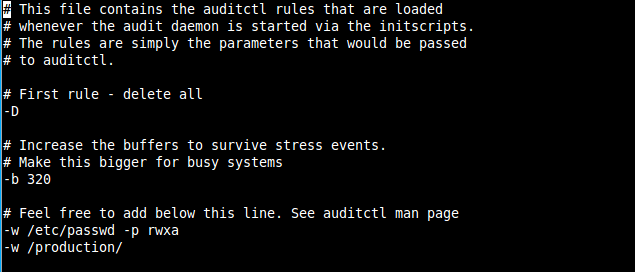
To understand it, you need to understand system calls. Every time a program interacts with the kernel—like opening a file, starting a process, or changing permissions—it makes a system call. Auditd hooks into those calls and logs them based on rules you define. You can see how those rules are structured in the [suspicious link removed].
If a user opens a sensitive file or fails a login attempt, Auditd can record that event. It writes everything to log files, usually on disk, where it can be sent to other systems. This is why compliance teams like it. You get a full audit trail of who did what, when, and on which system. That level of detail matters during an investigation.
But there is a tradeoff. Auditd doesn’t decide what is important in the moment. It just records based on your rules. Those rules often end up being very broad because missing something is worse than logging too much. This generates a lot of data. Filtering usually happens later on a different system, and that delay is where things start to slip.
What eBPF Does Differently
eBPF changes where the thinking happens. Instead of collecting every single piece of data and deciding what matters later, it lets you run small, smart programs directly inside the Linux kernel.
This sounds technical, but here is what it means in practice: these programs sit at the very heart of the system. According to the official eBPF overview, they can watch system calls, network traffic, or even specific functions as they run.
Instead of logging every single time any file is opened, you can write a tiny program that says: "Only tell me if a sensitive folder is accessed by a program I don't recognize." Everything else is ignored before it ever leaves the kernel.
This is the power of ebpf monitoring. You reduce the "noise" at the source. You aren't moving mountains of data; you are only moving the data that actually has meaning. From an ebpf security perspective, it’s about having better control over your visibility so you don't drown in it later.
System Spotlight
While Auditd acts like a security camera recording everything for later review, eBPF acts like a smart bouncer at the door, deciding in real-time who belongs and who doesn't before they even enter the room.
Key Difference: Where the Work Happens
Most Linux monitoring tools follow a "pipeline" model: collect everything first, and analyze it later. Auditd fits this model perfectly. It captures an event, writes it to a file, and relies on a human or another piece of software to interpret it.
eBPF breaks that pattern. It processes the event inside the kernel—right where it occurs. It decides immediately if the event should be kept or thrown away.
This shift matters more than it might seem. By moving less data, you save storage space, use less internet bandwidth, and spend less time parsing logs. It’s the difference between recording 24 hours of security footage and only having a camera that turns on when it sees someone climbing a fence.
Performance and System Impact
Performance is where the differences become very obvious. When you are running runtime security tools, you have to consider how much "tax" they put on the system’s CPU and memory.
Auditd writes a steady stream of data to the disk. On a busy system, this creates "overhead"—basically, the computer spends more time recording what it is doing than actually doing its job. This impact has been studied in detail in performance reports from EuroBSDCon and through practical analysis by experts like Brendan Gregg.
eBPF reduces this pressure. Because it filters the data early, there is less data to move around. However, it isn't "free." Since eBPF programs run in the kernel, a poorly written program can still slow things down. It’s like a filter on a faucet: if the filter is too thick, the water won't flow, no matter how clean it is.
What This Means for Threat Detection
Threat detection is a race against time. The gap between when an attacker does something and when a security team sees it determines who wins.
With Auditd, detection usually happens later in a central log platform (often called a SIEM). This creates a delay—sometimes seconds, sometimes minutes. eBPF closes that gap. Because it makes decisions at the source, it can surface suspicious behavior the moment it happens.
This leads to a much faster response. It also works better for network security monitoring, where seeing a suspicious connection immediately is much more valuable than reading about it in a report the next morning.
Real-World Impact: The Detection Gap
To see why this timing matters, we can look at the security challenges faced by Citibank in recent years. In recent data breach reports, it was revealed that unauthorized actors exploited web vulnerabilities to gain access to customer information.
In a traditional setup using Auditd, the bank would have a perfect record of the breach after the fact. Investigators could see exactly which records were touched. But for a global bank, the problem isn't just knowing you were robbed—it's stopping the theft while it's happening. As security experts often point out, banks are reluctant to admit breaches because, by the time the logs are analyzed, the "booty" is already gone.
By using eBPF-based tools, teams can move from "hindsight" to "real-time." Instead of waiting for a log to be written to a disk and then sent to a server, eBPF can flag the suspicious behavior the microsecond it occurs in the kernel. It turns a "lawsuit waiting to happen" into a "threat blocked at the door."
The Detection Gap: In modern breaches, the "Time to Detect" (TTD) is the only metric that matters. Auditd helps you understand the past, while eBPF helps you control the present.
Where Auditd Still Makes Sense
Despite the new technology, Auditd is not dead. It still makes sense in environments where "completeness" is the most important thing. If your organization is required by law to keep a record of every single action for legal reasons, Auditd is a proven, reliable tool for that job.
It also works well on smaller, stable systems where there isn't a massive flood of data. Sometimes, you don't need the fastest technology; you just need a reliable record to explain what happened after the fact.
Where eBPF Is Gaining Ground
eBPF is becoming the standard for modern environments like the "Cloud" and "Containers." These systems are very fast and generate a lot of unpredictable activity.
These setups need visibility that doesn't slow the system down. The industry is moving in this direction quickly. Even Microsoft has integrated eBPF support into its Linux security tools. The trend is clear: the world is moving away from raw, bulky logs and toward "smart" filtering.
Why Many Teams Use Both
In the real world, it isn’t a competition. Many teams use both tools together because they solve different problems.
- Auditd provides the long-term, historical record for the lawyers and auditors.
- eBPF provides real-time visibility for security responders.
Using them together covers the gaps that either tool would leave open if used alone.
What to Watch For: Spotting the Escape
If you’re defending these systems, you can’t just wait for a summary report. You need to know what a breakout looks like while it's happening. Depending on your Linux monitoring tools, that data is going to look very different.
The Auditd Trail
When an attacker tries to escape, they usually need to interact with sensitive parts of the host. In Auditd Linux, you’ll see this as a flood of system calls. You might see a container suddenly trying to use mount() to grab a host directory or execve() to run a shell with root privileges.
The problem? On a busy server, Auditd is recording every mount and every process. By the time you find the one "evil" line in a 50GB log file, the attacker has already moved on. It’s a great record for a post-mortem, but it’s a tough way to catch a live runner.
The eBPF Signal
This is where eBPF monitoring changes the game. Instead of looking at a list of everything that happened, you can set "tripwires." For example, you can use ebpf security tools to alert you only if a container process attempts to access a file outside of its own virtual environment.
Because eBPF lives in the kernel, it sees the attempt in the microsecond it happens. It’s the difference between reading a police report the next day and having a silent alarm go off the moment someone touches the safe.
The Visibility Gap
Traditional tools often see what is inside the container, but they miss how the container is talking to the host. Real-time threat detection requires seeing that interaction as it happens, not after it's logged.
A Pragmatic Path Forward
If you’ve already got Auditd running, don't feel like you have to rip it out tomorrow morning. It’s a workhorse. It does exactly what it was built for—creating that rock-solid, line-by-line record that auditors and investigators live for.
But here’s the harder question you have to ask yourself: Are you actually catching threats as they happen, or are you just doing a high-tech autopsy after you've already been breached?
If you're managing cloud-native apps or complex container setups, raw logs usually aren't enough. They're too slow. Adding eBPF-based monitoring into the mix fills that gap. It gives you a way to filter for the high-priority events right at the source, so you aren't drowning in data later on.
Most teams I talk to don't actually pick a "winner" here. They use both. Auditd handles the history; eBPF handles the "right now." At the end of the day, it just comes down to what you need more: a perfect paper trail or an immediate answer.
Conclusion: It’s Not About Replacing Auditd
Auditd still has a role; it provides the complete, reliable record that compliance teams require. eBPF solves a different problem by reducing noise and improving visibility in real-time.
The real shift is in the approach. Older systems collect everything and figure it out later, while newer systems decide what matters immediately. Most teams end up somewhere in the middle, balancing historical compliance with modern speed.
Stay Ahead of the Curve
If you want to keep up with how the Linux kernel and security landscape are evolving, subscribe to our Linux Security Newsletter. We deliver the latest on eBPF, threat hunting, and system hardening directly to your inbox so you never miss a beat.
 PREVIOUS

 NEXT
NEXT

Powered By

Linux Security - Your source for Top Linux News, Advisories, HOWTOs and Feature Releases
QUICK LINKS
subscribe to newsletters!
Like staying secure? So do we.
Sign up for updates, tips, and alerts!