


Why Linux Servers Get Hacked More Often Than People Think
 May 11, 2026
•
May 11, 2026
•
 MaK Ulac
4 - 7 min read

Linux runs a massive part of the internet. Cloud platforms, databases, containers, web hosting, APIs, and internal business infrastructure all depend heavily on Linux systems. Most people interact with Linux-backed services every day without realizing it. That popularity also makes Linux server security a constant concern.
There’s a common assumption that Linux systems are naturally secure and therefore harder to compromise. Linux does have strong security foundations, but real-world Linux security problems rarely happen because of the operating system alone. Most compromises happen because systems drift over time, services stay exposed, passwords get reused, or updates stop happening consistently.
A Linux server connected to the internet starts attracting automated scans almost immediately. Attackers usually don’t begin with advanced techniques. They look for exposed services, weak authentication, old software, and operational mistakes that are easy to automate at scale.
Why Linux Systems Are Valuable Targets
Attackers care about access and uptime. Linux servers often provide both.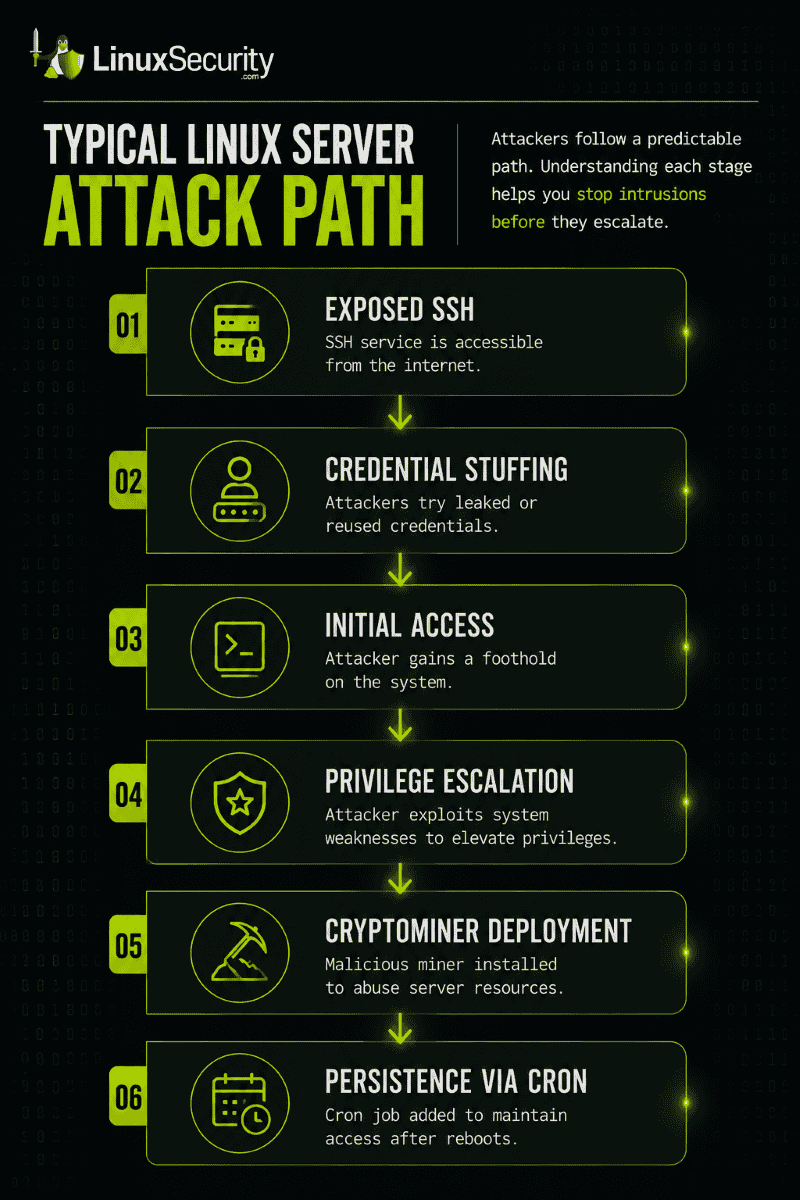
A compromised Linux machine can become:
- Phishing infrastructure
- Malware hosting
- A cryptomining node
- A credential theft platform
- Part of a botnet
- An internal pivot point inside company networks
Cloud growth made this even more common. Organizations constantly deploy temporary Linux systems for testing, development, container security research, APIs, and internal tools. Over time, some systems get forgotten or stop receiving updates entirely.
That creates opportunities that attackers repeatedly reuse.
Modern Linux security guidance increasingly focuses on reducing exposed services and continuously validating systems because production environments change constantly after deployment.
Common Linux Server Security Mistakes
Most successful attacks don’t rely on sophisticated malware or expensive zero-days. They rely on operational gaps that quietly appear over time.
Common Linux server security mistakes include:
- Exposing SSH directly to the internet
- Weak server security policies
- Poor Linux patch management
- Reusing passwords
- Excessive
sudopermissions - Weak container security configurations
- Forgotten development systems
- Disabled logging
Many of these issues are easy to identify initially. Maintaining them consistently is the hard part.
Weak SSH Security Is Still One of the Biggest Problems
SSH allows administrators to remotely manage Linux systems. Think of it as remote command-line access to a server. The issue is exposure. When SSH is reachable from the internet, attackers can continuously attempt logins using:

- Leaked passwords
- Reused credentials
- Brute-force attacks
- Stolen SSH keys
You can check whether SSH is listening publicly on your system with:
sudo ss -tulpn | grep sshExample output:
tcp LISTEN 0 128 0.0.0.0:22If SSH is exposed publicly, automated scanners can see it too.
Many Linux security incidents still begin with password-based SSH authentication. .
You can check whether password authentication is enabled:
sudo grep PasswordAuthentication /etc/ssh/sshd_configIf you see:
PasswordAuthentication yesthe server accepts password logins unless additional controls exist.
This alone doesn’t mean the system is compromised. It does increase attack exposure significantly.
Outdated Software Creates Easy Entry Points
Linux systems depend on thousands of packages:
- Web servers
-
SSHservices - Libraries
- Databases
- Container runtimes
- Monitoring agents
- Management tools
New vulnerabilities appear constantly, which is why Linux patch management has become a major operational security focus.
The issue usually isn’t patch availability. Most distributions release fixes quickly. The problem is the delay. Systems remain unpatched because:
- Updates might break applications
- Maintenance windows are limited
- Temporary infrastructure gets forgotten
- Teams assume internal systems are safe
You can check for pending updates on Ubuntu or Debian systems with:



sudo apt update && sudo apt list --upgradableOn RHEL-based systems:
sudo dnf check-updatebecause public exploit code often appears shortly after disclosure.
Strong Linux patch management reduces this window significantly, but many environments still struggle to maintain visibility across older systems and cloud workloads.
Many Servers Accidentally Expose Internal Services
A common Linux security problem is simple overexposure.
Services intended only for internal access sometimes become reachable from the internet accidentally:
- Databases
- Docker APIs
- Kubernetes dashboards
- Development tools
- Admin panels
- Monitoring interfaces
You can check which services are listening on a Linux system with:
sudo ss -tulpnLook for services bound to:
0.0.0.0That usually means the service accepts external network connections.
For example, a database listening publicly without firewall restrictions creates unnecessary risk even if authentication exists.
Attackers scan continuously for these mistakes because they’re common and easy to exploit.
Web Applications Often Become the Initial Entry Point
Many Linux compromises begin through vulnerable web applications rather than the operating system itself.
Common examples include:
- Outdated WordPress plugins
- Insecure file upload features
- Weak API authentication
- Exposed admin panels
- Remote code execution vulnerabilities
Once attackers gain execution through a web app, they usually begin exploring the underlying system immediately.
Typical post-compromise checks include:
- Searching for saved credentials
- Identifying writable directories
- Checking cloud access tokens
- Reviewing scheduled tasks
- Testing privilege escalation paths
One commonly abused command is:
sudo -lThis displays which commands the current account can run with elevated privileges.
Misconfigured sudo permissions remain one of the most common Linux privilege escalation paths in real-world environments.
Linux Malware Is More Common Than Most People Think
Linux malware receives less public attention than Windows malware, but it remains extremely active across cloud infrastructure and internet-facing systems.
Common Linux malware includes: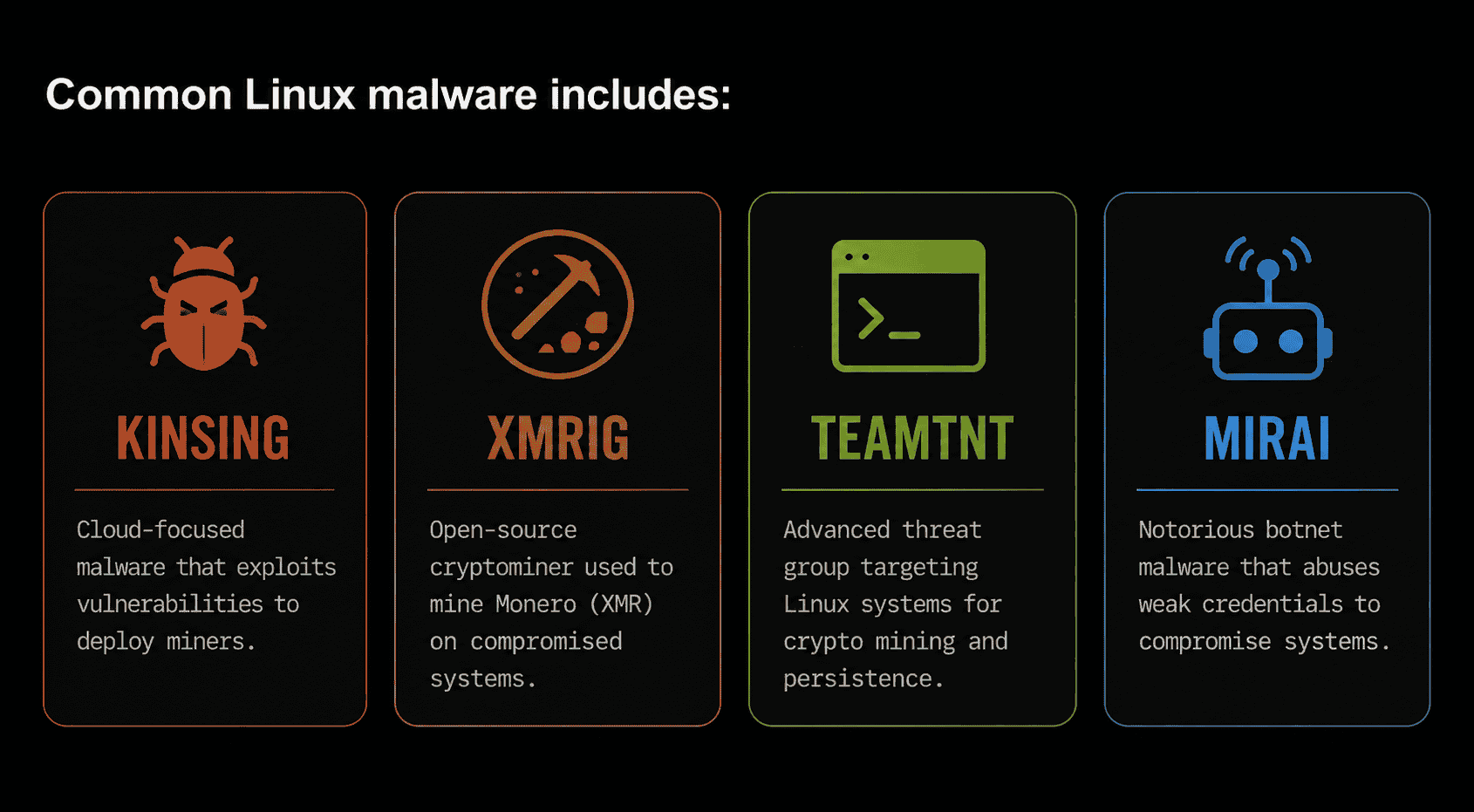
- cryptominers
-
SSHworms - ransomware
- botnets
- rootkits
- webshells
Cryptominers are especially common because attackers often want long-term CPU usage instead of immediate disruption.
A compromised Linux server running at high CPU usage may quietly generate cryptocurrency for months before anyone notices.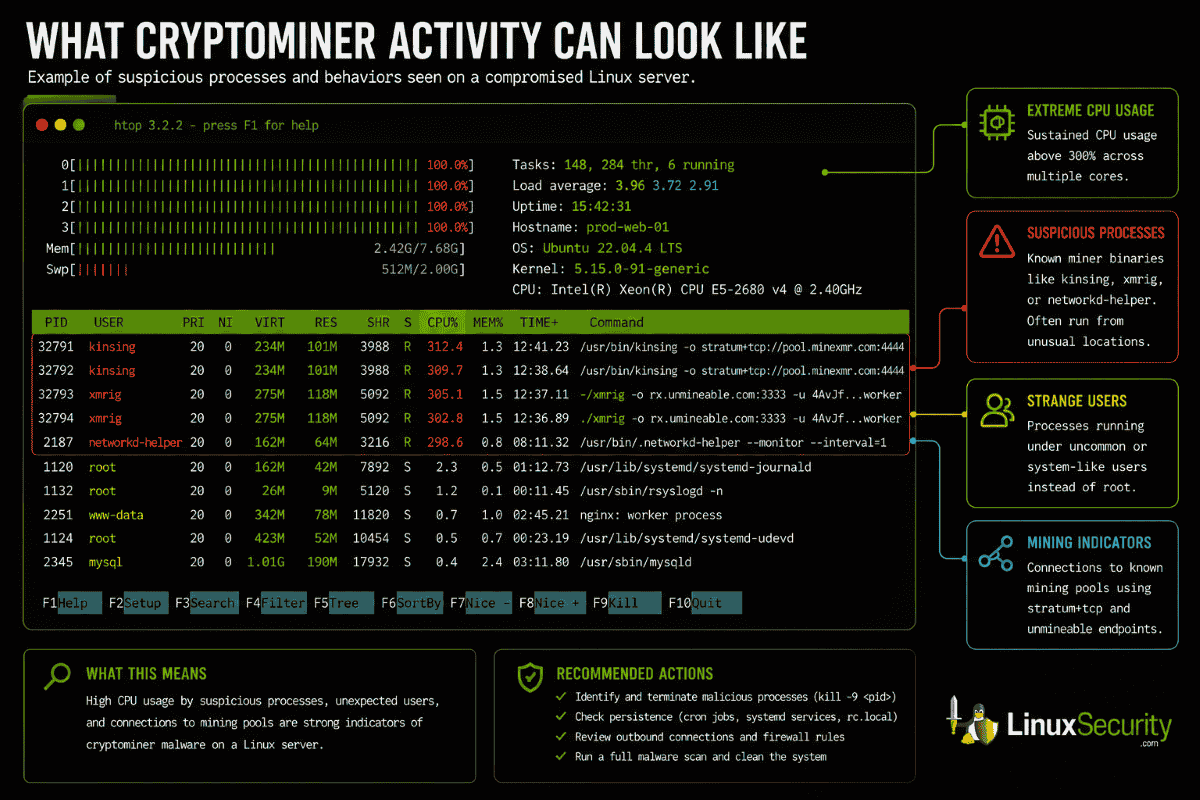
You can check for unusual resource consumption with:
topor:
htopLook for:
- Unknown processes
- Sustained high CPU usage
- Unexpected outbound traffic
- Processes running under strange usernames
Attackers often rename malicious processes to resemble legitimate system services. Linux malware frequently blends into normal operations instead of visibly disrupting the system.
Container Security Introduced New Risks
Containers changed how Linux infrastructure operates, but they also created new attack paths.
Container security became much more important as organizations moved workloads into Kubernetes and cloud-native platforms. A container is not a full virtual machine. Containers share the host kernel, which means isolation failures may expose the underlying host system.
Attackers increasingly target:
- Vulnerable container images
- Exposed orchestration systems
- Leaked secrets inside containers
- Insecure runtime permissions
- Overly privileged containers
You can quickly view running containers with:
docker psOr in Kubernetes environments:
kubectl get pods -ALarge environments sometimes lose visibility into what workloads are running, which images they use, or whether they still receive updates. That visibility gap creates major container security problems over time.
Why Compromises Often Go Undetected
Many Linux servers operate quietly for years with limited monitoring or visibility. That creates ideal conditions for persistence.
Attackers often:
- Add
SSHkeys - Create scheduled tasks
- Install malicious services
- Modify startup scripts
- Hide inside trusted processes
You can review scheduled cron jobs with:
crontab -lList active services:
systemctl list-units --type=serviceReview recent logins:
lastNone of these commands guarantees a compromise exists. They help establish visibility into what the system is actually doing.
That distinction matters because Linux security issues often come from assumptions. Systems appear secure because configurations look correct, while actual behavior tells a very different story.
Basic Server Security Habits Matter More Than People Think
Good server security usually comes down to consistency rather than complexity.
The highest-impact improvements are often basic operational practices:
- Enabling MFA
- Improving Linux patch management
- Removing unused services
- Limiting internet exposure
- Aonitoring logs
- Auditing scheduled tasks
- Reviewing exposed ports
- Reducing administrative privileges
Many organizations spend heavily on advanced security tooling while basic Linux security hygiene quietly breaks underneath them.
Linux Security Is Mostly About Operations
People often treat Linux security as a configuration problem. Install a control. Apply a benchmark. Enable a policy. Done.
Real systems don’t work that cleanly.
Infrastructure changes constantly after deployment. Temporary exceptions become permanent. Security settings drift quietly in the background while workloads continue operating normally. Over time, operational gaps start stacking together until attackers find an opening.
Most compromises don’t happen because Linux is insecure by design. They happen because operational reality eventually creates gaps attackers can repeatedly automate, scan for, and exploit at scale.
 PREVIOUS

 NEXT
NEXT

Powered By

Linux Security - Your source for Top Linux News, Advisories, HOWTOs and Feature Releases
QUICK LINKS
subscribe to newsletters!
Like staying secure? So do we.
Sign up for updates, tips, and alerts!