Audit Linux privileges now to limit compromise, escalation, and system-wide damage. Review Linux Privileges×


MUT-1244 Advisory: Credential Theft Risks and Protection Steps
 Dec 19, 2024
•
Dec 19, 2024
•
 Brittany Day
3 - 5 min read

In recent months, Linux security administrators and WordPress site owners have encountered a formidable adversary: MUT-1244. This threat actor has been unleashing havoc by targeting academics, penetration testers, red teamers, security researchers, and other threat actors. MUT-1244's primary goal is to acquire sensitive data, including AWS access keys and WordPress account credentials.
Their campaign leverages trojanized GitHub repositories designed to fool even the most diligent users. By disguising malicious code as legitimate tools and repositories, MUT-1244 has managed to steal over 390,000 credentials.
This article will delve into how MUT-1244 operates, highlighting the infection vectors, the extent of credential exfiltration, and the critical indicators of compromise you need to watch out for. We'll break down the practical steps Linux security admins can take to safeguard their systems and data, from verifying software sources to implementing robust credential management practices. By understanding and recognizing the tactics employed by MUT-1244, you can better protect your environment against this persistent and evolving threat.
Infection Vectors: Trojanized GitHub Repositories
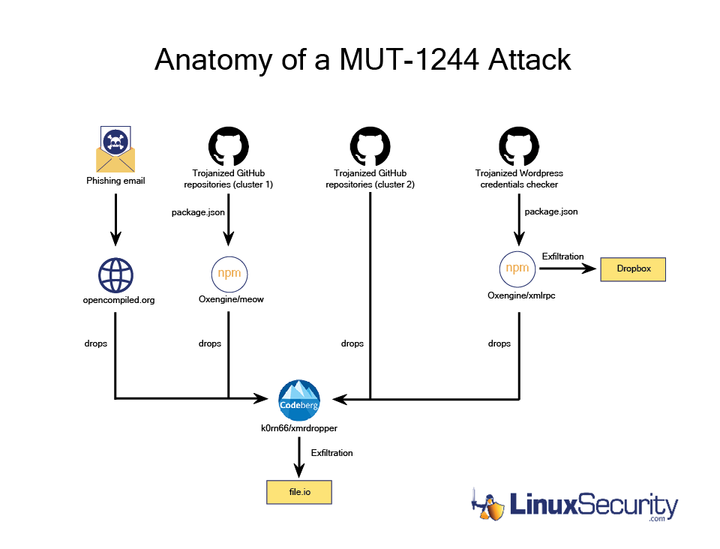 One of the primary ways MUT-1244 has managed to infiltrate systems is through trojanized GitHub repositories. Many security professionals, including penetration testers and red teamers, rely on various open-source tools on GitHub to perform their tasks. MUT-1244 has exploited this trust by creating repositories that appear legitimate but are laden with malicious code.
When unsuspecting users clone and execute these repositories, they inadvertently run malicious scripts that compromise their systems. These scripts swiftly harvest credentials and other sensitive data, relaying the information to the attackers. MUT-1244 has been particularly cunning in ensuring that the malicious repositories are well-crafted and the malicious code is deeply embedded, making it difficult for users to immediately detect anything amiss.
Exfiltration: The Scope of the Breach
The exfiltration of credentials is the core objective of MUT-1244's campaign. By specifically targeting tools that offensive security professionals would use, the threat actor has gathered a vast trove of sensitive data, including AWS access keys and WordPress account credentials. These credentials are critical, as they can provide attackers direct access to various services and platforms, potentially leading to further exploitation and data breaches.
The trojanized tools used in these attacks are designed to look like legitimate credentials checkers, which security professionals use to audit and manage passwords and keys. But instead of merely checking the credentials, these tools are configured to capture and exfiltrate them. Sometimes, the compromised tools even provide normal feedback, making it harder for users to realize they have been duped.
Indicators of Compromise: What to Watch Out For
 Understanding the indicators of compromise (IoCs) associated with MUT-1244 can help in early detection and remediation. Some of the most important IoCs to be aware of include phishing email tactics and known malicious GitHub users and repositories.
One common phishing tactic involves sending emails with subjects like "Notification: Important CPU Microcode Update for High-Performance Computing (HPC) Users" from senders such as
Furthermore, several malicious GitHub users and repositories have been identified as part of this campaign. Users with names like 0x3ngine, 0xget, and 0zzzer, and repositories such as 0x3ngine/xmrdropper and 0xget/cve-2001-1473 are known to distribute compromised code.
Practical Steps for Protecting Your Systems
Given the persistent and evolving nature of threats like MUT-1244, Linux admins should implement a multifaceted approach to securing their systems and credentials. Here are several practical steps to safeguard systems and data effectively:
- Audit Third-Party Tools & Repositories: Thoroughly audit any third-party tools and repositories before integrating them into your workflow. This means verifying the source's legitimacy, assessing the code's integrity, and performing internal security checks before deployment. Where possible, use repositories from well-known and reputable sources or official channels.
- Practice Secure Credential Management: Implement stringent credential management practices. Regularly rotate credentials, enforce strong password policies, and use multi-factor authentication (MFA) whenever feasible. These practices can help limit the risk of credential theft and ensure that compromised credentials are quickly rendered useless.
- Educate Users: Educate your team about common phishing tactics and the specific methods used by MUT-1244. Awareness training can significantly reduce the likelihood of falling prey to phishing schemes. Ensuring that users can recognize suspicious emails and understand how to respond appropriately can make a big difference in preventing initial compromises.
- Use Strong Access Controls: Leverage robust access controls and comprehensive logging mechanisms. By setting up fine-grained access controls and monitoring user activity closely, you can quickly detect and respond to anomalous behavior. Logs can provide critical insights into potential security incidents, allowing for faster remediation and investigation.
- Stay Current & Proactive: Stay informed about the latest threat intelligence and updates relating to your security tools. Subscribing to industry newsletters, attending security conferences, and participating in professional forums can help you stay ahead of emerging threats and keep up with best practices. Keeping your security tools and threat databases up to date is crucial for maintaining an effective defense against adversaries like MUT-1244.
Our Final Thoughts: Vigilance and Proactive Security Administration are Key
 MUT-1244 poses an immense threat to Linux security administrators, particularly those working in offensive security. By compromising over 390,000 credentials using trojanized GitHub repositories and sophisticated phishing tactics, this threat actor has highlighted the necessity for stringent measures and constant vigilance against attacks of this nature.
To protect against these threats, it's essential to regularly assess third-party tools, implement strong credential management practices, and stay abreast of IoCs and threat intelligence updates. Involving your team members in understanding potential attack vectors while maintaining strong access controls can also significantly strengthen your security posture.
By taking proactive measures and staying vigilant, Linux admins can protect their systems and data against evolving threats posed by actors like MUT-1244. The key is staying informed, implementing best practices, monitoring security measures regularly for new challenges as they emerge, and adapting accordingly.
 PREVIOUS

 NEXT
NEXT



Powered By

Linux Security - Your source for Top Linux News, Advisories, HOWTOs and Feature Releases
QUICK LINKS
subscribe to newsletters!
Like staying secure? So do we.
Sign up for updates, tips, and alerts!