Explore top 10 tips to secure your open-source projects now. Read More
×


Exploring Leading Network Access Control Solutions for Linux Environments
 Oct 22, 2025
•
Oct 22, 2025
•
 MaK Ulac
3 - 5 min read


Topics Covered
Network security doesn’t have a perimeter anymore. Laptops, IoT devices, contractors, remote users — everything connects from somewhere different. That’s how the attack surface grew faster than most teams could track. NAC cybersecurity systems stepped in to rebuild control.
These tools don’t just block or allow. They identify every device, check compliance, and enforce access policies that shift based on risk. That matters when Linux servers, Windows laptops, and unmanaged IoT devices all share the same network. A strong NAC architecture gives teams visibility across that mess and makes sure only trusted, compliant systems get in.
Forecasts point to a $7 billion NAC market by 2030, growing nearly 20% each year. Adoption isn’t driven by hype. It’s because visibility and access control are now the backbone of network defense — especially in mixed Linux security environments where patching and compliance vary wildly.
Core Features of an Effective NAC
Visibility always comes first. You can’t defend what you don’t see. The NAC must detect every device trying to connect — from an enterprise workstation to a Linux IoT controller buried in a warehouse. 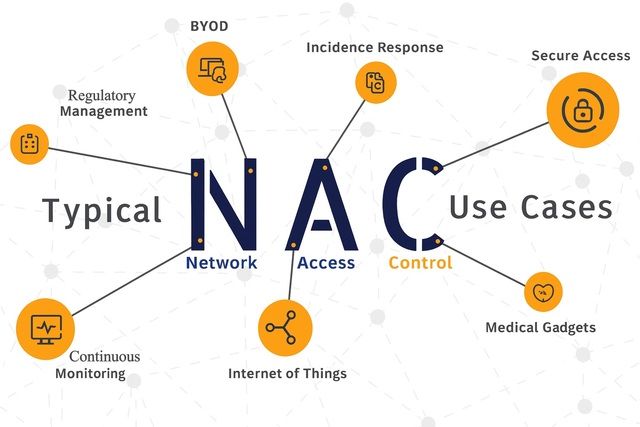
Once visible, posture checks follow. The NAC confirms each device meets policy: updated antivirus, OS patches applied, no rogue software. Anything that fails gets quarantined or denied access. This automated enforcement closes the gap between detection and response. That enforcement step forms the backbone of a proactive NAC cybersecurity posture — blocking risky or noncompliant devices before they touch critical systems.
Modern NACs add dynamic context — decisions based on who, where, and how. Access isn’t just yes or no; it shifts by role, health, or connection type. That’s the practical side of zero-trust.
Key traits worth checking:
- Comprehensive visibility: Device profiling across managed and unmanaged systems, including Linux endpoints.
- Policy enforcement: Real-time compliance checks and remediation before access.
- Adaptive control: Access privileges that shift with context — user, location, or device posture.
That last point connects directly to zero-trust models. The Zero-Trust Security in Linux Environments guide breaks down how every session, device, and user must re-earn trust — the same logic NACs enforce at the network layer.
Leading NAC Solutions for the Modern Enterprise
A few platforms stand out. Each tackles visibility and control differently but lands on the same goal: limit exposure, know every device, and react fast.
Cisco Identity Services Engine (ISE)
Cisco ISE ties deep into Cisco’s switches, wireless controllers, and firewalls. It’s built for large networks where context matters — user identity, device posture, and network location all shape the access decision.
ISE can spot the difference between a Linux production server and a guest tablet on Wi-Fi, then apply policies accordingly. The profiling engine is strong, and the reporting feeds directly into compliance systems. In regulated environments, that’s gold.
More importantly, it connects to broader monitoring. Layered visibility is what stops lateral movement before it starts, a point underscored in this network monitoring tools review. ISE fits cleanly into that visibility layer.
Aruba ClearPass Policy Manager 
HPE’s Aruba ClearPass focuses on flexibility. It supports mixed environments — Cisco switches, open-source stacks, and Linux authentication systems alike. That makes it practical for enterprises where infrastructure isn’t uniform.
ClearPass simplifies onboarding for BYOD and guest devices. Users self-register, authenticate, and connect under policy without IT manually approving each device. The reporting engine helps with forensic tracking and regulatory checks like HIPAA or PCI-DSS.
For teams managing Linux servers and IoT systems, ClearPass bridges network identity with OS-level controls. That uniformity keeps access rules consistent across Linux and Windows without extra complexity.
Forescout Platform
Forescout skips endpoint agents altogether. It listens to network traffic, identifies devices, and enforces policy through existing infrastructure. That’s a big win in environments full of unmanaged systems — IoT sensors, factory gear, Linux-based controllers.
If Forescout spots an unpatched Linux host in the wrong segment, it can isolate it instantly and trigger a workflow in the ITSM tool. That real-time enforcement sits at the heart of adaptive defense.
Discover how adaptive network defense explains the inseparability of visibility and response automation. Forescout embodies that principle — it doesn’t wait for manual intervention.
Key Considerations for Implementation
Getting NAC right takes planning. The technology’s solid; the rollout determines success.
- Start in monitor-only mode. Let the NAC learn your network before it enforces anything. This phase builds your inventory and flags weak spots quietly.
- Avoid blanket rules. Tailor policies to roles, risk, and device type. Legacy Linux servers might need tighter segmentation than modern endpoints.
- Handle exceptions early. Old systems, IoT, and OT often can’t meet full compliance. Plan isolation zones or remediation workflows in advance.
- Keep communication open. Tell employees what’s changing and why device onboarding exists. Quiet rollouts fail faster.
- Integrate smartly. NAC works best when tied to firewalls, SIEMs, and vulnerability scanners. A device that fails posture check should trigger alerts and tickets — not just a block.
- Iterate. Use NAC analytics to refine policies. Visibility improves over time; treat it as a living system, not a one-time project.
Integration is where most value emerges. A connected NAC can feed data into Linux security monitoring stacks, helping unify insight across OS layers.
Final Analysis
The old perimeter’s gone for good. Too many devices, too much movement, too little certainty. NAC fills that gap by giving enterprises what they’ve lost — clear visibility, consistent control, and the ability to react in real time.
Cisco ISE, Aruba ClearPass, and Forescout each deliver a strong footing for that goal. Together, they prove NAC isn’t an accessory to security anymore. It’s the framework that makes zero-trust real, especially across hybrid and Linux-driven networks.
 PREVIOUS

 NEXT
NEXT



Powered By

Linux Security - Your source for Top Linux News, Advisories, HOWTOs and Feature Releases
QUICK LINKS
subscribe to newsletters!
Like staying secure? So do we.
Sign up for updates, tips, and alerts!