Explore top 10 tips to secure your open-source projects now. Read More
×


How Business Access Control Systems Are Evolving to Combat Modern Cyber-Physical Threats
 Jun 11, 2025
•
Jun 11, 2025
•
 MaK Ulac
4 - 7 min read


Topics Covered
The boundary between cyber and physical security is effectively gone. Attacks that once exploited software vulnerabilities now frequently begin with a compromised badge reader, a tampered access panel, or a network-exposed physical control system. For enterprise environments, this shift renders traditional access models obsolete.
Access control has become a software-defined security layer, distributed, context-aware, and deeply integrated with identity infrastructure and telemetry. It's no longer sufficient to monitor doors in isolation; modern systems must correlate physical access with digital behavior, apply dynamic policy enforcement, and adapt to threat conditions in real time.
In connected business environments, this isn’t a forward-looking concept; it’s the baseline requirement. Integration across physical and digital domains isn’t about streamlining workflows; it’s about closing off one of the last high-impact vectors for lateral movement, sabotage, or insider compromise.
From Locks to Intelligence: The Evolution of Access Control
Legacy access control systems relied heavily on standalone hardware keypads, magnetic cards, and mechanical locks, each isolated from the larger IT and cybersecurity environment. While such systems were capable of managing physical entry, they were unaware of the broader context: who the user was, what network resources they accessed, or whether their activity patterns signaled malicious behavior.
Fast forward to today, and we see a paradigm shift. Access control is now digital, network-aware, and data-driven. Systems communicate over secure cloud platforms, leverage biometric and behavioral authentication, and integrate with surveillance, alarm, and identity management software.
A mature security model depends on clear Access Control decisions so users, services, and devices only reach the resources they are meant to use.
For more granular policy decisions, Attribute-Based Access Control allows access to be evaluated against context such as role, device, location, or business need.
Modern business environments demand smarter, more agile systems, particularly in industries like healthcare, education, logistics, and financial services, where operational uptime and data protection are paramount.
Why Cyber-Physical Security Matters
One of the most dangerous developments in recent years is the rise of cyber-physical attacks. These threats target the points where digital systems meet the real world. An attacker might hack into a network-connected access panel to unlock doors remotely or disable surveillance systems to create a physical blind spot. Conversely, a physical intruder could plant rogue devices inside secure facilities, gaining a digital foothold.
These hybrid threats often go undetected by traditional IT tools because they originate outside the network perimeter. Without integrated physical access control and real-time monitoring, businesses leave themselves open to catastrophic breaches.
By adopting comprehensive business access control systems like those developed by Coram, organizations can unify physical and digital security protocols. These systems help detect suspicious access behaviors, enforce strict role-based permissions, and monitor facilities in real-time, all while ensuring compliance with modern security standards.
Essential Features of Enterprise Access Control Platforms
To respond to today’s challenges, modern access control systems are built with several advanced capabilities: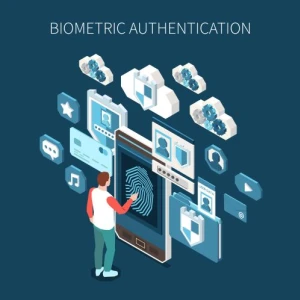
1. Biometric Authentication
Biometrics such as facial recognition, fingerprint scanning, and iris detection are becoming more common. Unlike keycards or PINs, biometric credentials cannot be easily stolen or duplicated, making them ideal for high-security environments.
2. Cloud Connectivity
Cloud-based control panels allow administrators to manage access permissions across multiple facilities from a central dashboard. Whether it's revoking access instantly or responding to emergencies, the flexibility of cloud management improves both responsiveness and oversight.
3. Role and Time-Based Access Control
Access permissions can now be configured based on job roles, departments, shifts, or even specific dates and times. This granular control reduces internal threats and ensures that users only access areas necessary for their work.
In larger environments, Role-Based Access Control helps standardize permissions by assigning access according to job function instead of managing users one by one.
4. Integration with Video Surveillance and Alarms
Modern access systems work alongside CCTV feeds and motion detectors, enabling event correlation. If a door is opened unexpectedly or outside of approved hours, the system can trigger alerts, lock down the building, or notify administrators in real time.
5. AI and Behavioral Analytics
Advanced platforms use machine learning to establish behavioral baselines for users. If an employee who typically enters through the front door during business hours suddenly accesses a restricted server room at midnight, the system flags it as an anomaly.
Linux and Open Source in Modern Access Control Systems
Linux and open-source frameworks are playing a foundational role in these modern systems. Many access control platforms rely on Linux because of its stability, scalability, and high level of security.
With open-source components, developers can customize software to meet industry-specific compliance requirements or unique workflow needs. Furthermore, the transparency of open-source software allows security teams to audit code for vulnerabilities, ensuring higher confidence in the system's integrity.
In environments where uptime, customizability, and security are non-negotiable—such as data centers or government facilities Linux-based access control solutions offer a reliable foundation.
Data Privacy and Compliance
With great power comes great responsibility, especially when collecting and storing personal data such as biometric scans or access logs. Compliance with regulations such as GDPR, CCPA, and HIPAA is essential for businesses implementing advanced access systems.
Today’s platforms are equipped with features like end-to-end encryption, audit logging, and privacy-by-design architecture. Users are often given control over their personal data, including consent management and access review. These features not only ensure legal compliance but also build trust among employees, clients, and stakeholders.
Real-World Use Cases
Access control systems are now being deployed across a wide range of industries to protect both people and information:
- Healthcare: Dermatology clinics use AI-powered facial scanning to assess skin conditions, combining biometric imaging with identity verification for secure, personalized treatment access

- Education: Universities employ cloud-managed access systems to restrict access to labs, dormitories, and IT infrastructure.
- Finance: Banks use iris recognition at secured vault entry points, layered with access logs and audit trails.
- Retail and Warehousing: Logistics centers use fingerprint scanners at shift check-in terminals to enforce identity verification and prevent time fraud.
Each use case demonstrates how advanced systems not only improve security but also streamline operations, reduce overhead, and increase accountability.
The Future of Access Control
As businesses become more digitally mature, access control systems will evolve from reactive gatekeepers into proactive intelligence hubs. Here are some trends driving the next wave of development:
- Mobile Access Credentials: Employees will increasingly use smartphones and wearable devices instead of cards or fobs.
- Decentralized Identity (DID): Blockchain and zero-knowledge proofs may soon allow secure, decentralized identity verification.
- Edge Computing: On-device AI will reduce latency and keep access decisions local, even during internet outages.
- Zero Trust Physical Security: Inspired by Zero Trust networking, access decisions will be based on dynamic risk profiles, not static permissions.
Aligning Physical Security with Today’s Threat Landscape
Legacy access models are now liabilities. As threat actors exploit both physical interfaces and network-level gaps, disconnected controls create systemic risk.
Modern access platforms must enforce policy across domains, operate with contextual awareness, and integrate into the broader security stack. These aren’t edge-case capabilities. They’re baseline requirements.
Security teams need systems that match threat complexity, deliver actionable insight in real time, and hold up under forensic scrutiny. Static controls don’t meet that bar. Adaptive infrastructure does.
 PREVIOUS

 NEXT
NEXT


Powered By

Linux Security - Your source for Top Linux News, Advisories, HOWTOs and Feature Releases
QUICK LINKS
subscribe to newsletters!
Like staying secure? So do we.
Sign up for updates, tips, and alerts!