Audit Linux privileges now to limit compromise, escalation, and system-wide damage. Review Linux Privileges×


New Supply Chain Attack: Protect Linux Systems from Typosquatting Threats
 Apr 21, 2025
•
Apr 21, 2025
•
 Brittany Day
3 - 6 min read


In a sneaky new supply-chain attack, threat actors have been discovered exploiting package naming conventions to trick unsuspecting developers into installing malicious packages that appear legitimate at first glance. You are likely fastidious about checking package names. Still, in today's fast-paced environment, I could see myself overlooking a small error and putting my systems and data at risk of persistent compromise. Falling for this stealthy scam impacting npm users could enable bad actors to remotely control your servers, siphon sensitive information, and retain continuous access through injected SSH keys.
This emerging threat is a much-needed reminder of the critical importance of robust dependency auditing and network monitoring to protect against silent compromises in your environment.
In this article, I'll help you better understand and prepare for this new threat, equipping you to safeguard your Linux systems from this attack and similar vulnerabilities introduced in the modern software supply chain.
The Mechanics of Typosquatting Attacks
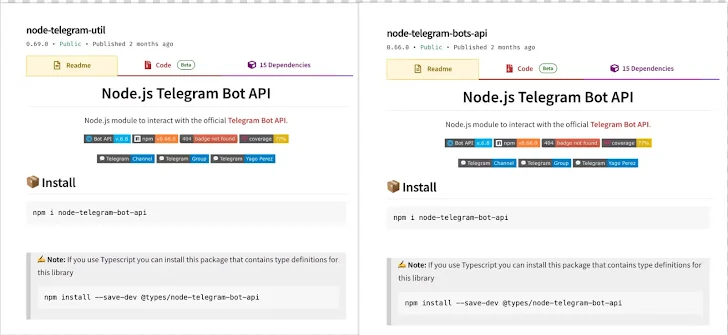 Source: SocketTyposquatting attacks exploit software package managers and dependency resolution processes, such as npm or pip, to take advantage of software dependency resolution mechanisms and ease library integration for developers. However, they depend on exact naming conventions when pulling library content into projects. By publishing malicious packages with names similar to trusted libraries, such as those offered through these package managers, attackers hope to fool users into silently installing their code. Once installed, it may take advantage of system permissions to perform unauthorized actions.
The Telegram bot-related packages recently discovered by Socket contained scripts designed to inject SSH keys directly into their victims' server, opening hidden backdoors that allowed for persistent access even after the malicious package had been uninstalled. Furthermore, these packages included capabilities for exfiltrating private keys or configuration data, further expanding an attack's reach into connected machines — making what initially may seem like an isolated attack into an event with far-reaching effects.
Why Linux Environments are at Risk
Linux systems are particularly susceptible to these attacks for several reasons. First, these servers often host essential applications, databases and services - making them high-value targets for attackers. With developer ecosystems like Node.js frequently running on Linux systems and extensively using Node Package Manager (npm) packages as part of their development workflows, there is an increased potential for exposure to typosquatting threats if left unmonitored.
Linux's open nature encourages flexibility and customization, which can have unintended security ramifications. While administrators and developers take advantage of the extensive freedom to configure environments, malicious actors can exploit overlooked details, such as dependency management or package installations, that go undetected by admins and developers alike. Its portability and accessibility make Linux popular among enterprises — but those same qualities require a strong defense against potential supply chain compromises.
Proactive Defenses: Auditing Dependencies and Infrastructure
 Preventing typosquatting attacks begins with better dependency hygiene. Security-conscious Linux admins should enforce strict practices to audit and validate packages before they are installed. While many developers rely on npm’s default settings for fetching libraries, tools like dependency checker scripts like OWASP dependency-check or supply chain security platforms like IBM's Software Composition Analysis can take it a step further by identifying packages that exhibit suspicious behavior. Socket’s detection algorithms are an example of how automated analysis can catch anomalies in package behaviors—such as hidden payloads or excessive permission requests—before they reach your environment.
Beyond package auditing, frequent reviews of infrastructure-specific indicators, such as SSH keys, are equally critical. Attackers who exploit typosquatting often aim to inject unauthorized keys to create persistent access. By maintaining a clean and well-documented list of SSH credentials and rotating keys periodically, Linux admins can reduce the likelihood of unauthorized use. Furthermore, network traffic monitoring, especially related to outgoing connections, can reveal signs of an ongoing compromise. Malicious npm packages often generate unusual outbound traffic, such as data exfiltration attempts or callbacks to command-and-control servers, which can serve as a warning sign for administrators.
Detecting and Mitigating Silent Compromises
Typsquatting attacks have one of the more dangerous features: their insidious ability to go undetected for extended periods. Developers might resolve broken dependencies or uninstall suspicious packages without realizing malicious code has already embedded itself within the system. We admins need layered defense mechanisms, including intrusion detection systems (IDSs) or file integrity monitoring (FIM), in place to detect silent compromises, such as unauthorized changes to system files or configuration settings.
Administrators should also carefully assess their servers' behavior. Any indications of slowdown, unusual disk usage or unexpected access patterns might signal attackers have gained entry through typosquatting. Regular security scans, designed to detect abnormal traffic or suspicious command executions, could help uncover their covert attacks.
It is critical to remember that conventional antivirus tools might miss malicious npm packages. Modern Linux frameworks, designed with supply chain risks in mind, will often detect deeper implications more promptly than antivirals alone.
The Bigger Picture: Reinforcing the Software Supply Chain
 At its core, protecting Linux systems against typosquatting attacks is part of a more significant challenge: safeguarding the entire software supply chain. With open-source ecosystems experiencing exponential growth and more and more third-party packages entering production every day, administrators and organizations alike must implement proactive measures to minimize supply chain vulnerabilities such as adding automated scanning solutions into CI/CD pipelines to detect malicious artifacts before production. At the same time, security awareness training can reduce incidents that result from accidental typosquatting installations.
Securing the supply chain doesn't stop with packages; it also involves vetting repositories and registries developers use. While npm regularly removes malicious packages when reported, administrators must encourage developers to carefully verify dependencies before installing them. Developers should pin specific versions of libraries to avoid unexpected updates that introduce vulnerabilities into their infrastructure.
Our Final Thoughts: Staying Ahead of Tomorrow’s Threats
As attackers continue to refine their techniques, Linux admins must remain vigilant and adaptable. Typosquatting attacks on npm packages targeting Linux environments are proof of how clever adversaries can exploit minor attention lapses. The consequence of such compromises often goes beyond the initial infection, with attackers leveraging access to infiltrate connected systems and extract valuable data.
By combining dependency auditing, infrastructure monitoring, proactive detection strategies, and supply chain resilience, Linux admins can disrupt attackers' pathways and fortify their systems against future threats. This battle is ongoing, but with the right tools and practices, it’s one that security teams can confidently face without sacrificing the flexibility and power that Linux so uniquely provides. Every system hardened and every attack prevented adds to the collective effort to protect open-source environments—and the critical services they enable—from becoming unwitting victims of supply chain exploits.
 PREVIOUS

 NEXT
NEXT

Powered By

Linux Security - Your source for Top Linux News, Advisories, HOWTOs and Feature Releases
QUICK LINKS
subscribe to newsletters!
Like staying secure? So do we.
Sign up for updates, tips, and alerts!