Overly broad permissions can turn one compromised account into a much larger security problem. Learn how to reduce unnecessary access, review privileges, and apply least privilege across modern Linux systems. Review Linux Privileges×


Why Red Hat’s krb5 Update Matters for Linux and Windows Authentication
 May 14, 2026
•
May 14, 2026
•
 MaK Ulac
4 - 7 min read

Topics Covered
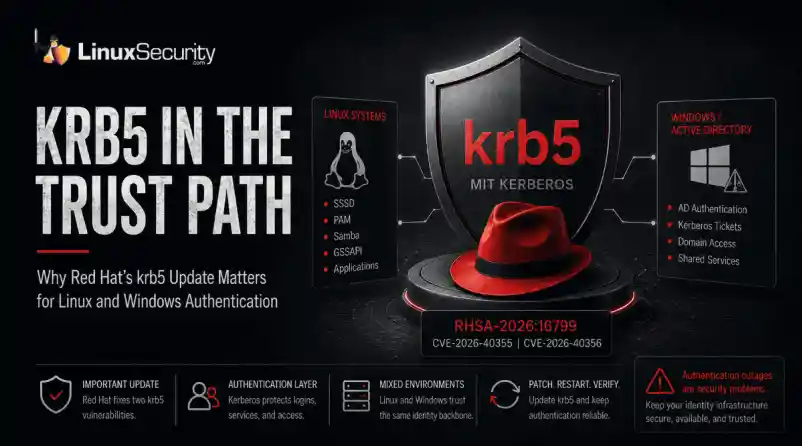
Red Hat released an Important krb5 security update for Red Hat Enterprise Linux 8 this week, addressing two vulnerabilities tracked as CVE-2026-40355 and CVE-2026-40356. On paper, it looks like another Linux package advisory.
Kerberos sits within the authentication layer that many enterprises use to connect Linux systems, Windows domains, Active Directory, file services, internal applications, and privileged-access workflows. When krb5 needs a security update, the concern is not just the package itself. It is the trust path behind it.
The advisory listed in today’s security feed identifies RHSA-2026:16799 as an Important krb5 security update for RHEL 8. The issue is tied to MIT Kerberos 5 and specific NegoEx handling conditions that could allow an unauthenticated remote attacker to crash an affected process.
This is not being described as credential theft or a full authentication bypass. That matters. But authentication-layer availability still matters, especially in mixed Linux and Windows environments where Kerberos helps determine who gets access to what.
What Red Hat Fixed in the krb5 Update
The update fixes two flaws in how MIT Kerberos 5 handles certain NegoEx authentication data. Instead of letting an attacker take over a system, the reported impact is that a specially crafted request could crash an affected process.
For Linux teams, that still matters. krb5 often sits close to login flows, service authentication, identity integrations, and access control. A crash in the wrong process can interrupt more than one user session. It can affect file access, application access, administrative workflows, and service-to-service authentication.
That is why Linux administrators should not dismiss the update simply because the impact reads like a denial-of-service attack.
Why This Is More Than a Routine Package Update
A RHEL system may use Kerberos directly. It may use SSSD. It may authenticate users through Active Directory. It may support Samba file shares, internal web applications, automation systems, or administrative access that depends on Kerberos tickets in the background.
In those environments, krb5 is not just another package. It is part of the access path.
If that path breaks, the effect is operational first. Users cannot log in. Services fail to authenticate. File shares stop behaving correctly. Admins lose reliable access when they need it most. Logs fill with authentication errors that may obscure other activity.
Those are not always breach scenarios, but they are security problems. Availability is part of security when the system being disrupted controls identity.
Why Active Directory Environments Should Pay Attention
Kerberos is closely tied to Microsoft Active Directory, but Linux systems rely on it too. In many organizations, Linux and Windows infrastructure share the same authentication backbone. A Linux server joined to Active Directory may use Kerberos to validate users, obtain tickets, and participate in domain-based access control.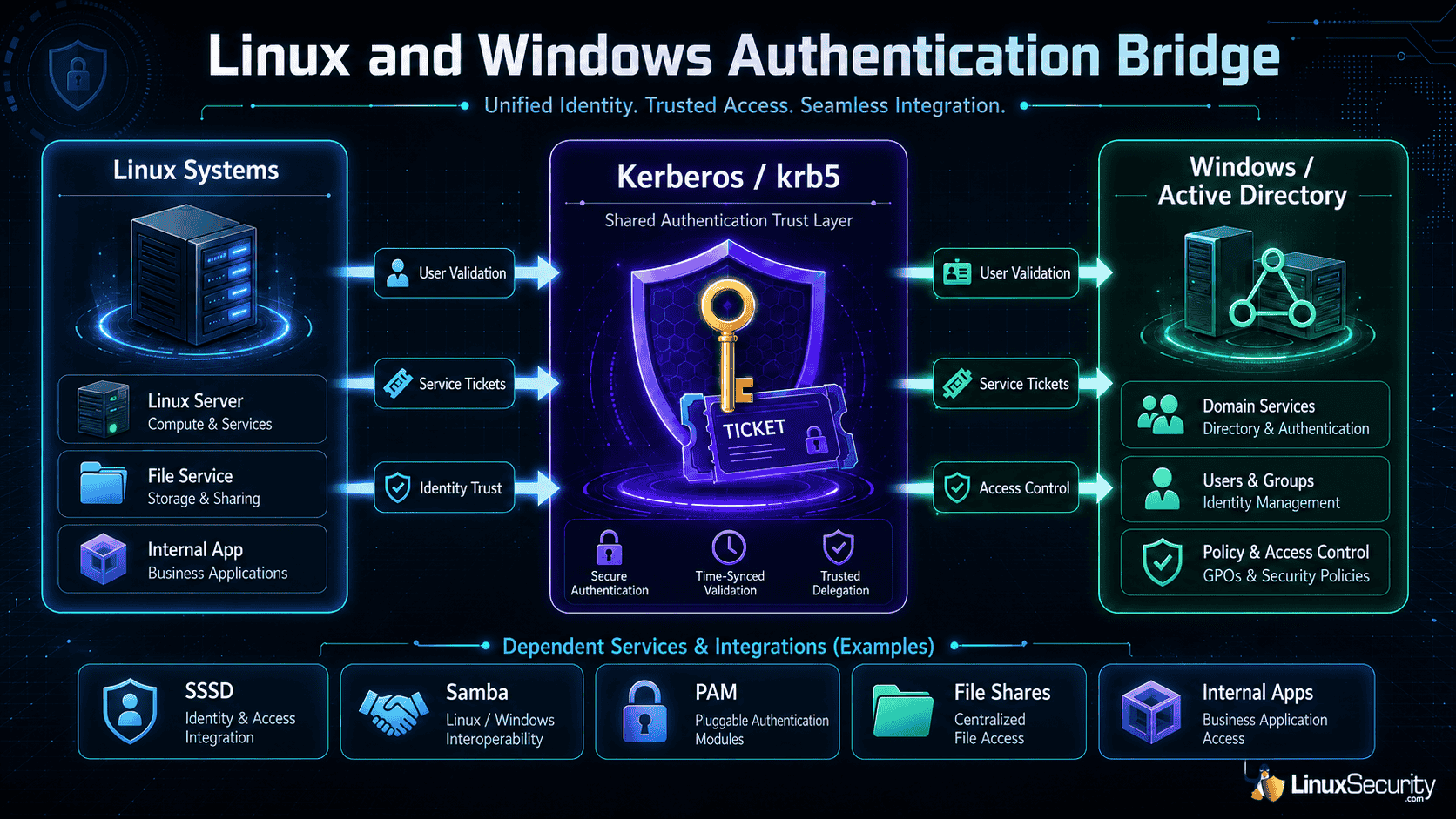
That makes this a Linux update with a Windows-relevant impact area.
A Windows-heavy organization may still run Linux database servers, web applications, file services, monitoring platforms, container hosts, developer tooling, and CI/CD runners. If those systems authenticate through Active Directory, krb5 becomes part of the same identity chain.
Not in the idea that this is a Windows vulnerability. It is not. The risk is that Linux systems often sit inside Windows-managed identity environments, and authentication flaws on one side can still affect the shared infrastructure on which both sides depend.
How Authentication Outages Can Turn Into Security Problems
The reported issue is narrower than a full Kerberos compromise. It depends on specific NegoEx handling conditions, and the public impact centers on crashing affected processes. That should keep the story grounded.
Still, authentication bugs deserve attention because they sit close to critical workflows.
A denial-of-service issue in authentication can disrupt logins, interrupt access to internal systems, break service authentication, or create pressure during an incident. When users cannot authenticate, teams often move fast. Sometimes too fast. They restart services, bypass controls, delay policy enforcement, or open temporary access paths just to restore operations.
Attackers do not always need to steal credentials to create useful disruption. Sometimes, they only need to make the identity unreliable. That is especially true in environments where Linux servers and Windows identity infrastructure are already tightly connected.
What Linux Teams Should Check After Patching
Linux teams running RHEL 8 should apply the krb5 update through normal security patching, then confirm that dependent services are restarted where needed. The update is rated Important in the feed, and the package sits close enough to authentication that it should not be pushed behind lower-risk maintenance.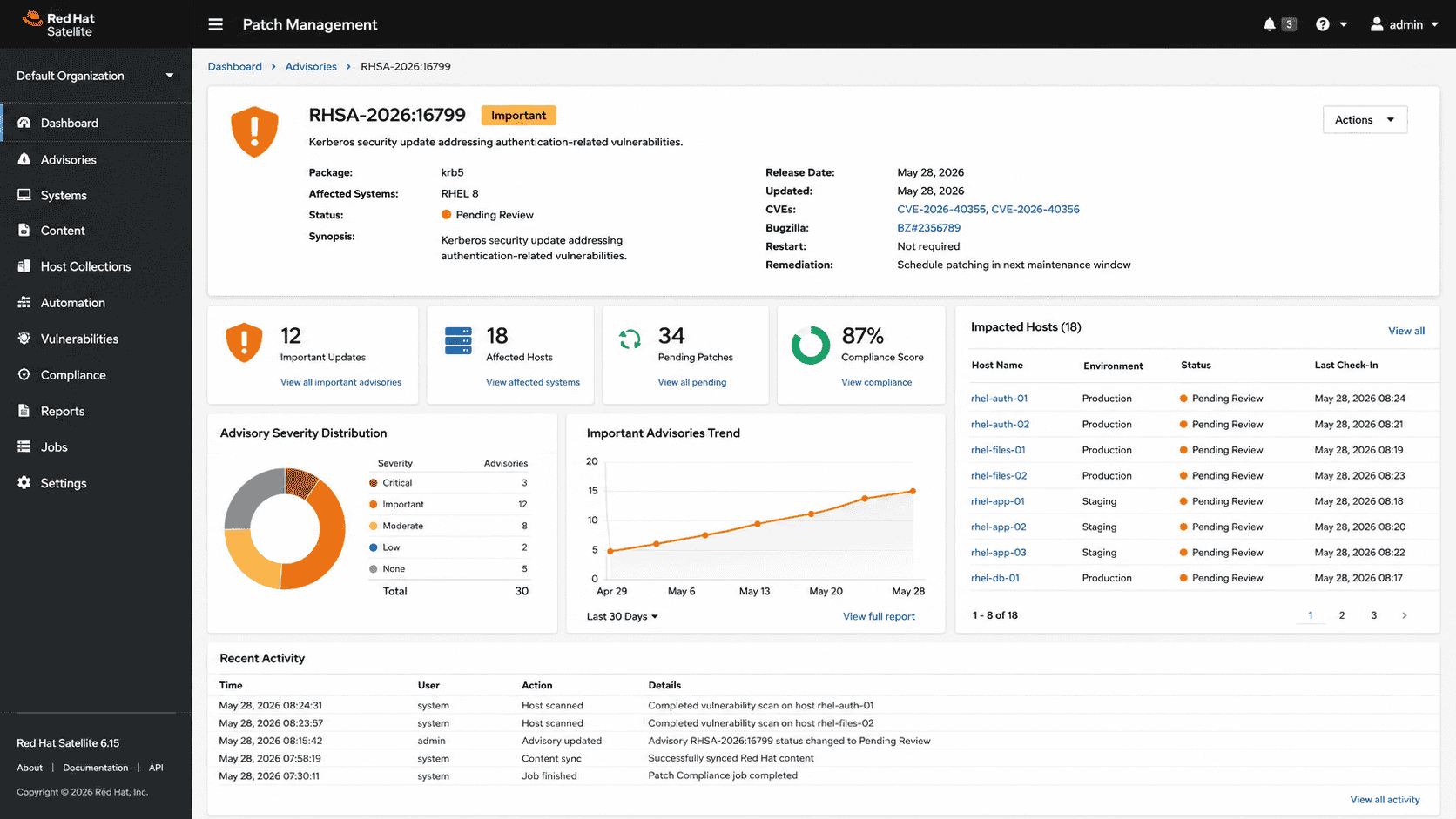
Admins should also check where Kerberos is actually used. In many environments, that list is longer than expected.
Start with Linux systems joined to Active Directory. Review hosts using SSSD, PAM, Samba, LDAP integrations, GSSAPI-enabled applications, and services that depend on Kerberos-backed access. Pay special attention to file servers, administrative jump hosts, internal applications, and systems that support privileged workflows.
CI/CD and automation systems are worth checking, too. If they rely on Kerberos-backed access to internal resources, authentication instability can affect builds, deployments, and operational tooling.
After patching, monitor authentication logs for unusual failures, repeated crashes, or service restarts. A quiet patch is ideal. A noisy authentication layer usually means something else needs attention.
What This Says About Linux and Windows Identity Risk
This advisory is a useful reminder that Linux and Windows security are not separate in most enterprise networks.
A Linux server may authenticate against Active Directory. A Windows user may access a Linux-hosted application. A Linux file server may depend on Kerberos tickets. A security team may need logs from both sides to understand what happened during an incident.
The trust layer is shared, even when the operating systems are different.
That is why krb5 updates matter. They are not always flashy, and they do not always point to immediate compromise. But they touch the systems that decide whether users, services, and administrators can access what they need.
For Linux administrators, the takeaway is simple: authentication infrastructure belongs near the top of the patching queue. Not because every flaw is catastrophic, but because the systems behind login, identity, and service trust are too important to leave exposed.
Bottom Line: Patch Authentication Before Trust Breaks
The Red Hat krb5 update is not a dramatic vulnerability story. There is no confirmed domain takeover, no stolen credentials campaign, and no Linux privilege escalation chain in the advisory details provided.
It still belongs on the radar.
Kerberos is one of the places where Linux and Windows security meet. In enterprise environments, that overlap supports login flows, file access, service authentication, and administrative control. When krb5 is affected, the concern is not only the Linux package. It is the identity infrastructure behind it.
That is what makes this update worth watching. Linux security is not only about patching exposed services or hardening the kernel. It is also about protecting the authentication paths that connect systems, users, and trust across the network.
Stay Ahead of Linux Security & Authentication Risks
Interested in more in-depth coverage of Linux security, enterprise authentication, Red Hat security updates, Kerberos risk, Active Directory integration, and infrastructure hardening strategies? Subscribe to the LinuxSecurity newsletter for weekly threat analysis, advisory coverage, and practical guidance for securing Linux and open-source environments.
Related Reading
- Red Hat Enterprise Linux 8.6 Security Update for Kerberos
- RedHat: RHSA-2022-8637:01 Important: krb5 security update
- Critical Linux-PAM Vulnerability Exposes Servers to Local Privilege Escalation
- RHEL 9.4 Security Enhancements: SELinux, Cryptography, More
- Comprehensive Linux Security Tools and Hardening Best Practices 2026
 PREVIOUS

 NEXT
NEXT

Powered By

Linux Security - Your source for Top Linux News, Advisories, HOWTOs and Feature Releases
QUICK LINKS
subscribe to newsletters!
Like staying secure? So do we.
Sign up for updates, tips, and alerts!