


Stay Ahead With Linux Security Features

 security advisory infrastructure risks
 More than 4,300 internet-facing devices have been pulled into a newly documented router malware campaign called AryStinger. The infected systems are mostly not enterprise servers. They are older routers, NAS appliances, and embedded Linux devices that stayed online long after anyone was likely checking them. . QiAnXin XLab researchers found that the campaign is leaning on known vulnerabilities, including flaws that have been public for years. That is the important part. AryStinger does not...
 Jun 22, 2026
  security advisory risk management
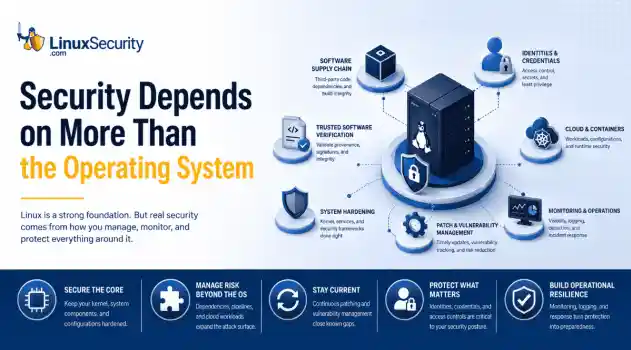
 If more than 12 million enterprise systems can be exposed by flaws in a security control designed to harden Linux, it's probably worth asking whether Linux gives people a false sense of security. That's a question that has come up repeatedly throughout 2026. . This year alone, researchers have disclosed privilege-escalation vulnerabilities, root-level kernel flaws, and multiple supply-chain compromises affecting Linux environments. That doesn't mean Linux suddenly became insecure. It means...
Jun 15, 2026 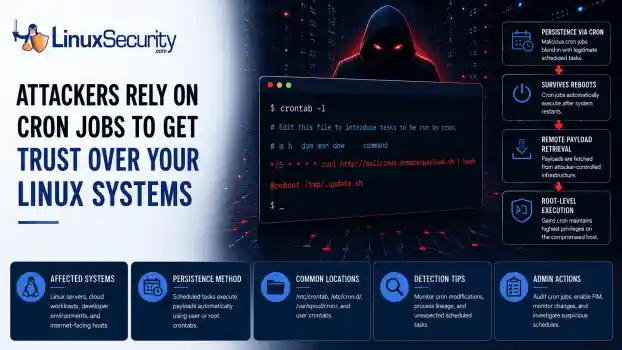 security advisory attack
 A Linux server gets cleaned up after an intrusion. The suspicious process is terminated, credentials are rotated, and the system is rebooted during maintenance. Everything seems secure. A few hours later, the same outbound connection appears again. . Situations like that point to persistence . The attacker no longer needs the original exploit because something on the host continues restoring access behind the scenes. Finding that mechanism is often more important than understanding how the...
Jun 08, 2026 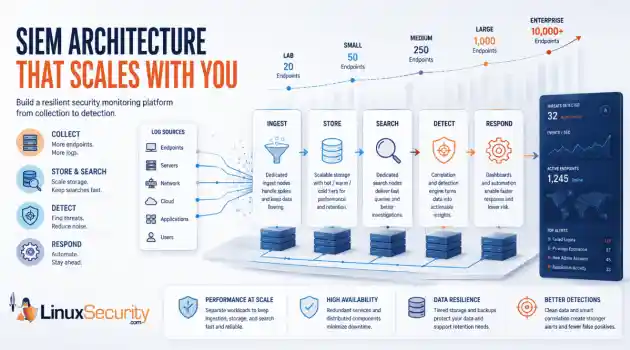 threat detection scalability
 Building a SIEM is easier than scaling one. Most open-source deployments start as a simple "all-in-one" server. It is easy to set up, but that design rarely survives the transition from a lab to a production workload. . A SIEM watching 20 endpoints is not doing the same job as one watching 500. More endpoints mean more logs; more logs require more storage; more storage makes search heavier. Eventually, the very architecture that made your lab easy to deploy becomes the reason your production...
Jun 04, 2026 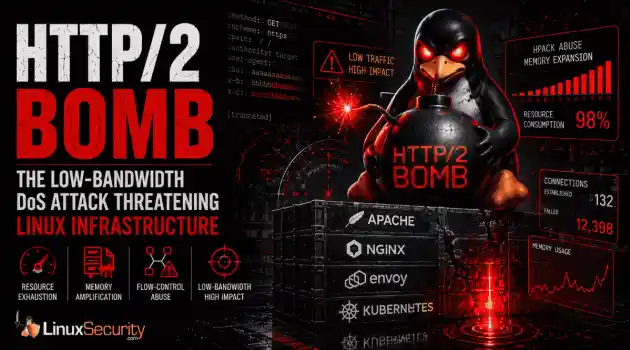 security advisory apache
 A newly disclosed attack technique called HTTP/2 Bomb is drawing attention because it targets the software that sits at the front of much of the Linux internet. Apache HTTP Server, NGINX, Envoy, and the ingress layers that many Kubernetes environments depend on can be forced into consuming disproportionate amounts of memory using relatively small amounts of attacker traffic. . For Linux administrators, the concern is not the HTTP/2 protocol itself. It is the possibility that a single...
Jun 04, 2026  Refine features
X Clear Filters Get the latest News and Insights
Get the latest Linux and open source security news straight to your inbox.
Community Poll
Does sandboxing completely stop hackers?
Loading...

Explore Latest Linux Security features
We found -4 articles for you...
102
 security best practicesnetwork threatdeveloper practices
Understanding Security Threats In Open-Source Software Supply Chains
When you think of supply chains, your mind probably jumps to physical products—a t-shirt passing through farms, factories, trucks, and stores before landing in your hands. Now take that same idea and apply it to software. . Each application, library, or tool you use passes through a digital supply chain, made up of developers, repositories, package managers, and ultimately, end-users. But here’s the catch: every link in that chain is a potential target for cybercriminals looking to exploit weaknesses, inject malicious code, or cripple downstream systems. If you work with open-source software , this isn’t some distant hypothetical—it’s a very real security challenge you might face right now. The rise in open-source software supply chain attacks is alarming, with incidents growing exponentially every year. Why? Because targeting the chain lets attackers impact not just one company but potentially thousands. Whether it’s a repository compromise, vulnerability in shared dependencies, or malicious packages sneaking through, every phase has its risks. The question isn’t whether you’re exposed—it’s what you’re doing to discover and mitigate those risks before they escalate. Let’s break this down and figure out how to tighten your defenses at every level without getting buried in complexity. What Is Supply Chain Security and Why Is It So Important? As the name suggests, supply chain security protects the resources passed along in the trading process from network security threats. Cybersecurity vulnerabilities are assessed during the development process so companies can stop weaknesses from affecting other companies in the open-source software supply chain. Robust security is crucial because open-source supply chains have various vulnerabilities that cybercriminals can target. Just one open-source supply chain attack can affect hundreds or thousands of end-users. Open-source logistic software plays a vital role in stopping these security threats. Many programs todaybuild on open-source tools , which involve contributions from various developers and users who bring more cybersecurity vulnerabilities to the forefront so they can be addressed to strengthen overall data and network security to prevent breaches. What Supply Chain Security Threats Should I Be Aware Of? Cybersecurity vulnerabilities can arise at any point in the software supply chain. Let’s discuss the various components at risk: Developer Practices A software’s initial developers are the first link in the supply chain, where the first risks arise. Because this phase lays the groundwork for the entire project, how these developers approach their work has a massive impact on open-source supply chain security. The reality is that even experienced developers can make mistakes, so security threats in this phase often arise from simple failure to adhere to security best practices, such as: Using multifactor authentication on developer accounts. Having a formal change-tracking process. Giving each release a unique identifier. Testing for bugs and unexpected behavior throughout the development cycle. Documenting and managing a project’s dependencies. Cryptographically signing a project’s integrity. Tracking and addressing cybersecurity vulnerabilities in open-source security toolkits used in development. Developers may overlook these procedures due to distractions or time crunches. However, as simple as they are, ignoring these tactics can leave a company facing various security issues in its software supply chain. Repositories The next phase in the software supply chain is a repository or a server that hosts publicly available software packages where developers place their open-source code for others to use. Repositories have been the most used app development for in-house or licensed code, and the Linux Foundation reports that now 70%–90% of software solutions use open-source resources. Because these repositories are so large, managing themcan lead to threat oversights. Code in them may lack notes or dependencies, creating future cybersecurity vulnerabilities or misconfigurations. Weak access controls could let cybercriminals inject malicious code into these repositories. Downloading a software package is also fairly easy without crucial security features. Project Dependency Managers After downloading software from a repository, developers and users often use Project Dependency Managers (PDMs), which are programs that automate installation, updating, or configuration tasks to help watch over the open-source supply chain and maintain data and network security. Unfortunately, it is easy to over-apply PDMs, as they automate a lot, but they don’t modify the software and can’t check it for reliability issues or other cybersecurity vulnerabilities. As a result, teams may overestimate what these security toolkits can do, thus missing critical security checks in the process. Vulnerability Databases Because modern programs are often the result of dozens or thousands of software packages, it’s almost impossible to keep track of all cybersecurity vulnerabilities and dependencies. Developers turn to databases like the Common Vulnerabilities and Exposures Program and the National Vulnerability Database Programs to assist workers in maintaining open-source supply chain security. However, this phase in the supply chain can introduce risks of its own. Databases need help to keep up with the rapidly changing world of cybercrime, so their records may need to be completed or made more accurate once other security threats are identified. End-User Practices The final step in the supply chain is using the software. End-users can sometimes find or introduce new cybersecurity vulnerabilities as they use a program. Most network security issues and incidents result from end-user errors. However, if errors are manageable, then it could just be a design flaw that developers should try to fix. In open-source software supply chains,end-users are also crucial in addressing network security threats, as they can discover and report problems to developers so they can patch them and update notes in repositories, creating a cycle of open-source supply chain security improvements. Supply Chain Vulnerabilities in Open Source While open-source software offers the advantage of having multiple contributors that can find cybersecurity vulnerabilities, this can also introduce some unique risks. Most notably, malicious code has more chances to enter the open-source supply chain because so many people can contribute to repositories. Since open-source tools spread so widely, an attack on one storage or database could affect many parties down the line. In one notorious instance, an attacker compromised an open-source scripting language server to push two malicious updates in the repository. Later that same year, an attacker inserted password-stealing malware into two packages for a popular open-source PDM. One of these packages saw 14 million weekly downloads, so this one attack could have affected tens of millions of projects. The rapid growth in these attacks is easy to understand, as a single open-source supply chain attack can have far-reaching consequences, and this software has become an industry standard. Addressing Security Concerns for the Open-Source Software Supply Chain Many businesses still overlook open-source software security because these cybersecurity vulnerabilities are easy to miss when focusing on internal processes. Teams are concerned with ensuring their workflows and in-house programs are secure, taking attention away from network security threats earlier in the open-source supply chain, where attacks are far more accessible. Open-source software’s collaborative nature makes it easy for cybercriminals to insert malicious code into various aspects of the system. However, that same collaboration is also the key to better open-source supply chain security. The industry should encourage all supply chainparties, from initial developers to end users, to share their findings, discuss network security issues, and collaborate to label and review repositories effectively. Then, the community can benefit from others’ experience and expertise. Following the NIST’s secure software development framework and engaging in the best security practices is also essential. If more teams adopt these principles and standards, the software supply chain will become more standardized, enabling more helpful collaboration. Supply Chain Security Best Practices While every development cycle is unique, some practices apply to every software supply chain. That starts with a risk assessment. Map out your supply chain to see all your dependencies, revealing where cybersecurity vulnerabilities can arise. Once you know where you’re most likely to encounter network security issues, you can address them appropriately. Next, modernize your processes. Outdated technology can create data silos, making it difficult to spot potential network security threats and risks, creating more room for human error, and taking too long to respond to security alerts efficiently. Modern network security toolkits with automation, encryption, data consolidation, and file and access monitoring are crucial to spotting and preventing open-source supply chain threats. To make those permissions measurable and enforceable across teams and partners, an IGA solution helps organizations govern identities, review access rights, and reduce excessive privilege throughout the supply chain. You should also review and update your permissions throughout the supply chain. Most companies should give supply chain partners less access. Restrict permissions throughout the supply chain so everyone can only access what they need, and use strict identification and verification tools to enforce these policies. Be sure to verify every bit of code before deploying it. Scan everything before using it in the development process. If you find a vulnerabilityor bit of malicious code, alert others in the open-source community. Proactively hunting threats will ensure others’ oversight doesn’t affect you. Our Final Thoughts on Improving Open-Source Software Supply Chain Security Securing your open-source software supply chain isn’t just a task—it’s a responsibility shared among all contributors, from developers to end-users. You can’t rely on the idea that “someone else will catch it.” Every link in the chain matters, and cracks anywhere can ripple outward, leaving vulnerabilities that attackers love to exploit. Whether you’re choosing dependencies, hardening repository access, or locking down permissions, every small step counts toward protecting your systems—and, more importantly, your users. Addressing these challenges takes a sharp eye, steady habits, and, honestly, a little teamwork sprinkled throughout the lifecycle. But don’t let the scale of this responsibility feel overwhelming. You have tools, frameworks, and a community to lean on. Most importantly, this isn’t a fixed target; it’s an evolving process that thrives on iteration. When you regularly assess risks, modernize workflows, tighten permissions, and verify every bit of code before deployment, you're building security into the foundation of your processes. It’s not about the perfect solution—it’s about staying adaptable and proactive. The threats to open-source software supply chains aren’t going away. But with diligence and collaboration, you can build processes that keep the attacks at bay and ensure your systems are as resilient as possible. . The landscape of open-source software supply chains presents distinct vulnerabilities. Discover effective strategies to pinpoint and alleviate these dangers.. Supply Chain Risks, Open Source Security, Cybersecurity Practices, Network Threats. . Brittany Day
 May 23, 2025 •

Get the latest News and Insights
Get the latest Linux and open source security news straight to your inbox.
Community Poll
Does sandboxing completely stop hackers?
Search Topics
Powered By

Linux Security - Your source for Top Linux News, Advisories, HOWTOs and Feature Releases
QUICK LINKS
subscribe to newsletters!
Like staying secure? So do we.
Sign up for updates, tips, and alerts!
Discover faster search, smarter navigation, and deeper Linux security insights. Read More