Explore top 10 tips to secure your open-source projects now. Read More
×


Does Linux Give Users a False Sense of Security? What This Year's Biggest Linux Security Incidents Actually Reveal
 Jun 15, 2026
•
Jun 15, 2026
•
 MaK Ulac
3 - 6 min read
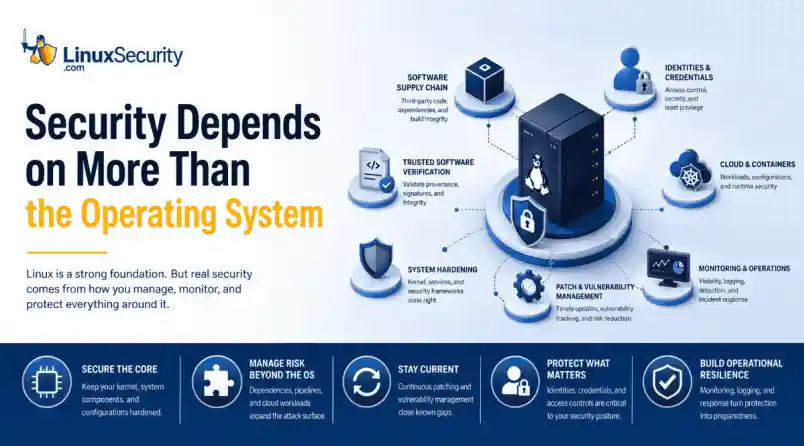

If more than 12 million enterprise systems can be exposed by flaws in a security control designed to harden Linux, it's probably worth asking whether Linux gives people a false sense of security. That's a question that has come up repeatedly throughout 2026.
This year alone, researchers have disclosed privilege-escalation vulnerabilities, root-level kernel flaws, and multiple supply-chain compromises affecting Linux environments. That doesn't mean Linux suddenly became insecure. It means that vulnerabilities still exist, trusted software can still be compromised, and security depends on much more than the operating system itself. Linux earned its reputation for security, but that reputation can sometimes lead people to assume they're safer than they actually are.
Why Linux Earned Its Reputation
It did not get that reputation by accident. The controls are real. They change how a system behaves after something goes wrong. They limit what a normal user can touch, what a compromised process can modify, and how much software is exposed in the first place.

- Permission separation: Keeps normal users and compromised processes away from root-level access.
- Open-source code: Can be inspected by researchers, maintainers, and security teams.
- Package managers: Centralized repositories make updates easier to distribute and discourage downloading random executables.
- Security frameworks: Tools like SELinux and AppArmor restrict what processes can do after they are already running.
These aren't cosmetic advantages. They reduce exposure and slow down privilege abuse. The mistake is treating these controls as the end of the security conversation.
When Advantage Becomes Misconception
The misconception starts when those advantages get turned into assumptions. Fewer visible attacks get read as no attacks. Open source gets treated as if someone has definitely reviewed the code. Security features get mistaken for secure outcomes.
The operating system gets all the attention while identities, packages, and build systems sit in the background. That matters now more than ever:
- Trusted workflows: A malicious package doesn't need to defeat the Linux permission model if a developer installs it inside a trusted CI/CD pipeline.
- Credential exposure: An exposed credential does not care which distribution is running underneath it.
- Operational reality: A weak build system can leak secrets while the host OS behaves exactly as configured.
The systems that stayed protected in 2026 were not protected because they ran Linux. They were protected because vulnerabilities were patched, dependencies were managed, and security controls were maintained.
The Problem With Assuming Security by Default: Copy Fail
The Copy Fail (CVE-2026-31431) kernel flaw was a reminder that even core components are not exempt. It was a local privilege escalation, meaning an attacker with low-privileged access could move to root.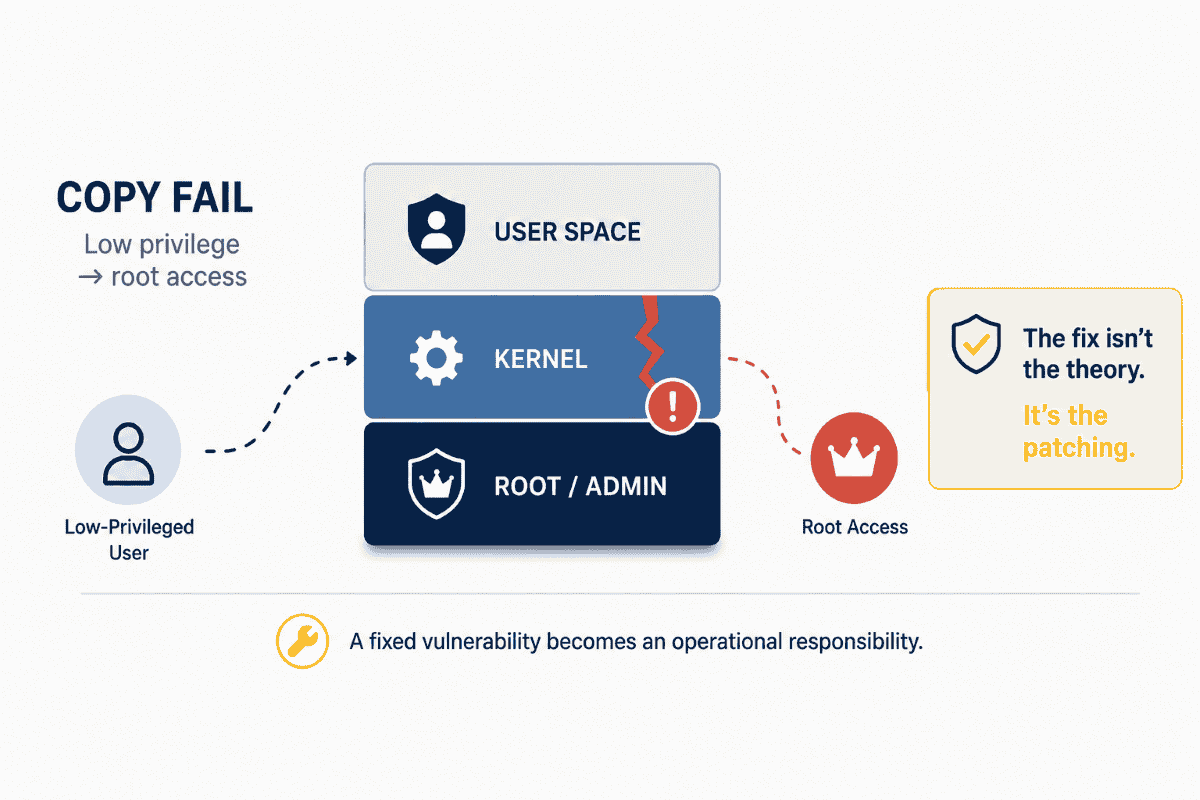
What stood out wasn't the bug—privilege escalation happens in every major OS—but where it lived. Administrators weren't dealing with a neglected third-party package; they were patching a core component. The systems that stayed vulnerable didn't fail because Linux was insecure. The lesson wasn't about kernel design. It was about patch management. A vulnerability with a fix is no longer a software problem; it's an operational one.
Mature Code and the Myth of Review: Dirty Frag
Dirty Frag (CVE-2026-43284 and CVE-2026-43500) affected mature networking components like IPsec ESP and RxRPC. These aren't experimental features. They are established parts of the networking stack.
The assumption is usually: The component has been around forever. Large organizations use it. If something serious existed, somebody would have found it by now.
Dirty Frag showed that complex networking code accumulates edge cases over time. Stability and security are related, but they are not the same thing. Public code can be examined by anyone, but that does not mean everyone is looking at it. Old code earns trust; it does not earn immunity.
Complexity as an Implementation Problem
Sometimes a vulnerability is the result of architectural complexity. Sometimes it’s a single character.
A 2026 kernel flaw came down to a small implementation mistake that created a privilege escalation path for containers. These bugs are frustrating not because they are common, but because they are ordinary. There was no failed security model. The problem was that inside a massive codebase, one small mistake survived long enough to become a vulnerability. The kernel contains millions of lines of code; complexity creates opportunities for mistakes, regardless of the review process.
The Attack Surface Shifted
The compromises involving Nx Console and the Mini Shai-Hulud campaign were notable because Linux often wasn't the target. The target was trust.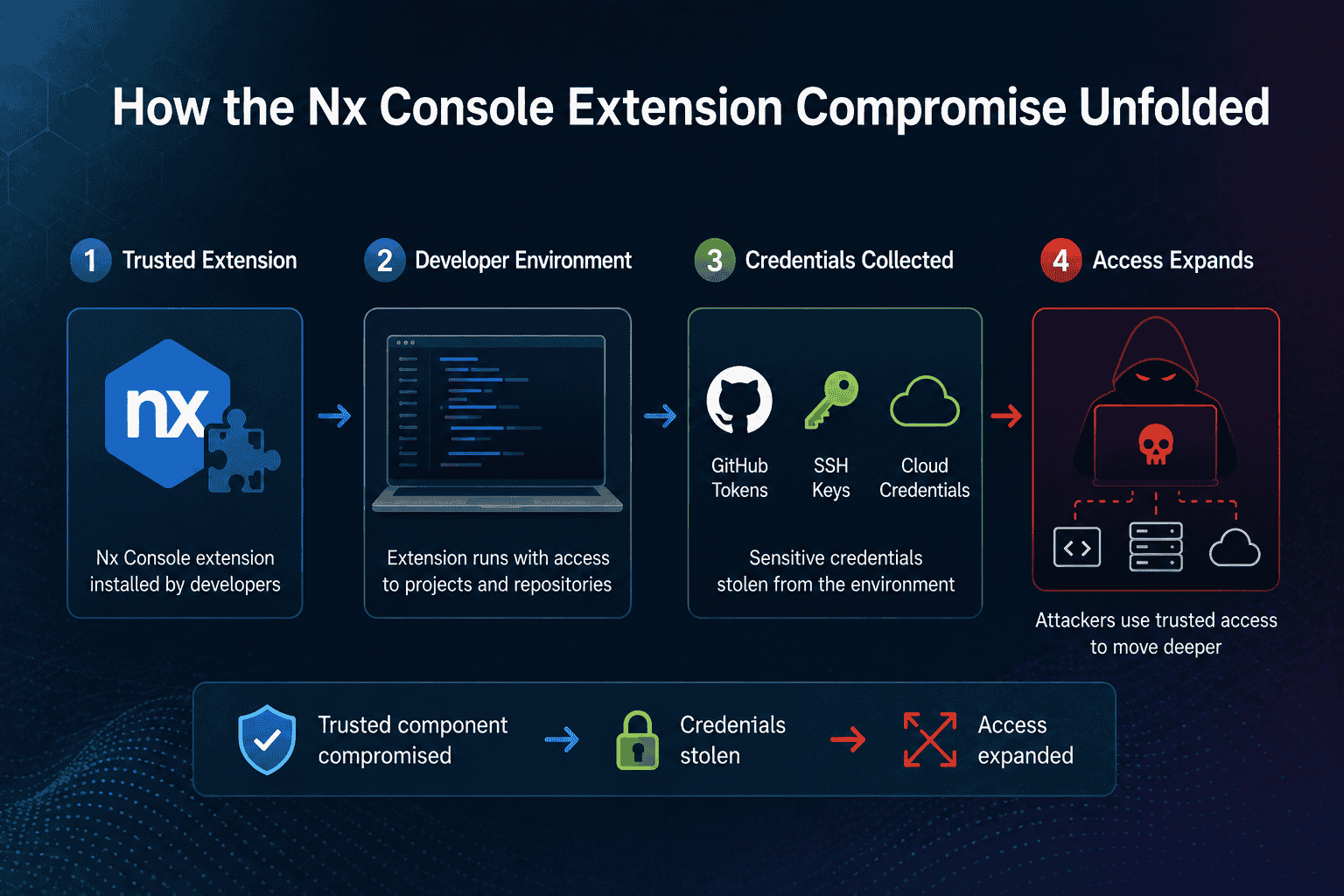
- Compromised packages: Can expose secrets within a build.
- Stolen credentials: Provide access to cloud infrastructure and Kubernetes environments.
- The human element: The XZ backdoor attempt showed that maintainer relationships and social engineering are as important as the code.
Visibility helped uncover these problems, but visibility alone did not prevent them. That is why initiatives like SBOMs and software provenance are gaining attention. The goal is to make trust easier to verify.
In several recent supply-chain incidents, organizations weren't breached through a kernel exploit at all. They were breached because trusted software, build pipelines, or credentials became part of the attack path.
What Actually Protects Linux Systems
The incidents of 2026 happened because vulnerabilities existed, software became complex, and trust relationships were abused. The OS matters, but what surrounds it matters just as much.
- For desktop users: Apply updates, enable MFA, and treat browsers as a primary attack surface.
- For self-hosters: Harden SSH, maintain a regular patching schedule, and review which services are exposed to the internet.
- For developers: Audit dependencies, secure CI/CD pipelines, and scan containers before deployment.
- For enterprise admins: Prioritize identity protection, monitor endpoint visibility, and review supply chain controls.
Notice how few of these depend on Linux specifically. That’s the point.
Linux remains one of the strongest security platforms available. But the real danger is not choosing Linux. The real danger is assuming Linux removes the need for patching, monitoring, governance, and operational discipline. 2026 has already provided several reminders why.
Want more Linux security news, vulnerability analysis, and software supply chain updates? Subscribe to the LinuxSecurity Newsletter and get the latest threats, advisories, and expert insights delivered directly to your inbox.
Related Reading
 PREVIOUS

 NEXT
NEXT

Powered By

Linux Security - Your source for Top Linux News, Advisories, HOWTOs and Feature Releases
QUICK LINKS
subscribe to newsletters!
Like staying secure? So do we.
Sign up for updates, tips, and alerts!