Explore top 10 tips to secure your open-source projects now. Read More
×


Compromised VS Code Extension Puts Linux Development Pipelines at Risk
 Jun 03, 2026
•
Jun 03, 2026
•
 MaK Ulac
4 - 7 min read
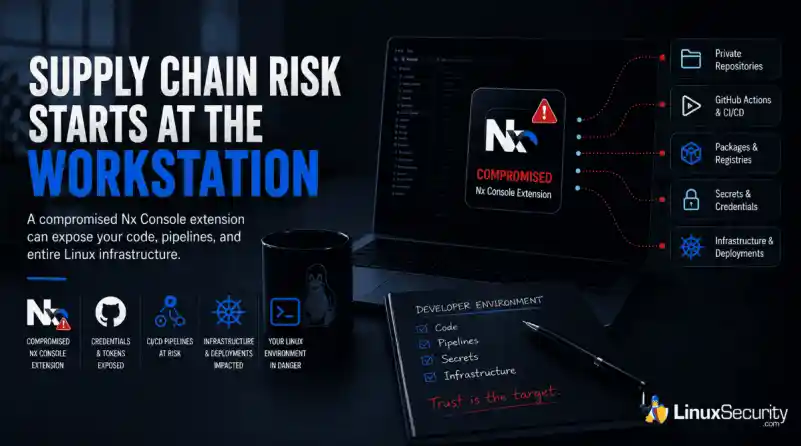

The compromise of Nx Console shows how much infrastructure now sits behind a single developer account. GitHub repositories, CI/CD pipelines, container build systems, Terraform projects, Kubernetes deployments. None of those systems was the initial target. The workstation was.
Attackers did not need a Linux privilege escalation bug or a remote code execution chain. They needed developers to trust a tool they were already using. For many organizations, that was enough.
What Happened?
Federal authorities confirmed the compromise in a public alert covering Nx Console and associated GitHub repositories. According to the CISA advisory, the incident was tracked under CVE-2026-48027 and involved supply-chain activity affecting development environments.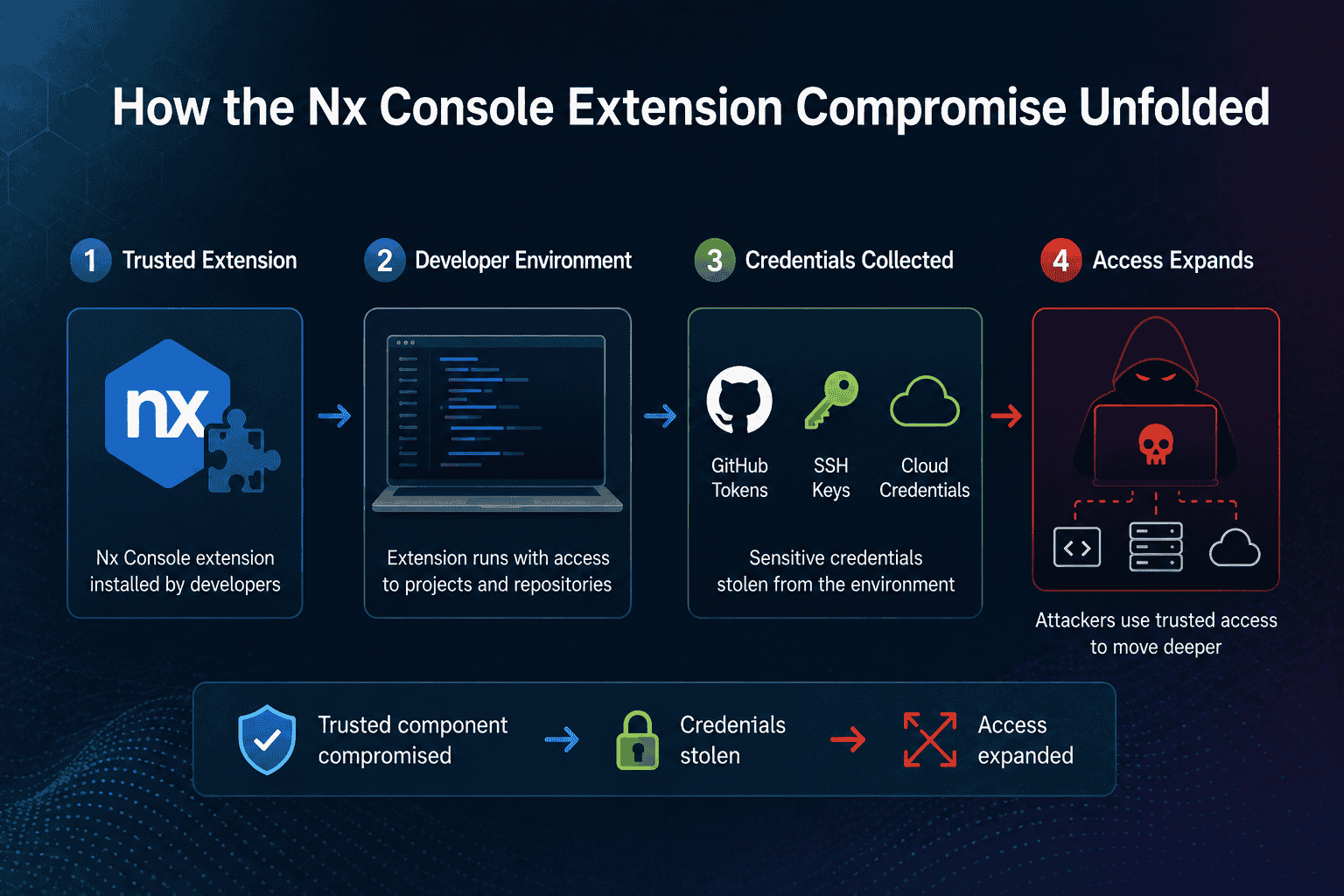
The compromise centered on Nx Console, a popular extension used by developers working with Nx-managed projects. Rather than targeting production infrastructure directly, attackers inserted themselves into a trusted part of the software development workflow. That matters because extensions already operate with broad visibility into projects, repositories, and developer activity.
Nx maintainers later published an incident timeline in their security update, including affected versions, discovery details, and remediation guidance. Users running impacted releases were instructed to remove affected versions and update immediately.
At a high level, the attack followed a pattern security teams have been seeing more often over the last several years. Compromise a trusted component. Collect credentials. Use existing trust relationships to move deeper into the environment.
No exploit chain required.
Incident Overview
|
Item |
Details |
|
Incident Type |
Supply-chain compromise |
|
Affected Component |
Nx Console |
|
CVE |
CVE-2026-48027 |
|
Primary Target |
Developer credentials |
|
Secondary Risk |
Repository and CI/CD compromise |
|
Potential Impact |
Source code, secrets, infrastructure access |
How the Attack Worked
Modern development extensions have a surprising amount of visibility. They can read project files, interact with repositories, inspect build processes, and in some cases, access authentication material already present on the system.
That trust model exists for convenience. Attackers understand that.
Research discussing the broader attack methodology, including credential theft and GitHub-focused abuse techniques, was later examined by Microsoft Threat Intelligence in its security research. The mechanics vary between incidents, but the objective rarely changes. Collect credentials that provide access to systems developers already use every day.
GitHub tokens are particularly valuable because they collapse multiple attack stages into one. Instead of breaking into a repository, an attacker authenticates. Instead of probing infrastructure, they inspect deployment workflows and secrets already stored inside the environment.
The token becomes the foothold.
From there an attacker may be able to:
- Clone private repositories
- Review deployment workflows
- Access package registries
- Harvest CI/CD secrets
- Modify build pipelines
- Publish malicious code updates
- Establish persistence through automation
None of those actions require root access on a Linux workstation. Sometimes they do not require touching the workstation again.
Why GitHub Tokens Matter
GitHub stopped being just a source code platform years ago.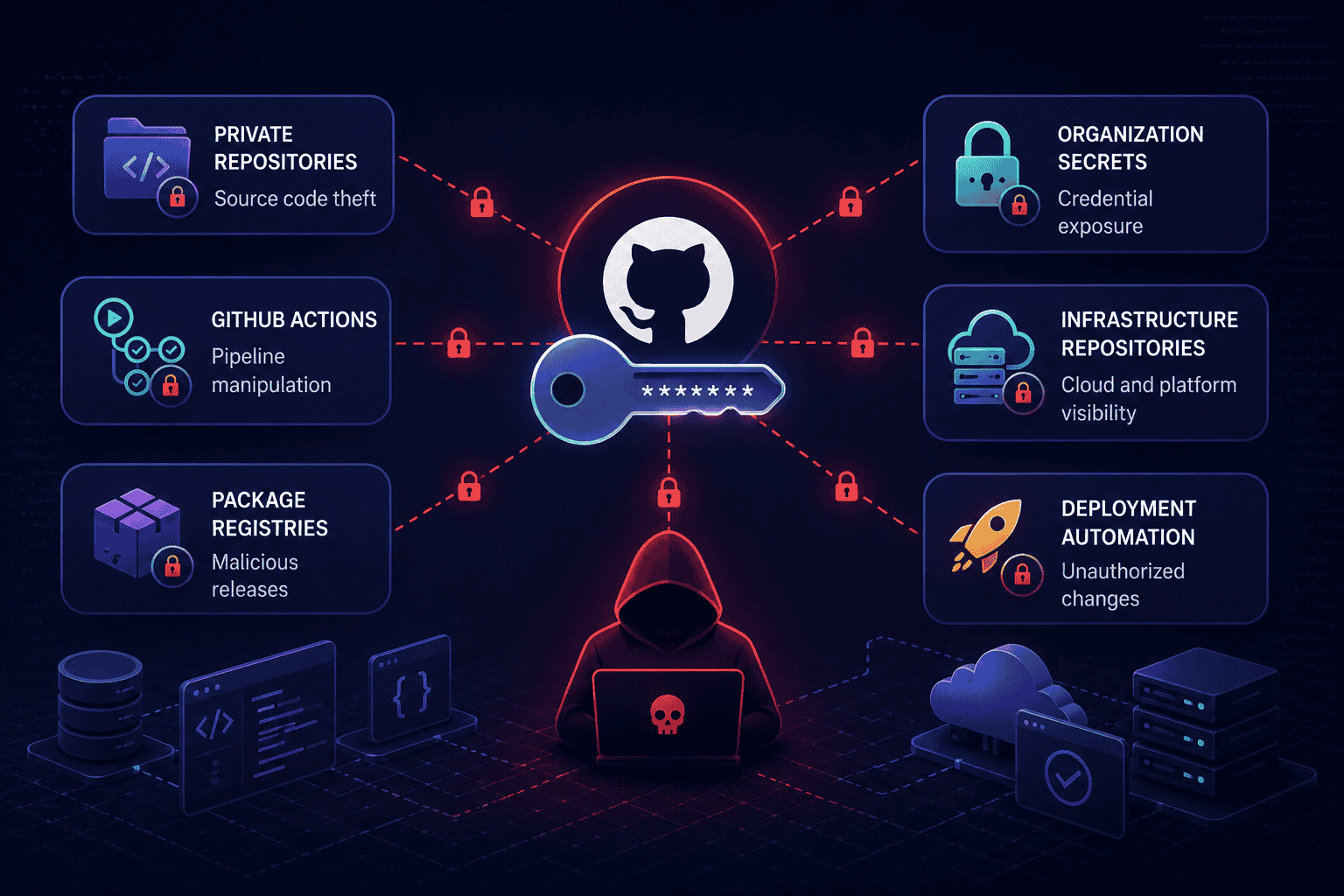
For many organizations, it functions as the operational center of the environment. Infrastructure definitions live there. Deployment workflows live there. Kubernetes manifests, Helm charts, Terraform projects, Ansible playbooks, cloud automation scripts. Same place.
The value of a stolen token depends on permissions. The problem is that developers often need extensive permissions to do their jobs. A single account may have access to:
- Private Repositories: Source code theft
- GitHub Actions: Pipeline manipulation
- Package Registries: Malicious Releases
- Organization Secrets: Credential Exposure
- Infrastructure Repositories: Cloud and platform visibility
- Deployment Automation: Unauthorized changes
That is why developer accounts keep showing up in modern attack chains. They sit between development and production. Attackers know it.
The Linux Security Impact
This is not really a VS Code story.
It is a Linux infrastructure story that happens to begin inside a development tool. Many affected users run Linux workstations because they manage Linux environments. Ubuntu systems administering Kubernetes clusters. Fedora laptops maintain cloud infrastructure. Debian workstations managing CI/CD pipelines. Different distributions. Similar trust relationships.
The workstation becomes the first hop.
A compromised developer machine may expose:
- GitHub tokens
- SSH keys
- Cloud credentials
- Kubernetes configuration files
- Internal repositories
- Build automation scripts
Not every stolen credential leads directly to production. Enough of them do. Teams often focus heavily on server hardening while developer systems quietly accumulate administrative access across multiple environments. An attacker does not necessarily need local privilege escalation when repository permissions already open the next door.
CI/CD Pipelines
Build systems represent one of the highest-value targets in a software environment. Once repository access is established, workflow definitions become attractive targets. A modified pipeline can collect secrets, alter builds, inject code into releases, or create long-term persistence that survives workstation cleanup. Those investigations get expensive fast.
Containers and Kubernetes
Container environments depend heavily on automation. Repositories define what gets built, where it gets pushed, and how it gets deployed. Attackers increasingly target the pipeline rather than the cluster itself. Modifying trusted deployment paths is often easier than breaking through cluster defenses.
Infrastructure-as-Code Repositories
Terraform and Ansible repositories frequently contain the blueprint for an entire environment. Even when secrets are managed correctly, those repositories reveal architecture, permissions, cloud services, deployment patterns, network layouts, and operational processes. An attacker can learn a great deal before ever launching a second-stage attack. The initial compromise happens on a workstation. The visibility gained afterward can extend across an entire organization.
What Linux Developers Should Do Now
The immediate priority is determining whether affected extension versions were installed and whether repository credentials may have been exposed. Organizations should review guidance published by Nx, GitHub, and CISA while treating exposed credentials as compromised until proven otherwise.
Extension Review

- Remove affected extension versions
- Update to verified releases
- Review installed development extensions
- Check for unexpected modifications
Credential Response
- Rotate GitHub personal access tokens
- Revoke unused credentials
- Review OAuth integrations
- Replace exposed secrets
Repository Audit
- Review commit activity
- Inspect branch protections
- Check workflow modifications
- Examine the package publication history
- Investigate unusual logins
CI/CD Review
- Rotate pipeline secrets
- Audit service accounts
- Validate deployment workflows
- Review recent build activity
Lessons for Open Source Security
Supply-chain attacks keep succeeding because they exploit trust that already exists. Developers trust extensions. Pipelines trust repositories. Production systems trust deployment workflows. Attackers do not need to build those relationships. They inherit them.
That shift changes how Linux defenders need to think about risk. The boundary is no longer the server. It is the entire path that leads to the server. Extension ecosystems, package registries, source repositories, CI/CD platforms, and developer workstations all sit inside the same attack surface now. Treating them as separate problems creates blind spots that attackers are increasingly willing to exploit.
Conclusion
The most important detail in this incident is what was not exploited.
There was no Linux kernel vulnerability. No container escape. No exposed daemon is listening on the internet. The attacker gained leverage through a trusted development tool and moved through existing trust relationships from there.
As more infrastructure becomes defined through GitHub repositories, containers, Kubernetes deployments, and infrastructure-as-code projects, developer workstations continue to increase in value. They hold credentials. They control pipelines. They connect directly to the systems organizations depend on every day.
That makes them a target.
Related Reading
- GitHub Actions Compromise CI/CD Supply Chain Risks Explored
- Why CI/CD Pipelines Are Targets in Software Supply Chain Attacks
- Risks of GitHub Repo Breach on Linux Supply Chain Security
- Why Linux Supply Chain Attacks Are Becoming a Nightmare for DevOps Teams
- GitHub Actions Linux Self-Hosted Runners Security Risks
- Open-Source Supply Chain Attacks Threaten Linux Production Systems
 PREVIOUS

 NEXT
NEXT

Powered By

Linux Security - Your source for Top Linux News, Advisories, HOWTOs and Feature Releases
QUICK LINKS
subscribe to newsletters!
Like staying secure? So do we.
Sign up for updates, tips, and alerts!