Explore top 10 tips to secure your open-source projects now. Read More
×


How Supply Chain Attacks Continue to Threaten Open-Source Software
 Jun 09, 2026
•
Jun 09, 2026
•
 MaK Ulac
4 - 7 min read

Topics Covered
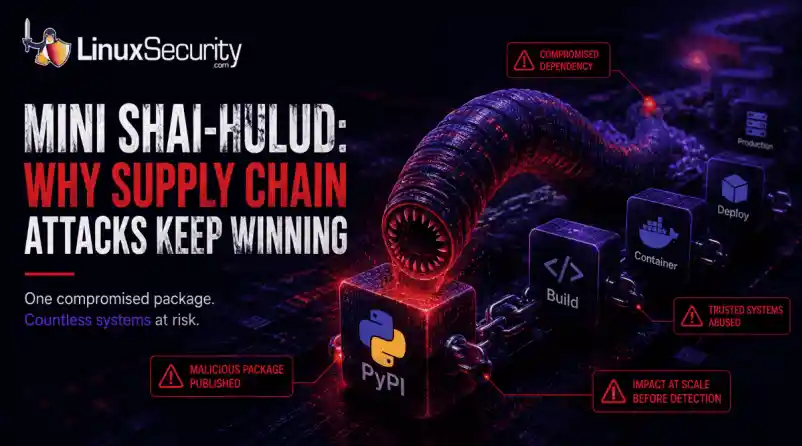
Researchers recently identified another wave of malicious packages on PyPI linked to the broader Mini Shai-Hulud campaign, a worm-like supply chain attack that spread through trusted software packages. On the surface, the packages looked no different from thousands of others published to the repository each week.
Instead of trying to break into a target network directly, the attackers hid malicious code inside software that developers were already using. A few downloads are all it takes. Once a package enters a development workflow, it can end up in places far beyond the original system.
That's what makes supply chain attacks difficult to ignore. A compromised package can end up in dozens of environments without the attacker ever interacting with the victim directly. The repository handles distribution. Dependency chains handle the rest. By the time someone figures out a package has been tampered with, the code may already be sitting in build systems, test environments, containers, or production workloads.
What Happened?
Researchers recently uncovered a new wave of malicious packages on PyPI linked to the broader Mini Shai-Hulud campaign. According to Socket's investigation, the attackers weren't relying on phishing emails or fake downloads. They were using software developers already trusted.
A malicious Python package may initially compromise a developer workstation, but the impact rarely stops there. If the package becomes part of an automated build process, it can be incorporated into Linux containers, deployed through Kubernetes, or distributed across production servers without anyone noticing.
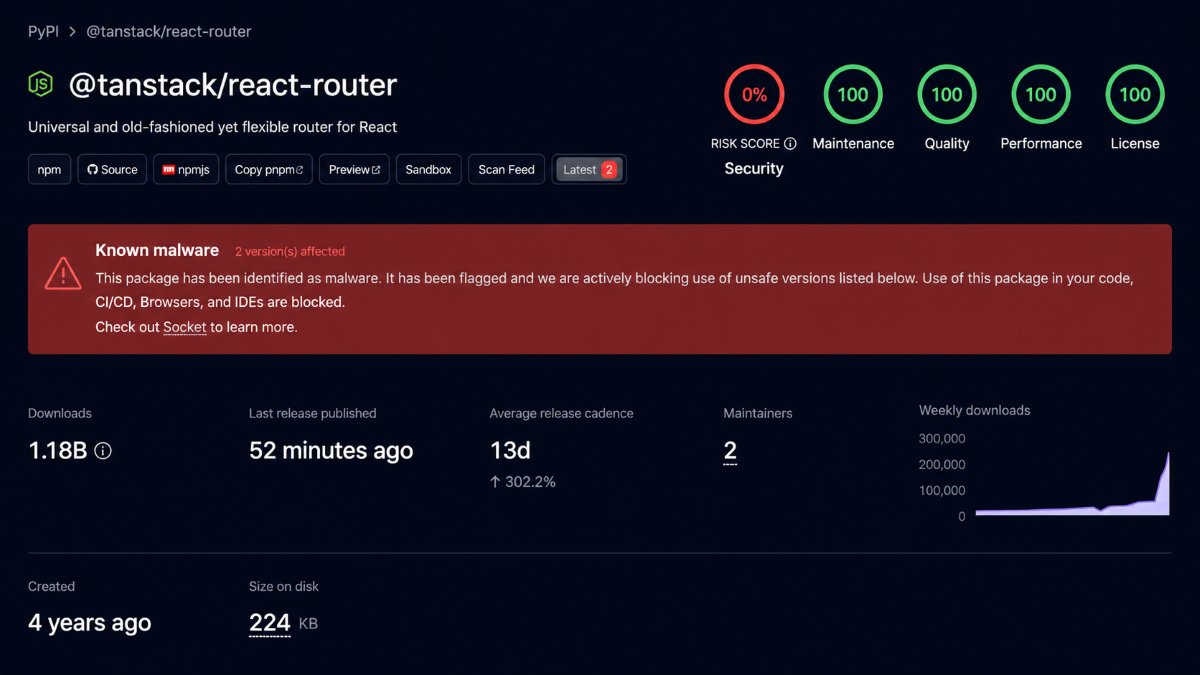
- The Approach: Instead of convincing users to download suspicious files, attackers insert malicious code into software people already trust. The repository remains legitimate, the package name remains familiar, and installation happens through normal workflows.
- The Targets: Research into the related Miasma and Mini Shai-Hulud activity found attackers targeting packages used by developers, researchers, and technical users. Several affected projects were tied to scientific computing and development workflows, granting access to environments where source code, credentials, and deployment infrastructure are often concentrated.
Trusted repositories have become a preferred target because they offer attackers a scale that traditional intrusion methods rarely achieve.
Why Are Supply Chain Attacks So Effective?
Supply chain attacks succeed because they abuse the trust already existing inside development environments. Developers trust official repositories, and organizations trust approved package managers. Build systems routinely download and install dependencies without requiring anyone to inspect every line of code.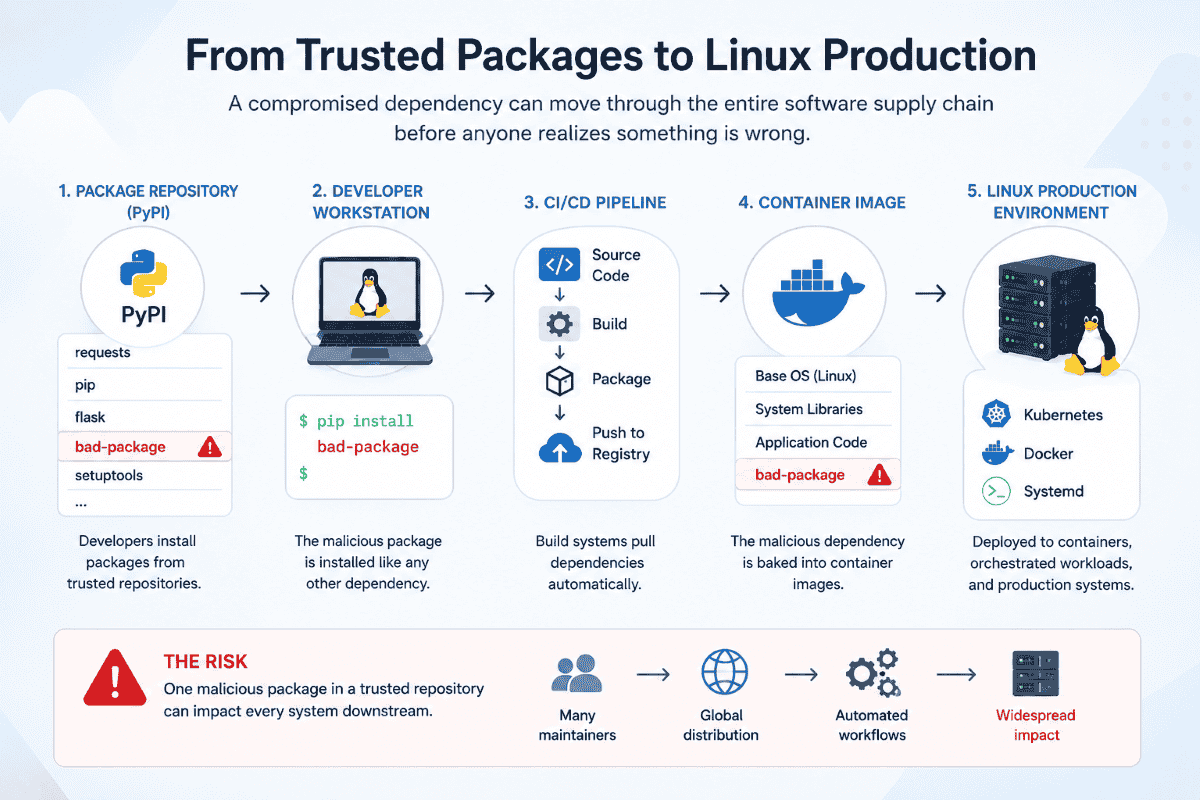
That trust creates an opportunity.
Modern software development relies heavily on automation. Modern development pipelines are built around automation. Packages get pulled automatically, builds run automatically, and updates move through environments faster than most teams can review them.
That works well until something malicious gets mixed in. A compromised package does not need a special path into the environment. It follows the same route as every legitimate dependency.
Most organizations could not tell you everything sitting inside their dependency tree. There is simply too much of it. One package depends on another, which depends on five more, and somewhere down that chain, a bad update can end up in places nobody expected.
Nobody installs malware on purpose. They install software they believe is safe.
Why Linux Users Should Pay Attention
Although the recent campaign involved Python packages on PyPI, the risk extends well beyond Python development.
Many Linux environments depend heavily on open-source software. Developers install packages from trusted repositories every day. Build systems pull dependencies automatically. Containers often include software from dozens of different projects maintained by people spread across the world.
That creates a lot of trust points.
A compromised dependency can end up in build systems, containers, development environments, and production workloads long before anyone realizes something is wrong.
That is part of what makes supply chain attacks so effective. The attacker never has to touch the target directly. The repository handles distribution. The dependency chain handles the rest.
A Systemic Trend: Beyond a Single Incident
The malicious PyPI packages linked to Mini Shai-Hulud are only the latest example of a much larger problem.
Over the past several years, attackers have repeatedly targeted the software supply chain instead of attacking organizations directly. The compromise of Codecov's software distribution process exposed customer credentials. The 3CX incident showed how a trusted software update could be turned into a delivery mechanism for malware. More recently, the attempted backdoor in the widely used XZ Utils project demonstrated how deeply attackers are willing to embed themselves in open-source ecosystems before making a move.
The techniques vary, but the objective rarely changes. Sometimes the target is a package repository. Sometimes it is a developer account, a source code repository, or a CI/CD environment. In every case, the goal is the same: gain access to software before it reaches users.
That shift matters. Attackers are spending less time looking for individual victims and more time looking for distribution points. Compromise something trusted, and the reach comes with it.
The Mechanics of Modern Supply Chain Attacks
Most supply chain attacks begin with access. Attackers obtain developer credentials, compromise maintainer accounts, abuse publishing infrastructure, or gain a foothold inside environments responsible for software distribution.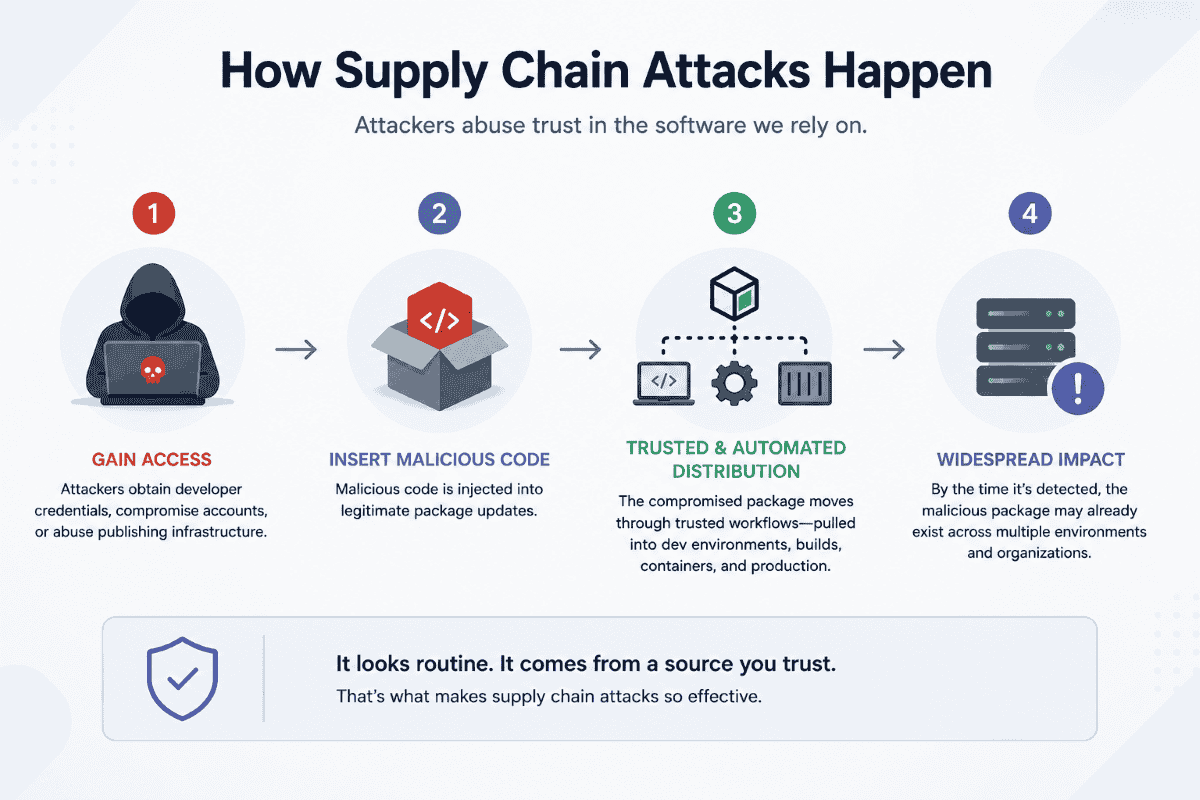
Once inside, the process is streamlined:
- Insertion: Malicious code is injected into legitimate package updates.
- Trusted Workflow: Attackers use existing development processes to move malicious code toward end users.
- Automated Distribution: A compromised package is pulled into development environments, incorporated into automated builds, packaged into containers, and eventually pushed into production.
Each step appears routine because the software originates from a source users already trust. The speed is what makes these incidents difficult to contain; by the time malicious activity is detected, affected packages may already exist across multiple environments and organizations.
Key Takeaways for Linux Administrators and Developers
The lessons from these incidents are not limited to Python developers. Anyone responsible for Linux systems, cloud workloads, or software delivery pipelines should view package repositories as part of their attack surface:
- Perform Regular Reviews: Dependency reviews should be routine. Unused packages should be removed rather than left sitting inside production environments.
- Secure Developer Accounts: Developer accounts deserve the same protection as administrative accounts. Multi-factor authentication (MFA) should be enabled, especially for maintainers responsible for publishing software.
- Increase Visibility: Organizations should monitor package publishing activity and software entering their environments. Software composition analysis (SCA) tools can help identify risky dependencies before deployment.
- Monitor for Anomalies: Tracking package updates can provide early warning when trusted projects suddenly introduce unexpected behavior.
The larger lesson is simple: Trust should not be automatic simply because software comes from an official repository.
Conclusion
The malicious PyPI packages linked to Mini Shai-Hulud will eventually disappear. The bigger issue will not. Open-source software is woven into modern infrastructure. Most teams could not realistically operate without it.
That is why these incidents matter. The code arrives through a source everyone trusts, gets pulled into a workflow that looks normal, and often spreads before anyone has a reason to question it. But incidents like this start much earlier in the process. The code arrives through a source that looks legitimate, gets pulled into a workflow that looks normal, and spreads before anyone has a reason to question it.
That is what makes supply chain attacks difficult to defend against. The trust is already there.
Related Reading
- Why Linux Supply Chain Attacks Are Becoming a Nightmare for DevOps Teams
- Why Software Supply Chain Security Matters in Linux Systems
- Debian 14 Requires Reproducible Builds for Package Integrity Enforcement
- Targeted Attacks on Open Source Maintainers Highlight Security Risks
If you like this kind of Linux security coverage, subscribe to our newsletter for more updates, analysis, and practical tips.
 PREVIOUS

 NEXT
NEXT



Powered By

Linux Security - Your source for Top Linux News, Advisories, HOWTOs and Feature Releases
QUICK LINKS
subscribe to newsletters!
Like staying secure? So do we.
Sign up for updates, tips, and alerts!