Overly broad permissions can turn one compromised account into a much larger security problem. Learn how to reduce unnecessary access, review privileges, and apply least privilege across modern Linux systems. Review Linux Privileges×


Stay Ahead With Linux Security HOWTOs
How to Secure My Network incident response network traffic
incident response network traffic Imagine logging into a production Linux server for routine maintenance and noticing background network activity connecting to an unfamiliar external IP address. Your endpoint protection agent is not popping up with an alert, there is no service failure, and on the surface, the system appears to be running normally. . For Linux administrators and security teams, such a situation is a moment of truth: Is this activity a sign of active intrusion or just a tool that was overlooked in the course of...
 Jul 21, 2026
How to Harden My Filesystemsystem hardening open source security
system hardening open source security We all spend a lot of time defending our systems from external threats, but the amount of damage an attacker can cause often depends on what happens after they get in. A single compromised account doesn't always lead to a major incident. The real danger begins when that account has far more access than it actually needs. . That's exactly what the principle of least privilege is designed to prevent. By limiting users, services, and applications to only the permissions required for their jobs,...
Jul 20, 2026

How to Learn Tips and Tricksthreat detection system monitoring
threat detection system monitoring For small security and IT teams, the "enterprise" dream of a fully automated SIEM often feels like a distant luxury. It’s a vision built on massive budgets and dedicated engineering teams—things that, frankly, most of us don't have. But here is the reality: you don’t need a six-figure platform to maintain a secure environment. . Linux systems are, by design, incredibly verbose. Every time a user authenticates, a process executes, or a configuration file changes, your system creates a record of...
Jul 17, 2026
How to Learn Tips and Tricksnetwork security centralized logging
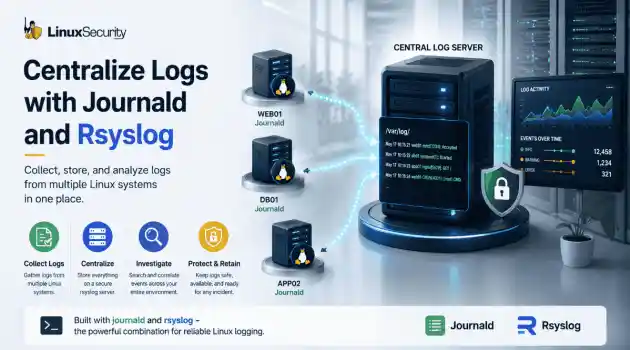
network security centralized logging Linux systems generate a steady stream of authentication, service, kernel, and application logs. On most systems, those logs never leave the machine that created them. If you're responsible for ten or twenty servers, that means checking each one separately. If one disappears before you can investigate it, its logs may disappear with it. Centralized logging solves that by sending log messages to another server as they're created. Instead of searching every machine, you have one place to review...
Jul 15, 2026
How to Secure My Networksecurity advisory audit
security advisory audit When you’re digging through an incident, your logs are the only thing you can actually trust. The problem is, attackers know that too. If someone gets root on your server, their first move is almost always to delete the evidence and cover their tracks. . If you aren't actively protecting your logs, you're basically flying blind the second a breach happens. It’s a miserable feeling to realize you have no idea what an attacker did because they wiped the logs before you even got there. In this...
Jul 11, 2026
 Refine HOWTOs
X Clear Filters
Get the latest News and Insights
Get the latest Linux and open source security news straight to your inbox.
Community Poll
Should Linux servers automatically install security updates?
Loading...
Explore Latest Linux Security HOWTOs
We found -3 articles for you...
161
 network securitydata protectionegress filtering
Egress Filtering Primer for Monitoring Outbound Traffic
When it comes to firewalls, most people start with the easy part. A port is open or closed, and the rules match whatever service the host is running. Outbound traffic does not announce itself the same way. It stays quiet, and that quiet pushes it to the edge of most reviews. You only notice the gap when something unexpected leaves the network, and by then the system has been running with wide-open defaults for far longer than anyone meant. . You start to see the pattern once you look closely. A workstation reaches a domain no one recognizes. A small service sends data outward for reasons that are not clear at first. None of this needs a sophisticated attack. It usually comes down to missing outbound controls and a bit of egress traffic that never got the same attention as the inbound side. This is where egress filtering fits. It is simply the practice of shaping and reviewing what leaves the host, but it rarely shows up in early firewall training. Beginners learn how to protect the front door and skip the part where the system talks back out. The ideas in this guide stay at that introductory level. We’ll explain the same problems every admin eventually runs into, just easier to fix before they turn into a cleanup job. What Is Egress Filtering and How Does Outbound Control Work? Egress filtering is the part of the firewall that decides what’s allowed to leave the host. People usually picture inbound checks when they think of a firewall, so the outbound side ends up quiet and a bit neglected. Once you start watching real egress traffic, it begins to make more sense. Some of it belongs to the system, some to regular application updates, and a small slice comes from processes no one expected to be talking to the network at all. A simple way to frame it is to look at the types of outbound traffic you’ll see on almost any Linux system: System services reaching out for DNS or time sync. Applications pulling updates or checking for new versions. Unexpected connections from tools,scripts, or background jobs. Outbound rules sit on their own axis. They’re not guarding an exposed service. They’re shaping which processes are trusted to initiate a connection in the first place. That’s why a clean egress policy is valuable. It tells you which applications are meant to talk outward and highlights anything that shouldn’t be generating packets at all. Before beginners start tuning rules, it helps to understand how packets behave as they leave the host. The fundamentals still apply, and the overview in our packet filtering basics guide offers a straightforward foundation when you’re lining up outbound flow with the rest of the firewall model. Why Do Outbound Rules Matter in Egress Filtering? Malware doesn’t need much help once it lands. Most of it tries to call out right away, and on a lot of systems, that path is wide open because no one has reviewed the outbound side in years. Egress filtering doesn’t block every possibility, but it trims enough room to make those callbacks slower, noisier, and easier to catch durin g routine monitoring. Not every outbound leak is malicious. In real deployments, you see drift long before you see an attack. A service starts reaching domains it no longer needs. An old script pushes data to an endpoint that’s been shut down. Small things like that add up, and when the rules aren’t managed, those stray connections blend into normal traffic. Troubleshooting gets harder because you’re sorting through behavior no one expected to see. The real risk is the blind spot that forms around unrestricted outbound access. A compromised process doesn’t need creativity when the host can talk to anything. Exfiltration doesn’t need a clever detour if plain HTTP already slips through without review. Tightening outbound defaults isn’t a paranoid move. It’s a way to keep the surface predictable so anything unusual stands out quickly. For readers new to how these layers fit together, the overview in our Linux firewall basics guidehelps frame why outbound rules deserve the same level of discipline as the inbound side. How Does Egress Filtering Operate in the Firewall Path? Once a process sends an outbound packet, it hits a sequence of checks that decide whether it leaves the host or gets dropped. The first rule that matches is the rule that wins, and that’s where people get tripped up. One misplaced allow can undo an entire outbound policy, and the firewall won’t complain because, technically, it followed the instructions you gave it. It helps to break the path into the pieces beginners run into most often: Stateful checks that track established connections Stateless rules that judge each packet on its own Netfilter chains that decide how packets move through OUTPUT and POSTROUTING Stateful filtering smooths out a lot of normal traffic. If a connection is already established, the firewall usually lets the return packets through without rechecking every rule. Stateless filtering is different. Each packet stands alone, which is why protocols like UDP can behave in ways that surprise new admins. All of this runs through the netfilter workflow that handles Linux packet processing. Once you understand where each checkpoint sits, troubleshooting gets easier. You’re not guessing which rule fired. You’re isolating the one place in the chain where the packet didn’t behave the way you expected. If you want a deeper look at why rule order breaks outbound filtering so easily, the firewall rule ordering basics guide will cover that in more detail when it’s published. Practical Examples of Egress Filtering for Beginners You start to see the value of egress filtering when everyday services brush against outbound rules. DNS is usually the first place it shows up. A host that sticks to two trusted resolvers behaves in a predictable way, and anything outside that pattern becomes interesting. It also shuts down a fair amount of quiet tunneling activity that beginners don’t notice until they review logs. SMTP tells a similar story. Outbound mail belongs on a relay, not on random applications trying to deliver messages straight to the internet. Once you tighten that path, stray mail traffic comes into view. A workstation that was never meant to send mail will hit a deny, and that denial becomes the clue you needed. Package updates fit the pattern, too. A system should only reach the repositories it actually uses. When it wanders off to an unapproved mirror, troubleshooting turns into guesswork. A narrow set of outbound rules keeps the update path simple, and the errors make more sense when something goes wrong. The same logic applies to applications that should never reach external networks in the first place. When a local tool suddenly starts firing outbound HTTP requests, a deny entry in the logs gives you a clean starting point instead of silent traffic leaving the host. Beginners often work through this with UFW, and the UFW basics material gives a clear look at how outbound rules behave there. It helps set expectations before you start trimming policies and watching which services still try to leave the box. How Beginners Should Think About Outbound Restrictions You notice the shift in thinking once you stop treating outbound rules like an afterthought. Most people are comfortable opening what they need and leaving the rest untouched. That pattern works for inbound traffic, but it falls apart when you watch how a system behaves on its way out. Egress filtering asks a different question. It asks what the machine is meant to reach, not what it could reach if everything were left open. A beginner gets more traction when they start framing outbound access around intent. That single change cuts a lot of noise before any rules go into place. It also forces a closer look at which applications actually need the network. Older deployments tend to collect services that talk outward for reasons no one remembers, and mapping those patterns is useful in its own right. A few habits help anchor thatmindset: Define the destinations a host truly depends on Review which applications initiate outbound traffic during normal work Tighten broad allows so unexpected connections stand out immediately Once you reduce the number of allowed paths, the stray traffic becomes easier to see. A system that was never supposed to generate egress traffic becomes obvious the first time it tries. The goal is not to make the host fragile. It is to shape a baseline that is steady enough to reason about, so anything outside that baseline shows up quickly. Beginners sometimes worry that outbound rules will break half their workflows. That worry fades once they realize how little outward access most workloads need. You are not chasing perfection here. You are building a predictable outward path that reflects the way the system is actually used. How Egress Filtering Fits Into a Healthy Firewall Setup Inbound rules cover what everyone sees first, but they only explain part of the story. You start to understand the full picture once outbound controls sit beside them. Egress filtering fills in that missing half. When both directions line up, the firewall stops feeling like a chain of small exceptions and starts behaving like a single flow you can reason about. That steadiness helps later when you are tracing an odd connection or trying to explain why a host behaved in a way no one expected. The mechanics are still familiar. Outbound packets move through OUTPUT, and then POSTROUTING, and each step decides whether the packet leaves the system. When those rules match how the host is supposed to behave, troubleshooting becomes more focused. Instead of chasing a long list of false leads, you are isolating the packet that does not fit the pattern. The work feels closer to a process of elimination than a guessing game. With time, outbound control becomes another piece of regular hygiene. You read egress traffic the same way you read inbound exposure, and the rules stay honest because they describe realworkloads rather than the assumptions that were in place years ago. That habit makes the whole firewall setup steadier, especially when new services appear quietly or when an environment shifts under load. If you want to see how this ties into diagnostic work, our firewall troubleshooting steps outline a method that matches how most teams approach incident cleanup in practice. Common Beginner Mistakes in Outbound Filtering Most of the trouble with egress filtering shows up long before a packet reaches the wire. You start to see the pattern once you look at how rules are ordered. A single allow placed too early stops later denies from ever running, and nothing in the logs complains because the firewall followed the rule exactly as written. The mistake only becomes visible when outbound traffic appears that no one expected to see. Default policies add their own weight. An outbound policy set to allow feels simple at first, but it pushes people into writing exceptions only when something breaks. Months pass, sometimes years, and the rule set turns into inherited behavior. You find hosts reaching DNS servers that were never approved or pulling updates from mirrors that no one actually uses. None of it was intentional. It just grew in the gaps. The common pitfalls tend to cluster in a few places: Rules are ordered in a way that allows too much too early Outbound defaults are set to allow, which hides drift in behavior Missing DNS or update server entries that turn into confusing failures Assumptions that outbound traffic is harmless by default Logging is disabled to keep noise down, leaving no evidence when you need it DNS trips people up more than they expect. If the allowance is not clear, the failure looks like a flaky resolver rather than a blocked query. Update paths behave the same way. A system reaches for a repository, gets denied, and throws an error that does not point anywhere near the firewall. Another pattern is the belief that outbound equals safe. Malwarerelies on that gap. When a host can talk to anything, it does not need clever exfiltration. A denied packet with a clean log entry is far easier to work with than quiet traffic slipping through an open default. Logging usually sits at the bottom of the stack, but it changes the experience of troubleshooting. Beginners often disable it to cut noise. The quiet feels tidy until something odd happens. Then there is nothing to trace. A few targeted log rules give you enough signal to see what is happening without drowning the system in detail. FAQ: Egress Filtering for New Linux Users Does UFW support outbound filtering? Yes, and it works well enough for most small deployments. UFW exposes outbound rules in a way that’s easy to reason about, which is why beginners lean on it. If you want a quick refresher on how UFW structures those controls, our guide on choosing a Linux firewall gives a broad comparison of common Linux firewall tools. It helps frame where UFW fits and when you might outgrow it. Should home users bother with egress filtering? If the system runs exposed services or handles mail, yes. Even on a workstation, limiting egress traffic can highlight unwanted connections from background applications. The policy doesn’t need to be strict. A few targeted rules catch most of the noise without adding work. Will this break updates? Only if the update servers aren’t accounted for, most update failures traced to egress filtering come from missing allow rules, not from over-tightening. Once the correct repositories are listed, updates run cleanly, and the outbound path stays predictable. Do I need complex rules to make this worthwhile? Not at the start. A simple outbound baseline catches far more than people expect. Over time, the policy grows around the actual behavior of the system instead of imagined risks. That makes egress filtering easier to maintain and easier to audit when workloads shift. Next Steps After Learning Egress Filtering Once the outbound side isunder control, the rest of the firewall picture becomes simpler to manage. You start seeing how each rule fits into the larger flow, and the policy becomes something you can adjust without worrying about hidden side effects. That clarity helps when environments change or when a new service lands on the host and needs to be folded into the existing model. A good next move is to revisit the inbound rules with the same discipline. Look for places where the policy drifted or where exceptions piled up during past troubleshooting. With egress filtering in place, the contrast between expected and unintended traffic becomes sharper, which makes cleanup faster. From there, broaden the view. Packet flow fundamentals, logging discipline, and routine audits form the rest of the baseline. These pieces reinforce each other. When they stay aligned, the firewall stops feeling like a set of patches and starts functioning like a predictable system you can rely on. When it comes to firewalls, most junior sysadmins start with the inbound side because it feels tangible. . Ingress protection enhances cybersecurity by preventing unapproved incoming traffic that could threaten internal systems.. Egress Filtering, Network Safety, Outbound Protection, Cyber Hygiene, Data Security. . Mak Ulac
 Jan 22, 2026
•
Jan 22, 2026
• How to Secure My Firewall
167
 network securitynetwork managementprivacy protection
Secure Your Work-From-Home Network: Eight Essential Tips
Learn how to secure your work-from-home network and protect your privacy in eight simple steps. . Earlier this week, we published an article headlined “ If you connect it, protect it .” The TL;DR version of that article is, of course, exactly the same as the headline: if you connect it, protect it. Every time you hook up a poorly-protected device to your network, you run the risk that crooks will find it, probe it, attack it, exploit it and – if things end badly – use it as a toehold to dig into your digital life. . Discover seven crucial strategies to safeguard your digital environment and ensure your personal information remains shielded from various risks.. Network Security, Privacy Protection, Remote Work Tips, Cyber Hygiene, Home Office Security. . Brittany Day
Oct 09, 2020
•
How to Secure My Network


Get the latest News and Insights
Get the latest Linux and open source security news straight to your inbox.
Community Poll
Should Linux servers automatically install security updates?
Search Topics
Powered By

Linux Security - Your source for Top Linux News, Advisories, HOWTOs and Feature Releases
QUICK LINKS
subscribe to newsletters!
Like staying secure? So do we.
Sign up for updates, tips, and alerts!