Audit Linux privileges now to limit compromise, escalation, and system-wide damage. Review Linux Privileges×


Stay Ahead With Linux Security HOWTOs

How to Learn Tips and Tricks incident response system monitoring
incident response system monitoring A Linux server can be fully patched, hardened, and compliant, yet still leave investigators unable to explain how an attacker got in. Without reliable Linux logging, even a well-secured system can become impossible to investigate. . Hardening defines what a system should allow, but logs reveal what actually happened. When visibility is incomplete, security teams lose the evidence they need to detect attacks, understand their scope, and determine how they unfolded. Why Linux Logging Must Come...
 Jul 23, 2026
How to Secure My Networkincident response network traffic
incident response network traffic Imagine logging into a production Linux server for routine maintenance and noticing background network activity connecting to an unfamiliar external IP address. Your endpoint protection agent is not popping up with an alert, there is no service failure, and on the surface, the system appears to be running normally. . For Linux administrators and security teams, such a situation is a moment of truth: Is this activity a sign of active intrusion or just a tool that was overlooked in the course of...
Jul 21, 2026
How to Harden My Filesystemsystem hardening open source security
system hardening open source security We all spend a lot of time defending our systems from external threats, but the amount of damage an attacker can cause often depends on what happens after they get in. A single compromised account doesn't always lead to a major incident. The real danger begins when that account has far more access than it actually needs. . That's exactly what the principle of least privilege is designed to prevent. By limiting users, services, and applications to only the permissions required for their jobs,...
Jul 20, 2026
How to Learn Tips and Tricksthreat detection system monitoring
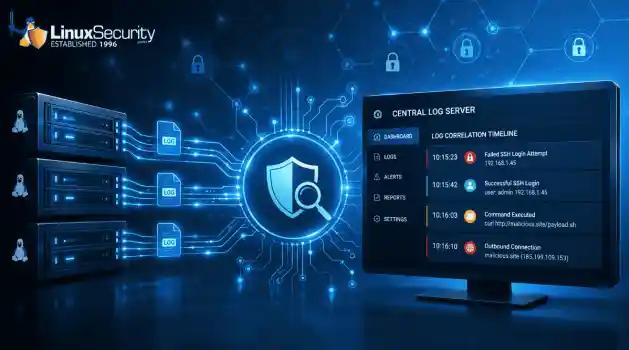
threat detection system monitoring For small security and IT teams, the "enterprise" dream of a fully automated SIEM often feels like a distant luxury. It’s a vision built on massive budgets and dedicated engineering teams—things that, frankly, most of us don't have. But here is the reality: you don’t need a six-figure platform to maintain a secure environment. . Linux systems are, by design, incredibly verbose. Every time a user authenticates, a process executes, or a configuration file changes, your system creates a record of...
Jul 17, 2026
How to Learn Tips and Tricksnetwork security centralized logging
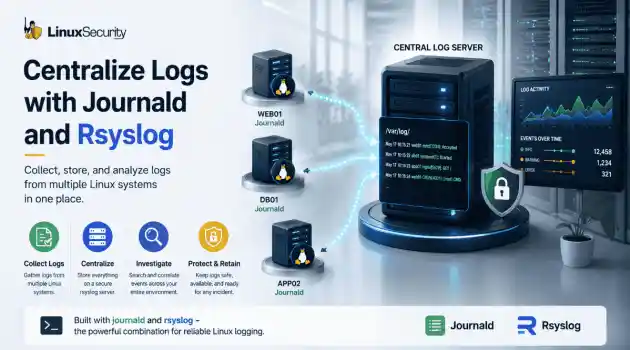
network security centralized logging Linux systems generate a steady stream of authentication, service, kernel, and application logs. On most systems, those logs never leave the machine that created them. If you're responsible for ten or twenty servers, that means checking each one separately. If one disappears before you can investigate it, its logs may disappear with it. Centralized logging solves that by sending log messages to another server as they're created. Instead of searching every machine, you have one place to review...
Jul 15, 2026
 Refine HOWTOs
X Clear Filters
Get the latest News and Insights
Get the latest Linux and open source security news straight to your inbox.
Community Poll
Should Linux servers automatically install security updates?
Loading...
Explore Latest Linux Security HOWTOs
We found 0 articles for you...
163
 security advisoryserverubuntu
How to Install and Secure MariaDB on Ubuntu 24.04
On Ubuntu 24.04, it doesn’t take much to get MariaDB running. Update the system first so the packages are current. Then install the server with apt install mariadb-server . Once it’s in place, check that the service came up cleanly. To lock it down, run mysql_secure_installation — that’s where you strip out the defaults attackers love to find. . This tutorial explains how to install MariaDB on Ubuntu and secure the configuration so it’s ready for real-world use. You’ll learn how to: Update package indexes before installation Install MariaDB with the apt install mariadb command Check the service status and enable it at boot Run mysql_secure_installation to handle the defaults that leave a fresh install exposed — the test database, anonymous accounts, and remote root logins. Once those are gone, the system is far less attractive to attackers. Installing MariaDB on Ubuntu 24.04 On Ubuntu 24.04, the installation is straightforward. These steps show how to install MariaDB on Ubuntu systems cleanly and securely. Update the package lists, install the server package, and confirm the service is running. The last step is securing the defaults — removing test databases, anonymous accounts, and remote root access — so the system isn’t left exposed. Done in this order, MariaDB installs cleanly and is ready for real workloads. Update Package Indexes Before installing MariaDB, refresh the package indexes so Ubuntu pulls the latest information about software packages: sudo apt update This command only updates package lists; it doesn’t install or upgrade anything. Most administrators also follow with: sudo apt upgrade -y Running an upgrade at this stage keeps the system current and avoids dependency issues when you install MariaDB. Install MariaDB After updating the package indexes, bring in MariaDB with: sudo apt install mariadb-server -y This installs the server package and its dependencies in one step. During setup, you may beasked for confirmation; press “Y” to continue. That single command installs the server and its dependencies. Many admins shorthand this as apt install mariadb when searching for the right syntax. If you’ve used MySQL before, note that mariadb install ubuntu works the same way — it’s designed as a drop-in replacement. Ubuntu 24.04’s default repositories provide MariaDB 10.11 (the current long-term support release). If you need MariaDB 11.x features, add the official MariaDB APT repository — but confirm it supports Ubuntu 24.04 and is production-ready. MariaDB was built as a fork of MySQL and remains fully compatible. In most cases, it can replace MySQL directly without breaking applications that rely on it. Check MariaDB Status and Enable Auto-Start After installing MariaDB, confirm that the service is running: sudo systemctl status mariadb If the output shows the service as active, enable it to start automatically on boot: sudo systemctl enable mariadb For another quick check, run mariadb --version to confirm the installed version, or connect directly with sudo mariadb . Both verify that the server is installed and working properly. With the service confirmed, move on to securing the installation. Secure the Installation Run the secure installation script to close off the defaults that aren’t safe for production: sudo mysql_secure_installation The script covers the basics. It sets a root password, removes anonymous accounts, disables remote root login, drops the test database, and reloads the privilege tables. Each step reduces risk and tightens the configuration. On Ubuntu, the root account usually uses Unix socket authentication, meaning sudo mariadb logs you in without a password. If you only manage MariaDB locally, socket authentication is safe and often easiest. If you plan to connect remotely as root or through tools that require password-based login, switch to mysql_native_password and set a strong password: ALTER USER'root'@'localhost' IDENTIFIED VIA mysql_native_password USING 'your_strong_password'; Setting a root password is useful if you later change authentication methods or allow remote access. Anonymous accounts should never remain in place. They let anyone connect without credentials. The same goes for the test database — it’s open to all users by default and should always be removed. Remote root logins are another weak point. Unless there’s a clear need for remote administration, keep them disabled. When the script finishes, the privilege tables reload and the changes apply right away. The details may differ between environments, but the goal stays the same: reduce exposure and stop unwanted access. Common Questions About MariaDB on Ubuntu Even with the basics covered, a few questions often come up when installing and securing MariaDB. Can MariaDB encrypt data? Yes. MariaDB supports column-level encryption and tablespace/data-at-rest encryption (often called TDE). Availability depends on the build and version — in community editions, some features are limited. Many admins rely on full tablespace encryption when supported, while others use OS-level or disk encryption (e.g. LUKS) if TDE isn’t available. How do I upgrade MariaDB? On Ubuntu, keep MariaDB patched with: sudo apt update && sudo apt upgrade -y This brings in security and point releases. For major upgrades (e.g. 10.x → 11.x), you’ll need to add the MariaDB APT repository and follow the official upgrade steps — these are not always seamless and should be staged and tested first. What’s the best way to back up a MariaDB database? For small setups, mysqldump is quick and dependable. It dumps everything into a file you can restore anywhere. Larger environments run MariaDB’s native backup utilities instead, which handle incremental and full copies without dragging performance down. The tool doesn’t matter as much as the process. Test the backups. A file that’s never been restored isn’ta backup — it’s just a copy. Where can I find more details on MariaDB? The official MariaDB documentation has everything from basic configuration to performance tuning and advanced security. It’s the reference most admins keep open when they’re running MariaDB in production. Final Thoughts: Install and Secure MariaDB on Ubuntu 24.04 MariaDB installs cleanly on Ubuntu 24.04 with apt install mariadb-server , but the real work is in what follows. Updating packages, checking the service, and running the secure installation script take away the weak defaults that make a fresh database easy to target. Most admins will be fine with 10.11 from Ubuntu’s repositories if you need 11.x features, use the official MariaDB repo. Whatever the version, don’t skip the basics: patch the system, test your backups, and review configuration against your environment. Set up this way, MariaDB isn’t just running — it’s hardened enough to handle production or development without leaving obvious gaps. . This tutorial explains how to install MariaDB on Ubuntu and secure the configuration so it’s ready. ubuntu, doesn’t, mariadb, running, update, system, first, packa. . MaK Ulac
 Sep 30, 2025
•
Sep 30, 2025
• How to Secure My Webserver
166
 configurationubuntudatabase
Step-by-Step Guide To Install And Configure MariaDB On Ubuntu 22.04
MariaDB, a fork of MySQL, is a popular database widely used by organizations and enterprises online. Here's how you can install it on Ubuntu. . MariaDB is a widely used database in Linux systems. In this guide, you will explore how to install the database on Ubuntu 22.04 with the help of a few easy-to-follow commands. Once you've installed and configured MariaDB, you will learn how to interact with it through the MariaDB command line. In the end, you will also see a command to uninstall the database from Ubuntu. . Follow this step-by-step guide to easily install and configure MariaDB on Ubuntu 22.04, ensuring a smooth setup and optimal performance. Install MariaDB, Ubuntu Database, Linux Database Setup. . Brittany Day
Dec 14, 2022
•
How to Learn Tips and Tricks

166
configurationdatabaselinuxDeploy Microsoft SQL Server in Docker On Linux Efficiently
Learn how to configure and connect to a Microsoft SQL Server Database on a Linux machine using Docker containers. . Microsoft SQL Server is a robust and widely used database management system (DBMS). Traditionally, SQL Server databases have been set up on dedicated servers or virtual machines, but Docker has changed all that. Let's take a look at how you can set up a SQL Server instance on a Linux container with Docker. . Discover the process of setting up and accessing Microsoft SQL Server on a Linux environment utilizing Docker containers in an optimal and streamlined manner.. Docker SQL Server, Linux Database Setup, Microsoft SQL Configuration, SQL Server on Linux. . Brittany Day
May 11, 2022
•
How to Learn Tips and Tricks
166
 data protectionmysqlhardening
Essential Techniques for Safeguarding Your MySQL Database Systems
Secure your MySQL database server by following these easy tips. . MySQL is one of the most popular relational database management systems that is a jackpot for attackers trying to sneak into the databases. A newly-installed MySQL database server can have many vulnerabilities and loopholes. Since data security is of great importance, it's mandatory to understand every aspect of MySQL security. This article focuses on the auditing and security of your MySQL database and provides nine tips to harden its security. . Fortify the integrity of your MySQL database by implementing these vital strategies to reduce vulnerabilities and safeguard your information.. MySQL Security Tips, Database Hardening, Data Protection Techniques. . Brittany Day
Mar 03, 2022
•
How to Learn Tips and Tricks
166
 security advisorymysqluser management
Essential Steps For Securing MySQL Installation And Management
Several steps can be taken to secure the default mysql installation.. Introduction mysql is a free DBMS for many platforms. When you install it there are various unnecessary features enabled that should be disabled to enhance security. Root Password When you first install mysql , be it from a source tarball or from a RPM, you must set the 'root' password. This is the password that can be used to control all of the tables, mysql startup/shutdown, etc. To do this type the command; mysqladmin -u root password 'new-password' Default Users and Tables mysql also ships with two default users and default 'test' tables. The default users are for connecting to the DBMS without specifying a password, so removing these users is obviously a very good security measure. There are also entries so that tables called or starting with 'test' can be world-writable. These should also be disabled for obvious reasons. To do so, you must first go into the DBMS: mysql -uroot -p mysql Enter password: Reading table information for completion of table and column names You can turn off this feature to get a quicker startup with -A Welcome to the MySQL monitor. Commands end with ; or g. Your MySQL connection id is 1 to server version: 3.22.32 Type 'help' for help. Now we execute the two commands to delete the desired entries: mysql> DELETE FROM user WHERE User = ''; mysql> DELETE FROM db WHERE Host = '%'; Disable TCP Networking If the database only needs to be accessable from the local machine then you should disable TCP networking. By doing so you eliminate the possiblity of people connecting to your daemon without an account on the machine the daemon is running on. To do this you must edit the file 'safe_mysqld', which is a script file that starts up the daemon for you. It may be in '/usr/bin' or '/usr/local/bin'. Once you locate the file change the following lines (approximate line numbers are included, but they may vary from version to version) byincluding the --skip-networking flag: 119: --skip-locking > > $err_log 2> &1 119: --skip-networking --skip-locking > > $err_log 2> &1 122: --skip-locking "$@" > > $err_log 2> &1 122: --skip-networking --skip-locking "$@" > > $err_log 2> &1 Resources General MySQL Security The MySQL access privilege system . Follow key practices to protect your MySQL setup, enhance account administration, and turn off unused functionalities.. MySQL Security, Database Management, User Access Control. . Anthony Pell
Aug 24, 2000
•
How to Learn Tips and Tricks

Get the latest News and Insights
Get the latest Linux and open source security news straight to your inbox.
Community Poll
Should Linux servers automatically install security updates?
Search Topics
Powered By

Linux Security - Your source for Top Linux News, Advisories, HOWTOs and Feature Releases
QUICK LINKS
subscribe to newsletters!
Like staying secure? So do we.
Sign up for updates, tips, and alerts!