Overly broad permissions can turn one compromised account into a much larger security problem. Learn how to reduce unnecessary access, review privileges, and apply least privilege across modern Linux systems. Review Linux Privileges×


Stay Ahead With Linux Security HOWTOs
How to Secure My Network incident response network traffic
incident response network traffic Imagine logging into a production Linux server for routine maintenance and noticing background network activity connecting to an unfamiliar external IP address. Your endpoint protection agent is not popping up with an alert, there is no service failure, and on the surface, the system appears to be running normally. . For Linux administrators and security teams, such a situation is a moment of truth: Is this activity a sign of active intrusion or just a tool that was overlooked in the course of...
 Jul 21, 2026
How to Harden My Filesystemsystem hardening open source security
system hardening open source security We all spend a lot of time defending our systems from external threats, but the amount of damage an attacker can cause often depends on what happens after they get in. A single compromised account doesn't always lead to a major incident. The real danger begins when that account has far more access than it actually needs. . That's exactly what the principle of least privilege is designed to prevent. By limiting users, services, and applications to only the permissions required for their jobs,...
Jul 20, 2026

How to Learn Tips and Tricksthreat detection system monitoring
threat detection system monitoring For small security and IT teams, the "enterprise" dream of a fully automated SIEM often feels like a distant luxury. It’s a vision built on massive budgets and dedicated engineering teams—things that, frankly, most of us don't have. But here is the reality: you don’t need a six-figure platform to maintain a secure environment. . Linux systems are, by design, incredibly verbose. Every time a user authenticates, a process executes, or a configuration file changes, your system creates a record of...
Jul 17, 2026
How to Learn Tips and Tricksnetwork security centralized logging
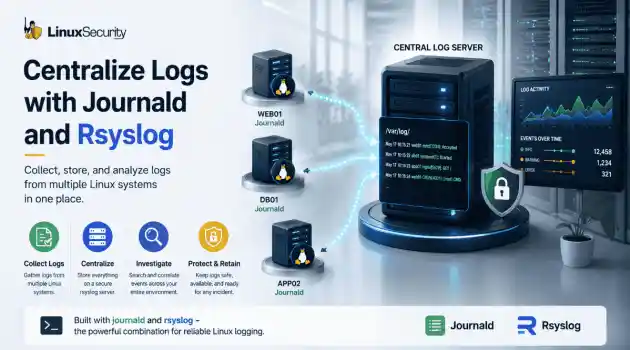
network security centralized logging Linux systems generate a steady stream of authentication, service, kernel, and application logs. On most systems, those logs never leave the machine that created them. If you're responsible for ten or twenty servers, that means checking each one separately. If one disappears before you can investigate it, its logs may disappear with it. Centralized logging solves that by sending log messages to another server as they're created. Instead of searching every machine, you have one place to review...
Jul 15, 2026
How to Secure My Networksecurity advisory audit
security advisory audit When you’re digging through an incident, your logs are the only thing you can actually trust. The problem is, attackers know that too. If someone gets root on your server, their first move is almost always to delete the evidence and cover their tracks. . If you aren't actively protecting your logs, you're basically flying blind the second a breach happens. It’s a miserable feeling to realize you have no idea what an attacker did because they wiped the logs before you even got there. In this...
Jul 11, 2026
 Refine HOWTOs
X Clear Filters
Get the latest News and Insights
Get the latest Linux and open source security news straight to your inbox.
Community Poll
Should Linux servers automatically install security updates?
Loading...
Explore Latest Linux Security HOWTOs
We found 30 articles for you...
161
 firewallnetworkingpacket filtering
Packet Filtering Overview in Linux Firewalls for Effective Security
A packet filtering firewall gives Linux a simple way to sort traffic at the packet level. The kernel reads the header fields, checks them against its rules, and makes a decision that stays consistent under load. The logic isn’t fancy, but it shapes how the rest of the system handles new connections. . The process is predictable. Packets arrive, their basic fields get inspected, and the filtering layer decides whether they move forward or stop right there. No payload review. No protocol deep dive. Just enough structure for the system to keep its footing. This article lays out that foundation so beginners can see how the filtering layer actually works inside Linux. Once the basic packet path is clear, the behavior of higher-level firewall tools becomes easier to understand, even when the setup remains simple. What Is Packet Filtering? Packet filtering is a basic check the system performs on every packet that reaches the kernel. A packet filtering firewall focuses on the packet header. That header is a small block of fields that the packet carries everywhere. It holds the source and destination addresses. It notes the protocol. It records the ports tied to the exchange, and that tiny set of values is enough for Linux to sort traffic quickly without reaching deeper layers. These fields give the system the minimum it needs to sort traffic. Nothing more. The idea grew out of early network equipment that had to make quick decisions with limited resources. The pattern still holds. Internet background noise shows the same thing every day. Port scans, stray connection attempts, and misrouted packets all carry enough header data for the firewall to judge them without reading the payload. The kernel leans on that predictability. The decision itself follows a straight line. The packet arrives. The header fields are compared to the rules in order. The first rule that fits determines what happens next. Some packets move forward. Some stop immediately. It is the simplest filtering model Linux uses,and it sets the base layer for everything that comes after, including more advanced stateful checks. What a Packet Looks Like A packet filtering firewall only sees what is in the packet header. Everything else is invisible at this stage. Breaking the header down makes the filtering step easier to understand. IP header fields the firewall can read: Source address Destination address Protocol value Basic routing and lifetime fields These pieces tell the kernel where the traffic came from and what type of packet it is. Nothing in this layer describes the application itself. It is all structural data that the system can trust. TCP header fields: Source and destination ports Sequence and acknowledgment numbers Flags like SYN, ACK, FIN TCP gives the firewall a sense of how a connection is forming. A SYN flag signals a new attempt. A FIN signals a close. These are simple indicators, not full context, but they help the kernel understand the packet’s place in a flow. UDP header fields: Source and destination ports Length Checksum UDP offers less information than TCP. The firewall still gets ports and protocols, which is usually enough for basic filtering, but there is no concept of connection steps. Ports in plain terms: Port 443 commonly maps to encrypted web traffic Port 22 commonly maps to SSH The firewall treats these as numbers, not guarantees Ports give a hint about the service behind the packet. The system reads them as numeric fields, and no more. Flags in plain terms: A SYN marks the start of a TCP connection An ACK signals progress in the exchange A FIN marks the close Flags help the kernel place a packet in time. They don’t reveal intent or payload, but they shape the early decision. All Linux firewall tools interpret these same fields. Interfaces differ, but the packet does not. Even early questions about choosing a Linux firewall eventually circle back to this structurebecause the filtering decision begins and ends with what the header exposes. How Linux Evaluates Packets Linux follows a steady evaluation path inside the kernel. Packets move through a small set of checkpoints, and each checkpoint gives the system a chance to make a filtering decision before the packet reaches anything higher in the stack. Packet Flow Into Netfilter Every packet hits Netfilter as soon as the kernel receives it. Netfilter assigns the packet to a chain based on direction, which keeps local traffic, outbound traffic, and transit traffic from mixing together in the filtering path. Linux Firewall Chains Explained Linux relies on three core chains for packet evaluation. INPUT checks packets headed to the local machine. OUTPUT handles packets generated by the host. FORWARD governs packets passing through the system. These chains form the backbone of Linux filtering behavior. Linux Firewall Tables Overview Rules sit inside tables, each built for a specific task. The filter table drives allow or drop decisions. NAT and other tables exist, but beginners mainly need to know that packets only touch the tables relevant to their path. The structure keeps evaluation predictable, a pattern reflected across major Linux distributions, including the Red Hat packet filtering documentation , which outlines the same table-driven model. How Netfilter Makes Decisions Netfilter processes rules in order. The kernel reads from the top of the chain, stops at the first rule that matches, and applies that result. The rest of the chain never runs. This simple flow explains why two similar rules can yield different outcomes. Why Firewall Rule Order Matters A broad rule placed early can catch traffic before a more specific rule even appears in the evaluation path. The kernel is only following its first-match logic, yet the effect can be surprising. This is where topics like firewall rule ordering basics become useful for understanding real behavior. How Packet Evaluation Fits theFiltering Model All of these decision points rely on the same header fields described earlier. The chains and tables simply give Linux a structure for reading them. Once the packet’s path is clear, the rest of the filtering model becomes easier to map, even when different firewall tools present it in their own style. Stateful Packet Filtering and Connection Tracking Stateful filtering expanded what Linux could do with packet decisions. Instead of treating every packet as a separate event, the system tracks how a connection forms and uses that memory to guide later decisions. It is a small shift in logic that changes the whole filtering model. What Stateful Packet Filtering Means Stateful packet filtering keeps a record of traffic that has already been approved. A new packet is marked as the start of a connection. Follow-up packets are marked as established. Related packets fall into a secondary category that still fits the flow. The firewall can make better judgments because it knows where the packet sits in the conversation. What Connection Tracking Actually Does Connection tracking holds a lightweight entry for each active connection. It does not store payloads or application data. It just records enough detail for the kernel to match replies to earlier packets. This keeps the evaluation orderly. Tools aimed at beginners rely on this for predictable behavior, and topics like UFW basics highlight how the heavy lifting happens behind the scenes. Why Statefulness Matters in Linux Filtering Without statefulness, the firewall would need broad rules to avoid blocking normal traffic. With it, the system sees which packets belong to a valid exchange and which do not. Established traffic moves with minimal checks. New traffic gets a closer look. It is one of the core steps that moved Linux away from older, strictly stateless models. How nftables Evaluates Packets nftables reorganized how Linux handles filtering decisions. The firewall still checks packet headers the same way, butthe path is cleaner, and the evaluation work sits closer to the packet flow. This keeps the packet filtering model consistent across tools. Key parts of the nftables model: Hooks that follow the packet path: Hooks sit at points where the kernel already processes traffic. When a packet reaches one of these points, nftables runs the rules tied to that hook. It keeps the evaluation aligned with the packet’s direction without adding extra steps. Efficient matching structures: nftables uses sets that let the kernel match addresses and ports quickly. This avoids long walks through rule lists and holds up well when traffic increases or when rulesets grow larger. Simplified filtering logic: nftables keeps decisions in fewer places. Tables map cleanly to hooks, and each rule has a focused job. The layout is easier to read and makes the evaluation path more transparent. These shifts don’t change the underlying ideas. Linux still reads the header, checks the state, and makes a decision. For someone working through the firewall troubleshooting steps , it helps to know that nftables reorganizes the filtering path without changing the core ideas. Why Packet Filtering Matters in Linux Firewalling Packet filtering matters because it gives the kernel a stable first decision on every packet, and that early verdict shapes how the rest of the firewall stack behaves. It also forms a big part of the groundwork people learn when they first look into Linux firewall basics , since most later behavior traces back to this early check. It underpins the basics of Linux firewalls. The initial allow or drop decision frames the rest of the packet’s path. Once that call is made, later components build on it rather than re-evaluating the packet from scratch. It keeps higher-level tools consistent. UFW stays predictable because the kernel already marks traffic as new or established. nftables benefits from the same foundation. Its cleaner structure still depends on the packet’s earliestevaluation inside the kernel. It shapes the troubleshooting pattern. When traffic behaves in unexpected ways, analysts often start with this first checkpoint. The decisions made here ripple through every later stage, and workflows described in firewall troubleshooting steps eventually point back to this point. It supports both inbound and outbound control. The same header checks drive decisions in both directions. Outbound filtering uses the same logic as inbound control, and concepts explored in Egress filtering continue from that shared mechanism. Packet filtering ends up as the quiet anchor that keeps Linux firewall behavior consistent, even as rule sets and tools evolve around it. Common Misunderstandings About Packet Filtering A few misunderstandings show up early when people start looking at how Linux evaluates packets. Much of it comes from expecting a packet filtering firewall to see more than it actually can or from mixing up how different layers of the system behave. Assuming the firewall inspects full payloads: Packet filtering only reads the header. The contents stay untouched at this stage. Mixing up stateless checks with stateful behavior: The firewall tracks established traffic, but not every decision comes from connection state. The distinction is easy to blur. Expecting rules to run in the wrong chain: Packets follow a specific path. If traffic never reaches a chain, its rules never apply. Thinking the firewall sees more than the header provides: The system makes its call based on fields like addresses, ports, and protocols. Anything outside that view sits out of reach. Clearing these points early keeps the filtering model steady before moving into more advanced pieces of the firewall stack. Packet Filtering Firewall FAQ A few questions come up often when people start learning how packet filtering works in Linux. Does packet filtering inspect full packets? No. It only reviews the header fields. The payload stays untouched in thisstage of the process. Is packet filtering the same as a firewall? It’s one part of a firewall. Packet filtering provides the first decision point, but higher layers build on that foundation. Do modern firewalls still use packet filtering? Yes. Even with newer designs, the header check remains the starting point for how Linux decides what to do with a packet. Where Packet Filtering Fits in Your Overall Linux Firewall Knowledge Packet filtering sits at the base of Linux firewalling, and most of the system’s behavior traces back to this early inspection step. Once the packet’s path makes sense, the rest of the firewall stack settles into a clearer shape. Rule ordering starts to feel more predictable because you understand why the kernel reaches a decision when it does. Stateful checks, which build on the same packet flow, become easier to read once you see how new and established traffic forms at the header level. Even egress control and basic troubleshooting rely on this groundwork, since every later step depends on how the packet was first classified. Nothing in the next layer is more complicated. Each concept is just an extension of the logic introduced here, and the model holds up as the ruleset grows or the network gets louder. Packet filtering ends up being the foundation that keeps everything else steady. Once this layer makes sense, the rest of the firewall stack stops feeling unpredictable. . The process is predictable. Packets arrive, their basic fields get inspected, and the filtering laye. packet, filtering, firewall, gives, linux, simple, traffic, level, kernel. . MaK Ulac
 Dec 06, 2025
•
Dec 06, 2025
• How to Secure My Firewall
161
 firewallsecurity integrationfirewall techniques
Introduction to Troubleshooting Linux Firewalls (2026 Guide)
Firewall problems usually come from small mistakes that hide in plain sight. A rule tied to the wrong interface, a default policy no one noticed, or an old setting that never actually applied. Once you’ve run into a few of these, the pattern starts to show up earlier. . New admins hit the same trouble points. A service looks open, but acts closed, outbound traffic stalls without explanation, or connectivity flips between working and broken. The common assumption is that if a rule is present, it must be active, but Linux does not care about intention. It evaluates context, order, and state, and it follows the exact Linux firewall rules you give it. This guide stays on real behavior. You watch what packets do, check how the host interprets them, and confirm whether your Linux firewall settings line up with the Linux firewall configuration you think you deployed. Step 1: Make Sure the Firewall Is Actually Running A lot of “firewall issues” start with a service that never entered enforcement. You see a full rule list, everything looks aligned, yet packets move through untouched. This check keeps you from debugging behavior that the system never applied. A quick workflow keeps it simple: Check the service state with systemctl status . You want a clean running process. Anything inactive, failed, or stuck in a reload loop means the rules you’re testing aren’t in play. Some tools load rules even when enforcement is off. They accept new entries, display them back, and still leave the kernel using defaults. Restart and reload aren’t interchangeable. Reloading refreshes tables in place. Restarting resets the entire engine. If the service failed earlier, reload won’t recover it. Check the service first. Otherwise, your test results mix real traffic with assumptions that don’t match the system state. If the firewall isn’t active, your Linux firewall settings stay cosmetic. Don’t treat the Linux firewall configuration as live until the serviceactually enforces it. Step 2: Check Logs for Drops, Rejects, and Unexpected Behavior Logs show what happened to the packet, not what you expected it to do. When traffic disappears with no obvious pattern, the log is where you confirm whether it touched a chain, got filtered early, or never reached the host at all. Most systems surface firewall-related messages through the journal or kernel logs . You scan for DROP, REJECT, or odd interface paths. After enough troubleshooting sessions with Linux firewall rules, you start to trust these traces more than the rule list because they reveal which decision ran first. Drops give you context about the path. Rejects send something back to the client, which is useful during controlled tests. Silent drops take longer because the client sees nothing. And if no log entry appears at all, the packet was either filtered upstream or logging isn’t active for that segment. When packets keep jumping past the rule you expect, the issue is usually order or policy. The behavior makes more sense once you walk through packet filtering basics and remember how each chain short-circuits on the first match. Log Snapshot: Why the Rule Didn’t Apply A quick look at how the log exposes the real match. Log snippet: DROP IN=eth0 SRC=192.168.1.50 DST=192.168.1.10 PROTO=TCP DPT=80 Cause: A drop rule higher in the chain matches first. The allow rule never runs. Step 3: Confirm Rule Order and Matching Behavior Most broken rules come from order, not syntax. Linux reads a chain from the top, matches the first condition that fits, and stops. Once you’ve debugged a few of these, you start noticing that the rule people think should fire sits too low in the list to matter. A clean way to think through it: A broad DROP near the top wipes out everything that follows. A specific allow only works if it appears before anything that could catch the same traffic. Old entries left above new ones often decide the entire path. Rewriting a rule rarelyfixes anything if it sits in the wrong place. Reordering almost always does. When you’ve looked at enough real cases, you stop trusting intention and start trusting position. The chain shows you which rule the kernel will hit first, long before you check the details of any single entry. Once you line up the sequence, the logic becomes predictable again. Watching the chain flow this way also helps you compare what you meant to apply with the Linux firewall settings that are actually in effect. You see it especially clearly when you trace behavior against the Linux firewall rules listed on the system. The mismatch between order and expectation explains most of the confusion, and understanding that flow connects naturally with firewall rule ordering basics . Step 4: Inspect Default Policies Before You Touch Anything Else Default policies set the baseline . They sit underneath every rule you write and decide what happens when nothing else matches. New users skip this check because the rule list looks fine, but the baseline is quietly set to DROP. After you run into this a few times, you start checking the defaults before adding anything new. Defaults create symptoms that feel inconsistent. You allow a service, but the client still times out. You open a port, but traffic never reaches the end of the chain. The rules look correct, yet the behavior stays the same. That pattern almost always points at a policy issue, not a rule issue. The policies on INPUT, OUTPUT, and FORWARD work as a final decision. If no rule claims the packet, the policy acts instead. When a default is DROP, you can add allow entries all afternoon and still watch packets fall through untouched. Reading the Linux firewall configuration at this point tells you whether the system will ever reach the logic you expect. Once the baseline is right, the rest of the Linux firewall rules start behaving the way you intended. Policy Check: The Default That Overrode the Rules A user kept adding allow rules and still saw drops.Nothing was wrong with the entries. The default INPUT policy was set to DROP, so no traffic ever reached the new rules. Setting it to ACCEPT temporarily made the flow visible again, and the intended behavior appeared as soon as the baseline changed. Step 5: Check Interfaces and Zone Assignments Interface mistakes show up almost as often as ordering mistakes. The packet enters on one path, but the rule sits on another. Once you’ve seen it happen a few times, you start checking the incoming interface before you question anything else in the chain. Firewalld adds another layer with zones. An allow rule tied to the public zone won’t help if the interface is bound to internal. Multiple NICs create the same pattern. A rule on eth0 never fires if the traffic arrives through eno1. VPN tunnels and virtual adapters from containers add more surfaces where packets can show up in places you didn’t plan for. The quickest way to sort this out is to compare the interface the packet actually used with the interface the rule expects. If they don’t match, the rule never had a chance. This is also where your Linux firewall settings show gaps that are easy to overlook until you trace the packet’s exact path. Step 6: Test Linux Firewall Connectivity A structured path keeps troubleshooting clean. You start at the host, then move outward. Each stage tells you how far the packet gets, and the order helps you see where the flow breaks. Work through the checks in order: Test on the host If the service responds locally, the process is running and listening. Test from the LAN A failure here usually points to ingress filtering, an interface mismatch, or a rule that only allows loopback traffic. Test from the WAN This separates internal reachability from true external access. If the LAN test works but the WAN test fails, the block often sits closer to the perimeter. When the Failure Is Outbound Inbound tests only show one direction. Sometimes the service is reachable, but thehost itself cannot contact external destinations. Local checks pass. Internal checks pass—requests leaving the host time out or disappear on the way out. Outbound traffic follows a different decision path, and this is where the basic idea behind egress filtering helps you understand why the two directions behave differently. Outbound rules can block traffic after it leaves the application, even if every inbound check looks clean. Tie the results back to the Linux firewall rules you expect to match. Once you align the failure direction with the rule path, the issue usually becomes obvious. Connectivity Check: Local Works, LAN Fails A user can reach a service on localhost but not from the LAN. The application is running and responds internally. External traffic never reaches it. The firewall allows local traffic but blocks network requests. Checking ingress rules and confirming interface bindings quickly exposes the issue. Step 7: When the Problem Is the Firewall Tool Itself Sometimes the issue isn’t the rule, the policy, or the interface. It’s the tool. Linux has several layers that manage packet filtering, and they don’t always work together cleanly. After you run into a few of these conflicts, you start checking which layer owns the ruleset before touching anything else. Different tools write to the same underlying system. Some expect full control. Others only update parts of the ruleset. Manual nftables changes can look correct, but they disappear the moment another tool reloads. Old rules also linger on systems that have been reconfigured several times, which makes the final behavior hard to trust at first glance. You see the conflicts in small ways. A rule applies, but the traffic still ignores it. A reload brings back an older state. The system looks active, but the behavior reflects a different layer entirely. Certain tools manage their own view of the ruleset. UFW is one example, and its behavior is shaped by the patterns described in UFW basics , where simple,high-level commands generate a complete underlying ruleset that can override manual changes. Once you confirm which component owns the rules, the rest of the troubleshooting becomes more predictable. Tool Conflict: One Layer Overriding Another A user edits nftables rules directly, but a higher-level tool overwrites them on reload. The fix is not to adjust the manual rule. The fix is to disable one tool before using another, so only a single layer manages the active ruleset. It is the same type of overlap you deal with when choosing a Linux firewall , where multiple tools shape the final ruleset. Linux Firewall Troubleshooting Table (Quick Reference) A quick way to see patterns as they come up. Most issues fall into a few familiar shapes, and once you know where each one sits in the flow, the fix becomes easier to spot. Symptom What to Check Likely Cause Step Firewall rules are set, but nothing changes Service state, active ruleset Firewall is not running or not enforcing rules Step 1 Traffic keeps getting dropped even though the Linux firewall rule looks correct Logs, DROP or REJECT entries A different rule matched earlier in the chain Step 2 Port shows as allowed, but the service is still unreachable Rule order A broad DROP rule placed above the allow rule Step 3 Added multiple allow rules, but connections still fail Default policies INPUT, OUTPUT, or FORWARD policy set to DROP Step 4 Service works on the server, but other devices cannot reach it Interface bindings, zone assignment The rule applied to the wrong network interface or zone Step 5 Local and LAN access work, but external access never connects Outbound path Outbound filtering affecting the return or forward path Step 6 Firewall changes work until reload, then reset or behave differently Active firewall tools Another firewall tool overwrites or rebuilds the ruleset Step 7 These checks help you compare the behavior you see with the Linux firewall settings that are actually in effect. Example: Diagnosing a “Rule Exists but Still Blocked” Issue A full walk-through helps you see how the pieces work together. You move through each layer the same way you would in a real troubleshooting session and let the behavior tell you where the mismatch sits. Symptom Port 443 is allowed, but external clients still cannot connect to the service. Step-by-step diagnosis Firewall active, confirmed: The service is running, and the ruleset is loaded, so the issue is not an inactive firewall. Logs show DROP on port 443: A DROP entry confirms the packet reached the host and hit a filter before any allow rule. Allow rule sits below a broad DROP: The allow rule never matched. The chain hit the broader rule first. The default policy is set to DROP: Anything reaching the end of the chain is dropped by the baseline decision. Interface mismatch: The allow rule targeted eth0, but the traffic arrived through ens3. The rule applied to the wrong interface. After corrections, connectivity restored: Once the rule order, default policy, and interface binding were adjusted, the service became reachable from external clients. Each layer explains a different part of the outcome. Checking the Linux firewall configuration reveals the baseline. Tracing the Linux firewall rules shows which decision was made first. When these pieces finally match the Linux firewall settings applied to the service, the flow becomes predictable, and the connection succeeds. Final Thoughts: Understanding Linux Firewalls Makes Troubleshooting Easier Troubleshooting gets easier once you understand the small patterns that shape how a firewall behaves. You start noticing the same issues comefrom the same places, and the flow makes more sense every time you walk through it. The goal here was to show how to diagnose what is happening in front of you, not to teach configuration or theory. If you want a clearer picture of how these patterns form, it helps to step back and look at the fundamentals that sit underneath them. That foundation is the focus of Linux firewall basics , and it ties directly into the way you read decisions, match entries, and make sense of the packet path. The behavior you observe always comes from the Linux firewall configuration on the system and the Linux firewall rules that actually run. Once those pieces line up in your head, most troubleshooting becomes a matter of following the packet and watching where it turns. . New admins hit the same trouble points. A service looks open, but acts closed, outbound traff. firewall, problems, usually, small, mistakes, plain, sight. . Mak Ulac
Dec 04, 2025
•
How to Secure My Firewall

161
 network securityfirewallnetworking
Key Considerations for Selecting a Linux Firewall Solution (Understanding the Types of Firewalls)
Choosing a firewall on Linux looks simple until you try to match a tool to a real environment. Most teams already understand the basic types of firewalls, but the gap between a conceptual model and day-to-day usability can be wider than expected. A tool that feels lightweight on a workstation can become restrictive on a production host. Another that works well in distributed environments might be overkill when all you need is a small ruleset and predictable behavior. . Linux offers several mature options, each shaped by different assumptions about how administrators work. UFW favors clarity. iptables reflects years of legacy deployments. nftables streamlines policy design and replaces older components. firewalld tries to make large or changing systems easier to manage. None is universally the best Linux firewall, but each is the best fit for someone. This guide focuses on how to evaluate those differences without getting buried in packet flow charts or rule syntax. Our goal here is simpler. Identify what matters when selecting a firewall, explain how these tools differ in practice, and give you enough clarity to choose the one that aligns with your environment, your workflow, and your tolerance for complexity. What Do Firewalls Do in Linux? A firewall on Linux has one job. It decides what gets in, what goes out, and what stays on the cutting room floor. The mechanics vary across the different types of firewalls, but the outcome is the same. You are defining the boundaries of a system and the conditions under which traffic is allowed to cross them. Most teams working with Linux already understand this, yet it helps to reset the frame before comparing tools. A firewall is not a cure-all, and it is not a substitute for sound architecture. It is a policy enforcement point that happens to sit very close to the operating system. The value comes from its consistency. If the rules are clear and the structure is predictable, the host behaves the way you expect. Overview of the Main Linux FirewallOptions Most administrators choose between four tools when they evaluate the best Linux firewall for a given environment. The differences are not subtle, but they are also not complicated once you look at how each one expects you to work. The goal here is not to walk through syntax or rule construction. It is to explain how each option approaches policy control so you can match the tool to the way your team operates. UFW: A Simple Firewall Option for Beginners UFW was designed for people who want to express intent without wrestling with low-level primitives. It offers a clean, high-level interface that makes sense in smaller environments, especially when the rule set is short and the workflow is predictable. Many administrators use it on laptops, developer machines, and lightweight servers because it removes friction without hiding too much. Anyone who needs a quick refresher on its behavior can use the UFW basics guide available at linuxsecurity.com. iptables: A Legacy Linux Firewall Framework iptables still appears everywhere. Long-running fleets, older distributions, and embedded systems rely on it because it has been the default for so long. It remains a stable choice when compatibility matters more than modernization. The tradeoff is that it mirrors the structure of the underlying packet filter, so it expects you to understand how traffic moves through those chains. If you want to revisit the fundamentals behind that model, our article on packet filtering basics gives helpful context without diving into deep engineering detail. nftables: The Modern Successor for Linux Firewall Management nftables replaces several older components and introduces a cleaner rule model that better reflects how administrators think about policy. It reduces duplication, organizes logic more efficiently, and ties long-term maintenance to a single, consistent framework. Teams planning future deployments tend to favor it because it avoids the pitfalls that accumulated around legacy tooling. Beforeworking with it, many administrators find it useful to review material on rule structure and ordering. firewalld: A Zone-Based Firewall Manager for Dynamic Environments firewalld takes a service-oriented approach. Instead of writing rules directly, you work with zones and service definitions that can shift with the system. This approach fits hosts that change roles or sit in environments where network conditions vary. It also makes sense in data centers or virtualized platforms where interfaces and services do not stay static. When something behaves unexpectedly, troubleshooting often comes down to verifying which zone is active and how the service definitions map to the rule backend. Those who want to revisit common diagnostic steps can look at the firewall troubleshooting steps overview at linuxsecurity.com for context. Strengths and Weaknesses of Firewalls for Beginners When people compare the types of firewalls on Linux, they often get lost in syntax, even though the real differences show up in how these tools frame policy. Each one sets its own expectations for structure, clarity, and scale. Looking at those factors side by side helps you see why a tool may feel intuitive in one setting and awkward in another. Some firewalls focus on abstraction. UFW falls into that category. It presents intent through a simplified interface, which works well when your rules are short and the system does not change much. The advantage is speed. You can express policy without parsing long tables of chains or translating a decision into multiple rule entries. The tradeoff is that you have limited visibility into the underlying logic, which can matter later if you begin to stack more complex conditions. Others favor granularity. iptables is the clearest example. It exposes the structure of the packet filter directly, so your policy ends up expressed in a sequence of tightly scoped rules. This approach appeals to administrators who want to see every step of the decision path. It also scales in ways simpleinterfaces cannot, but it carries a cost. The more detailed the policy becomes, the harder it is to follow the flow unless you are already comfortable with the underlying model. Tools like nftables and firewalld sit between these extremes. nftables streamlines logic and reduces duplication, which helps when rulesets grow or when multiple teams maintain the same policy. firewalld organizes behavior through zones and services, which works well in changing environments where interfaces and requirements shift. Both tools reward administrators who value organization and long-term maintainability over step-by-step detail. Understanding these differences helps you set realistic expectations. A tool that feels accessible today might become restrictive when your environment changes. Another that seems complex at first might be the only option that handles the scale or clarity you need later. The next section gets into how to evaluate those factors when choosing the best Linux firewall for your situation. How Do I Choose the Right Linux Firewall? Selecting the best Linux firewall is less about feature lists and more about how each tool fits the way you already manage systems. Administrators rarely choose a firewall in isolation. They choose it in the context of their workflow, their operational habits, and the level of complexity they are willing to support long term. One of the simplest ways to narrow the field is to look at your comfort level with networking concepts. If you want high-level control without interpreting detailed rule structures, UFW usually feels natural. It gives you fast results and predictable behavior, which is why many teams use it on smaller servers and individual workstations. Your environment matters just as much. Servers with a static role often do fine with straightforward tools. Systems that shift between networks or services benefit from the zone-based model firewalld uses, since it adapts more easily when interfaces move or when new roles come online. In largerdeployments, especially those that span multiple hosts, nftables tends to stand out because it organizes policy in a cleaner way and avoids the duplication that creeps in with legacy tooling. Some administrators need more than simple allow or deny decisions. They want consistent outbound control or detailed filtering of egress traffic. If that is part of your threat model, you will want to factor it into your choice. If you want a clear explanation of how outbound control works, you can reference the Egress filtering basics guide at linuxsecurity.com. Maintenance is another practical consideration. Policies tend to grow over time. A ruleset that starts small can evolve into something dense after a few service additions or operational changes. If your team expects to revisit the firewall regularly, choose a tool that keeps rules readable as they expand. nftables and firewalld often age better in that respect, although the right choice still depends on how your team writes and reviews policy. No single tool solves every use case. The decision comes down to how much detail you want to manage, how often the system changes, and how you plan to maintain the rules over the life of the host. The goal is not to memorize internal mechanics. It is to choose the firewall that aligns with your environment and reduces the friction your team deals with day to day. Common Beginner Misunderstandings When Choosing Among Types of Firewalls People run into the same predictable issues when they compare the types of firewalls on Linux. Most of these misunderstandings come from expectations shaped by older deployments, half-remembered tutorials, or outdated advice. The most common patterns include: Thinking iptables is obsolete. nftables replaces several legacy components, but iptables is still everywhere. Teams keep it because the behavior is predictable and because migrations take time. Treating it as deprecated creates the wrong assumptions when you’re supporting long-running hosts. Assuming UFW isinsecure because it simplifies the interface. Its security posture comes from the policies you apply, not the level of abstraction. UFW remains popular on workstations and smaller servers because it reduces configuration drift without weakening control. Believing firewalld is only for servers or large deployments. Its zone-based structure helps on any host where interfaces or roles change. Many unexpected decisions come from the rule order rather than the tool itself. If you want a clearer picture of how ordering affects outcomes, see our firewall rule ordering basics guide. All of these misunderstandings share a pattern. They focus on the surface of the tool instead of the policy beneath it. Once the interaction between rules feels familiar, the differences among these firewalls become easier to interpret. Our Final Thoughts on What Matters Most When You Compare Linux Firewalls Most firewall decisions get easier once the core ideas feel familiar. All of the major Linux tools work from the same principles. They inspect traffic, compare it against the rules you define, and enforce a policy that reflects your expectations. The structure changes from tool to tool, but the intent stays constant. A clear understanding of those fundamentals is usually what prevents confusion later, especially when a system behaves in a way that does not match your first impression. If you want a closer look at how Linux evaluates traffic, you can explore our article on Linux firewall basics . This guide keeps the focus on selection rather than mechanics, which is usually the part that stalls teams. Once you know the boundaries you need to enforce, the rest of the work comes down to picking a tool that represents those policies in a way you can maintain. Once you know how your environment handles traffic, the choice between UFW, iptables, nftables, and firewalld turns into a practical evaluation instead of a theoretical one. Each option fits a particular workflow and a particular tolerance forcomplexity. That is why most teams refine their choice as their infrastructure grows. What works for a single host may not scale in a multi-tenant setup, and what feels heavy on a workstation might be exactly what you want on a production system. . Linux offers several mature options, each shaped by different assumptions about how administrators w. choosing, firewall, linux, looks, simple, until, match, environment. . Anthony Pell
Dec 03, 2025
•
How to Secure My Firewall
161
 security advisoryfirewallpacket filtering
Linux Firewalls: Packet Filtering Overview and Concepts
Linux handles a lot of network traffic, and the firewall takes the first look at those packets before the system does anything with them. It checks what’s coming in, what’s going out, and drops the packets that don’t line up with the rules you set. That first check decides everything, and the packet doesn’t reach the rest of the system until the firewall is done with it. . Trusted and unknown traffic move through the same path, which is why the firewall matters in the first place. It gives you a predictable line between the two. Your rules shape that line, and they decide what the system accepts or refuses. Sometimes the difference is only a single rule. This guide covers the basics of Linux firewalls from a beginner’s angle. How packets pass through the kernel, how rule layers work, and what the core filtering pieces actually do. It’s enough to set a foundation before you move into anything more detailed. What Are Linux Firewalls? A Linux firewall reviews packets as they move through the system and decides whether to allow them or stop them. It follows the rules you create, and those rules shape how the machine handles connections. When people talk about a firewall on Linux, they are usually referring to this filtering layer in the kernel. The firewall sits at a trust line. Traffic from outside gets inspected first, but even local traffic passes through the same checkpoints. This keeps the system’s behavior steady, especially when the network gets noisy. Netfilter does the heavy lifting inside the kernel. It handles inspection, rule matching, and connection tracking. The tools you use on top are just different ways to manage Netfilter without touching the low-level commands. What Is Packet Filtering? Packet filtering is the core job of a packet filtering firewall . The idea is simple. The firewall looks at the details inside each packet and makes a decision based on the rules you set. Packets move through several checkpoints called chains. Each one covers adifferent stage in the packet’s path. The firewall reads the packet, tries to match it, and applies the first rule that fits. Linux supports stateless and stateful filtering. Stateless filtering checks packets one by one. Stateful filtering uses conntrack to remember active connections so the firewall knows which packets belong together. How Do Linux Firewalls Process and Evaluate Rules? Linux firewalls read rules from top to bottom, and the first match wins. Once a rule matches, the firewall applies that action and stops looking. This shapes how every packet is handled. Rule order drives a lot of behavior. A rule placed too early can override the one you meant to use. If no rule matches, the default policy takes over. Beginners often miss that and end up puzzled by traffic that gets dropped or allowed unexpectedly. If you want a simple, high-level explanation of why order matters, you can review our beginner’s guide to firewall rule ordering for a clearer look at how priorities work. Direction matters as well. Incoming and outgoing packets follow different chains, and each interface has its own context. A rule meant for one interface will not touch another. This is a common point of confusion when people start working with linux firewall rules . What Types of Linux Firewalls Exist and When Should You Use Each One? Linux gives you a few main tools for managing firewall rules. They look different, but they all rely on the same filtering engine in the kernel. A quick breakdown helps beginners see where each tool fits. Iptables is an older tool. It provides direct access to the rule tables and still appears in many guides. You will run into it even if your system has moved on. Nftables is the newer replacement. It uses a simpler rule structure, making it easier for the kernel to process. Most modern systems lean toward this, even if older tools are still installed. Firewalld is a layer on top that works with zones. It changes rules without restarts, whichhelps on systems that shift services or networks over time. UFW is a beginner tool that focuses on quick allow and deny actions. Ubuntu and Debian ship it by default because many users only need the basics. These tools line up with different comfort levels. Some people want full control. Others want a short command that just works. If you want a quick comparison of the ecosystem, you can check the types of Linux firewalls and see how these layers stack up. What’s the Difference Between Inbound and Outbound Filtering on Linux? Inbound filtering controls traffic coming into the system. Most beginners stop there, since blocking unwanted inbound traffic feels like the main job of a firewall. It does help, but it is only half of the picture. Outbound filtering shapes what the system is allowed to send. This matters because a machine can make unsafe connections without you noticing. A simple mistake or a small misconfiguration can let traffic out that never should have left the system. Outbound filtering helps catch that early. This is why Egress filtering gets attention in security work. It is a basic part of account hygiene, but many new users skip it because they only think of the firewall as a shield for incoming traffic. Why Do So Many Beginners Start with the UFW Firewall? Many beginners start with UFW because it comes preinstalled on Ubuntu and Debian. It gives you a short set of commands that handle the common cases. Allow this port. Deny that service. Check your rules. Nothing more complicated than that. UFW hides the lower layers, so you do not have to deal with chains or rule tables. It is meant for simple setups and small systems. If you just want a basic firewall that works without much tuning, UFW fits that need. It also lines up cleanly with how Linux manages packet filtering underneath. UFW writes rules for you and lets Netfilter do the rest. If you want a short introduction to how it works, you can review the UFW firewall and see how the commands map to thefiltering engine. What Mistakes Do Beginners Make When Configuring Linux Firewalls? Beginners hit the same set of problems when they first work with Linux firewalls. The issues look small at a glance, but each one can throw traffic off in ways that take time to sort out. Using the wrong interface A rule tied to the wrong network interface never triggers, which leaves the traffic untouched. Placing the rule in the wrong zone, firewalld groups rules by zones. If an interface sits in another zone, the rule does not apply. Putting rules in the wrong order The firewall reads from top to bottom. A rule placed too early can override the one you meant to use. Setting the wrong default policy When no rule matches, the default policy decides the outcome. A small mistake here can block or allow traffic without meaning to. Mixing up firewalld and iptables They operate at different layers. A change in one tool may not update the other, which leads to confusion. These are common first-run errors, and catching them early makes troubleshooting much easier down the line. FAQ: Answers to Common Linux Firewall Questions These are the questions that show up early when someone starts working with Linux firewalls. They help you build a basic map before you start tuning anything. What is the difference between iptables and nftables? iptables is the older interface. It’s everywhere and still works fine. nftables replaces it with a cleaner rule format that the kernel handles more efficiently. Same engine underneath, just a better way to speak to it. Is UFW a firewall? Yes. The ufw firewall is a simple front end that writes the underlying rules for you. It strips out the noise so you can focus on basic allow or deny decisions. Most beginners stick with it until they need more control. Do I need firewalld? Only if you want zones or expect rules to shift while services stay up, some distros enable it by default, but plenty of setups run cleanly without it. Itdepends more on your workflow than the tool. How do Linux firewalls process incoming and outgoing traffic? They use different chains. One handles inbound packets, the other handles outbound, and each chain applies its own set of rules. Once you watch the traffic flow a bit, the pattern settles in. What is the easiest firewall on Linux for beginners? UFW is the usual starting point. The commands stay short, and you don’t need to understand the whole rule stack. It covers the basics and keeps you from wrestling with the lower layers too early. What Should I Do After Learning Linux Firewall Basics? At this point, you know how Linux handles packets, how the rule layers fit together, and where the main tools sit. That’s the core of it. Everything else builds on those pieces, and they don’t change much across distributions. Most people take a bit of time to get comfortable reading their own rules. That’s normal. You add a rule, check the behavior, and adjust if something feels off. Over time, the flow makes sense, and the rule set starts to match the system instead of working against it. If you want to move further, you can review an advanced guide to Linux firewall configuration . It expands on what you learned here, but the basics stay the anchor. . Trusted and unknown traffic move through the same path, which is why the firewall matters in the fir. linux, handles, network, traffic, firewall, takes, first, those, packets, befor. . Anthony Pell
Dec 03, 2025
•
How to Secure My Firewall
161
 security advisoryfirewallsystem security
Set Up Config Server Firewall on Rocky Linux 9 for Enhanced Security
Several tools can assist you in keeping your Linux system secure, but one tool stands out: config-server firewall (CSF). This tool is an all-in-one security solution for your Linux machine, and it offers many features that make it stand out from other options. . CSF was created by Daniel Borkmann, who wanted to create a tool that could help him with both personal and professional projects. As such, he created CSF with features like real-time log monitoring and alerts. It also has a built-in firewall with support for IPTables, which means you can use it to create advanced rules for blocking traffic and ports. In addition to these features, CSF also comes with DDoS protection capabilities—a feature that will prove useful if you ever find yourself under attack by hackers or bots trying to take down your site. Fellow Rocky Linux users: learn how to install and configure CSF on Rocky Linux 9 in the tutorial linked below. I found it very helpful and straightforward. Please reach out to me on X @lnxsec if you have any questions - I'd love to help! . Establish and fine-tune Config Server Firewall (CSF) on Rocky Linux 9 by following guidelines to enhance your system's security seamlessly. CSF Installation, Config Server Firewall, Rocky Linux Firewall, Linux Security Setup. . Brittany Day
Dec 17, 2023
•
How to Secure My Firewall
161
network securitysecurity toolfirewallEnhance Privacy on Linux: Review Firewall Settings for Better Security
With the emergence of new technologies, it is essential to stay up-to-date with the latest security measures. Let's have a look at how to check your firewall and protect your privacy. . First, you have to know what a firewall is: it's a security tool that monitors incoming and outgoing traffic on your computer or network. This way, you can prevent unauthorized access through your system by blocking suspicious traffic. The article linked below helped me understand how to check my firewall settings on Linux, and I thought you would find it useful as well. Check it out! Have additional questions? Reach out to me on X @lnxsec - I'd love to help! . Grasping the mechanics behind VPNs is essential for managing data flow and protecting your network from unwelcome risks.. firewall management, network monitoring, system privacy, traffic control. . Brittany Day
Dec 17, 2023
•
How to Secure My Firewall
161
network securitysecurity managementfirewallInstall UFW GUI On Ubuntu For Enhanced Firewall Management
Linux is considered the most secure operating system on the planet. But you might be surprised to find out that Ubuntu doesn't ship with the firewall enabled or a simple-to-use GUI installed. Let's fix that. . Ubuntu is one of the most user-friendly Linux distributions on the market. It's also one of the most widely used open-source operating systems (OS). And given that Linux is often considered the most secure operating system available, it's a bit baffling why the OS doesn't default to enabling the firewall, and include a GUI tool to make using the firewall something that even new users can take care of. Fortunately, there's a straightforward GUI application you can install to make enabling and working with Uncomplicated Firewall a very simple endeavor. The only caveat is the installation of the GUI requires you to run a single command. I will walk you through the installation of the UFW GUI and how to use it. . Discover the process of activating your Ubuntu firewall using a graphical interface, enhancing usability and security administration.. Ubuntu Firewall GUI, Uncomplicated Firewall, Network Security Management. . Brittany Day
Nov 02, 2023
•
How to Secure My Firewall
161
 network securityfirewalliptables
Generate IPTables Firewall Scripts for Linux Kernel Protection
This program generates an iptables firewall script for use with the 2.4 or later linux kernel. It is intended for use on a single system connected to the Internet or a gateway system for a private, internal network. . . This tool creates a security script for iptables, tailored for Linux kernel versions 2.4 and above, improving network safety.. IPTables Script Generator, Linux Firewall Tool, Network Defense Solution. . Anthony Pell
Aug 25, 2023
•
How to Secure My Firewall

Get the latest News and Insights
Get the latest Linux and open source security news straight to your inbox.
Community Poll
Should Linux servers automatically install security updates?
Search Topics
Powered By

Linux Security - Your source for Top Linux News, Advisories, HOWTOs and Feature Releases
QUICK LINKS
subscribe to newsletters!
Like staying secure? So do we.
Sign up for updates, tips, and alerts!