Overly broad permissions can turn one compromised account into a much larger security problem. Learn how to reduce unnecessary access, review privileges, and apply least privilege across modern Linux systems. Review Linux Privileges×


Stay Ahead With Linux Security HOWTOs

How to Secure My Network incident response network traffic
incident response network traffic Imagine logging into a production Linux server for routine maintenance and noticing background network activity connecting to an unfamiliar external IP address. Your endpoint protection agent is not popping up with an alert, there is no service failure, and on the surface, the system appears to be running normally. . For Linux administrators and security teams, such a situation is a moment of truth: Is this activity a sign of active intrusion or just a tool that was overlooked in the course of...
 Jul 21, 2026
How to Harden My Filesystemsystem hardening open source security
system hardening open source security We all spend a lot of time defending our systems from external threats, but the amount of damage an attacker can cause often depends on what happens after they get in. A single compromised account doesn't always lead to a major incident. The real danger begins when that account has far more access than it actually needs. . That's exactly what the principle of least privilege is designed to prevent. By limiting users, services, and applications to only the permissions required for their jobs,...
Jul 20, 2026

How to Learn Tips and Tricksthreat detection system monitoring
threat detection system monitoring For small security and IT teams, the "enterprise" dream of a fully automated SIEM often feels like a distant luxury. It’s a vision built on massive budgets and dedicated engineering teams—things that, frankly, most of us don't have. But here is the reality: you don’t need a six-figure platform to maintain a secure environment. . Linux systems are, by design, incredibly verbose. Every time a user authenticates, a process executes, or a configuration file changes, your system creates a record of...
Jul 17, 2026
How to Learn Tips and Tricksnetwork security centralized logging
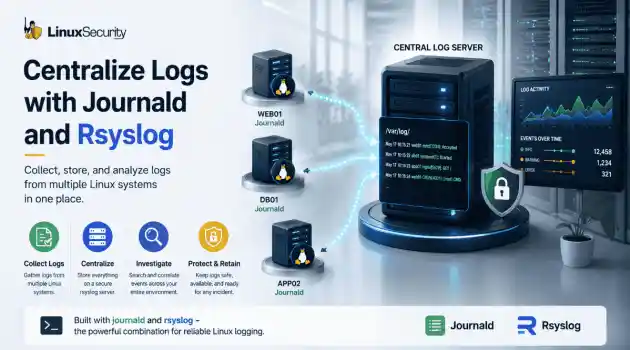
network security centralized logging Linux systems generate a steady stream of authentication, service, kernel, and application logs. On most systems, those logs never leave the machine that created them. If you're responsible for ten or twenty servers, that means checking each one separately. If one disappears before you can investigate it, its logs may disappear with it. Centralized logging solves that by sending log messages to another server as they're created. Instead of searching every machine, you have one place to review...
Jul 15, 2026

How to Secure My Networksecurity advisory audit
security advisory audit When you’re digging through an incident, your logs are the only thing you can actually trust. The problem is, attackers know that too. If someone gets root on your server, their first move is almost always to delete the evidence and cover their tracks. . If you aren't actively protecting your logs, you're basically flying blind the second a breach happens. It’s a miserable feeling to realize you have no idea what an attacker did because they wiped the logs before you even got there. In this...
Jul 11, 2026
 Refine HOWTOs
X Clear Filters
Get the latest News and Insights
Get the latest Linux and open source security news straight to your inbox.
Community Poll
Should Linux servers automatically install security updates?
Loading...
Explore Latest Linux Security HOWTOs
We found 6 articles for you...
167
 security enhancementnetwork managementiptables
Efficient Network Management Through sslh Transparent Proxying
Imagine you run a small business with several web services, such as a corporate website, an employee intranet, and a remote access server for staff working from home. Each service typically requires its port: 80 for the website, 443 for secure access, and 22 for SSH. Managing multiple ports complicates configuration and increases your exposure to security risks. . A transparent proxy acts as a single entry point that intelligently directs incoming traffic to the right service based on the type of connection. This means you can have all your services neatly organized behind one port, simplifying network management and improving security. Let's explore how configuring sslh , an SSL/SSH multiplexer for transparent proxying , can help achieve this streamlined setup. What is sslh ? 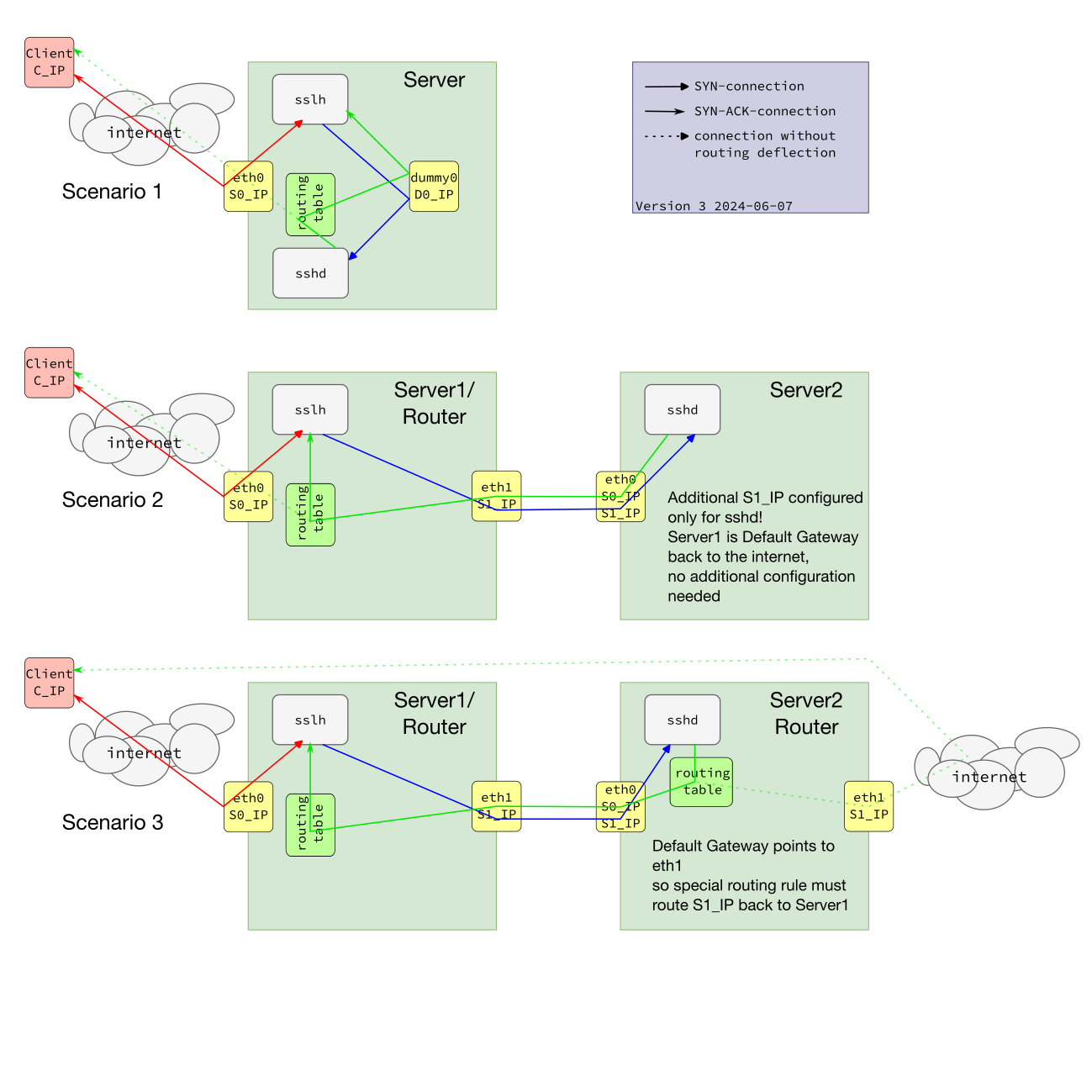 sslh is a powerful tool designed to multiplex protocols through a single port. It can intelligently redirect incoming packets to the appropriate backend service based on protocol characteristics. This versatility allows administrators to run multiple services on one port, making it an essential tool for efficient network management. Noteworthy Features of sslh Protocol Probing : sslh can detect multiple protocols, including HTTP, HTTPS, SSH, OpenVPN , XMPP, and more. Support for Multiple Technologies : Works seamlessly with IPv4, IPv6, TCP, and UDP. Various Operating Modes : It can operate in fork mode, select mode, and libev mode, depending on your performance needs. Importance of Transparent Proxying Transparent proxying allows a proxy server to intercept client requests to the backend server without needing any special configuration on the client side. This proxy type is particularly useful for logging and maintaining visibility of the original client IP addresses in backend servers. Use Cases Original Client IPAddress Visibility : Provides backend servers with the original client's IP address, which is crucial for accurate logging and monitoring. Simplified IP-based Access Control : Since the original client addresses are preserved, access control policies are easier to manage. Enhanced Security Tools Integration : Improves the effectiveness of security tools like fail2ban by ensuring accurate IP address tracking. Implementing Transparent Proxying on Linux To implement transparent proxying on a Linux system using sslh , you can choose from a couple of practical methods: using virtual network interfaces or employing iptables for packet marking. Method 1: Using Virtual Network Interfaces The first method involves creating virtual network interfaces. This approach grants precise control and management of network traffic flows by segregating traffic interfaces for sslh . The process begins with configuring virtual network interfaces using commands like ip link add , which creates peer interfaces. Following this, specific routing rules are adjusted to ensure that traffic flows through these virtual interfaces, with sslh then being configured to bind to them. Although this method provides high control and detailed traffic management, it does require significant network configuration expertise. Method 2: Using iptables Packet Marking The second method leverages iptables for packet marking. This technique relies on setting iptables rules to mark packets based on predefined criteria, which are then redirected to the designated backend services. For instance, create a rule to mark incoming HTTP traffic with a unique identifier, which sslh will then use to route the traffic appropriately. This method allows for a flexible and dynamic setup that is suitable for more complex network architectures. However, it necessitates a thorough understanding of iptables syntax and firewall rule management since improper configuration can lead to network complications. Both methods serve the ultimategoal of ensuring transparent proxying, where sslh intelligently routes traffic without requiring changes on client devices. By implementing either strategy, Linux and IT managers can better control their network traffic, preserve client IP addresses for accurate logging, and enhance overall system security. Configuring sslh for Transparent Proxying Configuring sslh for transparent proxying allows for managing multiple protocols over a single port, simplifying network service management and security. This involves setting up sslh to listen on a specific port and correctly forward incoming traffic based on its protocol type to the appropriate internal service. This section will guide you through the steps required to configure sslh for transparent proxying on a standard Linux system and within a Docker container, ensuring an efficient and secure network configuration. General Configuration for Transparent Proxying To configure sslh for transparent proxying on a Linux system, you must create or edit the /etc/sslh.cfg file. Below is a sample configuration: # /etc/sslh.cfg verbose: true; # Listening on the machine's external IP address listen: ( { host: "1.2.3.4"; port: "443"; } ); # Forwarding HTTP and SSH traffic to local services protocols: ( { name: "ssh"; host: "127.0.0.1"; port: "22"; }, { name: "tls"; host: "127.0.0.1"; port: "443"; }, { name: "openvpn"; host: "127.0.0.1"; port: "1194"; } ); # Increase timeout for OpenVPN timeout: 5; transparent: true; runas: "sslh"; For POSIX capabilities, run: sudo setcap cap_net_bind_service,cap_net_raw+pe /usr/sbin/sslh Then start sslh: sudo systemctl start sslh Docker Container Configuration for Transparent Proxying To run sslh in a Docker container with transparent proxying, you can create a Dockerfile and an accompanying configuration file. Here's how to do it: Create a Dockerfile: # Dockerfile FROM debian:latest RUN apt-get update&& \ apt-get install -y sslh && \ apt-get clean COPY sslh.cfg /etc/sslh.cfg RUN setcap cap_net_bind_service,cap_net_raw+pe /usr/sbin/sslh EXPOSE 443 CMD ["/usr/sbin/sslh", "-F", "/etc/sslh.cfg"] Create the sslh.cfg file: # sslh.cfg verbose: true; # Listening on the machine's external IP address listen: ( { host: "0.0.0.0"; port: "443"; } ); # Forwarding HTTP and SSH traffic to local services protocols: ( { name: "ssh"; host: "127.0.0.1"; port: "22"; }, { name: "tls"; host: "127.0.0.1"; port: "443"; }, { name: "openvpn"; host: "127.0.0.1"; port: "1194"; } ); # Increase timeout for OpenVPN timeout: 5; transparent: true; Build and Run the Docker Container: docker build -t sslh-transparent-proxy . docker run --cap-add=NET_ADMIN --cap-add=NET_RAW -p 443:443 -d sslh-transparent-proxy In the Docker setup, the container listens on 0.0.0.0:443 and forwards traffic internally. The --cap-add flags ensure the container has the capabilities for transparent proxying. This dockerized configuration makes it easy to deploy sslh transparently across various environments. What Are the Benefits of Using Transparent Proxying with sslh? Transparent proxying with sslh offers a range of benefits for network administrators and users looking to efficiently manage multiple protocols over a single port. By automatically detecting and routing incoming connections based on their protocol type, sslh simplifies the configuration of services such as SSH, HTTPS, and OpenVPN. This conserves valuable server resources by reducing the number of open ports required and enhances network security and operational flexibility. Below, we explore the key advantages of implementing transparent proxying with sslh in your network infrastructure. Improved Security Transparent proxying maintains the visibility of original client IP addresses at backend servers, which is crucial foraccurate logging and monitoring. This improves the ability to track and respond to malicious activities. Operational Advantages Transparent proxying simplifies firewall rules and offers consistent network traffic analysis. It provides better integration with IP-based security tools like fail2ban , enhancing the overall security posture. Real-World Applications and Use Cases Case Study Consider a mid-sized company that implemented sslh for transparent proxying to secure its SSH and HTTPS services. By preserving the original client IP addresses, it strengthened its logging mechanisms, enabling faster and more accurate detection of malicious activities. This implementation led to a significant reduction in unauthorized access attempts and streamlined its network traffic analysis processes. IT Management Impact For IT managers, transparent proxying with sslh aids in making strategic decisions by providing accurate and detailed logging data. This data is essential for network security audits and compliance with data protection regulations. Enhancing Logging and Monitoring By maintaining the visibility of the original client IPs, transparent proxying ensures logs are more comprehensive and accurate. This accuracy allows for better application of security policies and quicker identification of anomalies in network activities. Keep Learning About Transparent Proxying Transparent proxying with sslh significantly boosts network security by preserving original client IP addresses, simplifying access control, and enhancing logging accuracy. By implementing the methods described above, Linux and IT managers can secure their systems more effectively, making sslh an invaluable tool in their security arsenal. Additional Resources Official sslh Documentation sslh Configuration Guide sslh Docker Image iptables Documentation Linux Networking Guides . Optimize data flow oversight utilizing sslh for seamless proxying, preserving safety and genuine IP exposure.. sslhconfiguration, secure proxying solution, network protocol management. . Dave Wreski
 Jul 20, 2024
•
Jul 20, 2024
• How to Secure My Network
161
 network securityfirewalliptables
Generate IPTables Firewall Scripts for Linux Kernel Protection
This program generates an iptables firewall script for use with the 2.4 or later linux kernel. It is intended for use on a single system connected to the Internet or a gateway system for a private, internal network. . . This tool creates a security script for iptables, tailored for Linux kernel versions 2.4 and above, improving network safety.. IPTables Script Generator, Linux Firewall Tool, Network Defense Solution. . Anthony Pell
Aug 25, 2023
•
How to Secure My Firewall

161
 network securitysecurity measuresfirewall
Securing Your Linux Server Firewall Using Effective IPTables Rules
Server hacking and unauthorized access are genuine threats. These reasons are why you should implement a firewall as part of your overall network security strategy. Configuring a firewall with iptables rules is one way to mitigate such risks on Linux systems. . Lucky for you, this tutorial will teach you how to implement a firewall with basic iptables rules configuration that you can then customize based on your requirements. Ready to get your hands dirty? Time to dive in! This tutorial houses hands-on demonstrations. If you’d like to follow along, be sure you have an Linux server or desktop computer. This tutorial uses Ubuntu 14.04 for the examples but should work with other Linux distros and newer Ubuntu versions. . Master the setup of a Linux firewall by utilizing iptables directives to safeguard against intrusions and unwarranted entry.. Linux Firewall, IPTables Configuration, Network Security Tutorial. . Brittany Day
Feb 11, 2023
•
How to Secure My Firewall
163
 network securityDebianiptables
Managing Ping on Debian 10: Iptables Control for Network Security
In a production environment, it is common practice to disable network ping for a security reason so that no one can ping your server. However, by default, ping is enabled on Linux servers. Learn now to enable and disable Ping using iptables on Debian 10 in a helpful tutorial: . In this tutorial, I am going to show you the way you can use iptables firewall to disable or enable the ping port. I have run the commands on Debian 10. However, it should work on most other Linux systems as well. The link for this article located at VITUX is no longer available. . Optimize ICMP traffic control using iptables on Debian 10 to bolster your network's security and efficiency.. Iptables Management, Debian Firewall, Network Control, Server Security, Ping Configuration. . Brittany Day
Dec 20, 2019
•
How to Secure My Webserver
161
network securitysystem hardeningfirewallEnhancing Iptables for Real-Time Firewall Hardening in Linux
The objective of this document is to demonstrate how to harden iptables in real-time.. . Strengthen your Linux firewall by adopting effective methodologies to fortify iptables within immediate operations.. Iptables Hardening, Linux Firewall Strategies, Real-Time Protection. . Anthony Pell
Jun 19, 2006
•
How to Secure My Firewall
160
security advisorynetwork securitysystem hardeningLinux Security Techniques: IPChains And IPTables For Protection
You will find security tips to improve your overall system security by the use of IPChains, IPTables, and TCP Wrappers. And you will learn some useful and subtle configuration options for Sendmail, Postfix, Bind, NFS and others.. The link for this article located at Read this full article is no longer available. . Enhance your system's security with IPChains and IPTables. Control access with firewall rules, utilize stateful inspection, and keep updates regular for security.. IPChains Configurations, IPTables Security, Network Security Essentials, System Security Tips, Email Security Measures. . Anthony Pell
Jan 07, 2005
•
How to Harden My Filesystem
161
security managementperliptablesEffective IPTables Firewall Configuration with PCX Solution
PCX Firewall is an IPTables firewalling solution that uses Perl to generate static shell scripts based upon the user's configuration settings. This allows the firewall to startup quickly, as it does not have to parse config files every time it starts. The link for this article located at PCX Firewall is no longer available. . The link for this article located at PCX Firewall is no longer available.. firewall, iptables, firewalling, solution, generate, static, shell, scripts. . Anthony Pell
Nov 29, 2004
•
How to Secure My Firewall
161
network securitysecurity toolfirewallShoreline Firewall: Iptables Protection For Linux Environments
The Shoreline Firewall (Shorewall) is an iptables based firewall that can be used on a dedicated firewall system, a multi-function masquerade gateway/server or on a standalone Linux system.. . Delve into the Shorewall Framework, an iptables-centric tool designed specifically for Linux systems, delivering both strength and adaptability.. Shoreline Firewall, Iptables Security, Linux Firewall, Shorewall Tool, Network Protection. . Anthony Pell
Nov 29, 2004
•
How to Secure My Firewall

Get the latest News and Insights
Get the latest Linux and open source security news straight to your inbox.
Community Poll
Should Linux servers automatically install security updates?
Search Topics
Powered By

Linux Security - Your source for Top Linux News, Advisories, HOWTOs and Feature Releases
QUICK LINKS
subscribe to newsletters!
Like staying secure? So do we.
Sign up for updates, tips, and alerts!