Audit Linux privileges now to limit compromise, escalation, and system-wide damage. Review Linux Privileges×


Stay Ahead With Linux Security HOWTOs

How to Learn Tips and Tricks incident response system monitoring
incident response system monitoring A Linux server can be fully patched, hardened, and compliant, yet still leave investigators unable to explain how an attacker got in. Without reliable Linux logging, even a well-secured system can become impossible to investigate. . Hardening defines what a system should allow, but logs reveal what actually happened. When visibility is incomplete, security teams lose the evidence they need to detect attacks, understand their scope, and determine how they unfolded. Why Linux Logging Must Come...
 Jul 23, 2026
How to Secure My Networkincident response network traffic
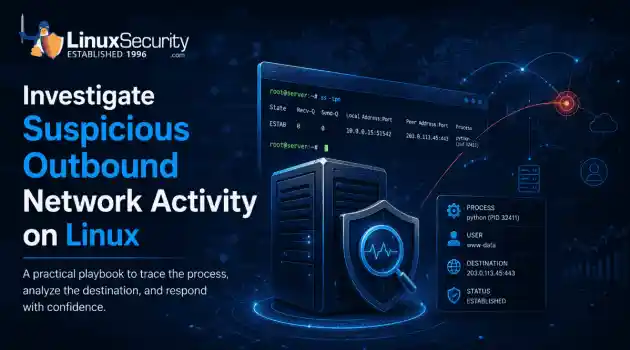
incident response network traffic Imagine logging into a production Linux server for routine maintenance and noticing background network activity connecting to an unfamiliar external IP address. Your endpoint protection agent is not popping up with an alert, there is no service failure, and on the surface, the system appears to be running normally. . For Linux administrators and security teams, such a situation is a moment of truth: Is this activity a sign of active intrusion or just a tool that was overlooked in the course of...
Jul 21, 2026
How to Harden My Filesystemsystem hardening open source security
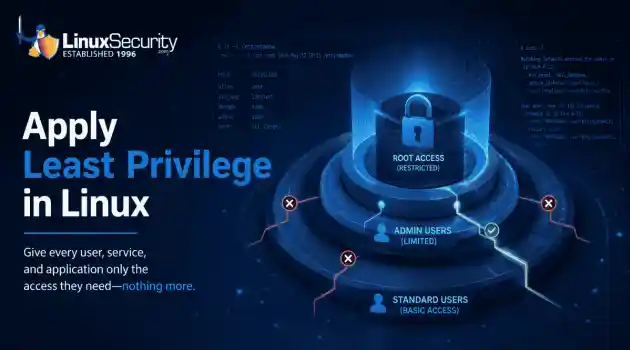
system hardening open source security We all spend a lot of time defending our systems from external threats, but the amount of damage an attacker can cause often depends on what happens after they get in. A single compromised account doesn't always lead to a major incident. The real danger begins when that account has far more access than it actually needs. . That's exactly what the principle of least privilege is designed to prevent. By limiting users, services, and applications to only the permissions required for their jobs,...
Jul 20, 2026
How to Learn Tips and Tricksthreat detection system monitoring
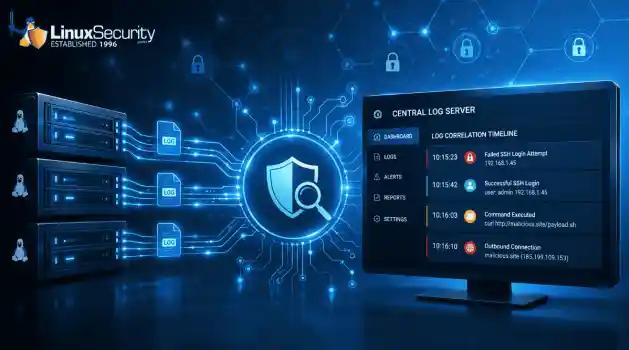
threat detection system monitoring For small security and IT teams, the "enterprise" dream of a fully automated SIEM often feels like a distant luxury. It’s a vision built on massive budgets and dedicated engineering teams—things that, frankly, most of us don't have. But here is the reality: you don’t need a six-figure platform to maintain a secure environment. . Linux systems are, by design, incredibly verbose. Every time a user authenticates, a process executes, or a configuration file changes, your system creates a record of...
Jul 17, 2026
How to Learn Tips and Tricksnetwork security centralized logging
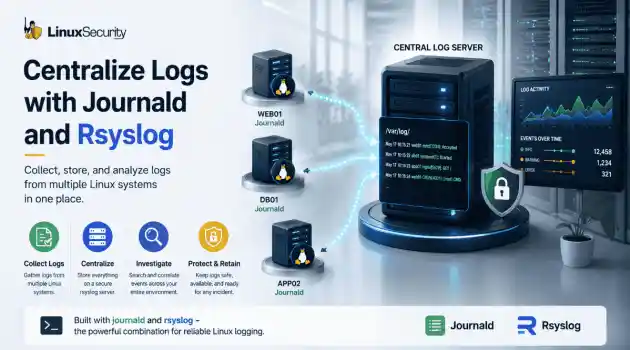
network security centralized logging Linux systems generate a steady stream of authentication, service, kernel, and application logs. On most systems, those logs never leave the machine that created them. If you're responsible for ten or twenty servers, that means checking each one separately. If one disappears before you can investigate it, its logs may disappear with it. Centralized logging solves that by sending log messages to another server as they're created. Instead of searching every machine, you have one place to review...
Jul 15, 2026
 Refine HOWTOs
X Clear Filters
Get the latest News and Insights
Get the latest Linux and open source security news straight to your inbox.
Community Poll
Should Linux servers automatically install security updates?
Loading...
Explore Latest Linux Security HOWTOs
We found -1 articles for you...
166
 security practicesrisk mitigationLinux tools
Best Practices for Managing Linux Kernel Patches and Updates
The Linux kernel is at the heart of any Linux operating system, serving as an intermediary between hardware and software to efficiently manage computer resources. As it plays such an integral role, its security must remain paramount. . It is of utmost importance to apply security patches and updates regularly to protect systems against vulnerabilities or potential exploits. In this article, I'll share best practices for managing such updates. The Critical Importance of Recurring Kernel Updates Numerous high-profile security incidents have been linked with unpatched software vulnerabilities, underscoring the importance of timely updates. Due to its central role and exposure, this need is amplified for Linux kernel updates. Regular patches provide relief against vulnerabilities while fixing bugs and improving system stability and performance - not to mention regulatory standards compliance, which is vital for businesses operating across industries. Petya and NotPetya ransomware attacks took advantage of vulnerabilities for which patches already existed, which would have prevented attacks had they been applied sooner. This underscores the necessity of constant vigilance and swift response in cybersecurity matters. Understanding the Kernel Patching Process Linux kernel versions are released regularly with new security patches and bug corrections. Long-term support (LTS) releases provide stability in environments that do not want frequent changes. Mainline kernels offer the latest features but should not be used in production environments due to potential instability. People commonly assume that newer kernels are less secure. While new features may introduce vulnerabilities, they often bring security benefits and should not be considered risky. Sometimes, the most vulnerable system isn't one with a brand-new kernel but one left exposed and vulnerable due to known flaws. Why Are Linux Admins Struggling with Patch Management? Linux administrators face numerous difficulties when itcomes to patch management policies. Reboots required for multiple kernel updates can be disruptive and impactful on high availability environments, but assessing impact and maintaining operational continuity are essential tasks that compound kernel updates' complexity. Furthermore, human error must also be considered when designing automated systems. Even with automated systems, monitoring is crucial in mitigating risks like patch conflicts and unintended side effects. When dealing with industries like healthcare or finance that operate 24/7, finding an ideal time and place for rebooting and updating needs careful consideration. Best Practices for Kernel Updates What measures are you taking to make kernel updates seamless and secure? Best practices for kernel updates can help minimize downtime and maximize security. They include: Scheduled Updates: Establish regular maintenance windows designed to cause minimum service disruption. Staging Environments provide an ideal place for testing updates before introducing changes system-wide. Rollback Procedures: If problems arise after an update, a robust rollback strategy allows quick reversion to an earlier state. Incident Response Plan: Having an emergency response plan ready can facilitate swift resolution if an update creates security risks. Encryption & Authentication: End-to-end communications encryption and authentication mechanisms during update processes are integral to an effective patch management strategy. Organizations may also benefit from subscribing to vulnerability alerts explicitly tailored for their environment to stay informed of new threats as soon as they emerge. Tools for Security Patch Monitoring and Management Linux administrators can use tools to monitor and manage kernel updates. These include: Automated Patching Solutions: Tools like Kpatch allow live kernel patching, making security patches applicable without rebooting. Configuration Management Tools: Puppet , Chef , or Ansible can help automate patch deployment across various systems. Vulnerability Scanners: Products like OpenVAS or Nessus provide vulnerability scanners, which allow organizations to scan systems for known vulnerabilities and more effectively prioritize patch deployments. Automating Patch Updates Automation can improve efficiency. However, to maximize its potential, policies should be established that govern how much of this type of automation should occur, such as automating non-critical systems and manually reviewing updates for crucial systems or servers. Case Study of Effective Kernel Patch Management Google is a model of effective kernel patch management with their approach to its internal systems and cloud services. Employing containerization and microservice architecture, they isolate systems to limit any single update or failure from having too significant an impactful effect. Automation plays an integral part in their strategy alongside code review, testing before deployment, and live migration technology updating the underlying infrastructure with minimal user impact - an excellent model for organizations seeking to modernize their patch management practices. Our Final Thoughts on the Importance of Linux Kernel Patches & Updates Security patches and kernel updates are essential to keeping any system secure and should not be neglected or delayed. As the basis of any Linux-based infrastructure, keeping the kernel secure requires constant vigilance. Adhering to structured practices, employing practical tools, and creating a security culture will significantly decrease cybersecurity risks. Linux administrators can ensure their systems' integrity, availability, and safety by understanding how patch management works and engaging in the best practices we've discussed. . Implementing security enhancements and system updates is essential for safeguarding infrastructures from vulnerabilities and maintaining reliability.. Linux Kernel Updates, Patch Management Strategies,Cybersecurity Tools, Kernel Security Practices. . Brittany Day
 Sep 02, 2024
•
Sep 02, 2024
• How to Learn Tips and Tricks
166
 risk managementsecurity practicesrisk mitigation
Enhancing Docker Security: Four Essential Practices for IT Admins
Without the right tools and processes in place, Docker security can feel like a moving target. Learn four best practices for keeping deployments safe in this helpful TechTarget tutorial. . When it comes to container security, there are two key areas IT admins should emphasize: the container image and host. You can't, after all, secure one without the other. At the end of the day, virtualized containers still run on a host system. A privilege escalation bug could compromise the security of the entire host and lead to loss of confidentiality, integrity and availability. The good news is that IT admins can use freely available tools -- combined with a coherent build and test process -- to mitigate risks. To get started, embrace these four Docker security best practices. . Discover proactive strategies to mitigate threats in Docker security and protect your container environments with these essential guidelines.. Docker Security, Container Best Practices, Risk Management, IT Administration. . Brittany Day
Dec 21, 2020
•
How to Learn Tips and Tricks

167
 network securitysecurity solutionsrisk mitigation
Understanding TCP And UDP Security Threats and Mitigation Strategies
This is a Sun document that describes what many of the most common TCP and UDP network security vulnerabilities exist, as well as how to reduce their threat.. . This is a Sun document that describes what many of the most common TCP and UDP network security vuln. document, describes, common, network, security. . Anthony Pell
Nov 29, 2004
•
How to Secure My Network
167
network securityaccess controlsecurity measuresFive Critical Access Points For Stronger Network Protection
This documentation discusses the five access points that need to be protected for you to minimize an attacker's entry to each identified access point in the network.. . Establish strong firewalls as your primary defense against unauthorized access, tailoring them to filter unwanted traffic and identify anomalies.. Access Control, Network Security, Cyber Defense, Security Protocols. . Anthony Pell
Nov 23, 2004
•
How to Secure My Network

Get the latest News and Insights
Get the latest Linux and open source security news straight to your inbox.
Community Poll
Should Linux servers automatically install security updates?
Search Topics
Powered By

Linux Security - Your source for Top Linux News, Advisories, HOWTOs and Feature Releases
QUICK LINKS
subscribe to newsletters!
Like staying secure? So do we.
Sign up for updates, tips, and alerts!