Overly broad permissions can turn one compromised account into a much larger security problem. Learn how to reduce unnecessary access, review privileges, and apply least privilege across modern Linux systems. Review Linux Privileges×


Stay Ahead With Linux Security HOWTOs
How to Secure My Network incident response network traffic
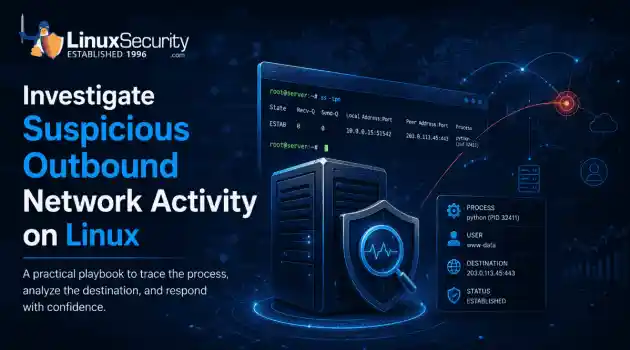
incident response network traffic Imagine logging into a production Linux server for routine maintenance and noticing background network activity connecting to an unfamiliar external IP address. Your endpoint protection agent is not popping up with an alert, there is no service failure, and on the surface, the system appears to be running normally. . For Linux administrators and security teams, such a situation is a moment of truth: Is this activity a sign of active intrusion or just a tool that was overlooked in the course of...
 Jul 21, 2026
How to Harden My Filesystemsystem hardening open source security
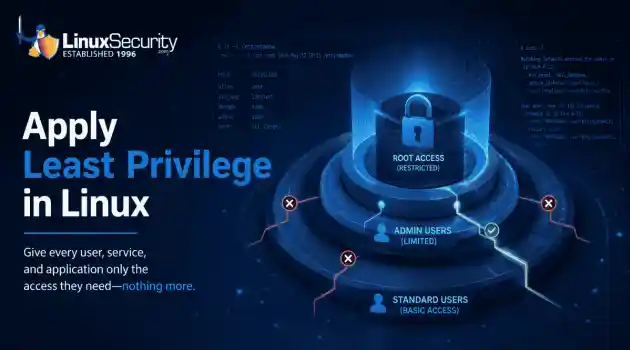
system hardening open source security We all spend a lot of time defending our systems from external threats, but the amount of damage an attacker can cause often depends on what happens after they get in. A single compromised account doesn't always lead to a major incident. The real danger begins when that account has far more access than it actually needs. . That's exactly what the principle of least privilege is designed to prevent. By limiting users, services, and applications to only the permissions required for their jobs,...
Jul 20, 2026
How to Learn Tips and Tricksthreat detection system monitoring
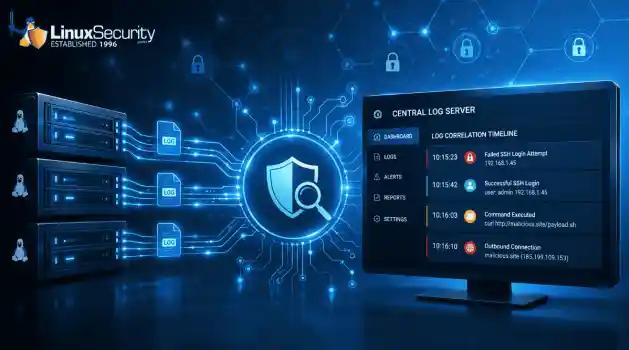
threat detection system monitoring For small security and IT teams, the "enterprise" dream of a fully automated SIEM often feels like a distant luxury. It’s a vision built on massive budgets and dedicated engineering teams—things that, frankly, most of us don't have. But here is the reality: you don’t need a six-figure platform to maintain a secure environment. . Linux systems are, by design, incredibly verbose. Every time a user authenticates, a process executes, or a configuration file changes, your system creates a record of...
Jul 17, 2026
How to Learn Tips and Tricksnetwork security centralized logging
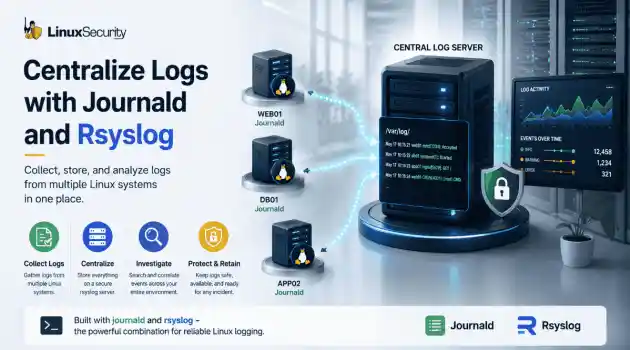
network security centralized logging Linux systems generate a steady stream of authentication, service, kernel, and application logs. On most systems, those logs never leave the machine that created them. If you're responsible for ten or twenty servers, that means checking each one separately. If one disappears before you can investigate it, its logs may disappear with it. Centralized logging solves that by sending log messages to another server as they're created. Instead of searching every machine, you have one place to review...
Jul 15, 2026
How to Secure My Networksecurity advisory audit
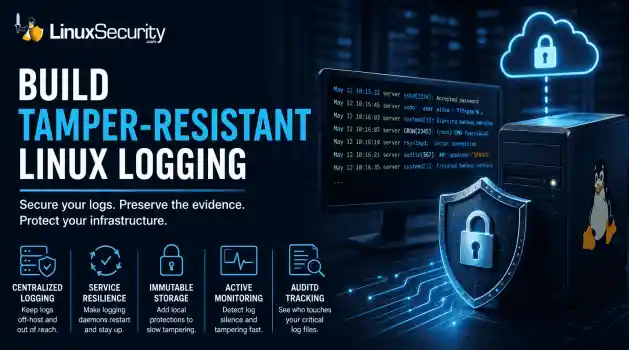
security advisory audit When you’re digging through an incident, your logs are the only thing you can actually trust. The problem is, attackers know that too. If someone gets root on your server, their first move is almost always to delete the evidence and cover their tracks. . If you aren't actively protecting your logs, you're basically flying blind the second a breach happens. It’s a miserable feeling to realize you have no idea what an attacker did because they wiped the logs before you even got there. In this...
Jul 11, 2026
 Refine HOWTOs
X Clear Filters
Get the latest News and Insights
Get the latest Linux and open source security news straight to your inbox.
Community Poll
Should Linux servers automatically install security updates?
Loading...
Explore Latest Linux Security HOWTOs
We found -3 articles for you...
166
 user managementLinux systemsroot account
Safely Assigning Sudo Privilege To Users On Linux Systems
The sudo command is a very important command on Linux systems. You might say that it allows users to run privileged commands without logging in as root, and that is true. . However, the more important point is that it allows individuals to manage Linux systems – adding accounts, running updates, installing applications and backing up the system – without requiring these things be done using the root account. This is consistent with the policy that says root privilege should only be used as needed and that no one should simply log in as root and run all of their commands. Doing routine work using the root account is considered dangerous because any typos or commands run in the wrong location can have very serious consequences. To provide a user with sudo privileges on Fedora and related systems, the user must be made a member of the “wheel” group. While that might seem like an odd name for the group that provides root-level privilege, it appears to have been derived from the term “big wheel” that was used for many years to describe someone with considerable power or influence. . Optimize Linux operations by granting sudo access to users, ensuring security by avoiding direct root account usage.. Sudo Command, User Management, Linux Permissions, System Administration, Privilege Escalation. . Brittany Day
 Jul 21, 2023
•
Jul 21, 2023
• How to Learn Tips and Tricks
166
 security practicessystem accessroot management
Effective Root Account Management For Enhanced Security
Keeping the superuser account secure should be a top priority for any system.. The most sought-after account on your machine is the superuser account. This account has authority over the entire machine, which may also include authority over other machines on the network. Remember that you should only use the root account for very short specific tasks and should mostly run as a normal user. Running as root all the time is a very very very bad idea. Several tricks to avoid messing up your own box as root: When doing some complex command, try running it first in a non destructive way...especially commands that use globbing: e.g., you are going to do a rm foo*.bak , instead, first do: ls foo*.bak and make sure you are going to delete the files you think you are. Using echo in place of destructive commands also works. Provide your users with a default alias to the /bin/rm command to ask for confirmation for deletion of files. Only become root to do single specific tasks. If you find yourself trying to figure out how to do something, go back to a normal user shell until you are sure what needs to be done by root. The command path for the root user is very important. The command path, or the PATH environment variable, defines the location the shell searches for programs. Try and limit the command path for the root user as much as possible, and never use '.', meaning 'the current directory', in your PATH statement. Additionally, never have writable directories in your search path, as this can allow attackers to modify or place new binaries in your search path, allowing them to run as root the next time you run that command. Never use the rlogin/rsh/rexec (called the "r-utilities") suite of tools as root. They are subject to many sorts of attacks, and are downright dangerous run as root. Never create a .rhosts file for root. The /etc/securetty file contains a list of terminals that root can login from. By default (on Red Hat Linux) this is set to only the local virtual consoles(vtys). Be very careful of adding anything else to this file. You should be able to login remotely as your regular user account and then use su if you need to (hopefully over ssh or other encrypted channel), so there is no need to be able to login directly as root. Always be slow and deliberate running as root. Your actions could affect a lot of things. Think before you type! . Protect your superuser account by following best practices for managing root access effectively.. keeping, superuser, account, secure, should, priority, system, sought-after. . Anthony Pell
Jul 30, 2000
•
How to Learn Tips and Tricks


Get the latest News and Insights
Get the latest Linux and open source security news straight to your inbox.
Community Poll
Should Linux servers automatically install security updates?
Search Topics
Powered By

Linux Security - Your source for Top Linux News, Advisories, HOWTOs and Feature Releases
QUICK LINKS
subscribe to newsletters!
Like staying secure? So do we.
Sign up for updates, tips, and alerts!