Overly broad permissions can turn one compromised account into a much larger security problem. Learn how to reduce unnecessary access, review privileges, and apply least privilege across modern Linux systems. Review Linux Privileges×


Stay Ahead With Linux Security HOWTOs
How to Harden My Filesystem system hardening open source security
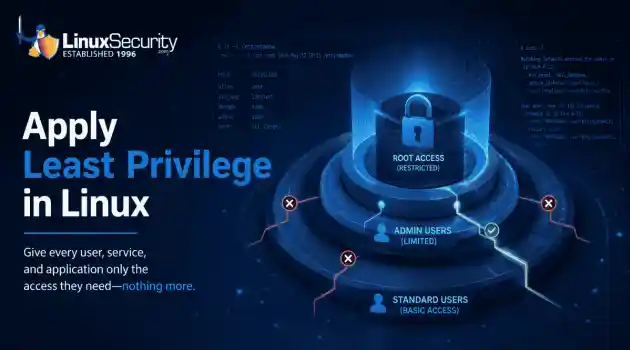
system hardening open source security We all spend a lot of time defending our systems from external threats, but the amount of damage an attacker can cause often depends on what happens after they get in. A single compromised account doesn't always lead to a major incident. The real danger begins when that account has far more access than it actually needs. That's exactly what the principle of least privilege is designed to prevent. By limiting users, services, and applications to only the permissions required for their jobs, you...
 Jul 20, 2026
How to Learn Tips and Tricksthreat detection system monitoring
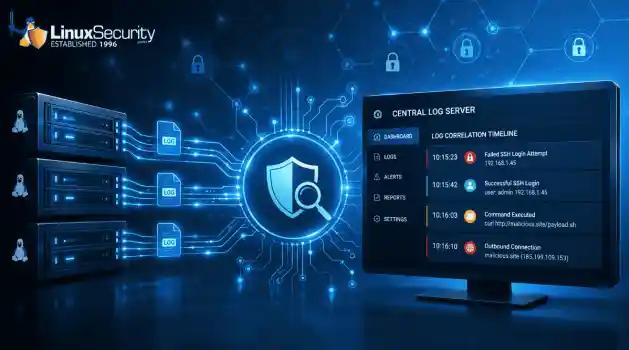
threat detection system monitoring For small security and IT teams, the "enterprise" dream of a fully automated SIEM often feels like a distant luxury. It’s a vision built on massive budgets and dedicated engineering teams—things that, frankly, most of us don't have. But here is the reality: you don’t need a six-figure platform to maintain a secure environment. . Linux systems are, by design, incredibly verbose. Every time a user authenticates, a process executes, or a configuration file changes, your system creates a record of...
Jul 17, 2026
How to Learn Tips and Tricksnetwork security centralized logging
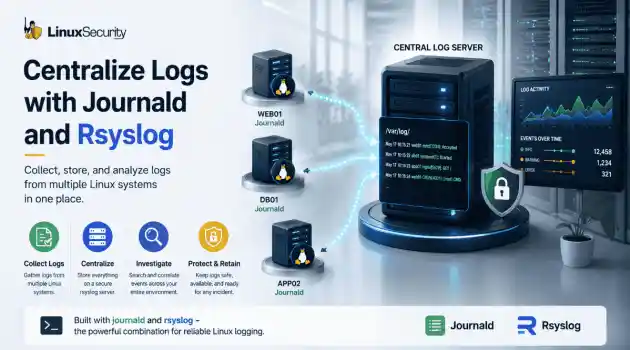
network security centralized logging Linux systems generate a steady stream of authentication, service, kernel, and application logs. On most systems, those logs never leave the machine that created them. If you're responsible for ten or twenty servers, that means checking each one separately. If one disappears before you can investigate it, its logs may disappear with it. Centralized logging solves that by sending log messages to another server as they're created. Instead of searching every machine, you have one place to review...
Jul 15, 2026
How to Secure My Networksecurity advisory audit
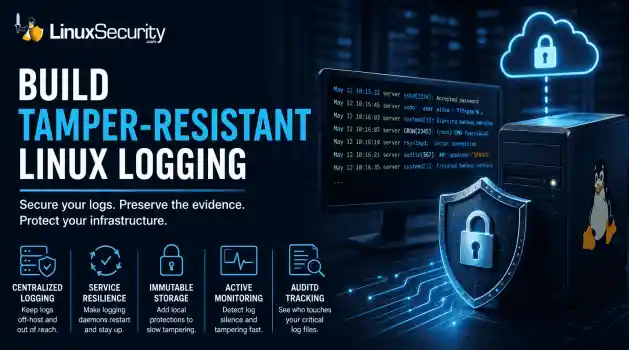
security advisory audit When you’re digging through an incident, your logs are the only thing you can actually trust. The problem is, attackers know that too. If someone gets root on your server, their first move is almost always to delete the evidence and cover their tracks. . If you aren't actively protecting your logs, you're basically flying blind the second a breach happens. It’s a miserable feeling to realize you have no idea what an attacker did because they wiped the logs before you even got there. In this...
Jul 11, 2026
How to Harden My Filesystemlog analysis security incident
log analysis security incident When an attacker breaks into a Linux system, their work is rarely done. Usually, the real work starts after the initial exploit: hiding their tracks. If you’re a Linux admin or security analyst, there is nothing worse than logging in, running a few commands, and realizing the logs aren't telling the whole story. When logs are missing or look "off," your primary source of truth is compromised. This guide covers how to handle that situation. We’ll walk through the workflow you need to determine...
Jul 10, 2026
 Refine HOWTOs
X Clear Filters
Get the latest News and Insights
Get the latest Linux and open source security news straight to your inbox.
Community Poll
Should Linux servers automatically install security updates?
Loading...

Explore Latest Linux Security HOWTOs
We found -4 articles for you...
166
 security strategiessystem protectionBIOS
Essential BIOS Security Strategies For Linux Boot Process
The BIOS is the lowest level of software that configures or manipulates your x86-based hardware.. LILO and other Linux boot methods access the BIOS to determine how to boot up your Linux machine. Other hardware that Linux runs on has similar software (OpenFirmware on Macs and new Suns, Sun boot PROM, etc...). You can use your BIOS to prevent attackers from rebooting your machine and manipulating your Linux system. Most PC BIOSs let you set a boot password. This doesn't provide all that much security (the BIOS can be reset, or removed if someone can get into the case), but might be a good deterrent (i.e. it will take time and leave traces of tampering). Similarly, on SPARC/Linux (Linux for SPARC(tm) processor machines), your EEPROM can be set to require a boot-up password. This might slow attackers down. Many PC BIOSs also allow you to specify various other good security settings. Check your BIOS manual or look at it the next time you boot up. For example, most BIOSs disallow booting from floppy drives and some require passwords to access some BIOS features. Note: If you have a server machine, and you set up a boot password, your machine will not boot up unattended. Keep in mind that you will need to come in and supply the password in the event of a power failure. ;(. To secure the BIOS and Linux boot process, adopt strategies like BIOS password protection, boot order configuration, and secure boot features for enhanced safety. BIOS Security, Linux Boot Process, Security Strategies, System Protection. . Anthony Pell
 Jul 25, 2000
•
Jul 25, 2000
• How to Learn Tips and Tricks

Get the latest News and Insights
Get the latest Linux and open source security news straight to your inbox.
Community Poll
Should Linux servers automatically install security updates?
Search Topics
Powered By

Linux Security - Your source for Top Linux News, Advisories, HOWTOs and Feature Releases
QUICK LINKS
subscribe to newsletters!
Like staying secure? So do we.
Sign up for updates, tips, and alerts!