Audit Linux privileges now to limit compromise, escalation, and system-wide damage. Review Linux Privileges×


FreeRDP 3.27 Raises the Baseline for Secure Remote Access
 Jun 16, 2026
•
Jun 16, 2026
•
 MaK Ulac
3 - 5 min read

Topics Covered
Remote access tools do not need dramatic new features to improve security. Sometimes the more useful change is quieter, like stronger defaults that make weak encryption harder to use by accident.
What FreeRDP Is and Why This Release Matters
FreeRDP is an open-source implementation of Microsoft’s Remote Desktop Protocol, used as both a library and a set of clients across Linux, Windows, macOS, Android, and other systems. In Linux environments, it is often the practical RDP client administrators reach for when they need console access to Windows hosts, jump systems, lab machines, or remote desktops without moving through a full Windows workstation.
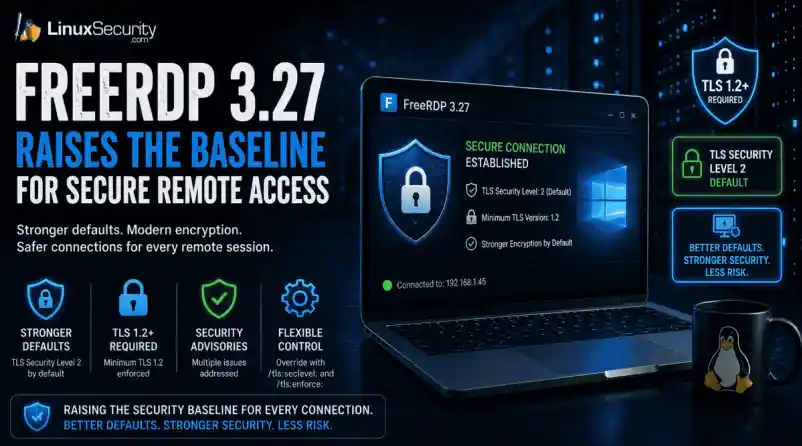
FreeRDP 3.27 matters because it changes the floor for encrypted remote access. The release sets the default TLS security level to 2 and requires at least TLS 1.2, while still leaving client-side override options through /tls:seclevel: and /tls:enforce: for environments that have not caught up yet. That is the operational detail.
A Linux RDP client connecting with safer defaults creates fewer accidental weak sessions, fewer legacy negotiation surprises, and less cleanup later when remote access security gets reviewed after a finding.
What Changed in FreeRDP 3.27
FreeRDP 3.27 is not a feature-heavy release. The important changes are in the defaults that control encrypted connections and RDP security.
- TLS security level 2 is now the default.
- TLS 1.2 or newer is required by default.
- Multiple security advisories were addressed as part of the release.
- Environments that still rely on older TLS configurations should be tested before deployment.
- In practical terms, FreeRDP now makes it harder to fall back to weaker encryption settings and easier to force TLS 1.2 or newer across remote access deployments.
For administrators using FreeRDP as a Linux RDP client, the change is mostly about reducing the number of weak connection paths that remain available simply because nobody disabled them.
Why Stronger Remote Access Security Defaults Matter
Remote access tools tend to accumulate compatibility settings over time. They stay around because somebody still has an old server, an old gateway, or a forgotten system that breaks when defaults change.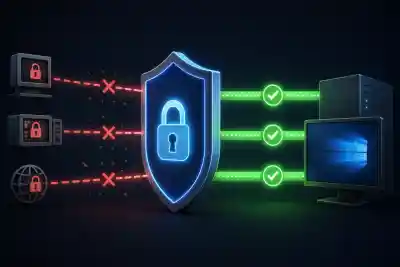
That flexibility comes with a cost.
- Permissive settings can keep weak remote access security configurations alive for years.
- Secure remote access becomes harder to enforce when legacy encryption remains available by default.
- Weak TLS settings often persist long after they should have been retired. Raising the minimum requirement removes many of them by default.
TLS 1.2 is still a valid baseline. The problem is usually what sits below it. When admins look up TLS 1.2 end of life or a TLS 1.2 vulnerability, they are usually trying to understand whether old TLS support is still exposed anywhere in the environment.
TLS 1.2 vs 1.3 is a separate decision. TLS 1.3 is better where both sides support it, but FreeRDP’s change is simpler than that. Requiring TLS 1.2 or newer, it cuts off older negotiation paths that still show up during remote desktop security reviews and remote access assessments.
What Admins Should Check Before Updating
FreeRDP 3.27 raises the default security baseline, but stronger defaults do not replace existing remote access security controls.
Before updating, administrators should verify a few things:
- Test connections to older RDP servers, gateways, and legacy systems that may not fully support TLS 1.2 or newer.
- Review Azure AD (Entra ID) and authentication-related changes if those features are part of the deployment.
- Confirm that logging, MFA, access restrictions, and patch management processes continue to operate as expected.
- Validate that existing remote access security solutions still behave correctly after the upgrade.
The release aligns with common remote access security best practices, but it is only one layer. Secure remote access depends on authentication controls, monitoring, patching, and access management. FreeRDP can support those efforts, but it is not a complete answer to how to secure remote access by itself.
FreeRDP Reflects the Secure-by-Default Shift
FreeRDP 3.27 is part of a broader move toward stronger remote access security defaults. The release does not introduce a new security model. It removes more of the weak negotiation paths that tend to survive in long-lived environments simply because nobody revisited the configuration.
For organizations using FreeRDP, the change is straightforward. Secure remote access becomes less dependent on manual hardening and less likely to inherit outdated settings by default. Administrators still need to test systems, validate compatibility, and maintain their remote access security controls, but FreeRDP 3.27 raises the baseline in the right direction.
Want more Linux security news, vulnerability analysis, and remote access security updates? Subscribe to the LinuxSecurity Newsletter for the latest threats, advisories, and practical guidance on Linux systems.
Related Reading
 PREVIOUS

 NEXT
NEXT

Powered By

Linux Security - Your source for Top Linux News, Advisories, HOWTOs and Feature Releases
QUICK LINKS
subscribe to newsletters!
Like staying secure? So do we.
Sign up for updates, tips, and alerts!