Overly broad permissions can turn one compromised account into a much larger security problem. Learn how to reduce unnecessary access, review privileges, and apply least privilege across modern Linux systems. Review Linux Privileges×


Oracle Linux: Advisory CVE-2025-61882 Critical RCE Threat from Cl0p
 Oct 07, 2025
•
Oct 07, 2025
•
 MaK Ulac
4 - 7 min read


Topics Covered
Oracle has confirmed a critical remote code execution flaw in E-Business Suite, tracked as CVE-2025-61882. The bug resides in the Concurrent Processing and BI Publisher components, which handle reporting and job scheduling. It can be reached remotely over HTTP without authentication. One exposed instance is enough for complete control.
All supported builds from 12.2.3 through 12.2.14 are vulnerable. While the flaw isn’t in Linux itself, most EBS deployments run on Oracle Linux or RHEL, making it a direct concern for linux security teams. These systems rarely operate in isolation; they often share identity stores, databases, and monitoring tools. A compromise in EBS often means compromise across the stack that supports it.
Early telemetry links the activity to Cl0p, a ransomware group known for turning enterprise applications into access points. Their shift from broad data theft to targeting business platforms reflects a wider trend: attackers aren’t exploiting single products anymore; they’re exploiting the relationships between them.
That’s the real risk here. Oracle EBS may be the entry point, but the damage spreads through what connects to it — authentication services, financial databases, and the Linux hosts underneath. The line between application and infrastructure security is already thin; this vulnerability just makes that boundary visible.
Oracle EBS RCE Vulnerability (CVE-2025-61882): Technical Summary
CVE-2025-61882 is a critical remote code execution vulnerability affecting Oracle E-Business Suite’s BI Publisher integration. It holds a CVSS score of 9.8, placing it among the most severe enterprise ERP vulnerabilities disclosed this year.
The flaw can be reached over the network through HTTP, and no login is required. A single crafted request is enough to hit the vulnerable path. Once executed, the attacker gains full control of the affected EBS instance. From there, confidentiality, integrity, and availability all fall in sequence — the entire stack becomes theirs to command.
How CVE-2025-61882 Works and Post-Exploitation Impact
The exploit starts with a crafted HTTP request sent to the BI Publisher interface in Oracle E-Business Suite. There’s no login, token, or session required. The request alone is enough to reach the vulnerable path and trigger remote code execution.
At the core of the flaw is how BI Publisher processes input from Oracle’s Concurrent Processing framework. Under certain conditions, unvalidated data is passed straight into the rendering engine. That’s the opening attackers need — it turns a simple web request into code execution on the host.
Once the exploit lands, control shifts fast. Attackers can:
- Run arbitrary commands on the EBS application server.
- Query or modify connected databases.
- Interrupt or alter scheduled ERP processes.
- Move laterally through authentication stores or file systems connected to the same network.
Those actions give adversaries reach far beyond the Oracle layer. They can pivot into shared infrastructure, access credentials, or use the compromised EBS instance as a launching point for additional attacks.
E-Business Suite is deeply integrated into core operations — financials, HR, and supply chain systems all depend on it. When it’s breached, data exposure and business disruption happen in the same motion.
For teams responsible for linux security, this isn’t abstract risk. Most EBS instances sit on Oracle Linux or RHEL, often with broad privileges and shared network visibility. Once the application layer falls, the underlying system usually follows.
Cl0p Campaign Attribution and Attack Timeline
The ransomware group Cl0p has been confirmed as the actor exploiting CVE-2025-61882. Activity began in August 2025, with scanning and exploitation of exposed EBS servers observed within weeks of disclosure.
By September, multiple enterprises reported extortion attempts following confirmed breaches. The approach was consistent with Cl0p’s playbook: target unpatched enterprise software, steal data before detection, and pressure victims with timed ransom demands.
Threat intelligence from Mandiant and Google TAG links these incidents to Cl0p infrastructure through overlapping domains and reused payload code. This campaign shows a clear evolution in the group’s methods — moving from large-scale data theft to precision targeting of high-value ERP systems.
For defenders, the signal is clear. Enterprise applications like EBS are now part of the initial access chain, not the end target. Securing them means treating patching and network segmentation as part of standard operational hygiene, not an afterthought.
Why Oracle EBS Exploit Matters for Linux Security
Oracle E-Business Suite remains one of the most common enterprise applications running on Oracle Linux and RHEL. These systems aren’t just compatible — they’re the default foundation for many deployments. That means responsibility for patching, access control, and monitoring often falls directly on linux security teams, not the application owners.
A successful exploit gives attackers full control of the EBS application layer, but the reach doesn’t stop there. With command execution rights on the host, they can pivot deeper into the Linux environment, access shared authentication stores, or use the compromised instance to launch attacks against connected services. For organizations that rely on Oracle Linux or RHEL in production, the path from one unpatched EBS server to a wider breach is short and direct.
The Broader Threat Landscape
Cl0p’s exploitation of CVE-2025-61882 continues a pattern that’s defined their recent operations. The group has previously targeted enterprise web applications such as MOVEit, Fortra GoAnywhere, and Cleo Integration Cloud — each time exploiting trusted business platforms that sit inside corporate networks.
That approach works, and others are following it. Groups like Scattered Spider and ShinyHunters have shifted toward the same strategy, repurposing existing exploits against ERP and supply-chain systems hosted on Linux infrastructure. It’s a logical move: these workloads hold the data adversaries want, and their patch cycles tend to lag behind internet-facing services.
The result is a steady rise in ERP-focused intrusions across Linux environments. Attackers aren’t looking for a single flaw anymore — they’re targeting the platforms that keep business running. For teams maintaining Linux workloads, keeping Oracle EBS secure now falls under the same operational urgency as patching the kernel itself.
Mitigation and Response
Oracle has released patches covering E-Business Suite 12.2.3 through 12.2.14, and they need to be applied immediately. Delays give attackers time to automate scanning and exploit delivery — a cycle that Cl0p and similar groups already understand well. Patching is the first step, but not the only one. Containment, monitoring, and privilege control all matter once a service has been exposed.
Recommended actions: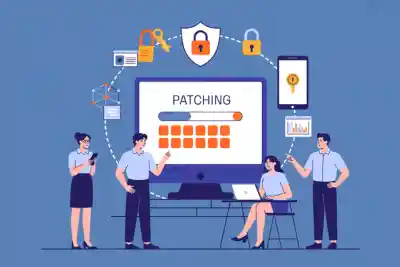
- Apply the official Oracle patch for all affected EBS versions (12.2.3–12.2.14). Confirm installation through Oracle Support documentation and internal version audits.
- Restrict HTTP exposure for BI Publisher endpoints. Limit access to internal networks or authenticated reverse proxies only.
- Monitor Linux logs for indicators of compromise using tools such as journalctl, centralized SIEM feeds, or auditd. Unusual web process activity or outbound connections from the EBS host should be treated as high priority.
- Enforce least privilege for Oracle service accounts. Remove shell access where possible and review group permissions for any inherited escalation paths.
- Segment ERP and database tiers to reduce the blast radius. Lateral movement between EBS, database, and file services should not be possible under normal operating conditions.
For teams managing linux security, these steps should be treated as both immediate containment and long-term practice. Patching closes the vulnerability, but architecture and access control determine whether a similar exploit becomes a breach the next time around.
Broader Takeaway
CVE-2025-61882 is a reminder that linux security doesn’t stop at the operating system. The most damaging breaches increasingly start higher up the stack — in enterprise applications that run on trusted Linux infrastructure but fall outside the usual patch cadence.
Flaws like this one show how attackers view the ecosystem: not as isolated layers, but as connected surfaces that can be chained together. Application-layer vulnerabilities in tools such as Oracle EBS are attractive because they combine sensitive data, consistent deployment patterns, and broad internal access.
 PREVIOUS

 NEXT
NEXT

Powered By

Linux Security - Your source for Top Linux News, Advisories, HOWTOs and Feature Releases
QUICK LINKS
subscribe to newsletters!
Like staying secure? So do we.
Sign up for updates, tips, and alerts!