Audit Linux privileges now to limit compromise, escalation, and system-wide damage. Review Linux Privileges×


CUPS Exploit Chain Still Reaches Root Access, Despite 2024 Fixes
 Apr 07, 2026
•
Apr 07, 2026
•
 MaK Ulac
3 - 6 min read


Topics Covered
The Common Unix Printing System (CUPS) still sits on millions of Linux systems, usually in the background, rarely monitored, and often trusted more than it should be. We saw a wake-up call in late 2024 when a series of vulnerabilities revealed how printer auto-discovery could be abused to enable remote code execution.
That chain had a constraint. Something had to trigger it. A user had to interact with a printer or a job had to run, for the exploit to land. That safety net is gone.
A new exploit chain, tracked as CVE-2026-34980 and CVE-2026-34990, builds on the same surface but removes that dependency entirely. No user interaction, no timing requirement. What’s left is a far more predictable path from network access to root-level impact, closer to a controlled execution path than an opportunistic exploit.
Quick Recap: What Happened in 2024?
To understand the contrast, we have to anchor back to our 2024 blog post. The 2024 issues—specifically the chain involving CVE-2024-47176 and CVE-2024-47076—primarily abused the cups-browsed service. An attacker could send a crafted UDP browsing packet to systems running cups-browsed, advertising a malicious IPP printer.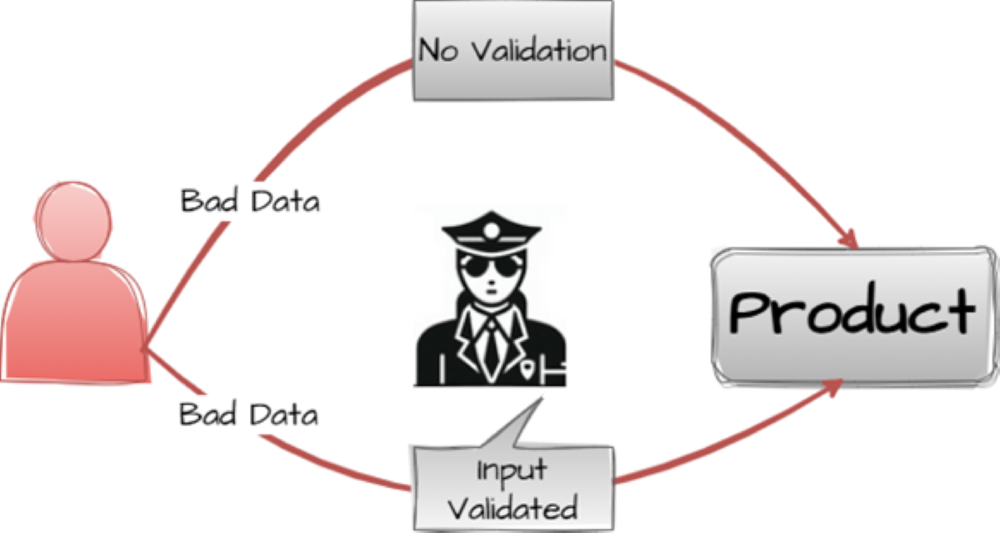 Source: MITRE, Common Weakness Enumeration (CWE)
The core limitation was the trigger. While the system would ingest the malicious configuration, the actual execution of code only happened when a user attempted to print to that device. It was a "trap" that relied on timing and user behavior. It was dangerous, but less streamlined than what we are seeing now. The 2026 version removes the friction and replaces it with a direct, scriptable assault.
What’s New in 2026: A Cleaner, More Dangerous Chain
The shift in 2026 is defined by a move toward zero-interaction, unauthenticated exploitation. This new chain moves from a simple network request directly to a root file overwrite.
According to the latest research by Asim Viladi Oglu Manizada, the combination of CVE-2026-34980 and CVE-2026-34990 allows an attacker to bypass the need for any human in the loop. The first vulnerability handles the initial code execution as the lp user, while the second provides a mechanism for local privilege escalation. This results in a root-level impact that increases post-exploitation flexibility.
Where This Attack Actually Works
This attack isn't a "magic bullet" for every Linux desktop, but it hits exactly where enterprise risk is highest. The target must expose a shared PostScript CUPS queue.
As detailed in Asim’s configuration breakdown, shared printer queues are common in corporate environments. They simplify access and reduce friction for users, but they often remain enabled long after their initial deployment. In many cases, these are inherited configurations that no one revisits. So while the exploit is not "default everywhere," it appears frequently enough in real environments to be practical. The risk aligns with how organizations actually deploy and use print services.
How the Attack Works: Technical Flow
The technical logic follows a sequence that exploits the breakdown of trust boundaries between job handling and system-level execution.
- Identification: The attacker identifies an exposed CUPS service, typically on port 631, with a shared PostScript queue.
- The Payload: The attacker sends a Print-Job containing "smuggled" newlines. This exploits a parsing bug in CVE-2026-34980, where CUPS fails to sanitize hidden commands in the page-border option.
- RCE: The system is tricked into treating part of the job as a trusted PPD: control record. A follow-up raw print job then makes the server execute an attacker-controlled command or binary as the lp user.
- Escalation: Under CVE-2026-34990, the attacker coerces the service into authenticating to a malicious local listener, capturing a valid "Local" authentication token.
- Root Overwrite: The attacker creates a temporary queue pointed at a file like /etc/sudoers.d/pwn. Printing to it results in an arbitrary root file overwrite, effectively granting persistent root-level access.
Why CUPS Keeps Appearing in Exploit Chains
At this point, it is no longer useful to treat each CUPS vulnerability as an isolated issue. The pattern is consistent. CUPS was designed in a different era. It assumed a level of trust within local networks that no longer exists.
- Exposure: CUPS is often reachable over internal networks, and sometimes even the public internet. It is rarely treated as a hardened service.
- Complexity: Print jobs move through multiple layers, including filters and interpreters. Each layer expands the attack surface and creates opportunities for parsing issues.
- Weak Isolation: Print processing interacts more closely with system-level components than most services should. When something breaks, it does not fail quietly.
Who Owns the Risk
There is no single point of failure here. The risk accumulates across layers of the ecosystem. 
- Upstream developers at OpenPrinting are managing decades of design debt. Hardening a service this complex while maintaining backward compatibility is a slow crawl.
- Distributions play a role as well; many ship with insecure default configurations to ensure "out of the box" functionality.
- Enterprise environments create the final conditions for success by maintaining shared queues on flat internal networks.
- Even the security industry shares responsibility, as print infrastructure is rarely treated as a priority during audits or threat modeling.
What This Means in a Real Environment
Consider a typical corporate setup. Printers are shared across departments, and CUPS is accessible within the internal network. An attacker gains an initial foothold—perhaps through phishing or a compromised endpoint—and scans for internal services.
CUPS responds. The configuration matches what the exploit requires. At that point, the print service becomes more than infrastructure; it becomes a path to escalation. No alerts fire, and no user needs to click anything. The attack blends into normal service behavior, providing the attacker with a silent, root-level anchor inside the network.
Reducing Exposure Without Breaking Operations
Reducing risk starts with limiting where the service is reachable. Configuration matters as much as the code itself.
- Scope Sharing: Printer sharing should be scoped carefully, not left open by default.
- Segmentation: Systems responsible for print services should not sit in the same trust zone as critical infrastructure.
- Monitoring: Inspect print job activity. Anomalous behavior, like unauthorized local printer creations, is difficult to detect if you aren't looking at the logs.
- Patching: Systems running vulnerable versions of CUPS should be updated as patches become available from your distribution.
Final Takeaway
The 2026 CUPS vulnerability is not just another entry in a growing list. It is a signal. The attack surface has not been contained, and attackers are successfully removing friction from their exploits. Pattern recognition matters more than individual CVEs. If print services are still treated as background infrastructure, this will not be the last time they show up in an exploit chain.
Is your current internal security policy monitoring port 631 for unusual traffic, or is the print server still a blind spot in your infrastructure?
 PREVIOUS

 NEXT
NEXT



Powered By

Linux Security - Your source for Top Linux News, Advisories, HOWTOs and Feature Releases
QUICK LINKS
subscribe to newsletters!
Like staying secure? So do we.
Sign up for updates, tips, and alerts!