Overly broad permissions can turn one compromised account into a much larger security problem. Learn how to reduce unnecessary access, review privileges, and apply least privilege across modern Linux systems. Review Linux Privileges×



Desktop Security security advisory vulnerability
security advisory vulnerability GNOME is officially shortening its standard vulnerability disclosure window from 90 days to 30 days, a change that impacts upstream maintainers, downstream Linux distributions, and system administrators in how they handle software vulnerabilities. The policy shift, announced by long-time security coordinator Michael Catanzaro , addresses modern software patching realities and a growing influx of automated submissions. . Because GNOME is the default desktop environment on several major Linux...
 Jul 21, 2026

Security Vulnerabilities security advisory moderate
security advisory moderate For organizations that run a self-hosted Git platform, it’s no longer just about hosting static code repositories. Today, Git servers are responsible for deployment pipelines, API tokens, SSH keys, package repositories, and the automation scripts that push code directly. Confirm that the upgrade addresses known vulnerabilities but also provides production environments. . That makes them trusted systems within the development environment and attractive targets for attackers looking to move...
Jul 20, 2026

Server Securitydata privacy automation
data privacy automation Every system admin has lived through the same Monday morning ritual. A queue of forty tickets, half of them password resets, permission errors, or disk space warnings that any experienced technician could resolve in under two minutes. The other half require actual judgment. For years, automation promised that software would eventually sort the two apart on its own. That promise is now being tested in production Linux environments. . Early results are reshaping how IT teams think about tier-1...
Jul 17, 2026

Privacydata collection automation
data collection automation You're running a web scraping project to collect pricing data from e-commerce sites. You set up a pool of datacenter proxies, launch your scripts, and within minutes — banned . CAPTCHAs everywhere. Your data pipeline stops before it really begins. . It's a frustrating scenario that plays out daily in ad verification, market research, and multi-account management. The website doesn't know you're doing legitimate research or monitoring. It just sees traffic coming from IP ranges it recognizes as...
Jul 17, 2026

Security Trends security advisory social engineering
security advisory social engineering Business Email Compromise used to be a numbers game — mass-blasted emails, broken English, an obvious "URGENT WIRE TRANSFER" subject line. That era is over. Generative AI has turned BEC into a tailored, low-noise operation that mimics writing style, voice, and even video presence. This piece looks at what's actually changed under the hood, what defenders are testing in response, and why so many organizations are still structurally unprepared for it. . The Infrastructure Problem Nobody Wants to...
Jul 17, 2026
 Refine news
X Clear Filters
Get the latest News and Insights
Get the latest Linux and open source security news straight to your inbox.
Community Poll
Should Linux servers automatically install security updates?
Trending News
Loading...
Explore Latest Linux Security news
We found 8 articles for you...
210
 security advisorysoftware updateapplication security
Chrome 134 Update: Critical Fixes for Linux Users' Security
Google recently took an important step toward increasing web browsing security by unveiling Chrome 134 to patch several severe vulnerabilities. As a Linux administrator, staying informed on such updates to protect systems against potential threats is paramount. This release addresses critical issues like an out-of-bounds read in V8 and defects across DevTools Profiles and PDFium. . Keeping your Chrome browser updated, as cyber threats become increasingly sophisticated, can significantly lower security risks and ensure an enhanced browsing experience. Let's take a look at the bugs fixed in Chrome 134, their potential impact, and ways we can best protect ourselves as Chrome users. Understanding the Chrome 134 Security Update Chrome 134 marks an exceptional leap forward in browser security, patching multiple critical and high-severity vulnerabilities reported by Zhenghang Xiao and Nan Wang as CVE-2025-1914 . These vulnerabilities could result in crashes, data corruption, or remote attacks to exploit and execute code - this finding is especially noteworthy given that V8 serves as Chrome's JavaScript engine that renders webpages and runs scripts. DevTools vulnerabilities such as CVE-2025-1915 were also addressed, which are essential for debugging and optimizing web applications. It was discovered that improperly restricting pathnames to restricted directories posed a risk of unauthorized access. Other medium-severity issues include use-after-free vulnerabilities in Profiles ( CVE-2025-1916 ) and inappropriate implementations in Browser UI ( CVE-2025-1917 ), both of which enable attackers to compromise browser stability and security. Low-severity issues were also addressed, including improper implementations in Selection and Permission Prompts ( CVE-2025-1922 and CVE-2025-1923 ). Examining The Impact of These Fixes The fixes introduced in Chrome 134 are critical for all impacted Chrome users. If left unpatched, these vulnerabilities could allow attackers to execute arbitrary code,steal sensitive information, or crash the browser, causing significant disruptions. High-severity vulnerabilities, such as out-of-bounds reads and use-after-free bugs, can cause serious harm. Attackers might exploit these flaws to bypass security measures built into your OS or browser. By addressing these flaws, Chrome 134 helps block potential exploit paths, further strengthening your systems' security posture. Medium and low severity issues may seem less immediately concerning; however, they still play an essential part in increasing browser robustness and resilience. Security only stands up when all weak links are properly addressed. Minor problems can often become part of larger attack strategies, so every fix contributes to creating a safer browsing environment overall. Ensuring Your Chrome Browser Is Protected Staying up-to-date is critical to protecting against potential vulnerabilities in Chrome browsers. While updating on Linux can be relatively painless, updating all systems across an organization requires time and attention. Start by opening Chrome and entering its settings menu (represented by three vertical dots in the upper right corner). From here, navigate to Help > About Google Chrome for help. If an update is available, it will automatically download. Once this process has finished, it's important to relaunch the browser to complete its installation. Although updates on individual machines can be managed manually, automating updates across an enterprise can be simplified using various system management tools such as Puppet , Chef , or even simple cron jobs. These tools streamline this process and ensure all users within a network receive critical security patches without manual intervention. This automation saves time and ensures all critical patches are applied promptly. Debian , Mageia and openSUSE have released important security advisory updates regarding fixes for these flaws. It is crucial that all impacted users apply the updates released by theirdistro(s) promptly to mitigate risk. Reporting Issues and Contributing to Security Once you detect issues or vulnerabilities, you must report them promptly. Google offers bug bounties for serious security vulnerabilities to encourage researchers and professionals to discover and fix flaws quickly. You can report problems by filing an entry in Chrome Bug Tracker with as much detail as possible so developers can address them efficiently. Participating actively in Chrome's reporting process improves its security while providing a safer internet for all. Your participation helps foster collaboration within the broader cybersecurity community, strengthening security and creating greater resilience. Our Final Thoughts on the Significance of the Chrome 134 Update Chrome 134 marks an important advancement toward safeguarding browsing experiences for all users, particularly enterprise environments where security cannot be compromised. As a Linux security admin, it is critical to ensure your browser remains updated against newly discovered vulnerabilities. Understanding their impact and maintaining timely updates will significantly lower risk. Staying informed via official channels such as Chrome Releases and actively engaging in the security community are great ways to build and sustain an effective security posture for your organization. Reporting issues also helps strengthen Chrome's security infrastructure, creating a safer internet. By taking these steps you are both protecting yourself and contributing to efforts by individuals worldwide to strengthen web security. . The latest Chrome 134 patch resolves severe vulnerabilities, boosting the browser's protection for users on macOS.. Chrome Update, Linux Browser Security, Software Patching, Cyber Threats, V8 Security. . Brittany Day
 Mar 13, 2025
•
Mar 13, 2025
• Security Vulnerabilities
210
 security advisoryOpenSSLcritical patch
OpenSSL: Critical Security Flaw Addressed in Latest Update
Yesterday, we wrote about the waited-for-with-bated-breath OpenSSL update that attracted many column-kilometres of media attention last week. . The OpenSSL team announced in advance, as it usually does, that a new version of its popular cryptographic library would soon be released. This notification stated that the update would patch against a security hole with a CRITICAL severity rating, the project’s highest. . The latest OpenSSL release tackles significant security flaws and offers crucial guidance for upholding IT reliability.. OpenSSL Update,Critical Security Patch,Software Vulnerabilities. . Brittany Day
Nov 04, 2022
•
Security Vulnerabilities

79
 security advisorykernel updatecritical patch
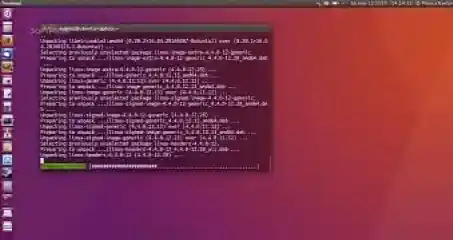
Ubuntu: Kernel Update for 30+ Flaws Critical: Driver Security Risks
Canonical has released the first Linux kernel security update for all of its supported Ubuntu Linux releases to address more than 30 security vulnerabilities. Learn more about this update and its implications for Ubuntu users: . AffectingUbuntu19.10 and Ubuntu 18.04 LTS systems using Linux kernel 5.3, the new security update addresses two heap-based buffer overflows in the Marvell WiFi-Ex and Marvell Libertas WLAN drivers, as well as flaws in the Fujitsu ES network device driver, Broadcom V3D DRI driver, Mellanox Technologies Innova driver, and Mellanox Technologies ConnectX driver. Additionally, issues were resolved in Linux kernel's Intel WiMAX 2400 driver, Geschwister Schneider USB CAN interface driver, netlink-based 802.11 configuration interface, event tracing subsystem, the driver for memoryless force-feedback input devices, Microchip CAN BUS Analyzer driver, PEAK-System Technik USB driver, ALSA timer implementation, and DesignWare USB3 controller driver. The link for this article located at Softpedia News is no longer available. . Several Ubuntu versions have been issued essential kernel updates correcting over 30 vulnerabilities linked to hardware drivers and memory buffer overflows.. Ubuntu Kernel Update, Linux Security, Driver Vulnerabilities, Canonical Security, Heap Overflow Fixes. . LinuxSecurity.com Team
Jan 08, 2020
•
Security Projects
78
 security advisoryvulnerabilitycritical patch
Microsoft: Critical Zero-Day Flaws Require Urgent Attention
Microsoft maintained the pressure on system administrators this month by releasing fixes for over 70 vulnerabilities in its products, two of which are classed as zero-day flaws. . The 15 updates released by Redmond cover 74 unique CVEs in Windows, Internet Explorer, Edge, Office, SharePoint and Exchange. Just like last month, two of them are being actively exploited in the wild and should be prioritized. The link for this article located at InfoSecurity is no longer available. . Apple has rolled out its latest updates tackling 52 security vulnerabilities, with three of them categorized as urgent zero-day threats that demand prompt action from IT professionals.. Windows Updates,ZERO-Day Flaws,Security Patches. . LinuxSecurity.com Team
Apr 10, 2019
•
Vendors/Products
67
 security advisoryOpenSSLcritical patch
RHEL: Critical OpenSSL Patches Needed Now to Mitigate Serious Risks
At first glance, you might not think that the latest set of OpenSSL security patches are that important. Sure, there's a dozen of them and two are serious, but are they really that bad? Yes, actually they're not just bad, they're awful.. True, some operating systems, such as Red Hat Linux Enterprise (RHEL), aren't greatly impacted by these latest problems. But if you're using any operating system that uses OpenSSL 1.0.2 or OpenSSL versions: 1.0.1, 1.0.0 and 0.9.8, it's another story. The link for this article located at ZDNet Blogs is no longer available. . Multiple platforms are providing essential updates for OpenSSL; take immediate action to safeguard your infrastructure and reduce vulnerabilities.. OpenSSL Patches, RHEL Security, Critical Updates, Risk Mitigation. . LinuxSecurity.com Team
Mar 19, 2015
•
Cryptography
78
security advisorysoftware updateremote executionMozilla Firefox: 10 Patches Released For Critical Remote Issues
Mozilla released 10 patches for three versions of its Firefox browser on Tuesday, five of which are considered critical and could be used to remotely install malicious code.. The U.S. Computer Emergency Readiness Team warned that the problems "could allow a remote attacker to execute arbitrary code, bypass intended access restrictions, cause a denial-of-service condition or obtain sensitive information." The link for this article located at Network World is no longer available. . Google has issued 12 security updates for Chrome, with six classified as critical, aimed at mitigating vulnerabilities that could allow malicious remote code execution.. Mozilla Firefox Patches, Remote Code Execution, Browser Fixes. . LinuxSecurity.com Team
Oct 30, 2013
•
Vendors/Products
78
security advisorycritical patchauthentication issueSiemens: Security Update Announcement for SCADA Authentication Issues
In the wake of a researcher's public disclosure of flaws in Siemens products that could let an attacker take over a control system without even knowing the username and password, Siemens today said it will issue security updates in January to fix product vulnerabilities. . Security researcher Billy Rios on Tuesday posted details in his blog of some of the vulnerabilities he and fellow researcher Terry McCorke had found and reported to the ICS-CERT and Siemens in May. Siemens confirmed it was in the process of fixing the flaws today after Rios cried foul when the company appeared to deny the existence of the vulnerabilities that he and fellow researcher Terry McCorke had been working with the company on fixing. The link for this article located at Dark Reading is no longer available. . Security researcher Billy Rios on Tuesday posted details in his blog of some of the vulnerabilities . researcher's, public, disclosure, flaws, siemens, products, attac. . LinuxSecurity.com Team
Dec 23, 2011
•
Vendors/Products
78
security advisorycode executioncritical patchAdobe Flash Player Urgent Update: Vulnerabilities and Code Execution Risks
Adobe's Flash Player software is on 99 percent of Internet-connected desktops, offering up multimedia and video capabilities on a multitude of popular Web sites such as YouTube. But the Adobe Flash platform has been beset by a rash of security problems that give intruders potential access to computers running the software. . Issues have included one recent vulnerability described as "frighteningly bad" by a security expert. Technologists, however, disagree on the severity of Flash's weaknesses. Some say Flash is merely a victim of its own success, attracting attention from those with bad intentions but being no worse off than other software platforms when it comes to its inherent security. An alternate opinion is that Adobe simply lacks tight security practices in its internal development procedure and so has become a preferred vector for cyberthieves. A review of Flash-focused security incidents of late raises eyebrows: Just last week, Adobe issued a critical patch for both Flash and AIR; the fixed flaws included what Adobe called "a vulnerability in the parsing of JPEG data that could potentially lead to code execution." Foreground Security in November detailed what one company official has described as a "frighteningly bad" security flaw in which an attacker can put a malicious Flash object on a Web site via user-generated content capabilities. Malicious scripts can then be executed. Adobe in July confirmed a Flash zero-day bug in its Flash and Reader software had a critical vulnerability on Windows, Macintosh, Linux, and Solaris operating systems that could cause a crash and enable an intruder to take control of a system. Product updates were issued to resolve the problem. The link for this article located at ComputerWorld is no longer available. . Adobe Flash encounters severe vulnerabilities. Essential updates are addressed for enhanced online safety.. Adobe Flash vulnerabilities, Flash Player security, multimedia threats. . LinuxSecurity.com Team
Dec 15, 2009
•
Vendors/Products

Get the latest News and Insights
Get the latest Linux and open source security news straight to your inbox.
Community Poll
Should Linux servers automatically install security updates?
Trending News
Search Topics
Powered By

Linux Security - Your source for Top Linux News, Advisories, HOWTOs and Feature Releases
QUICK LINKS
subscribe to newsletters!
Like staying secure? So do we.
Sign up for updates, tips, and alerts!