Overly broad permissions can turn one compromised account into a much larger security problem. Learn how to reduce unnecessary access, review privileges, and apply least privilege across modern Linux systems. Review Linux Privileges×



Desktop Security security advisory vulnerability
security advisory vulnerability GNOME is officially shortening its standard vulnerability disclosure window from 90 days to 30 days, a change that impacts upstream maintainers, downstream Linux distributions, and system administrators in how they handle software vulnerabilities. The policy shift, announced by long-time security coordinator Michael Catanzaro , addresses modern software patching realities and a growing influx of automated submissions. . Because GNOME is the default desktop environment on several major Linux...
 Jul 21, 2026

Security Vulnerabilities security advisory moderate
security advisory moderate For organizations that run a self-hosted Git platform, it’s no longer just about hosting static code repositories. Today, Git servers are responsible for deployment pipelines, API tokens, SSH keys, package repositories, and the automation scripts that push code directly. Confirm that the upgrade addresses known vulnerabilities but also provides production environments. . That makes them trusted systems within the development environment and attractive targets for attackers looking to move...
Jul 20, 2026

Server Securitydata privacy automation
data privacy automation Every system admin has lived through the same Monday morning ritual. A queue of forty tickets, half of them password resets, permission errors, or disk space warnings that any experienced technician could resolve in under two minutes. The other half require actual judgment. For years, automation promised that software would eventually sort the two apart on its own. That promise is now being tested in production Linux environments. . Early results are reshaping how IT teams think about tier-1...
Jul 17, 2026

Privacydata collection automation
data collection automation You're running a web scraping project to collect pricing data from e-commerce sites. You set up a pool of datacenter proxies, launch your scripts, and within minutes — banned . CAPTCHAs everywhere. Your data pipeline stops before it really begins. . It's a frustrating scenario that plays out daily in ad verification, market research, and multi-account management. The website doesn't know you're doing legitimate research or monitoring. It just sees traffic coming from IP ranges it recognizes as...
Jul 17, 2026

Security Trends security advisory social engineering
security advisory social engineering Business Email Compromise used to be a numbers game — mass-blasted emails, broken English, an obvious "URGENT WIRE TRANSFER" subject line. That era is over. Generative AI has turned BEC into a tailored, low-noise operation that mimics writing style, voice, and even video presence. This piece looks at what's actually changed under the hood, what defenders are testing in response, and why so many organizations are still structurally unprepared for it. . The Infrastructure Problem Nobody Wants to...
Jul 17, 2026
 Refine news
X Clear Filters
Get the latest News and Insights
Get the latest Linux and open source security news straight to your inbox.
Community Poll
Should Linux servers automatically install security updates?
Trending News
Loading...
Explore Latest Linux Security news
We found 15 articles for you...
210
 security advisoryremote code executionpatch management
Google Chrome 124 Critical Security Update: Risks and Impact on Linux
The release of Google Chrome 124 addresses four vulnerabilities, including a critical security flaw enabling remote attackers to execute arbitrary code, potentially resulting in data loss or full system compromise. The Google Stable channel has been updated to 124.0.6367.78 for Linux, mitigating these dangerous bugs. To help you safeguard your critical Linux systems and sensitive data, let's examine the flaws found in Chrome and Chromium - its open-source foundation, their security implications, and the importance of patching to secure your systems. . What Vulnerabilities Have Been Discovered & Fixed in Google Chrome? A critical Type Confusion vulnerability has been found in the ANGLE graphics layer engine ( CVE-2024-4058 ). This flaw allows attackers to remotely execute arbitrary code or perform sandbox escapes, which can result in unauthorized access, data loss, corruption, or complete system compromise. This presents a significant threat to user privacy and information security. This vulnerability was discovered by Toan (suto) Pham and Bao (zx) Pham of Qrious Secure. As a result, Google awarded them a $16,000 bounty. This raises questions about the effectiveness of Google's bounty program and whether the rewards are proportionate to the severity of the flaws discovered. It also highlights the role of ethical hacking and bug bounty programs in identifying and patching vulnerabilities. Another high-severity vulnerability identified is an out-of-bounds read in the V8 API ( CVE-2024-4059 ), also addressed in this update. However, Google Chrome withheld information regarding the reward for this issue. This lack of transparency raises concerns about how rewards are assigned in bug bounty programs and whether specific vulnerabilities are prioritized less. Admins and security practitioners must understand the full extent of the vulnerabilities and their implications, as this information can inform their risk assessment and mitigation strategies. Furthermore, a use-after-free condition hasbeen identified in the Dawn implementation of the WebGPU standard ( CVE-2024-4060 ). While details about the reward for this issue are also withheld, this issue emphasizes the importance of thoroughly testing and reviewing open-source software , as even popular and widely used projects can contain critical security flaws. What Are the Implications & Longterm Consequences of These Flaws? The implications of these vulnerabilities go beyond immediate risks. They raise questions about the effectiveness of the software development and testing processes employed by Google and the broader industry. We cannot understate the impact of these vulnerabilities on admins and organizations. They expose sensitive data, leading to financial loss and eroding trust in online platforms. Therefore, Linux admins and impacted organizations must immediately update Chrome to the latest version to ensure their systems are secure. You will find information on how to update to Chrome 124 here. Our Final Thoughts on These Google Chrome Bugs This critical security update for Google Chrome addresses several vulnerabilities, including a crucial flaw that enables attackers to steal data and fully compromise systems. In this article, we've highlighted the implications and raised questions about the effectiveness of bug bounty programs, the transparency of rewards, and the development and testing processes employed by Google. As security practitioners and members of the open-source community, it is crucial to understand the implications of these vulnerabilities and take immediate action to update systems and advocate for robust security practices . By staying informed and proactive , we can better protect ourselves and our organizations from potential cyber threats. . Assess fundamental weaknesses in the Chrome version 124 upgrade aimed at reducing vulnerabilities to data compromise and security breaches for Linux operating system users.. Chrome Security Update, Critical Flaws in Chrome, Linux Browser Security, BugBounty Program Insights. . Brittany Day
 May 30, 2024
•
May 30, 2024
• Security Vulnerabilities
215
 security advisoryarbitrary code executionKDE
KDE Warning: Global Themes May Cause Data Loss and Execution Threats
The KDE team has warned Linux users about the potential risks of installing global themes. They have emphasized the need for vigilance and careful consideration when downloading and using themes, even from official sources like the KDE Store. Global themes and widgets created by third-party developers can run arbitrary code, resulting in unexpected consequences, including deleting personal data. At least one user had had their files wiped after installing a faulty global Plasma theme. . What Are the Risks of Installing Global Themes? How Can I Avoid These Dangers? KDE's warning highlights an important issue that could have significant implications for Linux users and the broader open-source community. The fact that arbitrary code execution is required for global themes to customize the desktop's appearance raises concerns about security and integrity. The potential for malicious actors to exploit this functionality is a severe security risk that should not be taken lightly. It is crucial to note the lack of resources for reviewing the code used in each global theme before they are included in the official KDE Store. This raises questions about the responsibility of both the developers and the users. While developers should ensure that their themes are thoroughly tested and free from malicious code or vulnerabilities , users should exercise caution and thoroughly evaluate them or rely on reviews from trusted sources. KDE has shared one specific incident where a global theme deleted personal data using the rm -rf command without warning or confirmation. This is a concerning example of potential damage. This incident highlights the need for robust security measures and thorough validation processes within the KDE Store and other repositories to ensure the safety of Linux users. The implications of this issue go beyond data loss. It raises questions about users' trust and confidence in the themes available in open-source repositories. Malicious actors' ability to upload themes withoutproper vetting or oversight can undermine the overall security of the Linux ecosystem. The KDE team and other open-source communities must take immediate steps to address this issue, including implementing more robust validation processes and promoting user awareness and education about the potential risks. Linux admins must remain vigilant and exercise caution when downloading and installing themes or any other software, even from trusted sources. They should thoroughly evaluate the code and functionality of themes before implementation, considering the potential consequences of executing arbitrary code on their systems. Our Final Thoughts on the Implications of KDE's Warning This article serves as a timely reminder to the Linux community about the importance of security and caution, even within the open-source world. The previously mentioned data loss incident is a stark reminder of the potential risks and the need for robust security measures. As security practitioners, we must remain proactive in identifying and mitigating potential vulnerabilities and educating users about the dangers they face. . KDE alerts users regarding dangers posed by global themes that could erase personal files. Discover strategies to safeguard against these risks.. KDE Themes Risks, Open Source Security, Linux Data Security. . Brittany Day
Mar 22, 2024
•
Desktop Security

79
security advisorycriticaldebianDebian 12.3 Release Postponed Because of EXT4 Data Loss Issue
The Debian project has announced that it is delaying the release of its next version, Debian 123. This delay is because developers are working on fixing a bug that causes EXT4 file systems to become corrupt. . The bug occurs when the system writes too much data in too short a time to the EXT4 file system, leading to data loss and corruption. This affects only some distributions based on Debian, such as Ubuntu, Linux Mint, and Raspbian. The bug was found by a developer named Timo Teräs, who posted about it on Launchpad, an open-source collaboration website owned by Canonical Ltd. After finding out about the bug, Canonical contacted Debian about it and suggested that they delay releasing their new version until they could fix this issue. The team at Debian then decided to delay their release until they could fix this problem so that there would not be any risk posed by using EXT4 file systems within their operating system (OS). Check out the article linked below for more details on this bug. I'm disappointed to see this release put on hold, but happy to see the Debian team prioritizing security over speed. The link for this article located at Phoronix is no longer available. . Debian delays version release for EXT4 data corruption issue, ensuring system integrity before launch.. Debian Release Delay, EXT4 Corruption Issue, Data Loss. . LinuxSecurity.com Team
Dec 10, 2023
•
Security Projects
210
 security advisorycriticaldata loss
Linux Kernel 5.12 RC2 Early Release: Critical Swap File Issue Resolved
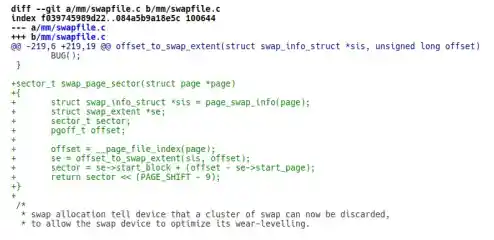
Linux Kernel 5.12 RC2 has been released early due to a nasty swap file bug. Do not use Linux Kernel 5.12 RC1 for testing - you stand to lose data! . In the Kernel mailing list, Linus Torvalds announced the early release of Linux Kernel 5.12 rc2. The reason for early release because of a critical swap file bug that exists in Linux Kernel 5.12 rc1 which may cause direct damage to your file system data by overwriting them. If your Linux distribution uses swap files (not swap partition) and if you are running the Linux Kernel 5.12 rc1 then you are probably impacted. . The release of Linux Kernel 5.12 RC2 has been expedited in response to a significant swap file problem that poses threats of potential data loss.. Kernel Update, Critical Bug, Early Release, Data Loss, Linux Kernel. . Brittany Day
Mar 09, 2021
•
Security Vulnerabilities
83
 security advisorycriticaldata loss
Linux 5.1 Critical Advisory: Data Loss Risk from FSTRIM on LVM and dm-crypt
As a forewarning to those using LVM, dm-crypt, and Samsung solid-state drives, this combination in some manner(s) may lead to data corruption if using the Linux 5.1 kernel. . Linux FSTRIM/Discard is being too aggressive leading to data loss on certain setups, which at this point seem to be isolated to those using LVM and dm-crypt. The device mapper bug in Linux 5.1 is causing for blocks to be discarded wrongly or too much and that can lead to "massive data loss" issues. The link for this article located at Phoronix is no longer available. . The FSTRIM utility in Linux could significantly threaten data integrity for users of Logical Volume Management, dm-crypt, or Samsung SSDs. Linux Kernel, Data Loss Bug, Overly Aggressive FSTRIM, LVM, dm-crypt. . LinuxSecurity.com Team
May 25, 2019
•
Hacks/Cracks
83
 malwarecybersecuritylegal documents
US Law Firm Battles Major Data Loss From Cryptolocker Ransomware
A small US law firm has bravely admitted losing its entire cache of legal documents to the Cryptolocker Trojan despite attempting to pay the $300 (. According to TV reports, Goodson The link for this article located at TechWorld is no longer available. . According to TV reports, GoodsonThe link for this article located at TechWorld is no longer availabl. small, bravely, admitted, losing, entire, cache, legal, documents, cryptoloc. . LinuxSecurity.com Team
Feb 07, 2014
•
Hacks/Cracks
77
security threatsmalware riskdata lossEC2 Security Concerns: Unauthorized Access And Malware Risks
Using Amazon's EC2 (Elastic Compute Cloud) can pose a security threat to organizations and individuals alike, though Amazon's not to blame, according to researchers from Eurecom, Northeastern University, and SecludIT. . Rather, third parties evidently are not following best security practices when using preconfigured virtual machine images available in Amazon's public catalog, leaving users and providers open to such risks as unauthorized access, malware infections, and data loss. The researchers say similar security vulnerabilities may be present in other public clouds from such providers as Rackspace, IBM, Joyent, and Terremark. The underlying message is that for all the power and opportunity of public clouds, providers and users alike need to approach with caution and embrace best security practices. Cloud infrastructure providers can't be expected to assess the security of every image, bit, and transaction that occurs on their machines any more than an apartment landlord can be responsible for everything that happens within his or her complex -- that is, what tenants do behind closed doors in the spaces they rent. The link for this article located at InfoWorld is no longer available. . Rather, third parties evidently are not following best security practices when using preconfigured v. using, amazon', (elastic, compute, cloud), security, threat, organizations, individua. . LinuxSecurity.com Team
Nov 10, 2011
•
Server Security
77
data backupdata losssecurity practiceEssential Strategies for Data Protection on World Backup Day
Hello, world! Today it's your Backup Day. World Backup Day is a new idea promoted by a small team of Redditors, and it's a good idea. You can never be too careful when it comes to backing up.. By the way, this is about your data, and not calling your buddies over for help in a hostile situation, which is not really my area of expertise. So let's talk backups! Basically it means putting your data in multiple places so that if something happens to one place (let's say you forget your laptop on the top of your car and subsequently back over it), that important PowerPoint presentation you've been working on isn't lost. The link for this article located at CNET is no longer available. . By the way, this is about your data, and not calling your buddies over for help in a hostile situati. world, backup, hello, today, promoted, small. . LinuxSecurity.com Team
Apr 01, 2011
•
Server Security

Get the latest News and Insights
Get the latest Linux and open source security news straight to your inbox.
Community Poll
Should Linux servers automatically install security updates?
Trending News
Search Topics
Powered By

Linux Security - Your source for Top Linux News, Advisories, HOWTOs and Feature Releases
QUICK LINKS
subscribe to newsletters!
Like staying secure? So do we.
Sign up for updates, tips, and alerts!