Overly broad permissions can turn one compromised account into a much larger security problem. Learn how to reduce unnecessary access, review privileges, and apply least privilege across modern Linux systems. Review Linux Privileges×



Desktop Security security advisory vulnerability
security advisory vulnerability GNOME is officially shortening its standard vulnerability disclosure window from 90 days to 30 days, a change that impacts upstream maintainers, downstream Linux distributions, and system administrators in how they handle software vulnerabilities. The policy shift, announced by long-time security coordinator Michael Catanzaro , addresses modern software patching realities and a growing influx of automated submissions. . Because GNOME is the default desktop environment on several major Linux...
 Jul 21, 2026

Security Vulnerabilities security advisory moderate
security advisory moderate For organizations that run a self-hosted Git platform, it’s no longer just about hosting static code repositories. Today, Git servers are responsible for deployment pipelines, API tokens, SSH keys, package repositories, and the automation scripts that push code directly. Confirm that the upgrade addresses known vulnerabilities but also provides production environments. . That makes them trusted systems within the development environment and attractive targets for attackers looking to move...
Jul 20, 2026

Server Securitydata privacy automation
data privacy automation Every system admin has lived through the same Monday morning ritual. A queue of forty tickets, half of them password resets, permission errors, or disk space warnings that any experienced technician could resolve in under two minutes. The other half require actual judgment. For years, automation promised that software would eventually sort the two apart on its own. That promise is now being tested in production Linux environments. . Early results are reshaping how IT teams think about tier-1...
Jul 17, 2026

Privacydata collection automation
data collection automation You're running a web scraping project to collect pricing data from e-commerce sites. You set up a pool of datacenter proxies, launch your scripts, and within minutes — banned . CAPTCHAs everywhere. Your data pipeline stops before it really begins. . It's a frustrating scenario that plays out daily in ad verification, market research, and multi-account management. The website doesn't know you're doing legitimate research or monitoring. It just sees traffic coming from IP ranges it recognizes as...
Jul 17, 2026

Security Trends security advisory social engineering
security advisory social engineering Business Email Compromise used to be a numbers game — mass-blasted emails, broken English, an obvious "URGENT WIRE TRANSFER" subject line. That era is over. Generative AI has turned BEC into a tailored, low-noise operation that mimics writing style, voice, and even video presence. This piece looks at what's actually changed under the hood, what defenders are testing in response, and why so many organizations are still structurally unprepared for it. . The Infrastructure Problem Nobody Wants to...
Jul 17, 2026
 Refine news
X Clear Filters
Get the latest News and Insights
Get the latest Linux and open source security news straight to your inbox.
Community Poll
Should Linux servers automatically install security updates?
Trending News
Loading...
Explore Latest Linux Security news
We found 0 articles for you...
83
 Linux securitythreat detectiondefense strategies
Malicious Linux Shell Scripts: Evasion Techniques And Defense Strategies
The Uptycs Threat Research team outlines how malicious Linux shell scripts are used to cloak attacks and how defenders can detect these threats and mitigate their risk of suffering an attack. . Evasive techniques used by attackers, date back to the earlier days, when base64 and other common encoding schemes were used. Today, attackers are adopting new Linux shell script tactics and techniques to disable firewalls, monitoring agents and modifying access control lists (ACLs). In previous Uptycs Threat Research posts, we discussed the common utilities in Linux, which are generally used by threat actors in the attack chain. In this report, we highlight those common defense evasion techniques, which are common in malicious Linux shell scripts. And then, we outline how Uptycs spots and mitigates against them. . Deceptive UNIX shell scripts employ stealth measures; explore methods to identify and counteract these harmful scripts proficiently.. Malicious Linux Scripts, Evasion Tactics, Threat Detection, Risk Management. . LinuxSecurity.com Team
 Jul 30, 2021
•
Jul 30, 2021
• Hacks/Cracks
83
 apachemalwareApache server
Updated Pro-Ocean Malware Targets Apache, Oracle And Redis Privacy Issues
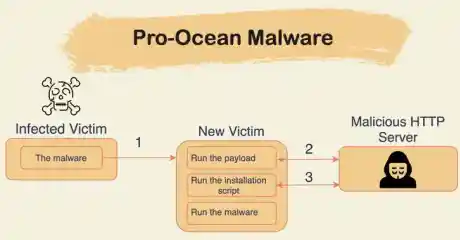
The evasive new Pro-Ocean cryptojacking malware is sidestepping security defenses and targeting Apache, Oracle and Redis servers. . A financially-motivated threat actor notorious for its cryptojacking attacks has leveraged a revised version of their malware to target cloud infrastructures using vulnerabilities in web server technologies, according to new research. Deployed by the China-based cybercrime group Rocke , the Pro-Ocean cryptojacking malware now comes with improved rootkit and worm capabilities, as well as harbors new evasion tactics to sidestep cybersecurity companies' detection methods, Palo Alto Networks' Unit 42 researchers said in a Thursday write-up. "Pro-Ocean uses known vulnerabilities to target cloud applications," the researchers detailed. "In our analysis, we found Pro-Ocean targeting Apache ActiveMQ ( CVE-2016-3088 ), Oracle WebLogic ( CVE-2017-10271 ) and Redis (unsecure instances)." The link for this article located at The Hacker News is no longer available. . An economically-motivated cybercriminal has unveiled a new variant of the Aqua-Mine cryptojacking malware targeting Angular and MySQL servers.. Pro-Ocean Malware,Cryptojacking Attacks,Cloud Application Threats. . LinuxSecurity.com Team
Feb 01, 2021
•
Hacks/Cracks

83
 malwareenterprise securitypassword theft
Qakbot Password-Stealing Malware's Evasion Tactics Overview
A well-known form of malware which has been stealing login credentials and finances from enterprises for over a decade has once again been updated with new tricks to make it more effective at avoiding detection. . Qakbot - also known as Qbot - has been afflicting businesses since 2008, using worm-like capabilities to spread. The information-stealing trojan malware targets Microsoft Windows systems in an effort to create backdoors and make off with the usernames and passwords which can provide access to financial data. The link for this article located at ZDNet is no longer available. . Qakbot - also known as Qbot - has been afflicting businesses since 2008, using worm-like capabilitie. well-known, malware, which, stealing, login, credentials, finances, enterprises. . LinuxSecurity.com Team
May 03, 2019
•
Hacks/Cracks
83
 malwaresecurity technologiesspam
Spammers and Botnets Adapt With Disposable Domains for Evasion
Spammers and the botnet operators they're allied with are continuing to adapt their techniques to evade security technologies, and now are using what amount to disposable domains for their activities. A new report shows that the spammers are buying dozens of domains at a time and moving from one to another as often as several times a day to prevent shutdowns.. Spammers for years have been buying domains in bulk and using them for both redirections to other, often malicious, sites and for locations to set up quick e-commerce sites for sales of pills, pirated software, fake watches or whatever goods they're pushing that day. Anti-spam services and email filters typically use static lists of known malicious domains or ones known to be used by spammers. That approach worked well early on in the fight against spam, but as the spammers have analyzed the defenses deployed against them, their tactics have become much more devious and effective of late. New research by security firm M86 Security Labs shows that the amount of time that a spammer uses a given domain is basically a day or less. The company looked at 60 days worth of data from their customers and found that more than 70 percent of the domains used by spammers are active for a day or less. The link for this article located at ThreatPost is no longer available. . Spammers for years have been buying domains in bulk and using them for both redirections to other, o. spammers, botnet, operators, they're, allied, continuing, adapt, their, techniques. . LinuxSecurity.com Team
Jul 15, 2010
•
Hacks/Cracks
83
malwaresecurity risksweb applicationsObfuscating Malicious Code Within Compromised Sites - Methods of Avoidance
Criminals are increasingly attempting to conceal malware embedded in hacked websites from search engines such as Yahoo! and Google. Their aim is to prevent browsers which use technology such as Google's Safe Browsing API from sounding the alarm when a user visits a hacked website. Google's Safe Browsing API allows client applications to query Google's phishing and malware blacklist. Firefox and Google Chrome both make use of the API, which is based on Google searches of websites for suspicious code.. If a Google search bot reaches one of these sites that conceal malware, it is recognised and simply fed harmless code. Web applications can identify visits from Google from the IP address and from the user agent (googlebot, yahoo) and can then use this information to control optional redirects to other pages. This can be achieved with just a few lines of code inserted into a hacked PHP web application. Fraudsters often use compromised websites, but also sometimes use special blog software. The link for this article located at H Security is no longer available. . Criminals conceal malware embedded in hacked websites to evade detection by search engines, using tactics to mislead bots and users.. Malware Concealment, Hacked Websites, Search Engine Evasion, Web Application Security. . LinuxSecurity.com Team
Apr 26, 2010
•
Hacks/Cracks

Get the latest News and Insights
Get the latest Linux and open source security news straight to your inbox.
Community Poll
Should Linux servers automatically install security updates?
Trending News
Search Topics
Powered By

Linux Security - Your source for Top Linux News, Advisories, HOWTOs and Feature Releases
QUICK LINKS
subscribe to newsletters!
Like staying secure? So do we.
Sign up for updates, tips, and alerts!