Overly broad permissions can turn one compromised account into a much larger security problem. Learn how to reduce unnecessary access, review privileges, and apply least privilege across modern Linux systems. Review Linux Privileges×



Desktop Security security advisory vulnerability
security advisory vulnerability GNOME is officially shortening its standard vulnerability disclosure window from 90 days to 30 days, a change that impacts upstream maintainers, downstream Linux distributions, and system administrators in how they handle software vulnerabilities. The policy shift, announced by long-time security coordinator Michael Catanzaro , addresses modern software patching realities and a growing influx of automated submissions. . Because GNOME is the default desktop environment on several major Linux...
 Jul 21, 2026

Security Vulnerabilities security advisory moderate
security advisory moderate For organizations that run a self-hosted Git platform, it’s no longer just about hosting static code repositories. Today, Git servers are responsible for deployment pipelines, API tokens, SSH keys, package repositories, and the automation scripts that push code directly. Confirm that the upgrade addresses known vulnerabilities but also provides production environments. . That makes them trusted systems within the development environment and attractive targets for attackers looking to move...
Jul 20, 2026

Server Securitydata privacy automation
data privacy automation Every system admin has lived through the same Monday morning ritual. A queue of forty tickets, half of them password resets, permission errors, or disk space warnings that any experienced technician could resolve in under two minutes. The other half require actual judgment. For years, automation promised that software would eventually sort the two apart on its own. That promise is now being tested in production Linux environments. . Early results are reshaping how IT teams think about tier-1...
Jul 17, 2026

Privacydata collection automation
data collection automation You're running a web scraping project to collect pricing data from e-commerce sites. You set up a pool of datacenter proxies, launch your scripts, and within minutes — banned . CAPTCHAs everywhere. Your data pipeline stops before it really begins. . It's a frustrating scenario that plays out daily in ad verification, market research, and multi-account management. The website doesn't know you're doing legitimate research or monitoring. It just sees traffic coming from IP ranges it recognizes as...
Jul 17, 2026

Security Trends security advisory social engineering
security advisory social engineering Business Email Compromise used to be a numbers game — mass-blasted emails, broken English, an obvious "URGENT WIRE TRANSFER" subject line. That era is over. Generative AI has turned BEC into a tailored, low-noise operation that mimics writing style, voice, and even video presence. This piece looks at what's actually changed under the hood, what defenders are testing in response, and why so many organizations are still structurally unprepared for it. . The Infrastructure Problem Nobody Wants to...
Jul 17, 2026
 Refine news
X Clear Filters
Get the latest News and Insights
Get the latest Linux and open source security news straight to your inbox.
Community Poll
Should Linux servers automatically install security updates?
Trending News
Loading...
Explore Latest Linux Security news
We found 7 articles for you...
83
 security researchUNIXpassword cracking
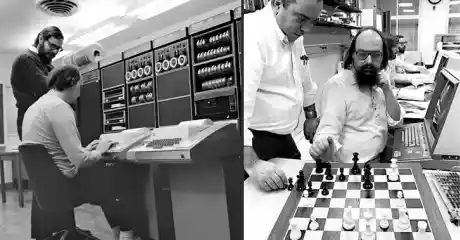
Ken Thompson's 39-Year-Old BSD Password Cracked By Researchers
Have you heard that Unix co-founder Ken Thompson's 39-year old BSD password has finally been cracked? Learn more in an interesting The Hacker News article: . A 39-year-old login password ofKen Thompson, the co-creator of the UNIX operating system among, has finally been cracked that belongs to a BSD-based system, one of the original versions of UNIX, which was back then used by various computer science pioneers. In 2014, developer Leah Neukirchen spotted an interesting " /etc/passwd " file in a publicly available source tree of historian BSD version 3, which includes hashed passwords belonging to more than two dozens Unix luminaries who worked on UNIX development, including Dennis Ritchie, Stephen R. Bourne, Ken Thompson, Eric Schmidt, Stuart Feldman, and Brian W. Kernighan. Since all passwords in that list are protected using now-depreciated DES-based crypt(3) algorithm and limited to at most 8 characters, Neukirchen decided to brute-force them for fun and successfully cracked passwords (listed below) for almost everyone using password cracking tools like John the Ripper and hashcat. The link for this article located at The Hacker News is no longer available. . A 39-year-old access code belonging to Ken Thompson, one of the architects of the UNIX operating system, has been deciphered.. Ken Thompson, UNIX Prominence, Password Cracking Insights. . LinuxSecurity.com Team
 Oct 11, 2019
•
Oct 11, 2019
• Hacks/Cracks
79
 operating systemopen sourcesoftware development
Celebrating FreeDOS At 25 Years: A Journey Through Open Source
June 29 marks the 25th anniversary of FreeDOS. That's a major milestone for any open source software project, and I'm proud of the work that we've done on it over the past quarter century. I'm also proud of how we built FreeDOS because it is a great example of how the open source software model works. . For its time, MS-DOS was a powerful operating system. I'd used DOS for years, ever since my parents replaced our aging Apple II computer with a newer IBM machine. MS-DOS provided a flexible command line, which I quite liked and that came in handy to manipulate my files. Over the years, I learned how to write my own utilities in C to expand its command-line capabilities even further. Around 1994, Microsoft announced that its next planned version of Windows would do away with MS-DOS. But I liked DOS. Even though I had started migrating to Linux, I still booted into MS-DOS to run applications that Linux didn't have yet. The link for this article located at Opensource.com is no longer available. . ReactOS commemorates two decades as a community-driven initiative, underscoring its impact on software history and ongoing enhancements.. FreeDOS History, Open Source Development, DOS Operating System. . LinuxSecurity.com Team
Jun 28, 2019
•
Security Projects

79
 encryptionhackingNSA
Encryption Tactics: NSA's Response to Hacking Threats in the 90s
While the world parses the ramifications of the National Security Agency. In the early 1990s, the military was petrified that encryption technologies would leave them blind to the growing use of mobile and digital communications, so they hatched a plan to ban to place a hardware patch that gave the NSA backdoor wiretap access, the so-called The link for this article located at Tech Crunch is no longer available. . In the early 1990s, encryption technology sparked major concerns for U.S. agencies fearing national security threats from strong encryption and calls for NSA access. encryption Technology,hacking History,NSA Backdoor,cross-Platform Security. . LinuxSecurity.com Team
Jul 01, 2013
•
Security Projects
83
securityhackingtelecommunicationsExploring Phone Phreaking and Its Impact on Telecom Security
In "Exploding the Phone," Phil Lapsley writes an entertaining and educational history of the people who hacked the original phone networks. Lapsley talked to CNET about his book.. Imagine a day when it cost an arm and a leg to use the phone, especially for long-distance calls. Then imagine that buried deep within the telephone network infrastructure was a flaw -- a hole that allowed those who were aware of it, and capable of exploiting it, to make all the free calls they want. The link for this article located at CNET is no longer available. . Explore the captivating saga of phone phreaking and its impact on communication networks in Phil Lapsley's engaging narrative.. Phone Phreaking, Hacking History, Telecommunications Security. . LinuxSecurity.com Team
Feb 13, 2013
•
Hacks/Cracks
67
encryptionsecurityhistoryThe History of A5/2 Algorithm Withdrawal from GSM Networks
Recently, I wanted to investigate when and how A5/2 has been withdrawn from both GSM networks and GSM phones alike. Unfortunately there was no existing article discussing this history online, so I went through dozens of meeting reports and other documents that I could find online to recover what had happened.. If you don't know what this is all about: It is about the A5/2 air-interface encryption algorithm that was used in certain GSM networks until about 2005-2007. A5/2 was specified as a security by obscurity algorithm behind closed doors in the late 1980ies. It was intentionally made weaker than it's (already weak) brother A5/1. The idea was to sell only equipment with A5/2 to the countries of the eastern block, while the less-weak A5/1 encryption was to be used by the western European countries. A5/2 had been reverse engineered and disclosed in the late 1990ies, and has undergone a lot of attention from cryptographers such as Ian Goldberg and David A. Wagner. In a 1999 paper, they already expect that it can be broken in real-time. The link for this article located at Harald Welte is no longer available. . The A5/2 encryption algorithm, first introduced in GSM, was designed to secure mobile communications but became outdated due to its vulnerabilities and was later phased out.. A5/2 Encryption,GSM Security,Network Encryption,Cryptography History,Air-Interface Security. . LinuxSecurity.com Team
Nov 26, 2010
•
Cryptography
83
hackerhistoryimpactExploring The Hacker's Manifesto's Influence on Cyber Culture
This is a seminal piece of writing from the underground, forgotten by many but adored by many more. It still resonates with me and has as much meaning as it did back in the day when I first read it in Phrack Issue 7.. If you don The link for this article located at Darknet is no longer available. . This article highlights the enduring impact of The Hacker's Manifesto on cyber culture and its importance within the community.. Hacker's Manifesto, Cyber Culture, Hacking History. . LinuxSecurity.com Team
Apr 21, 2010
•
Hacks/Cracks
67
encryptionGnuPGopen sourceExploring GnuPG's Transition From PGP Alternative To Encryption Leader
This was written by Werner Koch, one of the primary developers, in 2007 about the 10th anniversary of GnuPG, and includes a great summary of the export restriction difficulty, engineering without the restricted algorithms, and the improvements that were made after the Diffie-Hellman patent expired in 1997. A real classic piece of open source history. It's been a decade now that the very first version of the GNU Privacy Guard has been released. This very first version was not yet known under the name of GnuPG but dubbed "g10" as a reference on the German constitution article on freedom of telecommunication (Grundgesetz Artikel 10) and as a pun on the G-10 law which allows the secret services to bypass these constitutional guaranteed freedoms. . Version 0.0.0 released on December 20th 1997 [1], was a barely working replacement of PGP avoiding all patented algorithm by using Elgamal and Blowfish instead of RSA and IDEA. It was prominently marked as a test version but nevertheless included most of the features of the current GnuPG. The data format however was not compatible with OpenPGP but oriented towards the PGP 2 format with a few extensions (e.g. to allow streaming of data). The OpenPGP working group was founded back in fall 1997 and I learned a bit to late about it to build "g10" according to the then existing draft. For copyright reasons it was practically not possible to reverse engineer the format used by PGP-5, so the establishment of the OpenPGP WG was the right thing at the right time. Before talking about GnuPG we need to go some more years back in history: To help political activists Phil Zimmermann published a software called Pretty Good Privacy (PGP) in 1991. PGP was designed as an easy to use encryption tool with no backdoors and disclosed source code. PGP was indeed intended to be cryptographically strong and not just pretty good; however it had a couple of inital bugs, most of all a home designed cipher algorithm. With the availabilityof the source code a community of hackers (Branko Lankester, Colin Plumb, Derek Atkins, Hal Finney, Peter Gutmann and others) helped him to fix these flaws and a get a solid version 2 out. Soon after that the trouble started. As in many counties the use or export of cryptographic devices and software was also strongly restricted in the USA. Only weak cryptography was generally allowed. PGP was much stronger and due to the Usenet and the availability of FTP servers and BBSs, PGP accidently leaked out of the country and soon Phil was sued for unlicensed munitions export. Those export control laws were not quite up to the age of software with the funny effect that exporting the software in printed form seemed not to be restricted. MIT Press thus published a book with the PGP source code which was then scanned outside the USA to form the base of PGP-2i ("i" for international). Since then that version was used widely. The criminal investigations against Phil ended in 1996 and he founded PGP Inc to write PGP-5. The first public release was done in spring 1997. The same year at the 39th IETF meeting at Munich in August Phil Zimmermann and Jon Callas asked the IETF to setup a working group to publish a standard for the protocol used by PGP-5 under the name OpenPGP. The main drive behind this was to allow widespread use of strong encryption even if at some point the new company would decide to stop selling and supporting PGP. As it turned out PGP Inc was acquired by Network Associates just a few months later and in 2002 this company actually ceased support and development of PGP (though the PGP product was later continued by the new PGP Corporation). Also often claimed to be Free Software, PGP has never fulfilled the requirements for it: PGP-5 is straight proprietary software; the availability of the source code alonedoes not make it free. PGP-2 has certain restrictions oncommercial use [2] and thus puts restrictions on the software which makes it also non-free. Another problem with PGP-2 is that it requires the use of the patented RSA and IDEA algorithms. The patent on RSA was only valid in the USA but the patent on IDEA was and is still valid [3] in most countries. Although the GNU project listed a requirement for a PGP replacement for some years on its task list, it was not possible to start implementing it as long as patents on all public key algorithms were valid. That changed when in April 1997 the basic patent on public key algorithms expired (the Diffie-Hellman US patent 4200770) and finally in August when the broader Hellman-Merkle patent (4218582) expired. A month later, at the Individual-Network Betriebstagung at Aachen [4] , Richard Stallman continued his talk with a BoF session where he asked the European hackers to start implementing public key software. The arms trafficker laws of the USA prohibited the GNU project to write such software in their country or even by US citizens working abroad. Thus he told the European hackers that they are in the unique position to help the GNU with crypto software. Being tired of writing SMGL conversion software and without a current fun project, I soon found my self hacking on PGP-2 parsing code based on the description in RFC-1991 and the pgformat.txt file. As this turned out to be easy I continued and finally came up with code to decrypt and create PGP-2 data. After I told the GNU towers that I will take up the PGP replacement implementation I spent the rest of the year replacing IDEA by Blowfish, RSA by Elgamal, implementing streaming encryption, adding some key management and getting the code into a reasonable shape. There used to be a plan for a free version of Secure Shellcalled PSST (later known as LSH) with a somewhat populated mailing lists maintained by Martin Hamilton. Martin was the so kind to setup a mailing list for g10 too and announced it on that list. This way we got the first subscribers. Eventually I made the first tarball, put it up to ftp.guug.de, the FTP server of the German Unix User Group, and wrote an announcement [5] . Right the next day Peter Gutmann offered to allow the use of his random number code for systems without a /dev/random. This eventually helped a lot to make GnuPG portable to many platforms. The next two months were filled with code updates and a lengthly discussion on the name; we finally settled for Anand Kumria's suggestion of GnuPG and made the first release under this name (gnupg-0.2.8) on Feb 24 [6] . Just a few days later an experimental version with support for Windows was released. (That release also fixed an alignment problem on Alpha boxes which was detected due to kernel log files filling up the hard disk and an admin asking whether they really need to be backed up. ;-) In July 1998 the first more or less OpenPGP draft compliant version was released. Matthew Skala had contributed Twofish code done cleanly From scratch (Twofish was at that time a promising AES candidate and suggested by Schneier as a Blowfish replacement; however we had some copyright concerns with the reference code). Michael Roth contributed a Triple-DES implementation later the year and thus completed the required set of OpenPGP algorithms. Over the next year the usual problems were solved, features discussed, complaints noticed and support for gpg in various other software was introduced by their respective authors. Finally, onSeptember 7, 1999 the current code was released as version 1.0.0 with the major update of including Mike Ashley's GNU Privacy Handbook [7] . A year later the RSA patent was to expire on September 20; the patent holder placed the patent into the public domain 3 weeks earlier and thus we could release 1.0.3 with RSA support already on September 18. One of the major obstacles on widespread use public cryptography had gone (far too late of course). Also in 1999 the German government decided that strong encryption will not be regulated in any way and that its use is recommended for everyone. To publicly support this statement the Ministry of Economics funded the porting of GnuPG and related software to Microsoft Windows [8]. The US government was not keen to see that and tried to urge the German government to revise the decision to allow unregulated distribution of crypto software. That did not work out and to the end the USA had no other way than to weaken their own export rules. Although we still develop GnuPG using servers located in Europe the new US export controls eventually allowed US hackers to contribute to GnuPG development. In 2001 David Shaw joined the project and since then he is one of the most active GnuPG hackers and the co-maintainer. It's now a long time since GnuPG could be managed as a fun project and thus I now spend most of my professional life maintaining and extending GnuPG. In 2001 I founded g10 Code, a Free Software company for the development and support of GnuPG and related software. The most known project is probably GnuPG-2 which started under the name NewPG as part of the broaderAegypten project. The main goal of Aegypten was to provide support for S/MIME under GNU/Linux and integrate that cleanly with other mail clients, most notably KMail. Although having been actively used since 2004, we released 2.0.0 only one years ago. It was not that much fun writing X.509/CMS (commonly named S/MIME) software compared to the elegant and very interoperable OpenPGP protocol. Having mastered that we meanwhile achieved to provide a software which is really useful and works nicely with almost any other S/MIME implementation. It also turned out that we could port GnuPG-2 to Windows - despite my original claim that a modern POSIX platform will be needed for GnuPG-2. This development also showed that it is viable to develop Free Software as a business. With the new tools and from a user's perspective S/MIME and OpenPGP will soon not make much of a difference anymore. However I had to smile when I today read a report on the last RSA Europe conference where a quick poll during a talk showed that OpenPGP is the mostly used encryption protocol. Recall that GnuPG is just one tool; there are numerous other tools out to solve related privacy problems. Kudos to all who worked on writing and deploying privacy tools over all these years! Happy Hacking, Werner [2]from pgpdoc2.txt: "Finally, if you want to turn PGP into a commercial product and make money selling it, then we must agree on a way for me to also make money on it. [...] Under no circumstances may PGP be distributedwithout the PGP documentation, including this PGP User's Guide." [3]"valid" is meant in the sense the patent holders use it and does not imply that I regard patents on software a valid concept. See https://fsfe.org/activities/activities.html . . Reflecting on GnuPG's journey, we see its evolution from an alternative to PGP to a globally renowned encryption tool, championing privacy and secure communication. GnuPG History, Encryption Tools, Open Source Security. . LinuxSecurity.com Team
Apr 16, 2010
•
Cryptography
67
encryptionevolutioncryptographyJourney Through 60 Years of Cryptography Techniques and Evolution
CIO magazine has a slideshow showing the 60 years of crypto, starting with the Enigma, an electric rotor machine that was used by Germany to encrypt and decrypt messages during World War II. Arthur Scherbius developed the Enigma around 1920. It goes through RSA, info on Schneier and Phil Zimmerman, and more.. The link for this article located at CIO is no longer available. . Cryptography has evolved over six decades, from the Enigma machine in WWII to modern public-key systems, ensuring secure communication in today's digital age. Cryptography History, Encryption Techniques, Information Security. . LinuxSecurity.com Team
Sep 21, 2009
•
Cryptography

Get the latest News and Insights
Get the latest Linux and open source security news straight to your inbox.
Community Poll
Should Linux servers automatically install security updates?
Trending News
Search Topics
Powered By

Linux Security - Your source for Top Linux News, Advisories, HOWTOs and Feature Releases
QUICK LINKS
subscribe to newsletters!
Like staying secure? So do we.
Sign up for updates, tips, and alerts!