Audit Linux privileges now to limit compromise, escalation, and system-wide damage. Review Linux Privileges×


Security Vulnerabilities  email security Linux server
email security Linux server You've probably trained your team to look for red flags. Odd sender names, urgent language, mismatched links. But a well-crafted spoofed email won't trip any of those wires. It looks legitimate, sounds legitimate, and often comes from a domain that passes every automated check you throw at it. . Attackers know exactly how humans scan an inbox. They design around it. This guide walks you through the techniques attackers use to slip a spoofed email past both your filters and your users and what...
 Jul 25, 2026

Security Vulnerabilities cisa kev vulnerability prioritization
cisa kev vulnerability prioritization Most Linux teams don't struggle to find vulnerabilities anymore. They struggle to decide which ones deserve attention first. Between daily scanner results, vendor advisories, and hundreds of new CVEs each month, the challenge isn't visibility—it's prioritization. . To solve this, organizations typically lean on the National Vulnerability Database (NVD) and CISA’s Known Exploited Vulnerabilities Catalog. But these aren’t competing lists. They answer two entirely different questions. While the...
Jul 22, 2026

Desktop Securitysecurity advisory vulnerability
security advisory vulnerability GNOME is officially shortening its standard vulnerability disclosure window from 90 days to 30 days, a change that impacts upstream maintainers, downstream Linux distributions, and system administrators in how they handle software vulnerabilities. The policy shift, announced by long-time security coordinator Michael Catanzaro , addresses modern software patching realities and a growing influx of automated submissions. . Because GNOME is the default desktop environment on several major Linux...
Jul 21, 2026

Security Vulnerabilities security advisory moderate
security advisory moderate For organizations that run a self-hosted Git platform, it’s no longer just about hosting static code repositories. Today, Git servers are responsible for deployment pipelines, API tokens, SSH keys, package repositories, and the automation scripts that push code directly. Confirm that the upgrade addresses known vulnerabilities but also provides production environments. . That makes them trusted systems within the development environment and attractive targets for attackers looking to move...
Jul 20, 2026

Server Securitydata privacy automation
data privacy automation Every system admin has lived through the same Monday morning ritual. A queue of forty tickets, half of them password resets, permission errors, or disk space warnings that any experienced technician could resolve in under two minutes. The other half require actual judgment. For years, automation promised that software would eventually sort the two apart on its own. That promise is now being tested in production Linux environments. . Early results are reshaping how IT teams think about tier-1...
Jul 17, 2026
 Refine news
X Clear Filters
Get the latest News and Insights
Get the latest Linux and open source security news straight to your inbox.
Community Poll
Should Linux servers automatically install security updates?
Trending News
Loading...
Explore Latest Linux Security news
We found -2 articles for you...
81
 international standardsfacial recognitionstandardization
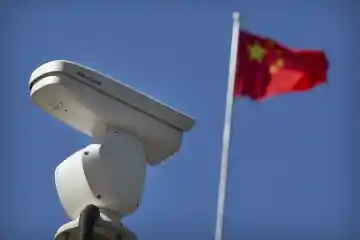
Chinese Companies Drive Standards For Global Facial Recognition Technology
The use of facial recognition technology iscontinuing to expand, despite concerns about itsaccuracy and fairnessand about how it could be used by governments to spy on people. These concerns have been heightened following a report by theFinancial Timeswhich shows that Chinese groups have a significant influence in shaping international standards regarding the technology. Learn more: . The report details how Chinese companies including ZTE, Dahua and China Telecom are proposing standards for facial recognition to the UN's International Telecommunication Union (ITU), the body responsible for global technical standards in the telecommunication industry. Usually, the standards set by the ITU are technical in nature, but human rights campaigners say the proposals under discussion in this case are more like policy recommendations. The standards proposed include recommendations for use cases, suggesting that facial recognition can be used by police, by employers to monitor employees, and for spotting specific targets in crowds. The link for this article located at Engadget is no longer available. . Chinese firms are influencing worldwide facial recognition benchmarks amidst worries regarding privacy and equity.. Facial Recognition, Global Standards, Technology Influence, Chinese Companies. . LinuxSecurity.com Team
 Dec 02, 2019
•
Dec 02, 2019
• Privacy
67
 encryptionwireless technologyinternational standards
China Dispute Over WAPI Forces Delegation to Exit Czech Meeting
An international dispute over a wireless computing standard took a bitter turn this past week with the Chinese delegation walking out of a global meeting to discuss the technology. . The delegation's walkout from Wednesday's opening of a two-day meeting in the Czech Republic escalated an already rancorous struggle by China to gain international acceptance for its homegrown encryption technology known as WAPI. It follows Chinese accusations that a U.S.-based standards body used underhanded tactics to prevent global approval of WAPI. "In this extremely unfair atmosphere, it is meaningless for the Chinese delegation to continue attending the meeting," the Standardization Administration of China delegation said in a statement carried by the official Xinhua News Agency. The link for this article located at Excite News is no longer available. . The delegation's walkout from Wednesday's opening of a two-day meeting in the Czech Republic escalat. international, dispute, wireless, computing, standard, bitter. . LinuxSecurity.com Team
Jun 12, 2006
•
Cryptography

82
internet regulationsprivacy rightsinternational standardsUS Cybercrime Treaty Insights: Privacy Rights and Surveillance Concerns
Even though the United States is a nonvoting member of the Council of Europe, it has pressed hard for the cybercrime treaty as a way to establish international criminal standards related to copyright infringement, online fraud, child pornography and network intrusions. . . . . Even though the United States is a nonvoting member of the Council of Europe, it has pressed hard for the cybercrime treaty as a way to establish international criminal standards related to copyright infringement, online fraud, child pornography and network intrusions. The U.S. Department of Justice says the treaty will eliminate "procedural and jurisdictional obstacles that can delay or endanger international investigations." Civil libertarians have objected to the treaty ever since it became public in early 2000, arguing that it would endanger privacy rights and grant too much power to government investigators. So have industry groups such as Americans for Computer Privacy and the Internet Alliance. They raised concerns that the treaty could limit anonymity or impose vague record-keeping requirements on U.S. Internet providers. "It's a treaty that goes way beyond combating cybercrime," said Barry Steinhardt, director of the ACLU's technology and liberty program. "It would require nations that participate in the treaty to adopt all sorts of intrusive surveillance measures and cooperate with other nations, even when the act that's being investigated is not a crime in their home country." So far, according to the Council of Europe, only three countries--Albania, Croatia and Estonia--have ratified the treaty. If the Senate approves it, the Bush administration said it believes that because U.S. law already abides by provisions in the treaty, no further legal changes would be necessary. The link for this article located at ZDNet is no longer available. . The U.S. supports a global pact on cybercrime, yet concerns grow over personal privacy safeguards and the reach of government surveillance powers. CybercrimeTreaty, Privacy Rights, International Standards, Internet Regulations. . Anthony Pell
Nov 19, 2003
•
Government

Get the latest News and Insights
Get the latest Linux and open source security news straight to your inbox.
Community Poll
Should Linux servers automatically install security updates?
Trending News
Search Topics
Powered By

Linux Security - Your source for Top Linux News, Advisories, HOWTOs and Feature Releases
QUICK LINKS
subscribe to newsletters!
Like staying secure? So do we.
Sign up for updates, tips, and alerts!