



Server Security denial of service open-source
denial of service open-source A process with a stable workload shouldn't keep growing its resident memory. When it does, the first question isn't how much RAM is available. It's where the allocations stopped being released. On Linux, that answer isn't always obvious because the kernel, allocator, and application all influence what memory usage looks like from the outside. . Separating normal allocation behavior from an actual leak takes more than watching top or container metrics. Heap growth, allocator caches, mapped...
 Jun 26, 2026
Security ProjectsLinux security security assessment
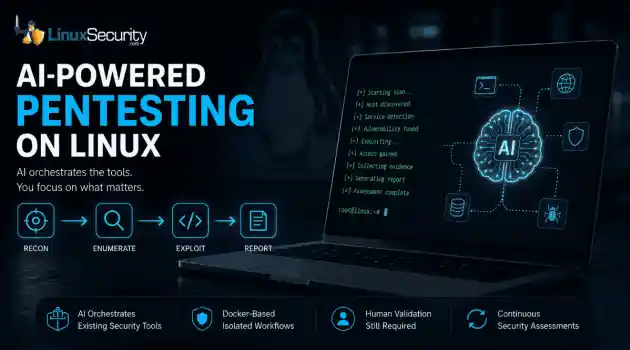
Linux security security assessment AI is beginning to reshape how penetration testing workflows are organized. For years, the penetration tester’s workflow has been a labor-intensive ritual: scan, enumerate, research, exploit, and report. But new frameworks like Dark Moon are attempting to codify that intuition, turning the "human-in-the-loop" process into a machine-coordinated workflow. But is this a genuine evolution in how we secure Linux environments, or just a sophisticated wrapper around the same old tools? . Dark Moon is...
Jun 26, 2026
Security Trends open-source linux development
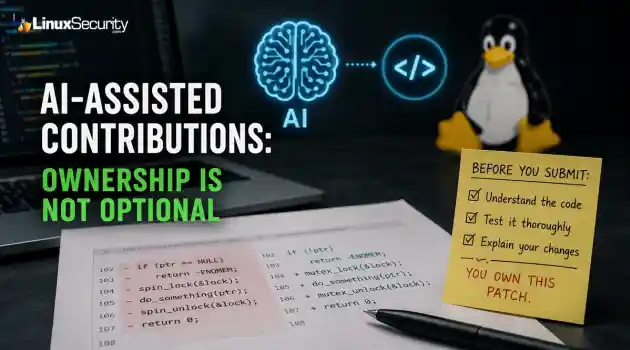
open-source linux development AI-assisted patches are already showing up across open source. Small GitHub projects, package updates, kernel-adjacent tools, system libraries. It’s not a future problem anymore. . Maintainers are going to see more of this code, and most of them aren’t trying to ban it outright. They’re trying to figure out what happens when a contributor submits a patch they didn’t fully write and may not fully understand. That’s where the review process gets messy. Linux development depends on trust, but...
Jun 25, 2026

Vendors/Productssystem update Linux application
system update Linux application Most weeks in Linux are about new features. This one is about avoiding problems before they happen. Several projects shipped updates that quietly change how systems behave behind the scenes. None of them are particularly flashy, but if you're responsible for containers, workstations, gaming systems, or recovery media, these releases are worth paying attention to. Here's what stood out this week. . Podman 6.0 Is a Major Upgrade, Not a Routine Package Update If your infrastructure depends on...
Jun 25, 2026
Security Vulnerabilities security advisory critical
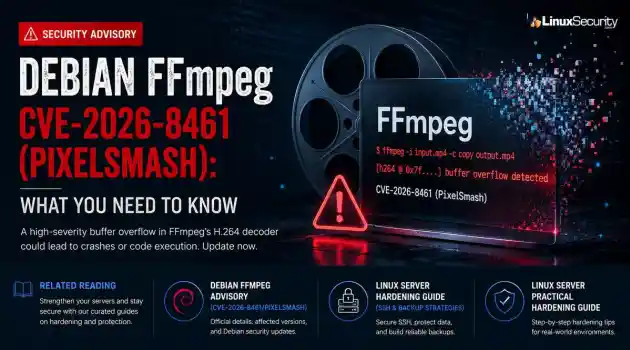
security advisory critical A newly disclosed FFmpeg vulnerability, known as PixelSmash ( CVE-2026-8461 ), affects the MagicYUV decoder and can be triggered by specially crafted video files. . Researchers demonstrated remote code execution against Jellyfin under specific conditions and found multiple Linux applications that could be exposed through normal media processing workflows. Even where code execution is not practical, the vulnerability can still be used to crash affected applications. What Is FFmpeg? FFmpeg is...
Jun 23, 2026
 Refine news
X Clear Filters
Get the latest News and Insights
Get the latest Linux and open source security news straight to your inbox.
Community Poll
Does sandboxing completely stop hackers?
Loading...

Explore Latest Linux Security news
We found -4 articles for you...
79
 security enhancementmemory safetylinux kernel
Linux Kernel Embraces Rust: Modern Security Solutions for Legacy Code
Integration of Rust into the Linux kernel marks an enormous advancement for those committed to its security and stability. Rust's inherent memory safety features offer powerful advantages that help combat common bugs like buffer overflows and use-after-free errors. These features provide greater protection from potential exploits while streamlining development efforts, helping admins more efficiently maintain secure systems. . Linux kernel maintainers and developers Greg Kroah-Hartman and Kees Cook have expressed strong backing for Rust integration, not as an attempt at revamping existing C code but instead using Rust to develop new components, increasing overall security while decreasing critical vulnerabilities. With this hybrid approach, your existing infrastructure remains strong while subsystems constructed using Rust provide superior reliability and security from day one. Let's examine how this approach will offer admins like yourself with more stable, secure, and manageable Linux environments in the future. Understanding The Security Challenges of C The Linux kernel, the cornerstone of millions of systems worldwide, has traditionally been written using the C programming language. Although C is powerful and flexible, its usage often leads to memory management errors that compromise security. Buffer overflows, use-after-free errors, and double free errors are surprisingly frequent due to manual memory management techniques employed by C programs. These vulnerabilities have serious real-world repercussions that attackers can exploit to gain unauthorized system access or for code execution. As more interconnected systems become vulnerable due to security flaws, security administrators must patch and monitor them regularly to detect exploits and prevent future ones. Rust: A Practical Solution for Memory Safety Rust was designed with safety as the primary objective and memory security at its heart. Its stringent compiler rules prohibit null pointer dereferences and doublefree while providing proper synchronization mechanisms, significantly reducing risk and helping mitigate common bugs at compile time. Greg Kroah-Hartman, one of the longstanding Linux kernel maintainers, has long championed Rust's integration. He observes that many kernel bugs result from complex quirks or edge cases in C that require tedious manual management. "Rust removes these ambiguities," says Kroah-Hartman. "It allows us to write new components without the legacy issues that have historically plagued kernel development." This means fewer vulnerabilities to worry about from the outset. Code written in Rust is inherently safer, which translates to fewer patches and less time spent on incident responses related to memory safety issues. Enhancing Development Efficiency Integration of Rust into the Linux kernel brings many benefits beyond security. Rust's stringent compile-time checks help identify errors early, improving software quality while speeding development time and simplifying maintenance costs - ultimately leading to faster production timelines and easier maintenance needs over time. This leads to more secure code and shorter production time. Kees Cook, an active participant in Linux kernel security development, elaborates further, stating, "The goal isn't to rewrite all existing C code in Rust, but to provide an option for new drivers and subsystems. We can improve security and efficiency by introducing Rust where it makes the most sense." By catching bugs early, Rust allows developers to focus on optimizing and refining their code rather than constantly fixing avoidable errors. This means more reliable updates and reduced downtime due to bugs in newly introduced code. Balancing Legacy with Innovation One of the key challenges developers face today is balancing maintaining existing C code and adopting Rust. The Linux kernel contains an immense codebase built over decades, and completely rewriting everything with Rust would be impossible and defeat its purpose altogether. Cook emphasizes the importance of developing new components using Rust while maintaining existing C code - this hybrid approach capitalizes on both languages' strengths. "We’re not throwing away what we have," Cook says. "The existing C code has been scrutinized and hardened over the years. Rust enhances our ability to tackle new challenges without introducing the old bugs." This approach offers confidence that existing systems will remain stable while benefiting from the advantages of Rust in new developments. The goal is to create a more secure and efficient kernel without disrupting the current infrastructure. Forward-Thinking Security The integration of Rust into the Linux kernel is a forward-thinking approach to security. It prepares the kernel for future challenges and complexities, ensuring new vulnerabilities don’t enter the system. This proactive stance is critical as the threat landscape continues to evolve. Kroah-Hartman captures this sentiment well: "Security is an ongoing battle. By incorporating Rust, we’re not just addressing today's issues but positioning ourselves to handle tomorrow's threats. It’s about building a resilient foundation to adapt and withstand emerging challenges." As a security admin, I find this future proofing invaluable. It means fewer reactive measures and more strategic, proactive security management. These Rust enhancements will result in a more robust kernel you can trust to handle your security requirements. Our Final Thoughts on Embracing Rust in the Linux Kernel Rust's inclusion in the Linux kernel marks an exciting turning point in its history. Memory management vulnerabilities have long plagued kernel development efforts. With built-in memory safety features and reduced likelihood of bugs introduced during development, Rust provides an effective solution that enhances its security posture from within. Greg Kroah-Hartman and Kees Cook's backing exemplifies the advantages of integration. By emphasizing new components over rewritingexisting code, the community can strike an optimal balance between innovation and legacy maintenance, keeping systems secure against future threats. As a Linux security admin, I believe that adopting Rust's integration can mean more reliable and secure systems with reduced time spent patching or responding to incidents. Rust provides the Linux kernel with an adaptive foundation capable of facing advanced and emerging threats. What is your opinion on Rust integration in the kernel? Reach out to us @lnxsec and let's have a discussion about it! . Linux kernel maintains stability and security through Rust integration, promising a more robust coding future.. integration, linux, kernel, marks, enormous, advancement, those, committed. . Brittany Day
 Mar 03, 2025
•
Mar 03, 2025
• Security Projects

Get the latest News and Insights
Get the latest Linux and open source security news straight to your inbox.
Community Poll
Does sandboxing completely stop hackers?
Search Topics
Powered By

Linux Security - Your source for Top Linux News, Advisories, HOWTOs and Feature Releases
QUICK LINKS
subscribe to newsletters!
Like staying secure? So do we.
Sign up for updates, tips, and alerts!
Discover faster search, smarter navigation, and deeper Linux security insights. Read More