



Security Trends  fedora security assessment
fedora security assessment A Fedora contributor account recently came under scrutiny for apparently AI-generated activity that disrupted the project's bug tracker. . Questionable Bugzilla comments, flawed patches, and improperly closed or reassigned bugs forced maintainers to spend time cleaning up the fallout. There is no evidence that malware was deployed or a backdoor reached production, but the incident exposed a different problem. Open-source projects can be disrupted without compromising a single line of code....
 Jun 12, 2026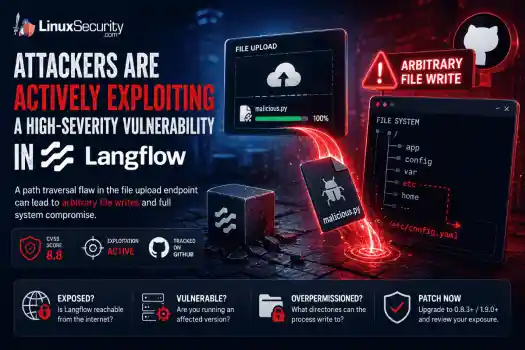
Security Vulnerabilities security advisory critical
security advisory critical Attackers are actively exploiting a high-severity vulnerability in Langflow , an open-source platform used to build and run AI workflows. . The flaw turns a file upload into a filesystem write, allowing a user-controlled file to escape the application's intended upload directory and land in locations Langflow was never supposed to touch. The vulnerable upload endpoint permits path traversal through crafted filenames. From there, the impact depends heavily on how the platform is deployed. A...
Jun 11, 2026 
Vendors/Productssecurity advisory linux
security advisory linux With npm v12 , dependency preinstall, install, and postinstall scripts will no longer execute automatically during package installation. Script execution will require explicit approval through new controls such as npm approve-scripts, with the change expected to arrive in July 2026. . The announcement targets a part of the software supply chain that has repeatedly appeared in package registry abuse, credential theft, and CI/CD compromise investigations. A single npm install could trigger code...
Jun 11, 2026 
Security Vulnerabilities security advisory zero-day
security advisory zero-day CISA added CVE-2026-11645 to its Known Exploited Vulnerabilities catalog after Google confirmed active exploitation of the flaw. The bug sits in V8, the JavaScript engine behind Chrome and Chromium. . That's where this gets more interesting. Most coverage will focus on Chrome because that's where the patch landed. But the affected component is V8. Chromium relies on it. Electron relies on it. Plenty of desktop software Linux users interact with every day relies on it too, often without much...
Jun 10, 2026 
Network Securitysecurity advisory networking
security advisory networking For years, IPv4 was the only proxy type that really mattered for anyone running automation off a Linux box. IPv6 was the protocol everyone said they’d migrate to, but almost nobody actually did. In 2026, that’s finally starting to shift. . The problem is that most admins stick with IPv4 out of habit. They know it; it’s what their tooling defaults to, and they don’t see a reason to change. Some are overpaying for addresses they don’t need. Others would quietly break their scrapers, scripts, or...
Jun 09, 2026  Refine news
X Clear Filters Get the latest News and Insights
Get the latest Linux and open source security news straight to your inbox.
Community Poll
What got you started with Linux?
Loading...
Explore Latest Linux Security news
We found -3 articles for you...
209
 security toolsthreat mitigationsystem protection
Malware Scanning: Protect Linux Systems from Evolving Threats
As malware continues to evolve , it poses an ever-increasing threat to computing environments of all kinds - Linux systems included. While many may assume Linux is safe due to its robust built-in security features , such a mistaken assumption may open doors for exploitation. . Malware such as viruses, trojans, ransomware botnets, keyloggers, worms, and rootkits pose considerable threats, including data breach risks and potential operational disruption to organizations of any size. Thus, admins must remain vigilant, as even one infection could wreak havoc upon an organization's operations integrity, disrupting service delivery to customers or clients. Linux may seem secure at first glance; however, its inherent security can still be vulnerable. Unpatched software or improper configuration can expose systems to attacks like cryptojacking, where attackers use your resources for cryptocurrency mining without your knowledge, or DDoS attacks that severely disrupt operations. As a result of these vulnerabilities and risks, malware scanners such as ClamAV, Chkrootkit, or RKHunter help ensure a more secure operating environment by providing system administrators the means necessary for malware detection and mitigation so they can maintain stable and secure operating environments. In this article, we investigate practical tools for scanning Linux environments for malware, helping you develop reliable defense mechanisms against an ever-evolving threat landscape. Linux Malware Presents an Increasing Risk for Admins & Organizations Though Linux has historically been known as a highly secure operating system, Linux malware has seen an alarming uptick over recent years, raising significant concern among system administrators. Malware attacks targeting Linux systems have increased in both frequency and complexity. Backdoors and new malware families highlight the growing and evolving Linux malware threat. This trend presents Linux admins with an immense challenge. They must stay vigilant againstsuch complex and dangerous attacks while protecting their systems against newer and more dangerous threats that constantly emerge. Malware scanning is now essential for detecting and mitigating malware attacks before they cause extensive damage. Let's examine some excellent tools Linux admins can use for malware detection and elimination. Essential Tools for Scanning Linux Systems for Malware Admins and organizations need specialized malware scanning tools to mitigate Linux security risks effectively. ClamAV , for instance, is an open-source antivirus engine that detects various forms of malware. Its capabilities cover files, emails, and directories, providing system administrators with the flexibility they require in securing different environments. Its regularly updated virus database ensures maximum protection from newer threats. Chkrootkit is an invaluable tool for detecting rootkits—malware that embeds itself deeply within system processes to evade detection—by scanning for known signatures on system processes. It helps administrators quickly spot potential compromises that otherwise go undetected. Furthermore, its lightweight architecture and simple deployment make Chkrootkit an essential component of any Linux security toolkit. The Role of RKHunter in Vulnerability Assessment RKHunter enhances Linux systems' malware defenses with an integrative vulnerability assessment solution , offering comprehensive rootkit detection, system configuration evaluation, weak password scanning, and suspicious file change detection capabilities. It is invaluable in protecting systems by identifying and addressing vulnerabilities early before attackers can exploit them. It regularly executes to detect any possible malicious activities, helping uphold a robust security posture by effectively addressing vulnerabilities before outside forces can exploit them. Establishing an Effective Security Framework Implementing tools such as ClamAV, Chkrootkit, and RKHunter into any security framework isintegral. Regular scanning using these solutions can significantly lower the risk of malware infections, freeing organizations to focus on core operations without worrying about cyberattacks. However, these tools alone do not serve as sufficient defense. A comprehensive security strategy must incorporate user education, regular software updates , and best practices for secure system configuration to provide extensive protection from emerging threats. Let's examine some of these best practices in more detail. Best Practices for Protecting Against Linux Malware Training users on safe computing practices is vital in protecting Linux systems against malware. Making them aware of common dangers like phishing attacks or social engineering tactics empowers users to identify and avoid potential dangers. Additionally, implementing strict access control policies and creating strong password policies strengthen system defenses further. Regular software updates are also integral to maintaining robust security. By keeping all components current with updates, known vulnerabilities will be patched immediately, decreasing risk. Administrators should conduct routine audits to confirm that security measures are working properly and meet industry standards. Our Final Thoughts on Malware Scanning & Its Importance The increasing prevalence of malware in Linux environments underscores the necessity of employing effective malware scanning mechanisms. As sophisticated threats like cryptojacking and DDoS attacks advance and new attacks emerge, organizations cannot overlook the importance of strong security measures. By including robust tools like ClamAV, Chkrootkit, and RKHunter in their security strategies, system administrators can significantly improve their defenses against potential infections. Staying abreast of new threats and adapting security protocols are integral to maintaining Linux systems' integrity and security. An inclusive approach encompassing user education, software updates, andvigilant monitoring will ensure your systems can withstand emerging cyberattacks and threats. Organizations can protect critical assets while upholding operational continuity amid an ever-more hostile digital landscape by prioritizing security first and maintaining operational continuity over time. . Unix-based environments encounter vulnerabilities from malicious software such as worms, spyware, and backdoors. Discover essential detection utilities and methodologies.. Linux Malware, System Security Tools, Threat Detection Strategies, Anti-Malware Practices, Rootkit Prevention Software. . Anthony Pell
 Oct 10, 2024 •
 Security Trends
 74
 network securityaccess controltraffic monitoring
Boosting Network Security: Linux Proxy Servers for Protection
Network security is of utmost importance for organizations and professionals managing Linux systems. A proxy server can be an invaluable asset in this regard, offering access control and traffic monitoring functions while enforcing security policies and providing additional layers of protection. . This article will explore how Linux proxy servers can enhance network security, covering their features that help strengthen defense mechanisms and best practices for managing them securely. We aim to equip you with actionable insights on using Linux proxy servers to defend against the malicious network security threats you face daily. Let's begin by examining what a proxy server is and its role in ensuring robust network security. Understanding Proxy Servers & Their Role in Network Security Proxy servers act as intermediaries between end-users and the websites they visit, forwarding client requests to appropriate servers before relaying responses back to clients. With this simple function in place, proxies can serve multiple roles, such as improving performance by caching content or balancing loads while increasing security. Proxy servers have become an indispensable element of modern security architectures due to the increased sophistication of attacks and the need for fine-grained access control and monitoring mechanisms. Proxies play an essential role in upholding security policies by restricting which resources can be accessed and by whom while providing protection from malware infections, unauthorized access, and data leakage threats by filtering traffic with filtering rules applied against it. Types of Linux Proxy Servers and Their Security Features There are various kinds of Linux proxy servers, each offering specific features and utilities in terms of security: HTTP Proxies: These proxies manage website traffic by caching content for improved speed and applying filter rules to block malicious websites. Additional security features include access control lists (ACLs) and URLfiltering. SOCKS Proxies: More versatile than HTTP proxies, SOCKS proxies can handle various forms of traffic such as web browsing, email, and torrent downloads. They support virtually every protocol available today, making them perfect for applications where only specific traffic needs filtering. Transparent Proxies: Also referred to as inline or intercepting proxies, transparent proxies don't require any configuration on the client side and are ideal for enforcing network-wide security policies by collecting traffic without users' knowledge. Commercial solutions: In addition to open-source Linux options, companies sometimes use ready-made proxy services to quickly access reliable IP pools and manage traffic without complex manual setup. Encryption and Privacy Measures with Linux Proxy Servers Proxy servers are pivotal in ensuring security and privacy by managing encrypted traffic. SSL/TLS interception enables proxies to inspect HTTPS traffic and detect threats hidden behind encrypted streams, helping block malware. In essence, proxy servers act as intermediaries between an encrypted connection and data as it passes through. Administrators seeking to use proxy servers for increased privacy can implement measures like stripping tracking headers and changing client IP addresses to anonymize them. Squid's SSL certificate management policies ensure that decrypted data remains safe. Content Filtering and Malware Scanning Integrating content filtering solutions and proxy servers helps block undesirable or harmful content. Squid , for instance, can be combined with content filtering tools to prevent access to specific URLs, domains, or categories, such as "adult" or "social media." Malware scanning is another essential component. Integrating Antivirus solutions such as ClamAV with a proxy server makes it possible to scan downloaded files in real-time for threats such as Trojan horses and block or alert administrators when any are discovered, decreasing the risk ofmalware spreading throughout a network. Best Practices for Secure Proxy Server Management If you are using proxy servers to improve network security, are you doing so in the safest manner? To increase security, proxy servers must be configured and administered correctly. Best practices include: Access Controls: Employ strict access control lists to regulate which users or devices can connect to the proxy. Regular Updates: Ensure all proxy software and operating system patches remain up-to-date to minimize vulnerabilities and mitigate attacks. Patch Management: Implement an efficient patch management strategy to ensure timely updates. Monitoring and Logging: To detect potential security breaches, closely observe proxy server activities and maintain logs that record such activity. Security Audits and Logs: Ensuring Compliance and Secure Operations Logs and audits are indispensable tools for maintaining a secure network environment. Logs provide a record of network activity that enables security incidents to be detected and addressed quickly, while audits ensure compliance with security policies and identify areas for improvement. Graylog or the Elastic Stack (ELK) can provide log analysis tools with dashboards and alerting systems to monitor proxy server activity in real-time and identify suspicious behavior immediately. Our Final Thoughts on Improving Network Security with Linux Proxy Servers Linux proxy servers are an indispensable network defense mechanism. They provide traffic control, monitoring, and enforcement of security policies. Organizations can significantly strengthen their network security with proxy servers by adopting encryption measures, enabling content filtering/malware scanning/fingerprinting scans, and following best management practices. Regular audits ensure a robust proxy setup that stands up against adversary attacks. Deploying Linux proxy servers is no longer an option for sysadmins and infosec professionals. Instead, proxyservers must become part of their defense strategy, providing the protection and flexibility necessary to adapt quickly to changing security needs. Adhering to the guidelines and insights we've shared can help organizations establish a secure network environment that protects critical assets and data against malicious threats. . Explore the ways in which Linux proxy systems enhance cybersecurity through their functionalities, administrative approaches, and safeguarding methods.. Linux Proxy Servers, Network Defense, Malicious Threats, Security Management, Traffic Control. . Brittany Day
Sep 30, 2024 • Network Security 

Get the latest News and Insights
Get the latest Linux and open source security news straight to your inbox.
Community Poll
What got you started with Linux?
Search Topics
Powered By

Linux Security - Your source for Top Linux News, Advisories, HOWTOs and Feature Releases
QUICK LINKS
subscribe to newsletters!
Like staying secure? So do we.
Sign up for updates, tips, and alerts!
Discover faster search, smarter navigation, and deeper Linux security insights. Read More