


Security Trends  fedora security assessment
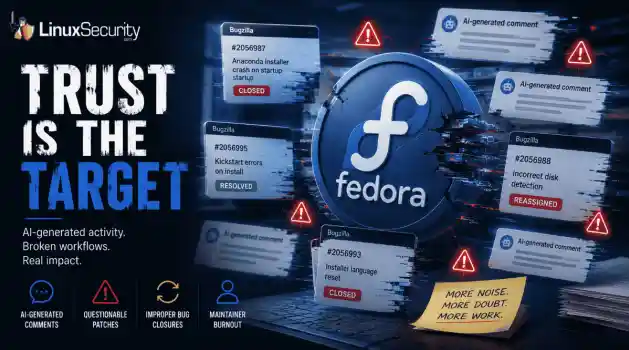
fedora security assessment A Fedora contributor account recently came under scrutiny for apparently AI-generated activity that disrupted the project's bug tracker. . Questionable Bugzilla comments, flawed patches, and improperly closed or reassigned bugs forced maintainers to spend time cleaning up the fallout. There is no evidence that malware was deployed or a backdoor reached production, but the incident exposed a different problem. Open-source projects can be disrupted without compromising a single line of code....
 Jun 12, 2026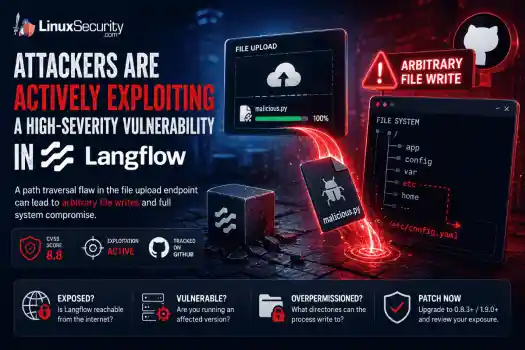
Security Vulnerabilities security advisory critical
security advisory critical Attackers are actively exploiting a high-severity vulnerability in Langflow , an open-source platform used to build and run AI workflows. . The flaw turns a file upload into a filesystem write, allowing a user-controlled file to escape the application's intended upload directory and land in locations Langflow was never supposed to touch. The vulnerable upload endpoint permits path traversal through crafted filenames. From there, the impact depends heavily on how the platform is deployed. A...
Jun 11, 2026 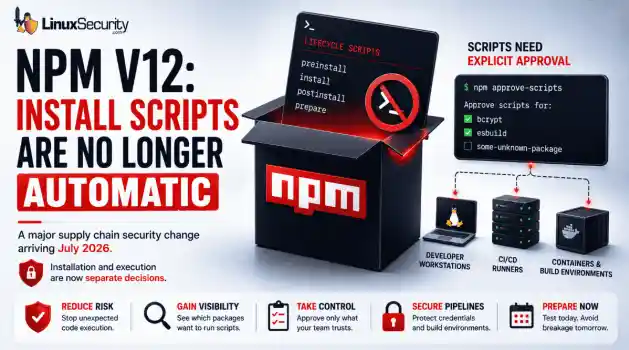
Vendors/Productssecurity advisory linux
security advisory linux With npm v12 , dependency preinstall, install, and postinstall scripts will no longer execute automatically during package installation. Script execution will require explicit approval through new controls such as npm approve-scripts, with the change expected to arrive in July 2026. . The announcement targets a part of the software supply chain that has repeatedly appeared in package registry abuse, credential theft, and CI/CD compromise investigations. A single npm install could trigger code...
Jun 11, 2026 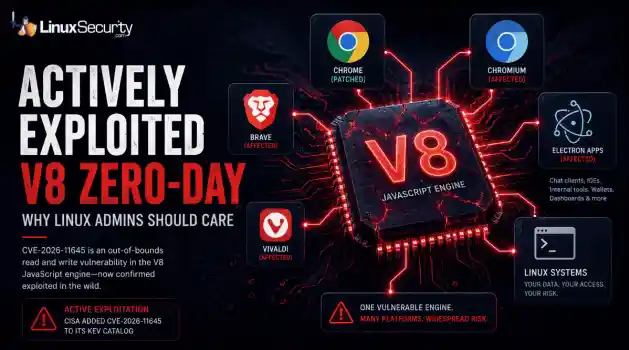
Security Vulnerabilities security advisory zero-day
security advisory zero-day CISA added CVE-2026-11645 to its Known Exploited Vulnerabilities catalog after Google confirmed active exploitation of the flaw. The bug sits in V8, the JavaScript engine behind Chrome and Chromium. . That's where this gets more interesting. Most coverage will focus on Chrome because that's where the patch landed. But the affected component is V8. Chromium relies on it. Electron relies on it. Plenty of desktop software Linux users interact with every day relies on it too, often without much...
Jun 10, 2026 
Network Securitysecurity advisory networking
security advisory networking For years, IPv4 was the only proxy type that really mattered for anyone running automation off a Linux box. IPv6 was the protocol everyone said they’d migrate to, but almost nobody actually did. In 2026, that’s finally starting to shift. . The problem is that most admins stick with IPv4 out of habit. They know it; it’s what their tooling defaults to, and they don’t see a reason to change. Some are overpaying for addresses they don’t need. Others would quietly break their scrapers, scripts, or...
Jun 09, 2026  Refine news
X Clear Filters Get the latest News and Insights
Get the latest Linux and open source security news straight to your inbox.
Community Poll
What got you started with Linux?
Loading...

Explore Latest Linux Security news
We found -4 articles for you...
209
 access controlincident responsedata backup
Effective Ransomware Defense for Linux: 5 Steps for Business Continuity
Ransomware attacks are surging—and in 2024, damages topped $30 billion . . Many of these attacks target Linux systems, especially in servers, cloud infrastructure, and DevOps pipelines. Attackers do not always need complex tools. A single misconfigured port or outdated package can open the door. Once inside, they encrypt data, demand payment, and sometimes leak files. No business is too small. No system is too secure—unless it is actively defended. By following a clear plan, businesses can reduce their risk and respond effectively if an attack occurs. Here is a 5-step action plan to build a strong ransomware defense. It is simple and practical. Step 1: Strengthen Identity and Access Controls Most ransomware attacks do not need to break through firewalls. They walk right in using stolen or weak credentials. Once inside, attackers move fast, escalating privileges, disabling security tools, and locking systems. That is why strong access control is your first line of defense. Here is how to tighten it up: Use Multi-Factor Authentication (MFA): MFA is required for all users, especially those with admin rights. Even if a password leaks, MFA can block access. Harden your Linux systems : Disable unnecessary services and ports. Configure firewalls to limit inbound and outbound traffic to essential services only. Enforce Least Privilege : Only give users access to what they need. No shared accounts. No broad permissions. Rotate and Manage SSH Keys : Remove unused keys. Use tools to manage and rotate them regularly. Disable Root Login over SSH : Prevent direct root access. Use sudo instead, with full audit logging. Monitor and Log All Access : Track logins, failed attempts, and privilege changes. Use auditd and log monitoring tools . Lock Down Inactive Accounts : Disable or remove no longer used accounts. These simple controls reduce your attack surface and make it harder for attackers to gain a foothold. Step 2:Build an Ecosystem of Ransomware Solutions Ransomware attacks do not have a single entry point, and they require a multi-layered defense strategy. An ecosystem approach is essential to build an effective defense. This ecosystem includes different security tools that work seamlessly together to cover multiple domains. Here are the key strategies for building an ecosystem: Focus on identity and access management (IAM): Protect critical accounts by implementing strict identity controls, including privileged access management (PAM) and robust user authentication. Manage vulnerabilities actively : Regular vulnerability assessments and mitigation through patch management and red teaming exercises help identify and close gaps in your systems. Implement endpoint protection: From endpoint detection and response (EDR) to user behavior analysis, ensure that every endpoint is properly secured and continuously monitored. Integrate security tools : Use security information and event management (SIEM) and threat intelligence platforms that integrate across your environment to detect and respond to ransomware attacks effectively. If you want to see what a complete, layered ecosystem looks like in practice, check out this comprehensive ransomware defense strategy , which outlines actionable steps and tools to implement at each layer of your infrastructure. An ecosystem that ties together various technologies and processes ensures a more robust and cohesive defense, making it harder for ransomware to succeed. Step 3: Back Up with a Purpose Backing up your data is one of the most important steps in protecting your business from ransomware. If your systems are attacked, having a reliable backup can help you recover without paying a ransom. But not all backups are equal. It is important to back up your data correctly to ensure it’s safe and easy to restore. Here are some strategies for effective data backups: Follow the 3-2-1 Rule: Keep three copies ofyour data. Store two on different media types (e.g., hard drives, cloud). One of those copies should be offsite or in the cloud so it's safe from local disasters like fire or flood. Test Your Backups : Regularly test your backups to make sure they work. A backup is useless if you can’t restore the data when needed. Ensure Backups Are Immutable : Ensure your backups are protected from being altered or deleted by ransomware. Some backup solutions offer features that prevent data from being changed once it’s stored. Automate Backups: Set up automated backups to run regularly. This reduces the risk of forgetting to back up important data and ensures that your most recent information is always protected. By following these steps, you’ll have peace of mind knowing that your data can be recovered quickly if ransomware strikes. Step 4: Build a Human Firewall Through Security Training Your technical defenses mean nothing if one employee clicks a malicious link. Deloitte mentions that over 90% of cyberattacks start with phishing. Training turns your team from vulnerabilities into vigilant defenders. Here are the key strategies: Phishing Simulation Drills : Conduct monthly mock phishing campaigns using realistic templates. Track click rates and provide immediate feedback to those who fail. Gradually increase difficulty to keep staff alert. Create a reporting culture where suspicious emails get forwarded to IT immediately. Password Hygiene Enforcement : Mandate password managers for all staff. Enforce 16-character minimums and block common passwords. Implement multi-factor authentication everywhere - especially for email and file access. Revoke credentials immediately when employees leave. Incident Response Protocols : Teach staff the exact steps for reporting anomalies - from ransomware pop-ups to suspicious login attempts. Establish clear escalation paths and response timelines. Run quarterly tabletop exercises simulating real breachscenarios. Tailored Role-Based Training : Developers need secure coding practices, finance teams require invoice fraud detection, and executives need advanced social engineering defense. Generic training wastes time—customize content by department. Measure effectiveness through metrics like phishing test pass rates and incident reporting speed. Reward security-conscious behavior publicly to reinforce its importance. Remember, your security chain is only as strong as its weakest human link. Pro Tip: New hire onboarding must include security training before granting system access. One untrained employee can undo all your technical safeguards. Step 5: Prepare for Fast Recovery and Restoration Ransomware attacks may be inevitable, but your ability to recover from them quickly can determine the extent of the damage. Having a reliable recovery process ensures your organization can return to normal operations without significant downtime. Here are the top strategies for recovery: Implement regular backups : Ensure that your backup solutions are automated and secure, stored offsite, and tested regularly to confirm they can be restored if necessary. Prepare a disaster recovery plan : Develop a clear plan for how your organization will recover from a ransomware attack. This includes defining recovery time objectives (RTO) and recovery point objectives (RPO). Continuously test recovery protocols : Regularly simulate ransomware recovery scenarios to ensure your team can restore data and services quickly and efficiently without disrupting business operations. Ensure compliance with data retention laws : Your recovery plan should also comply with relevant data protection and privacy regulations, ensuring sensitive data is handled appropriately during recovery. A well-structured recovery process allows your organization to quickly recover from a ransomware attack, minimizing operational and financial losses. Although prevention remains thepriority, Cyber Insurance is increasingly part of the broader resilience conversation around breach costs, recovery, and business continuity. Stay Ahead of Ransomware Building a strong ransomware defense goes beyond just implementing advanced technology. It requires a well-thought-out strategy and operational plan to effectively address every stage of a potential attack. Key takeaways to remember include: A comprehensive ransomware defense strategy must include both proactive and operational elements, focusing on prevention, detection, and response. Layered defenses are essential in addressing risks at various points during an attack. Regularly updating your threat intelligence helps you avoid new ransomware tactics and techniques. Having a solid backup and recovery plan minimizes downtime and data loss during an attack. Continuously evaluating and adapting your defense mechanisms ensures your strategy remains effective in the face of evolving threats. Remember, ransomware threats are constantly evolving. Stay vigilant and keep updating your strategies to stay safe. With the right plan, you can protect your data and ensure business continuity even in the face of an attack. . Numerous ransomware threats focus on Linux platforms. Implement the following guidelines to establish a robust protection and recovery plan.. Ransomware Defense, Linux Security, Data Backup, Recovery Plans. . MaK Ulac
 Apr 17, 2025 •
 Security Trends
Get the latest News and Insights
Get the latest Linux and open source security news straight to your inbox.
Community Poll
What got you started with Linux?
Search Topics
Powered By

Linux Security - Your source for Top Linux News, Advisories, HOWTOs and Feature Releases
QUICK LINKS
subscribe to newsletters!
Like staying secure? So do we.
Sign up for updates, tips, and alerts!
Discover faster search, smarter navigation, and deeper Linux security insights. Read More