Explore top 10 tips to secure your open-source projects now. Read More
×


Security Vulnerabilities  security advisory Red Hat
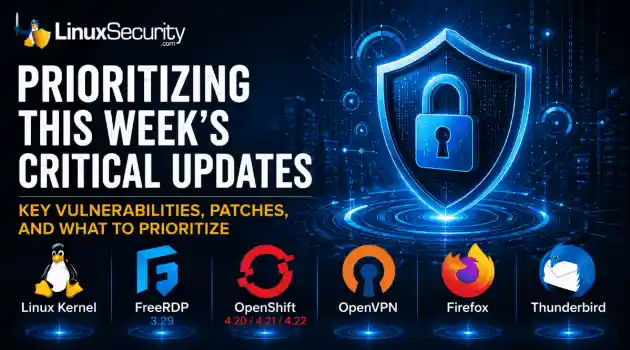
security advisory Red Hat Before the week gets away from you, take a look at what's landed across the Linux ecosystem. The volume of security advisories hasn't slowed, and while not every update demands an emergency maintenance window, several deserve to move to the top of your patch queue. This week's updates span the kernel, remote desktop infrastructure, VPNs, containers, browsers, and the utilities Linux systems quietly depend on every day. Individually, these look routine. Together they show how quickly attackers...
 Jul 15, 2026
Security Vulnerabilities security research open-source
security research open-source When researchers announced GhostLock, many people focused on the exploit. What stood out to me wasn't just what the vulnerability could do, but how long it had remained hidden. The flaw had lived in the Linux kernel for roughly 15 years before it was publicly identified by researchers. That means the flaw survived hundreds of kernel releases and years of upstream development before it was publicly documented. It raises an uncomfortable question about one of open source's oldest assumptions....
Jul 14, 2026

Network Securitynetwork protection system hardening
network protection system hardening Spin up a fresh Linux VPS with default settings and check /var/log/auth.log ninety seconds later. There will already be failed login attempts — not dozens, hundreds, sometimes before the deployment script has even finished running. . Automated bots scan the entire IPv4 address space non-stop, and port 22 with password authentication open is exactly what they're looking for. Most cloud providers have seen enough of this that a new instance gets its first probe within a minute of going live....
Jul 13, 2026
Security Vulnerabilities security advisory critical
security advisory critical If you’re running Gitea in a container, stop what you’re doing and check your versioning right now. We’re looking at a critical vulnerability— CVE-2026-20896 —shipped directly in Gitea’s official Docker images. It’s a 9.8 CVSS-rated "open door" that lets any unauthenticated attacker stroll in and impersonate any user on your system, admin account included, without needing a password or a token. The reality? This isn't some complex, low-level kernel exploit. It’s a classic "secure-by-default"...
Jul 13, 2026

Desktop Securitynetwork security system hardening
network security system hardening There was a time when Linux meant server rooms and hobbyist forums. These days it's on regular laptops, and a big part of that is people getting fed up with commercial operating systems scraping their data, shipping telemetry nobody asked for, and boxing them into hardware ecosystems they can't opt out of. . None of that makes Linux immune to trouble though. Yes, it dodges most of the mainstream malware that everyone else deals with. But the software running on top, and honestly the person...
Jul 13, 2026
 Refine news
X Clear Filters
Get the latest News and Insights
Get the latest Linux and open source security news straight to your inbox.
Community Poll
Is continuous patching actually viable?
Loading...
Explore Latest Linux Security news
We found 2,769 articles for you...
210
 security advisoryRed Hatcritical
Mak’s Weekly Security Roundup: Linux Updates You Shouldn't Ignore This Week
Before the week gets away from you, take a look at what's landed across the Linux ecosystem. The volume of security advisories hasn't slowed, and while not every update demands an emergency maintenance window, several deserve to move to the top of your patch queue. This week's updates span the kernel, remote desktop infrastructure, VPNs, containers, browsers, and the utilities Linux systems quietly depend on every day. Individually, these look routine. Together they show how quickly attackers can take advantage of organizations that let routine patches pile up. . Why This Week Matters One thing stood out as I worked through this week's advisories: nearly every layer of a modern Linux deployment received security attention. The operating system, remote administration tools, browsers, VPN software, container platforms, and the utilities Linux systems quietly depend on all received meaningful security updates. None of these vulnerabilities dominate the headlines on their own, but together they reinforce an important lesson: small, delayed patches have a habit of becoming much bigger security problems. Kernel Updates: Priority Kernel maintenance remains the most critical—and often most postponed—task. Ubuntu and Red Hat published multiple advisories covering networking, filesystems, and drivers. With several fixes addressing privilege escalation and container-escape scenarios—including several affecting privilege escalation and container-related components —these updates are essential. If you only have one reboot window this week, use it for the kernel. Hardening Remote Access and Orchestration FreeRDP 3.29 : This release addresses 22 vulnerabilities while introducing significant runtime hardening. Given its prevalence in enterprise environments, this update is a priority. OpenShift: Red Hat released security updates for 4.20 , 4.21 , and 4.22 . As the control plane for your infrastructure, securing the orchestration layer is paramount. VPNs: OpenVPN addressed multiple issues, including proxy and metadata handling. As internet-facing gateways, these should be prioritized. Browsers and Foundational Plumbing Browsers remain high-value targets. Firefox and Thunderbird updates are vital, particularly for administrator workstations. Additionally, ensure you address updates to Python Pillow and cifs-utils to maintain the integrity of your environment's "plumbing." Patching Priority Category Recommended Priority Linux Kernel Critical (Highest priority) Internet-Facing Services (OpenVPN) High Remote Access & Orchestration (FreeRDP, OpenShift) High Foundational Utilities (Wget, Python, GnuTLS) Medium/Ongoing End-User Apps (Firefox, Thunderbird) Medium/Ongoing Linux security isn't just about responding to the latest critical CVE; it’s about consistently reducing the attack surface. Consistent, disciplined patching remains your most effective defense against the cumulative risk of the modern threat landscape. . This week's roundup highlights crucial Linux security updates for your systems, emphasizing the urgency of timely patching.. Linux updates, security advisories, patch management, system vulnerabilities, open source software. . MaK Ulac
 Jul 15, 2026
•
Jul 15, 2026
• Security Vulnerabilities
210
 security advisorycriticalauthentication
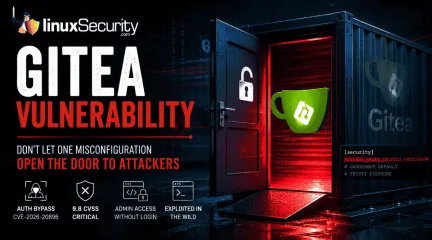
Critical Gitea Docker Authentication Bypass: An Open Door to Your Infrastructure
If you’re running Gitea in a container, stop what you’re doing and check your versioning right now. We’re looking at a critical vulnerability— CVE-2026-20896 —shipped directly in Gitea’s official Docker images. It’s a 9.8 CVSS-rated "open door" that lets any unauthenticated attacker stroll in and impersonate any user on your system, admin account included, without needing a password or a token. The reality? This isn't some complex, low-level kernel exploit. It’s a classic "secure-by-default" failure where one bad configuration template is quietly gutting your entire authentication model. . One Wildcard Default Broke the Trust Model Gitea has this reverse-proxy authentication feature built for enterprise setups where a front-end server—say, Nginx or Traefik —does the heavy lifting of verifying who you are. Once it knows you’re legit, it passes your username to Gitea via an X-WEBAUTH-USER header. It’s a standard, reliable pattern, provided you actually lock Gitea down to only accept that header from a proxy you trust. The security hole in the official Docker images is just one line in the app.ini template: REVERSE_PROXY_TRUSTED_PROXIES = * That wildcard tells Gitea: "I don't care where the request came from, I trust the identity header." By tossing out the safe default—which should’ve restricted trust to the local loopback interface ( 127.0.0.0/8 )—the Docker image leaves the door wide open. Any attacker who can hit your container’s HTTP port can just send a forged header and tell Gitea they’re the admin. No exploit chain, no credential theft, no memory corruption. Just one header, and they’re in. Why Git Platforms Are the New "Crown Jewels" It’s easy to think of a Git server as just a place to store code, but that’s a dangerous simplification. In today’s DevSecOps workflows, Gitea is the nervous system of your entire operation. Administrator access gives an attacker: The Full Repository Set: Public, private, and internalcode. Persistent Secrets: API keys, database credentials, and deploy tokens that developers accidentally committed and never scrubbed. Pipeline Control: The ability to alter CI/CD configurations to inject malicious code into your production builds before they’re even signed. Infrastructure Keys: SSH deploy keys and webhooks that connect your Git server directly to your live production systems. When an attacker gains admin access, they aren't just reading your repo—they’re using your own automation to move laterally into your CI/CD security stack. Which Gitea Deployments Are at Risk? The risk is concentrated in official Docker images through version 1.26.2 . If you are running these versions and have ENABLE_REVERSE_PROXY_AUTHENTICATION = true set, you are potentially exposed. If your container is reachable from the public internet—or even from an untrusted segment of your internal network—you are a high-priority target. Attackers are already using automated scanners to hunt for these ports. Take a minute to audit your Linux firewall rules; the only thing that should be talking to your Gitea container is your internal proxy. Staying Secure: Practical Defensive Steps Patching is the baseline here, but don't stop there. You need to verify your actual deployment state: Upgrade Immediately: Move to version 1.26.4 as soon as possible. Kill the Wildcard: Never leave REVERSE_PROXY_TRUSTED_PROXIES set to * in production. Hardcode the specific IP address of your authorized reverse proxy. Audit Container Exposure: Use Docker security best practices to ensure your management ports aren't just wide open to the world. Verify Your Network: If you’re managing Gitea in a larger environment, audit your Linux container security to ensure the service is isolated at the host level. The Bottom Line The Gitea Docker Authentication Bypass isn't exploiting a flaw in the Gitea source code; it’s exploiting the assumption that"default" settings are safe for production. The 13-day gap between public disclosure and the first in-the-wild scanning attempts from ProtonVPN exit nodes is a stark reminder of the speed at which today's attackers move. For those of us managing self-hosted infrastructure, this is a wake-up call. Verifying the configuration of your container templates is just as vital as keeping your kernel up to date. Before the next CVE hits, take the time to look under the hood—because if you haven't checked that wildcard, you’re currently hosting a free-for-all. As you tighten your Gitea deployment, how do you balance the need for ease-of-use in your internal configuration templates against the security risk of "convenient" defaults? . A critical Gitea Docker vulnerability could enable unauthenticated users to impersonate anyone without a password.. Gitea Vulnerability, Docker Security, Authentication Bypass. . MaK Ulac
Jul 13, 2026
•
Security Vulnerabilities

74
 security advisoryUbuntuconfiguration issue
Linux Privilege Escalation from a Defensive Perspective: Sudoers and SUID Misconfigurations
Root access on a Linux system rarely arrives through a zero-day. . Honestly, it usually doesn't even arrive through something you'd consider clever. More often — and this shows up in post-incident report after post-incident report — an attacker gets a low-privilege foothold through a misconfigured web app or a reused credential, and then just... looks around. What they find is a sudoers entry that's been sitting untouched since the last sysadmin handed off the server. Or a SUID binary a developer set during a late-night deployment and forgot to mention. Neither makes it into a CVE database. Neither gets a patch advisory. They're just there, waiting for someone to notice them. The Sudoers File Doesn't Clean Itself The design intent behind sudoers is reasonable — give specific users specific elevated permissions without distributing actual root credentials. The gap between intent and reality is that entries get written fast, during deployments, when nobody has time to get the scope exactly right, and then they stay. Sysadmins change. The documentation doesn't. Nobody ever schedules an audit. The worst version is also probably the most common one to find in the wild: developer ALL=(ALL) NOPASSWD: ALL One line. Whoever gets that user account gets the system. No second factor, no password prompt, nothing: sudo bash The subtle version — the one that trips up more environments — is when an admin adds something like vim to sudoers thinking it's scoped and safe. It isn't: sudo vim -c '!bash' Root shell, three keystrokes. GTFOBins catalogs this exact escalation technique for hundreds of binaries — find, less, python, perl, awk, tar, nmap with --interactive , and on and on. Same pattern across all of them: the binary gets NOPASSWD access, nobody checks whether it can spawn a shell, and the entry stays in place indefinitely because nothing breaks and nobody touches it. The cp case is less intuitive but just as damaging, maybe more so because it feelsinnocuous. Copy access to /usr/bin/cp with elevated permissions means an attacker can overwrite /etc/sudoers directly, inject their own NOPASSWD entry, then run bash: cp /etc/sudoers /tmp/sudoers.bak echo "$(whoami) ALL=(ALL) NOPASSWD:ALL" > > /tmp/sudoers.bak cp /tmp/sudoers.bak /etc/sudoers sudo bash No exploit code. No CVE required. A misconfigured permissions entry and roughly two minutes. Two Sudo Vulnerabilities That Got Less Attention Than They Deserved In mid-2025 two vulnerabilities in sudo itself were disclosed — CVE-2025-32462 and CVE-2025-32463 — that made even correctly written sudoers configurations exploitable. Worth knowing about, because sudo doesn't get treated with the same patch urgency as web application CVEs, and production systems tend to lag on it for exactly that reason. CVE-2025-32463, the more severe of the two at CVSS 9.3, abused sudo's --chroot option: place a malicious nsswitch.conf in any user-controlled directory and sudo loads an attacker's shared library as root — before it gets around to checking permissions. The flaw was introduced in sudo 1.9.14 (June 2023) and went undetected for about two years before Stratascale's research team found it. CISA added it to the Known Exploited Vulnerabilities catalog in September 2025, months after the patch was already available. Both vulnerabilities were patched in sudo 1.9.17p1, released June 2025. The gap between "patch available" and "patch deployed" in production Ubuntu 22.04 environments stretched well into the second half of the year, because nobody was treating sudo updates as urgent. The lesson here isn't just "patch sudo" — though that's obviously necessary. It's that a correctly written sudoers file isn't sufficient protection when the underlying binary has an elevation flaw. Defense has to go deeper than configuration. SUID Binaries: Persistent, Overlooked, and Reliable SUID is a permission bit — makes a binary execute as its owner regardless of who actually invokes it. Ping,passwd, su, a handful of others all legitimately need it. The problem is when it ends up on things it shouldn't: internal scripts, test binaries, standard utilities that picked up the bit during a misconfigured install and never lost it because nobody was looking. Every attacker who lands a shell runs this immediately: find / -perm -4000 -type f 2> /dev/null Output goes straight to GTFOBins. The non-standard entries — anything outside the expected set of system binaries — are where the actual findings are. Custom internal binaries with SUID set are the first things to dig into. PATH hijacking is clean and reliable when a custom SUID binary calls system utilities without specifying absolute paths. A script that runs system("service restart") instead of system("/usr/sbin/service restart") is exploitable by anyone who can write to an earlier PATH directory: cd /tmp echo "/bin/bash" > service chmod +x service export PATH=/tmp:$PATH ./vulnerable-suid-binary Shell resolves service to the malicious binary, executes it with the SUID binary owner's effective UID. If that's root, escalation is complete — simple as that. Editors with SUID set are a separate category, not just escalation but immediate persistence. If /usr/bin/nano carries the bit, the attacker edits /etc/passwd directly: adds a root-level account with no password, change survives reboots, nothing suspicious in logs beyond a file modification timestamp. Tools like LinPEAS automate all of this — SUID binaries, sudoers entries, writable cron jobs, kernel version against known CVE databases — in a single run, under sixty seconds. What used to take an experienced attacker thirty minutes of manual enumeration is now a script. Defenders need to understand what that output surfaces and what order it prioritizes findings, because that's the actual methodology being applied on the other side. Fixing It Open /etc/sudoers with visudo and actually read through every entry. Any line granting NOPASSWD: ALL to a non-system user either has a documented justification or it gets removed — those are the only two acceptable outcomes. For every binary with NOPASSWD access, look it up on GTFOBins by name. If there's a documented escalation path, that entry is an open door and should be treated as such. Replace broad grants with precise ones. A user who needs to restart nginx gets exactly that: # Scoped to one service, one action — nothing broader username ALL=(root) NOPASSWD: /usr/bin/systemctl restart nginx Not /usr/bin/systemctl . Definitely not ALL . For SUID, the approach that actually works is establishing a baseline on a known-good system and comparing against it: find / -perm -4000 -type f 2> /dev/null > /root/suid-baseline.txt Store that file somewhere reliable and run comparisons after deployments and package updates. Any new SUID binary outside a planned package install gets investigated. Anything that shouldn't carry the bit gets stripped: chmod u-s /path/to/binary Internal scripts should never have SUID set. Development environments sometimes add it for convenience — that needs to come off before anything reaches production, full stop. Monitoring matters too, and it's worth doing properly rather than just adding a single auditd rule and calling it covered. A useful starting set watches for sudo execution, SUID-related syscalls, and writes to sensitive files that privilege escalation techniques commonly target: # Flag all sudo invocations auditctl -a always,exit -F arch=b64 -S execve -F path=/usr/bin/sudo -k sudo_exec # Flag setuid/setgid syscalls — catches SUID abuse attempts auditctl -a always,exit -F arch=b64 -S setuid -S setgid -k priv_escalation # Flag writes to sudoers and sensitive auth files auditctl -w /etc/sudoers -p wa -k sudoers_change auditctl -w /etc/sudoers.d/ -p wa -k sudoers_change auditctl -w /etc/passwd -p wa -k passwd_change auditctl -w /etc/shadow -p wa -k shadow_change Once you have events, ausearch and aureport are how you actually work with the data rather than grepping raw logs: # Show all sudo-related events in the last hour ausearch -k sudo_exec --start recent # Show all sudoers file modifications ausearch -k sudoers_change # Summary report of privilege-related events by user aureport --auth --summary Parent-child process relationships are the real signal to watch. apache2 → sudo → bash is not a logging anomaly — it's a kill chain in progress. The SUID baseline comparison mentioned above pairs naturally with inotifywait for real-time alerting on new SUID files: inotifywait -m -r -e attrib /usr/bin /usr/local/bin /usr/sbin 2> /dev/null | \ grep --line-buffered "ATTRIB" | while read line; do echo "[ALERT] Attribute change detected: $line" | logger -t suid_monitor done Run that as a service, and any new SUID bit set outside of a package manager operation generates a log entry immediately. SELinux and AppArmor work alongside all of this — they constrain what a process can do even after it reaches root, containing the blast radius of a successful escalation even when prevention fails. And keep sudo patched — CVE-2025-32463 was in CISA's KEV catalog months after the patch was available, which tells you exactly how many production systems were sitting exposed throughout 2025. The kernel headlines this year — Copy Fail, Fragnesia, Dirty Frag — have most security teams focused on patches and module blacklists. That's reasonable. But those same teams often have sudoers entries that predate everyone currently on staff, and SUID binaries in /usr/local/bin that nobody can account for. Kernel CVEs get CVE numbers and CISA advisories. Misconfigured sudoers entries don't. That asymmetry in attention is precisely why they keep working year after year. Enumeration tools don't organize findings by category. LinPEAS flags the NOPASSWD entry and the unpatched kernel in the same output, same color coding, same priority. One of them usuallycomes first. . Explore misconfigurations in sudoers and SUID handling that lead to privilege escalation risks in Ubuntu systems.. Sudo Configurations, SUID Permissions, Privilege Escalation. . Andrew Kowal
Jul 10, 2026
•
Network Security
210
 security advisoryunauthorized accessLinux security
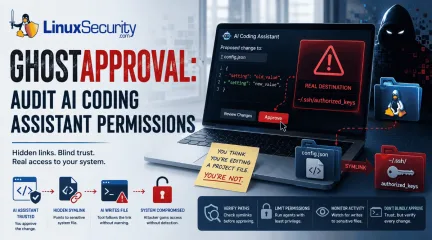
GhostApproval: Why Linux Developers Should Audit AI Coding Assistant Permissions
AI coding assistants have become a staple in many Linux developers' daily workflows. Whether you're generating boilerplate, refactoring code, or updating configuration files, it's easy to assume these tools stay safely inside your project directory. . Researchers recently pulled the curtain back on a threat they’ve dubbed " GhostApproval ." It’s a direct hit to the way we use tools like Cursor, Amazon Q, and Claude Code. They found these assistants have a dangerous blind spot: they can be tricked into modifying files outside of your project's sandbox. By hiding a simple, booby-trapped symbolic link in a code repository, an attacker can manipulate these assistants into editing sensitive system files instead of the project files you’re actually working on. Even worse, the confirmation prompts these tools show often hide the true destination of the change, making it look like you’re approving a harmless update when you’re actually handing over the keys to your system. It’s a classic trust boundary collapse, turning our favorite productivity boosters into high-speed conduits for unauthorized access. How the "Symlink Bypass" Exploit Actually Works At its core, this vulnerability is what we call a "symlink bypass." In Linux, a symbolic link—or symlink —is essentially a shortcut pointing to another spot on your hard drive. When you use an AI coding assistant, you naturally assume it’s playing by the rules and staying inside the "sandbox" of your current project folder. The security gap here is that many of these AI agents don’t bother to verify if a file is a legitimate file or just a shortcut before they start writing to it. If the tool skips that check, it will blindly follow the link wherever it goes. Quick Check: Is This File Really Inside Your Project? Before approving AI-generated file changes, verify the path: ls -l filename (Check if it points to a target) Readlink filename (See exactly where it points) Realpath filename (Confirm the fully resolvedpath is within your project) The attack itself is surprisingly straightforward: an attacker slips a seemingly harmless file, like config.json, into a repository, but turns it into a secret bridge pointing to a sensitive target, like your ~/.ssh/authorized_keys file. When you ask the AI to "update the config," it triggers a standard system call to write to that file. Because Linux is built to resolve these shortcuts automatically at the kernel level, it silently redirects the AI’s action straight to your SSH keys. Since the AI is running under your own user permissions, it has full authority to overwrite those files—and just like that, the attacker has effectively cracked open a back door to your machine without you ever suspecting a thing. Why This Matters for Linux Security At its core, this vulnerability punches a hole in the "human-in-the-loop" security model that we Linux admins have relied on for decades. We’re used to trusting our own oversight, but the breakdown here is all about trust boundaries. These AI assistants rely on us to vet every change, but when the UI shows you a harmless-looking project file while the OS is secretly hammering a sensitive system file, you aren't actually making an informed choice. You’re just rubber-stamping an action that’s hidden in plain sight. What makes this even more devious is that it’s not "malware" in the traditional sense, so your antivirus isn't going to have a heart attack. Instead, it’s a masterclass in " Living-off-the-Land ." The AI is performing perfectly normal, expected system calls—the same stuff your build tools do every day. Because it’s using your own trusted environment against you, it slips right past standard defenses. Since the system sees every move as an authorized action coming from you , it’s incredibly difficult to spot the foul play until the attacker has already gained a permanent foothold. Where Linux Users Are Most at Risk You are at a much higher risk if you frequently clone and run"AI-assisted" setups from untrusted or third-party repositories, particularly in the following environments: Cloud-based development environments: Where agents may have broad access to home directories and environment variables. Shared CI/CD build nodes: Where automated refactoring tools run without constant human oversight. Local Linux workstations: Where developers use AI agents to manage system-level configuration files or sensitive dotfiles. Sensitive Target Files: Keep a close eye on files that grant persistence or command execution, specifically ~/.ssh/authorized_keys, ~/.bashrc, ~/.profile, and core application configurations in ~/.config/. Staying Secure: Practical Defensive Steps If your team is using AI coding assistants, it’s time to stop treating them like basic text editors. You need to start viewing these tools as high-risk, privileged processes. Here is how you can lock down your environment: Audit Tool Permissions: Dig into your assistant’s documentation to see if it has access to your entire file system. If it does, do your best to restrict its scope strictly to your project folders. Don't Just "Rubber Stamp": Never blindly approve a diff from an AI. Take a second to use the command-line tools we covered to verify the actual file path before you give the agent the green light to modify anything. Tighten Path Resolution: If you’re writing scripts that handle files provided by others, always use realpath to double-check that the file is exactly where you think it is before your script touches it. Keep an Eye on System Calls: Consider setting up eBPF-based monitoring (like bpftrace ) to alert you if something tries to write to sensitive areas like your SSH keys or .bashrc. Run Agents with Low Privilege: Never run your development AI agent as a user with broad sudo access. Create a dedicated, low-privilege service account specifically for your development work—it’s the best way to minimize the "blast radius" if something goes wrong. At the end of the day, GhostApproval isn't exploiting a bug in the Linux kernel; it's exploiting the blind trust we put in the relationship between AI tools, our file systems, and our own approval processes. As AI becomes more deeply woven into our daily workflows, verifying what the AI is changing is just as important as reviewing the code it generates. As a Linux professional, how does the integration of AI-assisted tools into your current CI/CD pipeline change how you approach system-level auditing and access control? . Explore GhostApproval and how Linux developers can address AI coding assistant permission risks to enhance system security.. AI coding assistant permissions, GhostApproval vulnerability, Linux security practices, symlink dangers, unauthorized access management. . MaK Ulac
Jul 09, 2026
•
Security Vulnerabilities
210
 security advisoryauthenticationopenssh
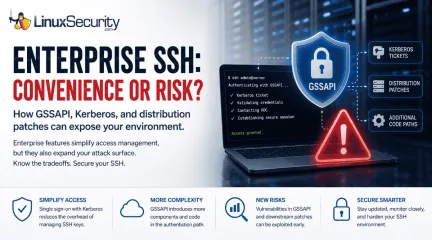
The Hidden Cost of Enterprise SSH Authentication
We often view OpenSSH security updates through the lens of standard patch management. When a new CVE hits, we scramble to update, check our versions, and return to business as usual. But recent vulnerabilities tied to distribution-added OpenSSH GSSAPI patches are a reminder that the danger doesn't always lie in the core code; it often resides in the "convenience" features we layer on top. . These recent issues shouldn't just trigger an apt upgrade or dnf update; they should trigger a configuration audit. As our infrastructure has grown more complex, we have enabled features like GSSAPI—designed to simplify enterprise management—that have quietly expanded our attack surface in ways that standard hardening guides rarely address. Why Enterprises Enable GSSAPI SSH keys work well until your environment starts growing. A handful of Linux servers is easy enough to manage, but hundreds or thousands are a different story. Keys need to be rotated, access needs to be revoked when employees leave, and every new system has to be brought into the process. That's where GSSAPI comes in. Organizations already using Kerberos can let users authenticate with their existing domain credentials instead of distributing and maintaining SSH keys on every server. For many enterprises, that's a practical decision rather than a security decision. The catch is that SSH is no longer handling a relatively simple login. It now has to work with Kerberos tickets and the software that supports them. Recent GSSAPI-related vulnerabilities are a reminder that every additional authentication feature adds more code that has to process data before a session is established. That doesn't mean GSSAPI is unsafe. It means features that make administration easier also deserve the same level of review as the rest of your SSH configuration. There's another detail that's easy to miss. Many Linux distributions ship OpenSSH with downstream patches to support enterprise environments. Those additions aren't part of the upstream OpenSSHcode maintained by the OpenBSD project, so administrators should pay attention to distribution-specific security advisories rather than assuming every OpenSSH issue affects every system the same way. Why "More Secure" Isn't "Less Risky" The core insight here is that complexity is the enemy of security. We implement GSSAPI to avoid the human-centric failure of weak passwords, but we trade that for the system-centric failure of a complex, high-privilege service boundary. If your environment doesn’t require SSO via Kerberos, you are paying a security tax for a convenience you aren't actually using. Even if you do require it, you need to treat the GSSAPI configuration with the same level of paranoia you apply to your authorized_keys files. The Audit: What Should You Be Looking For? If you are running an enterprise Linux fleet, the recent OpenSSH updates serve as a forcing function to look beyond the patch. Ask yourself the following: Is GSSAPI actually necessary? For most standalone servers or small, static clusters, the answer is usually no. If you aren't actively using Kerberos for SSH authentication, explicitly set GSSAPIAuthentication no in your sshd_config. Are your "Forwarding" features justified? Features like GSSAPIDelegateCredentials no, AllowAgentForwarding no, and AllowTcpForwarding no are often left enabled by default out of habit. These provide lateral movement pathways for attackers who compromise an initial jump host. Is your authentication boundary siloed? In a modern "Zero Trust" architecture, we aim to minimize the trust we place in the server itself. Are you relying on the server to validate complex Kerberos tokens, or are you moving toward ephemeral, centrally signed SSH certificates? The Takeaway The latest OpenSSH updates are not just another entry in your vulnerability management dashboard—they are a critique of our collective preference for "easy" enterprise configuration. When you see a GSSAPI-related vulnerability in a changelog,don't just patch. Re-evaluate. Every feature you enable in sshd_config is an intentional decision to expand the scope of what an attacker can target. Before you restart that service, ask yourself: Am I configuring this for security, or am I just configuring it for convenience? Want more Linux security news, vulnerability analysis, and software supply chain updates? Subscribe to the LinuxSecurity Newsletter and get the latest threats, advisories, and expert insights delivered directly to your inbox. Related Reading How to Harden SSH on Linux After Disabling Password Authentication How to Detect Unauthorized SSH Key Usage on Linux Systems . OpenSSH updates highlight the importance of thorough configuration audits over standard patching practices.. OpenSSH updates, enterprise SSH risk management, GSSAPI configuration issues. . MaK Ulac
Jul 06, 2026
•
Security Vulnerabilities
210
 security advisorycriticalUbuntu
Mak's Security Roundup: Prioritizing This Week's Critical Updates
Before you close out the week, check what still needs to be patched. . The list is not small. Ubuntu and Red Hat pushed kernel updates. OpenVPN and OpenShift both received security fixes. Several everyday Linux components were patched too, including Vim, nginx, cifs-utils, LibVNCServer, nghttp2, and Perl. That is the kind of week administrators can easily write off as routine. It should not be. These are the updates that keep small openings from turning into real access. Why This Week Looks Different One notable trend this week is the sheer volume of vendor advisories rather than a single dominant vulnerability. Ubuntu and Red Hat released updates across kernels, enterprise platforms, VPN software, and commonly deployed utilities. That pattern reflects today's Linux security landscape, where reducing risk often depends more on maintaining patch discipline than responding to one high-profile event. Linux Kernel Security Updates Kernel updates are easy to postpone because they usually mean a reboot. That's exactly why they keep showing up on patch backlogs. This week's updates include fixes for privilege escalation and container-related issues . Those aren't the vulnerabilities I'd be comfortable leaving unpatched for long. If someone already has a foothold on a server, the kernel is often where they try to go next. The less time those flaws sit in production, the better. Strengthening the Perimeter: OpenVPN The OpenVPN 2.7.5 update addresses seven security vulnerabilities, including issues with DNS handling, TLS-Crypt-v2 implementation, and proxy behavior. As the "front door" of the modern distributed enterprise, VPN gateways are inherently exposed and must be prioritized. Because VPN gateways are internet-facing, administrators should prioritize these updates to reduce the risk of unauthorized access, denial-of-service conditions, or other attacks addressed by the released fixes. Patching ensures that your remote access infrastructure remains a secure gateway ratherthan an entry point for unauthorized actors. Orchestration Integrity: OpenShift Red Hat OpenShift 4.19.36 and OpenShift 4.15.66 include security updates for the platform’s container infrastructure. As organizations shift toward microservices, OpenShift has become the operating system of the data center. Because OpenShift manages workloads across the cluster, a compromise of the orchestration layer can have broad security implications. Keeping OpenShift current helps reduce the risk of attackers exploiting vulnerabilities that could expose administrative components, workloads, or sensitive configuration data. Reducing that exposure also limits their ability to gain broader visibility or control over the production environment. Maintaining the Ubiquitous "Plumbing" Beyond the headline infrastructure components, several widely deployed utilities—including Vim , nginx , cifs-utils , LibVNCServer , nghttp2 , and Perl —received security attention this week. These utilities are the "plumbing" of Linux, used in almost every deployment and serving as dependencies for larger applications. Widely deployed utilities often become part of larger attack chains because they are present on so many systems. Delaying these seemingly minor updates can leave commonly deployed software exposed, creating opportunities for attackers to incorporate them into larger attack chains after gaining an initial foothold. Supply Chain Vigilance via Hardened Images Red Hat continues to ship updates for Hardened Images , including AI Base Images and container images. This reflects the industry shift toward "secure-by-design" infrastructure. Relying on stale base images is a common way organizations introduce known vulnerabilities into production. While automated scanners can quickly identify these vulnerabilities, your environment remains at risk until the underlying images are updated to a hardened baseline. The New Security Reality This week’s activity provides a vital snapshot ofthe current threat landscape, highlighting several key takeaways for security and infrastructure teams: Adopt a "Time-to-Exploit" Mindset: For internet-facing software, the window between public disclosure and exploitation is increasingly measured in hours or days, making timely patching more important than ever. Move Beyond Silos: You cannot secure your environment by patching in isolation. You must treat kernels, containers, and VPNs as a single, interdependent surface. Prioritize Ruthlessly: If your team is overwhelmed, follow this hierarchy: 1. Internet-facing services: (VPN gateways, web servers). 2. Kernel and privilege escalation fixes: (Reducing the risk of host compromise and container escape). 3. Ubiquitous utilities: (Vim, Perl, etc., to block lateral movement). What Matters Most This Week If this week's updates have one thing in common, it's that none of them can really be ignored. Kernel patches, VPN software, container platforms, and the tools that quietly support Linux systems all received security fixes. That's becoming a pretty normal week for Linux administrators. Nobody has an unlimited maintenance window. If you have to make choices, start with the systems that are easiest for an attacker to reach. Kernel updates shouldn't sit in the queue for long either, especially when they address privilege escalation or container-related issues. After that, work through the remaining utilities before they become next month's backlog. How is your team handling the growing volume of Linux security updates without falling behind on day-to-day operations? . Stay updated on critical patches for Linux systems from Ubuntu and Red Hat, vital to protect against threats.. Linux Kernel Security, OpenVPN Security Updates, Red Hat Patches, Ubuntu Updates, OpenShift Security. . MaK Ulac
Jul 03, 2026
•
Security Vulnerabilities
79
 security advisoryvulnerability managementopen source initiative
Linux Foundation Launches Akrites to Strengthen Software Supply Chain Security
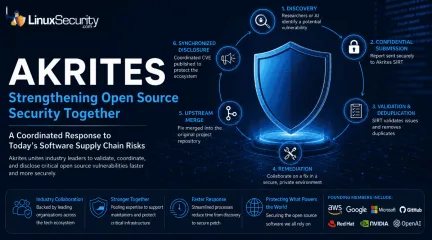
The Linux Foundation has officially launched Akrites , a coordinated industry initiative designed to improve how critical open source vulnerabilities are validated, coordinated, and disclosed before patches reach downstream users. Backed by a diverse coalition—including AWS, Google, Microsoft/GitHub, Red Hat, NVIDIA, and OpenAI—Akrites establishes a shared Security Incident Response Team (SIRT) to streamline the validation, remediation, and disclosure of vulnerabilities in the foundational code that underpins the modern digital economy. . AI Is Changing Software Supply Chain Security One detail in the Linux Foundation announcement stands out more than the launch itself. The organization isn't suggesting that open source projects suddenly need more vulnerability reports. They already receive plenty. The problem is volume. AI-assisted analysis has made it possible to review large codebases much faster than before. Researchers can identify suspicious patterns, compare projects, and generate vulnerability reports in a fraction of the time that manual analysis once required. That is good news for open-source security, but it has also exposed a weakness in the current response model. Every report still has to be reviewed by a person. Someone has to reproduce the issue, determine whether it affects supported releases, understand its severity, decide whether a CVE is appropriate, develop a patch, and move that fix through coordinated vulnerability disclosure before technical details become public. None of those tasks has become significantly easier simply because AI can produce findings more quickly. According to Endor Labs, one of Akrites' founding members, fewer than 5% of recently validated open source vulnerabilities have been patched . Whether that percentage changes over time, it illustrates the same trend. Discovery is accelerating faster than remediation. Why Existing Open Source Security Processes Are Under Pressure The reality for many maintainers looks verydifferent from how people imagine open-source security working. A widely used library isn't necessarily maintained by a large engineering team. In many cases, it's a handful of contributors or even a single developer balancing maintenance with a full-time job. Now imagine that the project suddenly receives dozens of reports describing the same underlying issue. One submission comes from a commercial scanner. Another is generated by an AI coding assistant. A third arrives through a bug bounty program. None are identical, but all require investigation. The difficult part isn't opening the email. It's figuring out whether the report is accurate, whether the vulnerability can actually be reproduced, whether downstream users are affected, and how the issue should move through vulnerability disclosure without exposing organizations before a fix is available. Akrites is intended to reduce that burden by acting as a shared Security Incident Response Team. Instead of every organization independently contacting maintainers, the initiative provides a coordinated process for validating reports, removing duplicates, and helping projects prepare fixes before disclosure begins. Recent Incidents Showed Why Coordination Matters Recent security incidents have demonstrated that identifying a vulnerability is often only the beginning. Log4Shell became a global response effort almost overnight. The challenge wasn't limited to understanding the vulnerability itself. Linux distributions, software vendors, cloud providers, security teams, and enterprise administrators all had to coordinate patches, advisories, testing, and deployment under intense time pressure. The XZ Utils backdoor exposed a different weakness. It showed how much critical infrastructure still depends on software maintained by very small teams. When one upstream project experiences a security problem, the consequences spread through Linux distributions, enterprise products, containers, cloud platforms, and countless applications built ontop of that code. Akrites would not have prevented either incident. The Linux Foundation isn't making that claim. Instead, the initiative attempts to strengthen the coordination that happens after a vulnerability is discovered and before it reaches the wider ecosystem. What Akrites Means for Open-Source Security Akrites represents a clear realization: open source security can no longer rely solely on the efforts of individual maintainers. Every critical project eventually hits the same wall: the software becomes indispensable long before the maintenance team has the resources to manage it. One interesting aspect of this initiative isn't just the technology—it's the list of founding members. Organizations like Citi, JPMorgan Chase, Ericsson, and Cisco rarely launch joint initiatives unless they share a massive, systemic problem. In this case, they do. Modern infrastructure shares an enormous amount of upstream code, which means one overwhelmed maintainer is now a systemic risk for banks, power grids, and cloud providers alike. What This Means for Linux Administrators Linux administrators rarely work directly with upstream maintainers, yet they depend on them every day. Enterprise distributions such as Red Hat Enterprise Linux, Ubuntu, Debian, SUSE, AlmaLinux, and Rocky Linux package software only after upstream projects have investigated reports, developed patches, and coordinated disclosure. Improvements at the upstream level can ripple through the entire software supply chain, ultimately affecting how quickly organizations receive trusted updates. : Faster upstream patch coordination: Verified fixes land in your distribution’s repositories sooner because the "middle work" of validation and deduplication is handled upstream. More consistent security advisories: Standardized reports make it easier to track and prioritize updates across your fleet. Better support for widely used components: Akrites says it can serve as a "maintainer of last resort" for certain criticalprojects by helping coordinate remediation when active maintenance is no longer sufficient. How Akrites Coordinates Vulnerability Response The initiative formalizes the vulnerability disclosure lifecycle to ensure confidentiality and speed. Instead of maintainers fielding reports from hundreds of sources, they have one predictable partner. Discovery: A researcher or AI surfaces a potential flaw. Confidential Submission: The report is sent to the Akrites SIRT, not a public bug tracker. Validation & Deduplication: The SIRT verifies the issue and removes duplicates. Remediation: Maintainers and industry engineers collaborate on a fix in a secure environment. Upstream Merge: The fix is merged into the original project's repository. Synchronized Disclosure: A coordinated CVE is published to alert the ecosystem. Akrites Won't Replace Vulnerability Management It is vital to note that Akrites is an upstream coordination body, not an enterprise security product. Organizations still need robust internal programs, including vulnerability management processes, asset inventories, and monitoring tools to detect threats within their specific environments. Akrites improves the upstream coordination of security, but the responsibility for securing the downstream enterprise environment remains with the organization. Akrites complements existing vulnerability management programs rather than replacing them. Organizations will still need scanners, patch management workflows, asset inventories, and software bills of materials (SBOMs) to identify affected systems and deploy updates. Akrites focuses on the upstream coordination that happens before those updates reach enterprise environments. Conclusion For years, the industry invested heavily in tools designed to identify software vulnerabilities faster. Akrites reflects a strategic recognition that discovery is no longer the limiting factor. As AI continues to accelerate vulnerability research, the challenge hasbecome how quickly maintainers can validate reports, coordinate fixes, and deliver patches before attackers exploit them. Whether Akrites succeeds will ultimately be measured not by the number of vulnerabilities it processes, but by whether it successfully shortens the time between discovery and remediation across the open source ecosystem. By professionalizing the "messy middle" of the response process, Akrites is attempting to build the operational infrastructure needed to keep our most critical software secure in an age of AI-accelerated threats. Want more Linux security news, open source security analysis, and software supply chain insights? Subscribe to the LinuxSecurity Newsletter for the latest vulnerability disclosures, security advisories, threat analysis, and expert coverage of the technologies shaping the Linux ecosystem. Related Reading Why Linux Supply Chain Attacks Are Becoming a Nightmare for DevOps Teams Targeted Attacks on Open Source Maintainers Highlight Security Risks . The Linux Foundation's Akrites aims to improve the response and management of open source vulnerabilities through collaborative efforts.. Linux Foundation, Akrites, Open Source Security, Vulnerability Coordination, Software Supply Chain. . MaK Ulac
Jun 29, 2026
•
Security Projects
210
 security advisorycriticalremote code execution
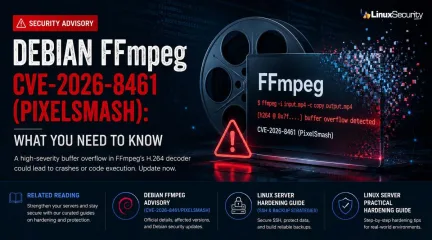
FFmpeg PixelSmash Vulnerability Exposes Linux Media Servers to Remote Code Execution Risk
A newly disclosed FFmpeg vulnerability, known as PixelSmash ( CVE-2026-8461 ), affects the MagicYUV decoder and can be triggered by specially crafted video files. . Researchers demonstrated remote code execution against Jellyfin under specific conditions and found multiple Linux applications that could be exposed through normal media processing workflows. Even where code execution is not practical, the vulnerability can still be used to crash affected applications. What Is FFmpeg? FFmpeg is one of the most widely deployed multimedia frameworks in the Linux ecosystem. It handles: Video decoding, encoding, and transcoding. Streaming and format conversion. Thumbnail generation and metadata extraction. Most users never interact with it directly. Applications call FFmpeg behind the scenes whenever media needs to be processed. That dependency chain becomes surprisingly large once administrators start looking for it: Media servers such as Jellyfin rely on FFmpeg for library scanning and transcoding. Photo management platforms use it to generate previews. Content management systems use it to inspect uploaded media. Desktop environments invoke it during thumbnail generation. Video production tools, streaming software, and automation workflows include FFmpeg in the processing path. The result is a shared component that exists across servers, workstations, containers, NAS appliances, and self-hosted platforms. A flaw inside FFmpeg often reaches much further than administrators initially expect. What Is PixelSmash? PixelSmash is the name given to CVE-2026-8461 , a heap out-of-bounds write vulnerability located in FFmpeg's MagicYUV decoder. MagicYUV is a lossless video codec designed for high-performance video processing. Researchers at JFrog discovered that specially crafted AVI, MKV, or MOV files can trigger memory corruption while the decoder processes video frame data. The vulnerability received a CVSS score of 8.8 and affects applications that relyon FFmpeg's vulnerable decoder implementation. The issue occurs because memory is allocated using one set of frame calculations while portions of the decoder later write data using different calculations. Under the right conditions, those writes extend beyond the intended heap boundary. Memory corruption follows. How the Vulnerability Works PixelSmash is a heap out-of-bounds write vulnerability in FFmpeg's MagicYUV decoder. A specially crafted video can cause the decoder to write beyond allocated memory, leading to application crashes or, under specific conditions, arbitrary code execution. How to Check If You're Affected ffmpeg -version ffprobe -version Debian/Ubuntu: dpkg -l | grep ffmpeg RHEL/CentOS/Rocky/Alma: rpm -qa | grep ffmpeg Arch Linux: pacman -Qs ffmpeg Containerized deployments: docker exec ffmpeg -version Why PixelSmash Changes the Linux Threat Model Most malicious file attacks depend on user interaction. Someone downloads a file, opens it, and triggers the exploit. PixelSmash breaks that pattern in common Linux deployments. Media servers such as Jellyfin monitor directories and immediately process new files using ffprobe. Desktop environments like GNOME and KDE generate thumbnails as soon as a directory is opened. Platforms such as Nextcloud and PhotoPrism automatically extract metadata and create previews for uploaded content. None of these workflows requires a user to play the video. The vulnerable decoder runs as part of routine system behavior. That matters because Linux environments often centralize media processing. A single server may ingest files from torrents, shared network mounts, automated download pipelines, or user uploads. Each of those paths feeds directly into background processing jobs that trust FFmpeg to handle untrusted input safely. PixelSmash turns those trusted workflows into an attack surface. A crafted video file does not need to trick a user. It only needs to reach a location where Linuxservices expect media to exist. Media Library Scanning Creates an Attack Surface Self-hosted media servers represent a clear example. Jellyfin continuously scans media libraries for new content. When a new video arrives, FFmpeg utilities such as ffprobe are often invoked automatically to extract metadata and catalog the file. The user does not need to click anything. The service sees a new file, starts processing, and executes the vulnerable code path as part of routine library management. Researchers demonstrated this behavior against Jellyfin by placing a crafted MagicYUV video into a monitored media directory. During the normal scan process, the malformed file triggered the overflow condition. For administrators running large media libraries, NAS appliances, or automated content ingestion pipelines, this is the scenario that deserves attention. Thumbnail Generation May Trigger Processing Automatically Desktop Linux systems introduce another exposure path. GNOME, KDE, and XFCE commonly generate previews and thumbnails when users browse directories. The goal is convenience, but behind that convenience sits media processing logic. A file manager opening a directory may trigger FFmpeg operations without the user ever launching a media player. Administrators investigating workstation exposure should consider thumbnail generation workflows when evaluating affected systems. The vulnerable file may be processed simply because someone browsed a folder. Automated Download Workflows Increase Risk Media automation environments often combine multiple services: Torrent clients download content. Scripts move files into library directories. Media servers scan new arrivals. Metadata services perform indexing. Preview generators create thumbnails. Transcoding services prepare content for playback. Each step expands the opportunities for FFmpeg to encounter untrusted input. JFrog researchers highlighted a scenario involving malicious torrent content entering a Jellyfin libraryautomatically. Once the file appears in a monitored directory, normal media processing begins, and the vulnerable decoder executes without user involvement. Administrators frequently focus on exposed web services, but media pipelines deserve similar scrutiny. Remote Code Execution Against Jellyfin The most significant finding from the research involved successful remote code execution against Jellyfin. Researchers demonstrated a chain in which a crafted MagicYUV AVI file entered a Jellyfin media library and triggered FFmpeg processing during metadata extraction. The overflow corrupted memory structures and ultimately redirected execution flow, allowing arbitrary commands to execute under the Jellyfin service account. That detail matters. The result was not root access, but the process executed with the privileges assigned to the Jellyfin service. Even so, service account access provides a foothold into the broader environment. Stored credentials, network shares, API tokens, configuration files, and weak sudo rules can all become relevant after initial compromise. Attackers rarely stop at the first process they reach. Why ASLR Still Matters The research does not suggest that PixelSmash reliably bypasses modern Linux memory protections on its own. Address Space Layout Randomization (ASLR) remains an important defensive barrier. The demonstrated remote code execution scenario required ASLR to be disabled. Researchers noted that CVE-2026-8461 by itself does not defeat that protection. This distinction is important because vulnerability headlines often compress technical limitations into a single phrase such as "RCE vulnerability." The overflow exists and the memory corruption is real, but exploitation becomes substantially more difficult when modern memory protections remain active and properly configured. Which Linux Applications May Be Affected? Jellyfin received much of the attention because researchers successfully demonstrated code execution against it, but the concern extends further.Applications that rely on FFmpeg and expose the MagicYUV decoder may be affected if they process attacker-controlled media files: Jellyfin Nextcloud configurations that generate video previews PhotoPrism Kodi OBS Studio Desktop thumbnail generation frameworks The exact level of exposure depends on implementation details. Decoder configuration, build options, security hardening, and application behavior all influence risk. Plex provides an interesting contrast: researchers found that Plex uses a more restrictive FFmpeg configuration with decoder limitations that reduce exposure to this specific attack path. Same dependency, different attack surface. What Defenders Should Do The immediate priority is identifying systems that process untrusted video content. Media servers deserve attention first, followed by content management platforms, photo management systems, preview generators, and automated upload workflows. Administrators should: Verify installed FFmpeg versions and apply available patches. Confirm containerized applications are not using outdated bundled FFmpeg builds. Review media libraries that automatically ingest content from torrents, uploads, shared folders, or external sources. Ensure services such as Jellyfin run with minimal privileges and do not have unnecessary access to sensitive files or network shares. Monitor vendor advisories for FFmpeg and dependent applications. PixelSmash is a reminder that some of the most important Linux attack surfaces are not internet-facing services but the background processes that automatically handle untrusted content. A media library scan or thumbnail generation task may seem routine, yet both can expose systems to vulnerabilities hidden deep within widely used dependencies. Want more Linux security news, vulnerability analysis, and software supply chain updates? Subscribe to the LinuxSecurity Newsletter and get the latest threats, advisories, and expert insights delivered directly to your inbox. Related Reading Debian FFmpeg Advisory (CVE-2026-8461/PixelSmash) Linux Server Hardening Guide (SSH & Backup Strategies) Linux Server Practical Hardening Guide . Researchers demonstrated remote code execution against Jellyfin under specific conditions and found . newly, disclosed, ffmpeg, vulnerability, known, pixelsmash, (cve-2026-8461), affects, magicyuv. . MaK Ulac
Jun 23, 2026
•
Security Vulnerabilities

Get the latest News and Insights
Get the latest Linux and open source security news straight to your inbox.
Community Poll
Is continuous patching actually viable?
Search Topics
Powered By

Linux Security - Your source for Top Linux News, Advisories, HOWTOs and Feature Releases
QUICK LINKS
subscribe to newsletters!
Like staying secure? So do we.
Sign up for updates, tips, and alerts!