Explore top 10 tips to secure your open-source projects now. Read More
×


CrackArmor AppArmor Flaws Put Linux Containers and Snap Sandboxes at Risk
 May 07, 2026
•
May 07, 2026
•
 MaK Ulac
3 - 5 min read

Topics Covered
Linux administrators rely on AppArmor to contain compromised applications. If a browser, container, or Snap package is exploited, the profile is supposed to limit what that process can touch on the host. This mechanism is the backbone of Linux container isolation.
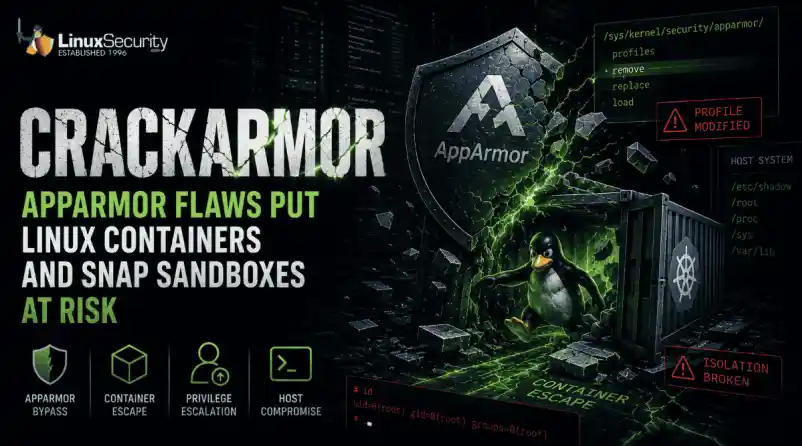
The newly disclosed “CrackArmor” vulnerabilities challenge that isolation model directly. Research from Qualys shows that attackers with local code execution may be able to manipulate or disable AppArmor protections entirely, turning a restricted process into a path toward host-level compromise.
The Breakdown of Mandatory Access Control
Traditional Linux permissions determine which users can access a system. AppArmor adds another layer by restricting what a process can do after execution begins through mandatory access control. Even a root process can still be blocked from accessing sensitive files, loading kernel interfaces, or initiating unauthorized actions if the profile denies it.
CrackArmor matters because the AppArmor vulnerabilities target the framework itself rather than a single application or driver. The flaws affect the Linux Security Module (LSM) policy management interfaces and allow an unprivileged local attacker to abuse a confused-deputy condition to load, replace, or remove security profiles.
By interacting with pseudo-files under /sys/kernel/security/apparmor/, an attacker may be able to alter enforcement behavior through privileged tooling that was never intended to expose direct profile control to lower-privileged users. This effectively bypasses the Linux sandboxing that administrators rely on for security.
Why This Isn’t “Just” a Local Privilege Escalation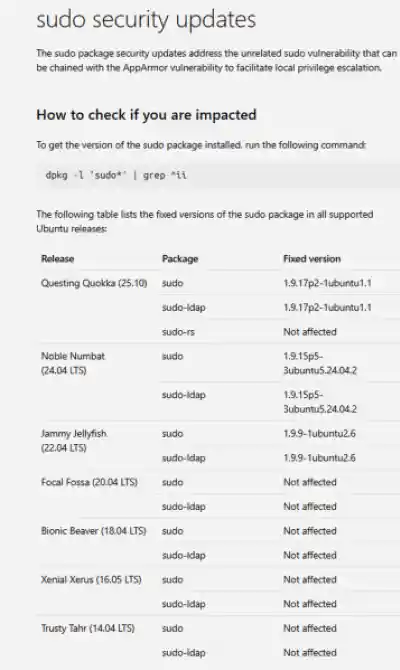
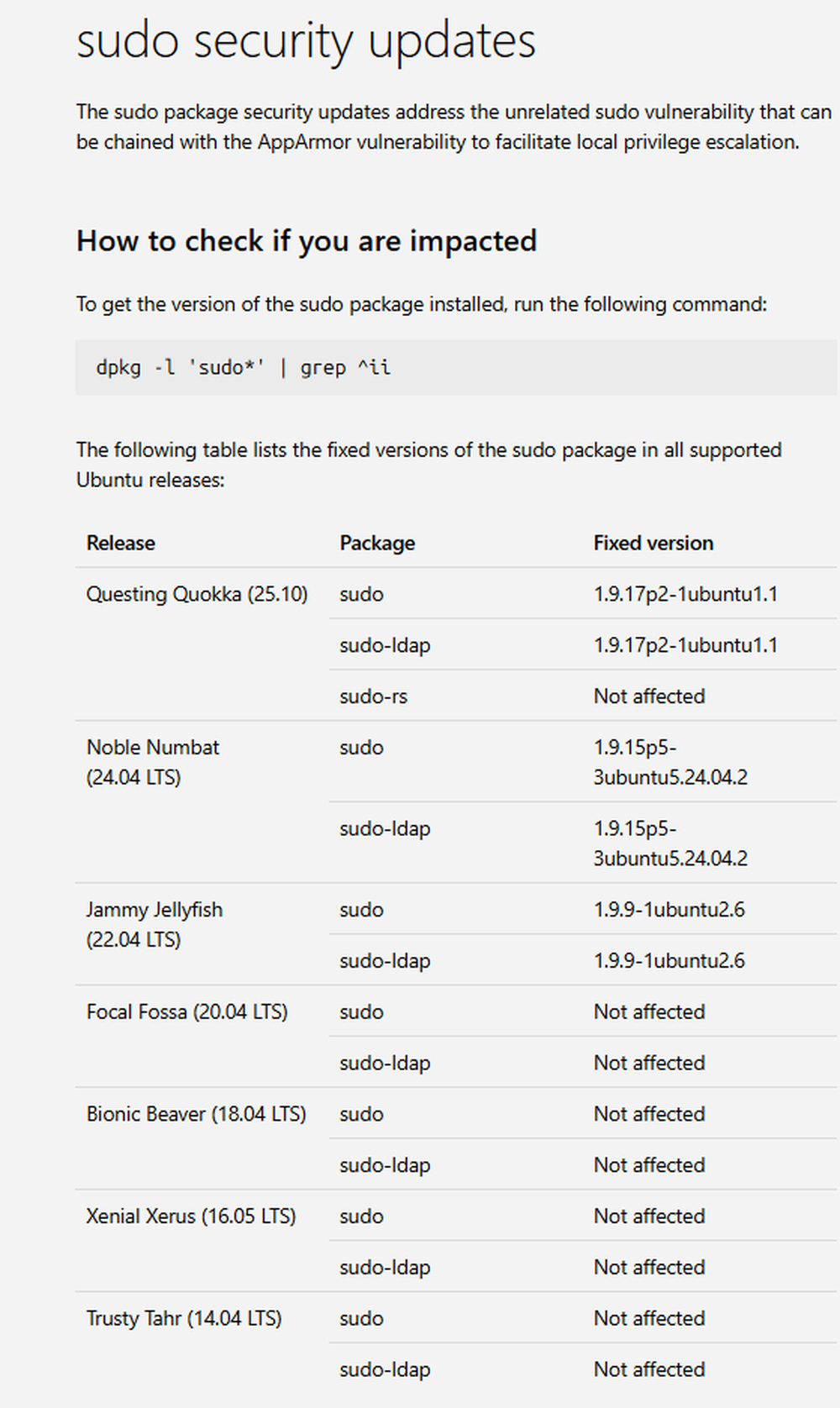
CrackArmor is not a remote code execution worm by itself. The attacker still needs local code execution first. In practice, though, that initial foothold is often the easy part. A successful exploit of these flaws can result in a Linux privilege escalation.
Common entry points include:
- Malicious scripts executed by users
- Browser exploit chains
- Vulnerable applications running inside containers
- Exposed development tooling or CI runners
Once local execution exists, the AppArmor flaws can be chained with other weaknesses to bypass namespace restrictions or weaken Linux container isolation. In a multi-tenant infrastructure, that changes the impact significantly.
There is currently no public evidence of widespread in-the-wild exploitation. Still, Linux privilege escalation and container escape paths remain high-value targets because they convert a limited foothold into persistent system access. Some of these flaws have reportedly existed since kernel v4.11, which was released in 2017, leaving a long exposure window across older deployments.
Container Isolation Risks
A realistic scenario involves a vulnerable web application running inside a Kubernetes security context, specifically a container protected by an AppArmor profile such as docker-default.
An attacker exploits the application and gains shell access inside the container. From there, the attacker abuses the AppArmor policy handling flaw to trigger privileged profile operations indirectly, leading to a potential container escape. If the profile is removed or replaced successfully, the container may gain visibility into host resources depending on namespace configuration, mounted filesystems, and granted capabilities.
At that point, the attack moves beyond the original container compromise and into host interaction, credential access, network inspection, or lateral movement activity. Effective Kubernetes security depends on these profiles remaining immutable to the processes they restrict.
Ubuntu, Azure, and Snap Exposure
Ubuntu security is heavily affected because AppArmor is enabled by default across much of the ecosystem.
Snap Sandbox
The Snap sandbox relies extensively on AppArmor profiles to isolate desktop and server applications from the host system. If these profiles can be manipulated, the core security promise of the Snap sandbox is broken.
Azure Kernels
Many Azure-focused Ubuntu kernels use AppArmor as part of the default workload isolation model for cloud deployments, making Ubuntu security a top priority for cloud architects.
Kubernetes
Kubernetes security clusters frequently assume that AppArmorProfile enforcement inside Pod Security Contexts provides a stable isolation boundary between workloads and the host. AppArmor vulnerabilities that allow profile modification threaten this entire boundary.
Remediation and Verification
Canonical has released patched kernels under USN-8243-1. Applying updates alone is not enough. The patched kernel does not become active until the system reboots. Maintaining robust Linux sandboxing requires verified, active enforcement.
Operational Actions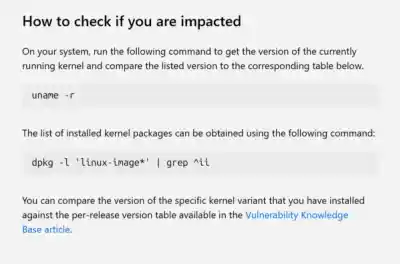
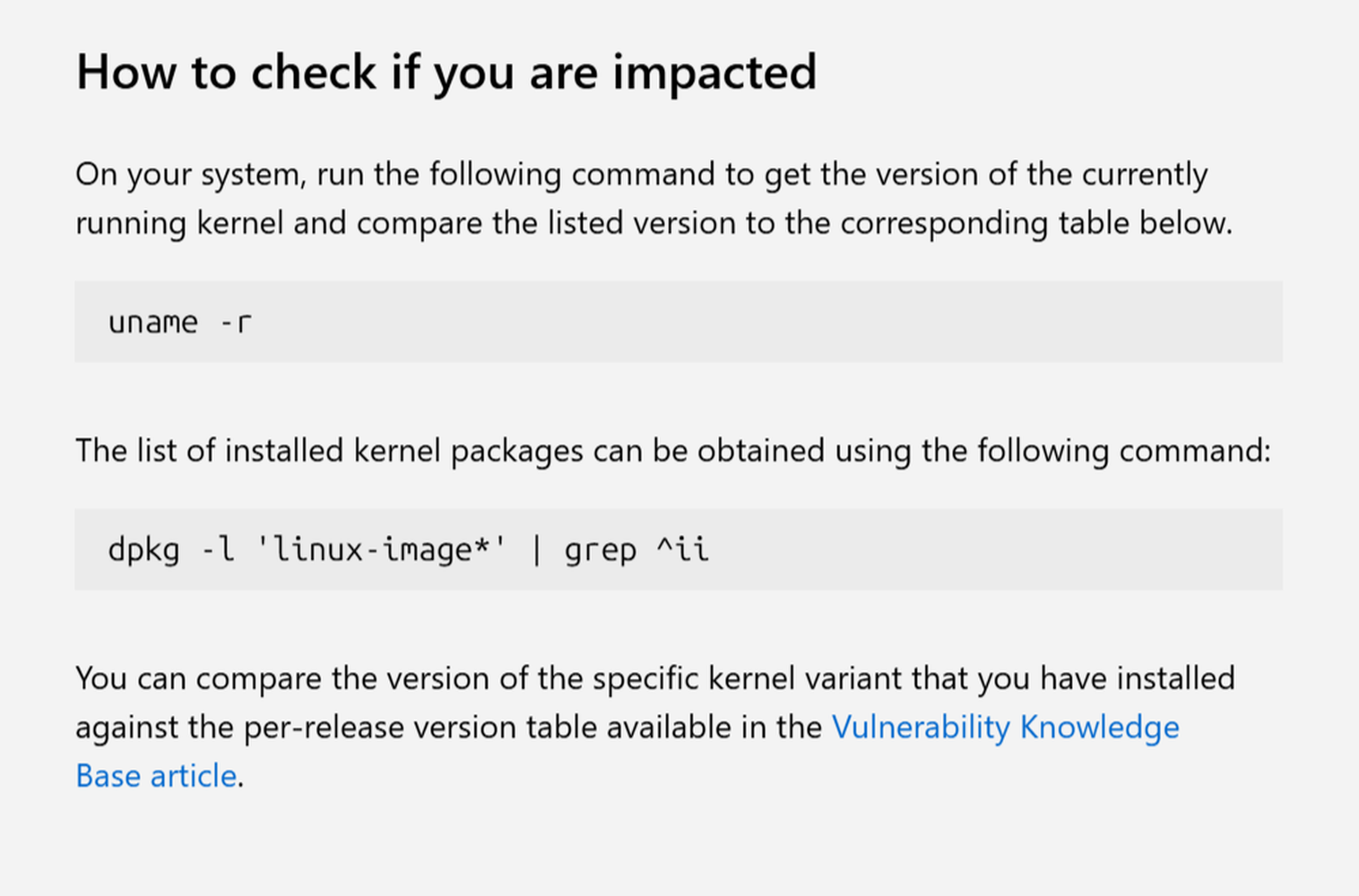
Audit active kernels: uname -r
Verify Kubernetes profile attachment: kubectl exec
The output should show AppArmor profiles operating in (enforce) mode.
Monitor for unexpected profile modifications through dmesg or journalctl -k, especially profile unload activity or denied operations involving the Linux Security Module filesystem.
Apply updates and reboot affected systems: sudo apt update && sudo apt upgrade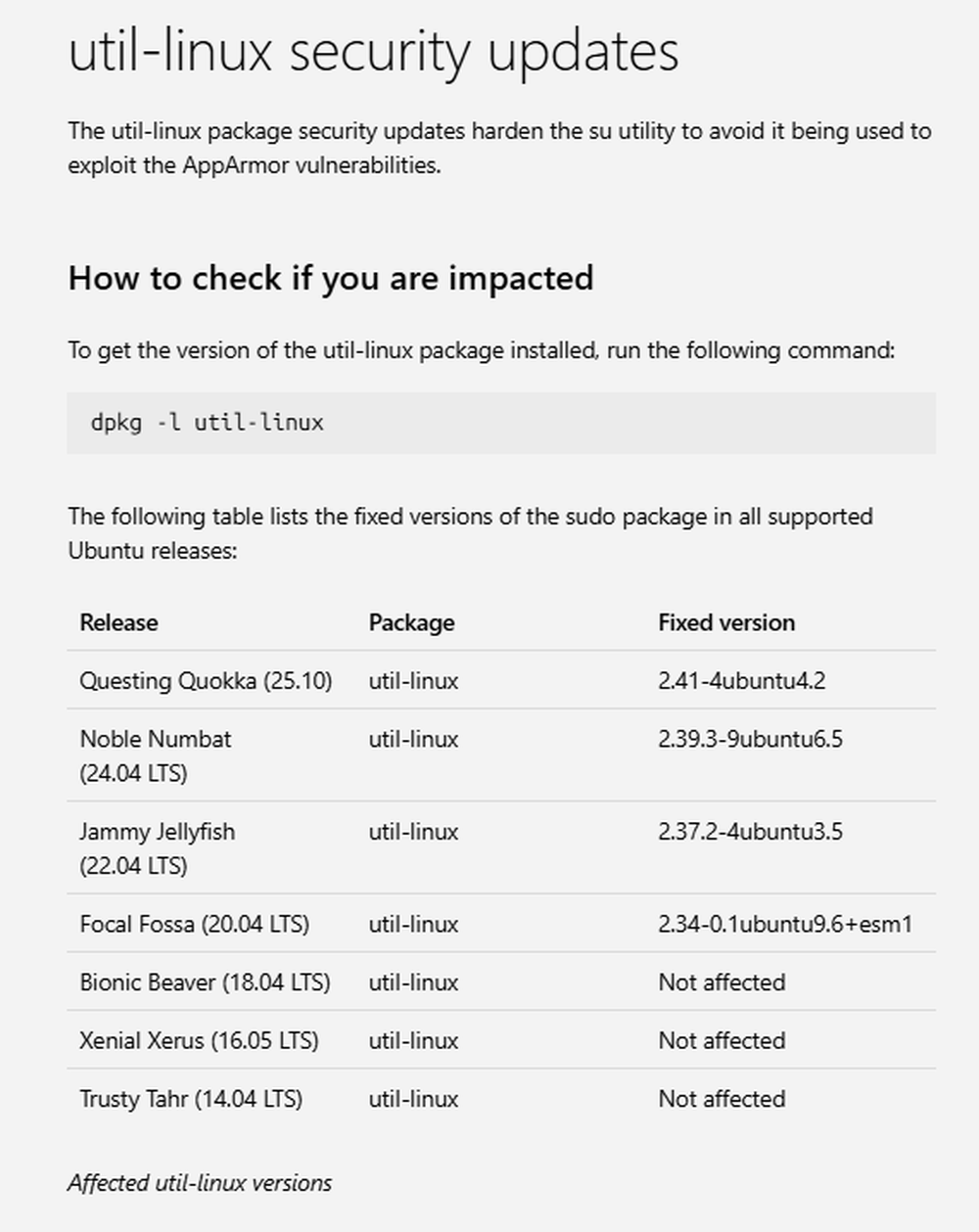
For organizations relying on mandatory access control, namespace isolation, or multi-tenant Linux infrastructure, delaying these updates leaves a path open for a container escape from local execution to broader system compromise.
Stay Ahead of the Threat:
- Sign up for our newsletter for weekly deep-dives into Linux security, Kubernetes risks, and container escape threats.
- Kubernetes Container Security Misconfigurations Leading to Threats
- What Is a Container Escape Vulnerability?
- What Is AppArmor? A Practical Look for Linux Admins
 PREVIOUS

 NEXT
NEXT
Powered By

Linux Security - Your source for Top Linux News, Advisories, HOWTOs and Feature Releases
QUICK LINKS
subscribe to newsletters!
Like staying secure? So do we.
Sign up for updates, tips, and alerts!