


Linux Security Monitoring Challenges and EDR Visibility Gaps
 May 14, 2026
•
May 14, 2026
•
 MaK Ulac
4 - 8 min read
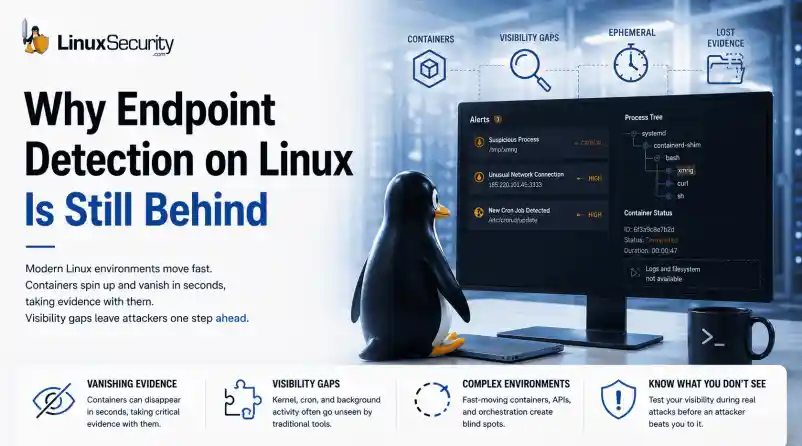

An attacker compromises a Linux container, launches a cryptominer, sets up a way to stay in the system through a background task, and disappears before the investigation even begins. By the time analysts start looking at the logs, the workload has shut down, and the container no longer exists.
This is the visibility problem modern Linux security teams are struggling with.
Security teams depend on visibility. If they cannot see what is happening on a system, they cannot investigate attacks, understand suspicious behavior, or respond quickly when something goes wrong. That problem gets much harder in modern Linux environments.
For years, endpoint detection and response tools — usually shortened to EDR — matured around Windows systems. Analysts grew used to having a clear view into processes, files, network connections, and suspicious activity. Linux never followed the same path.
Why Attackers Are Targeting Linux Systems
At the same time, Linux became the backbone of modern infrastructure. It now powers: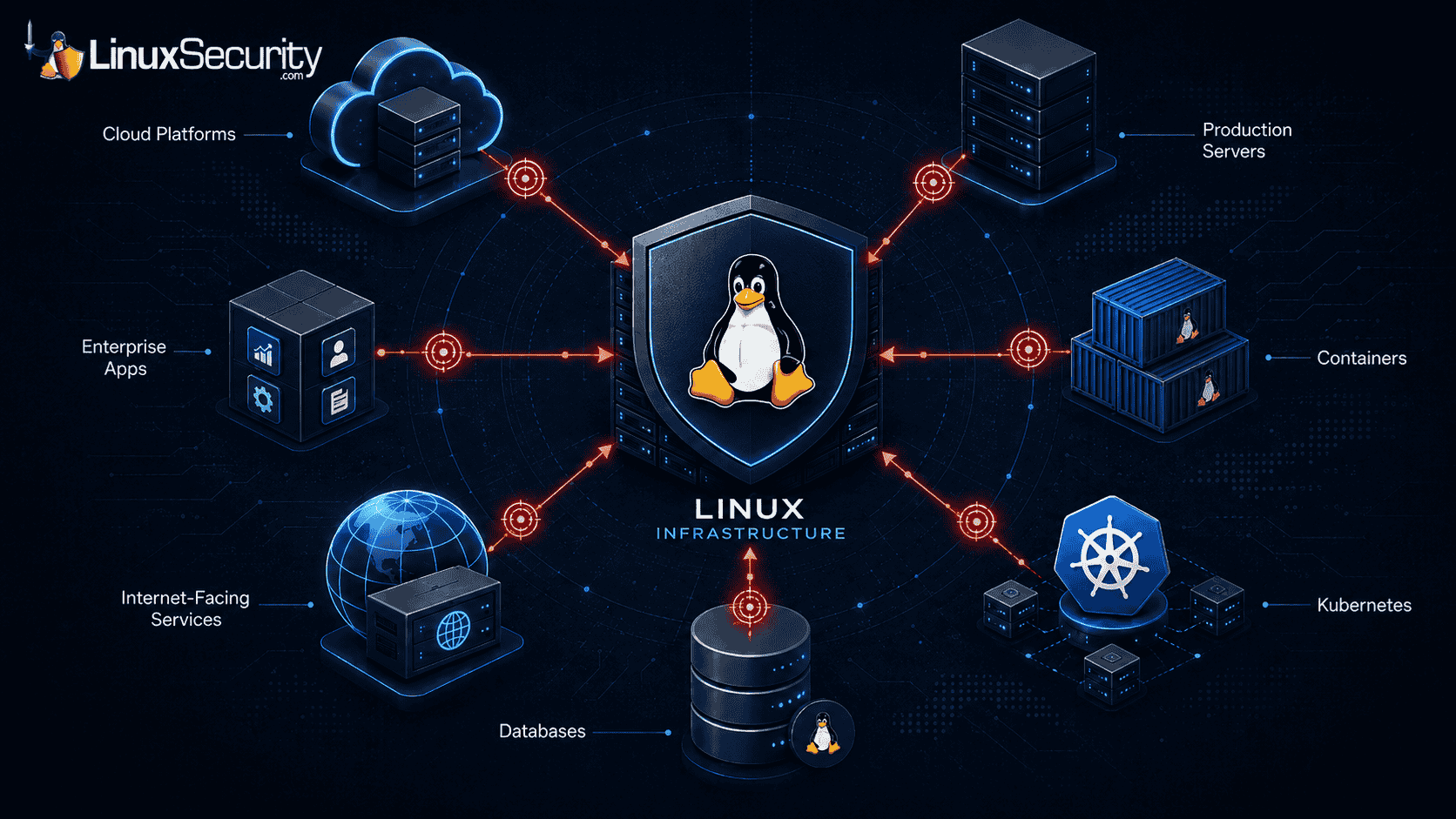
- Cloud platforms and production servers
- Containers and Kubernetes clusters
- Enterprise applications and databases
- Critical internet-facing services
Attackers noticed that shift too. Linux malware, ransomware, cryptominers, and cloud-focused attacks have all grown steadily more common. The issue is not that Linux lacks security tools, or that it is “less secure.” The bigger problem is that Linux environments changed faster than most monitoring tools did.
Infrastructure scales automatically in the background. In some environments, the system an analyst is investigating may no longer exist by the time the investigation even starts. That creates blind spots. Sometimes large ones.
What Endpoint Detection Tools Monitor on Linux
At a basic level, EDR tools collect activity data from systems so security teams can understand what happened during an attack. That data includes things like:
- Processes starting or stopping
- Files being created or modified
- Scripts running
- User logins
- Network connections
- Services being installed
- Scheduled tasks being created
Why Linux Attacks Are Hard to Detect
Most Linux attacks do not look malicious at first. Attackers often use the same tools administrators rely on every day, like Python, Bash, cron jobs, and curl, allowing malicious activity to blend into normal operations.
Modern Linux environments also generate massive amounts of system activity. Containers spin up and disappear constantly, processes launch through APIs, and workloads move between hosts. Security tools may see a suspicious process running, but lack the context needed to understand what triggered it or where it started.
That is the real challenge with Linux detection. The issue is rarely a lack of data. It is a lack of context.
Linux Environments Don’t Behave Like Traditional Systems
Traditional security tools were built for systems that stayed relatively stable. A workstation came online, ran the same software every day, and usually stayed in place for months or years. Modern Linux infrastructure rarely works like that anymore.
Today, many Linux workloads run inside containers. Applications are broken into small, moving parts. New workloads appear constantly while older ones disappear just as quickly.
Why Containers Create Visibility Blind Spots
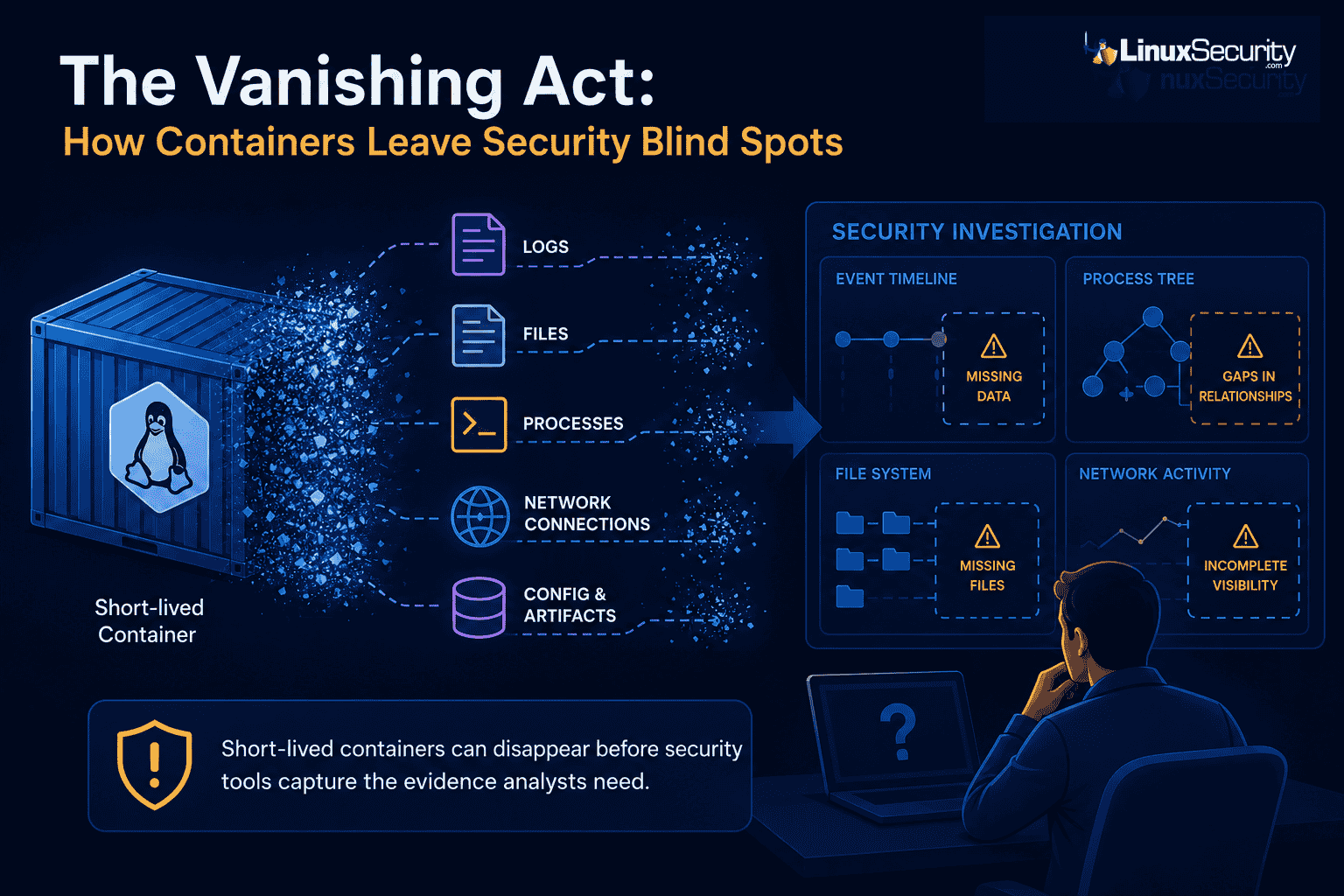
That speed changes everything for security teams:
- Evidence Disappearance: A container may only exist for a few seconds. If the tool misses activity during that window, the evidence may be gone forever.
- Vanishing Filesystems: Files can vanish before the tool has a chance to save the details.
- Complex Connections: It is harder to see which process started another because workloads are launched through automated platforms instead of direct commands.
Why Linux Monitoring Is So Inconsistent
Unlike Windows, Linux is highly fragmented. Organizations run different versions, different "kernels" (the core of the system), and different setups. One monitoring approach may work perfectly in one environment and fail completely somewhere else.
That complexity forces vendors into difficult tradeoffs:
- Collect more data, and you risk slowing down the system or making it unstable.
- Collect less data, and analysts lose the ability to see important activity.
Common Linux EDR Visibility Gaps
Many organizations assume they have more visibility than they actually do. A dashboard may appear healthy. The tool is online. Alerts are flowing. Everything looks fine.
Then the investigation starts.
Suddenly, there’s no record of the background task that launched the malware. No data showing how the attacker kept their access. No record of failed logins. Researchers found major gaps in areas like:
- Core system (kernel) monitoring
- Background service tracking
- Scheduled task (cron) monitoring
- Failed login visibility
- Changes to running processes
How Container Attacks Can Evade Investigations
Consider a real-world scenario involving groups like TeamTNT, who target cloud environments.
- An attacker breaks into a cloud workload.
- They launch a cryptominer and set up a background task to keep the attack running.
- The malicious activity spikes the CPU, and the system automatically kills the "unhealthy" container and replaces it with a clean one.
- When analysts arrive, the evidence is gone.
Without deep data that was captured and saved before the container vanished, analysts lose the full story. Missing data is hard to notice until you actually need it.
Is your Linux visibility as strong as you think?
The only way to know is to test it. If your team hasn't checked what your tools actually see during a container-based attack, now is the time to start
Containers Make Endpoint Visibility Harder
Containers made life easier for developers, but made security visibility harder almost immediately. At the core of the Linux system, a container is just a group of isolated processes. For security tools, this creates challenges: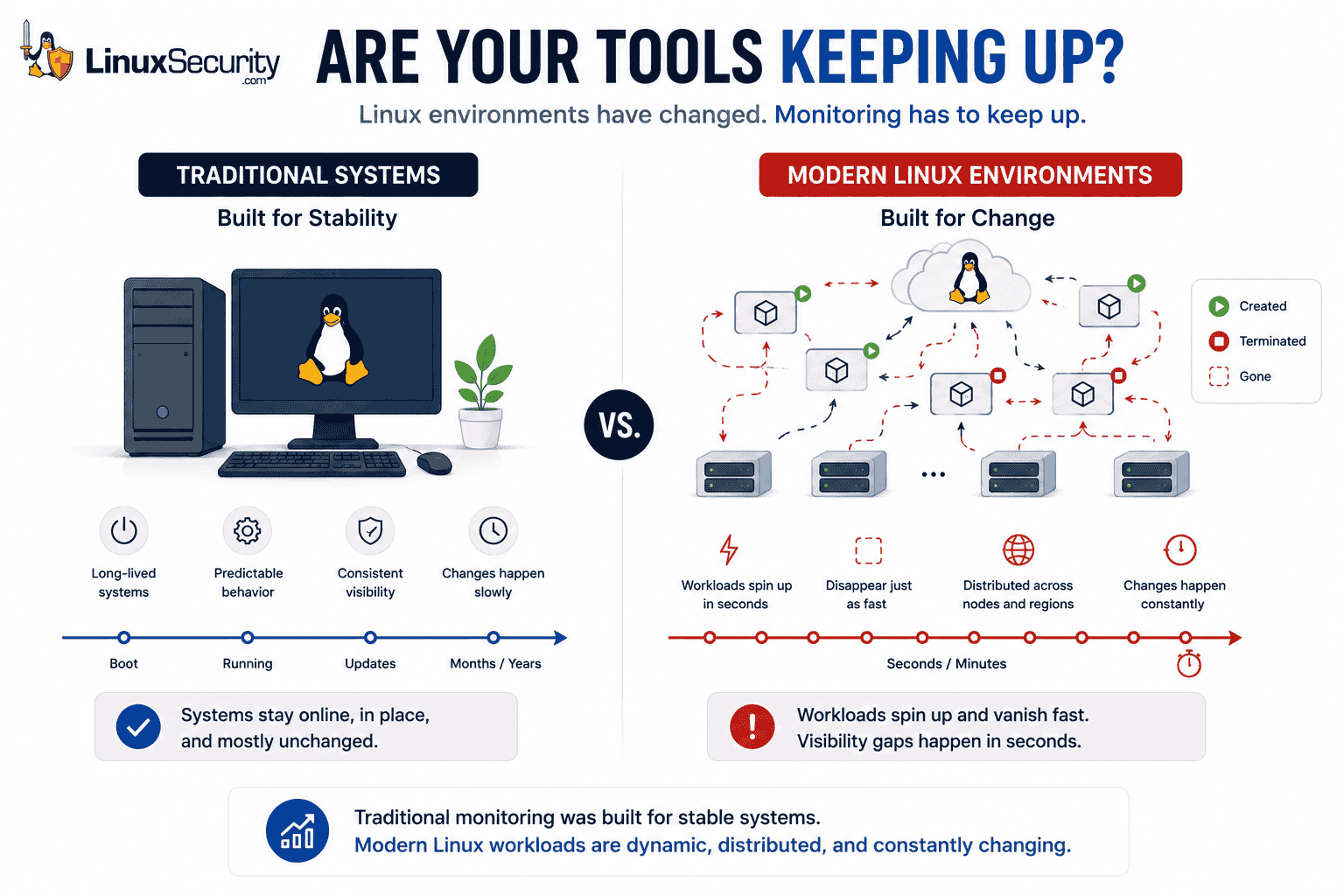
- Short Lifespans: A workload can do its damage and disappear before anyone looks at the logs.
- Isolation: A tool might see a process running, but struggle to see what the rest of the container looks like at that exact moment.
- Automation Layers: A command might be started by an automated script, making it hard for security teams to see who or what originally triggered it.
Because production systems must stay stable, security tools often have to be very "light." Heavy tools aren't allowed on critical servers. So, vendors compromise—sometimes intentionally.
Why More Security Data Is Not Always Better
The solution seems obvious: just collect more data. In reality, that creates its own problems. The more data you collect, the more memory, storage, and processing power you use.
Security teams also struggle with alert fatigue. Flooding analysts with endless data often slows investigations down instead of helping. What they need is useful context. That distinction matters.
Process Monitoring Alone Is Not Enough
Traditional tools focus on processes: a process starts, a process stops. This is useful, but incomplete. Take a "reverse shell" (a common attack tool) running through Python. On the surface, it looks normal.
But the picture changes when analysts can actually see the script itself.
Being able to see the details inside a script can expose:
- Hidden IP addresses
- Secret network connections
- Commands that are usually buried behind normal-looking activity
This is why Linux detection is moving beyond just watching processes. The process itself rarely tells the whole story anymore.
Attackers Already Exploit Linux Visibility Gaps
Modern Linux security products use advanced hooks to capture activity. These improve visibility, but they are complex.
Researchers have already shown ways to trick or bypass these monitoring methods. Attackers actively study where the "cameras" are turned off. Any blind spot eventually becomes useful to someone. Linux detection has to move beyond the basics because modern threats operate across:
- Containers and automated APIs
- System memory and hidden scripts
- Cloud infrastructure and the core kernel
How Security Teams Can Improve Linux Visibility
To bridge the gap, security teams should focus on these practical steps:
- Test Your Tools: Don't trust the dashboard. Run a test that mimics an attack and verify that your tool actually records it.
- Look Inside Scripts: Ensure your tools are capturing the actual commands inside a script, not just the name of the program (like "Python").
- Track the Container Lifecycle: Match up cloud logs with your security tools to see what happened inside a container before it was deleted.
- Watch the Core System: Monitor for changes to the kernel—this is where advanced attackers hide.
- Check for Persistence: Test if you can see changes to background tasks and scheduled jobs that allow an attacker to stay in the system.
Linux Visibility Still Matters
Linux systems are no longer just sitting in the background; they run the most important parts of modern business. Attackers know how valuable these systems are.
The challenge for defenders is visibility. Many assume Linux security works the same way Windows security does. In reality, it has a completely different set of challenges.
The industry is improving, and new tools are closing the gaps. But one reality remains: A security tool can only protect what it can actually see.
Stay Ahead of Linux Security & Infrastructure Trends
Interested in more in-depth coverage of Linux security, CI/CD security, software supply chain defense, DevSecOps, and enterprise hardening strategies? Subscribe to the LinuxSecurity newsletter for weekly threat analysis, infrastructure security insights, and practical guidance covering the Linux and open-source ecosystem.
Related Reading
- Why Container Security Monitoring Breaks Down in Ephemeral Environments
- How Linux Malware Evades Traditional Detection Tools
- Why Cloud-Native Infrastructure Creates Security Visibility Gaps
- The Challenges of Incident Response in Kubernetes Environments
- Why Traditional EDR Approaches Struggle in Modern Linux Systems
 PREVIOUS

 NEXT
NEXT

Powered By

Linux Security - Your source for Top Linux News, Advisories, HOWTOs and Feature Releases
QUICK LINKS
subscribe to newsletters!
Like staying secure? So do we.
Sign up for updates, tips, and alerts!