


Stay Ahead With Linux Security Features
 security advisory attack
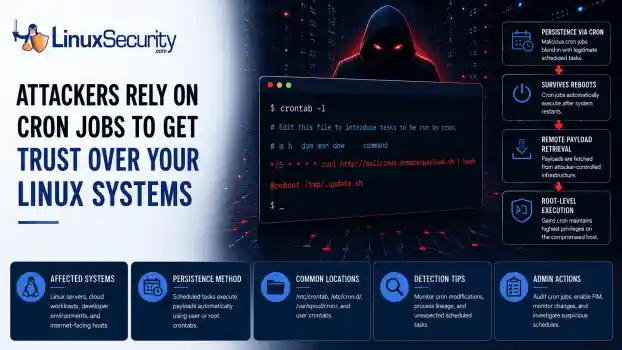
 A Linux server gets cleaned up after an intrusion. The suspicious process is terminated, credentials are rotated, and the system is rebooted during maintenance. Everything seems secure. A few hours later, the same outbound connection appears again. . Situations like that point to persistence . The attacker no longer needs the original exploit because something on the host continues restoring access behind the scenes. Finding that mechanism is often more important than understanding how the...
 Jun 08, 2026
  threat detection scalability
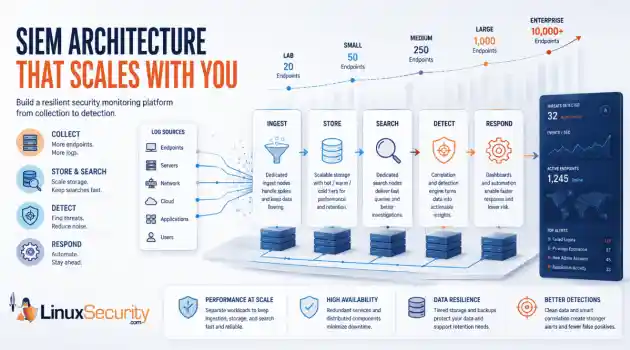
 Building a SIEM is easier than scaling one. Most open-source deployments start as a simple "all-in-one" server. It is easy to set up, but that design rarely survives the transition from a lab to a production workload. . A SIEM watching 20 endpoints is not doing the same job as one watching 500. More endpoints mean more logs; more logs require more storage; more storage makes search heavier. Eventually, the very architecture that made your lab easy to deploy becomes the reason your production...
Jun 04, 2026 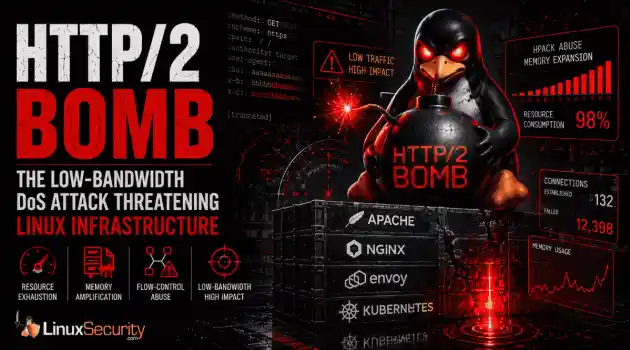 security advisory apache
 A newly disclosed attack technique called HTTP/2 Bomb is drawing attention because it targets the software that sits at the front of much of the Linux internet. Apache HTTP Server, NGINX, Envoy, and the ingress layers that many Kubernetes environments depend on can be forced into consuming disproportionate amounts of memory using relatively small amounts of attacker traffic. . For Linux administrators, the concern is not the HTTP/2 protocol itself. It is the possibility that a single...
Jun 04, 2026  security advisory important
 The compromise of Nx Console shows how much infrastructure now sits behind a single developer account. GitHub repositories, CI/CD pipelines, container build systems, Terraform projects, Kubernetes deployments. None of those systems was the initial target. The workstation was. . Attackers did not need a Linux privilege escalation bug or a remote code execution chain. They needed developers to trust a tool they were already using. For many organizations, that was enough. What Happened? Federal...
Jun 03, 2026  security advisory open-source
 You remove the malware. You rotate the compromised credentials. You patch the original vulnerability and close the ticket. Two weeks later, the attacker is back. . What happened? You didn't lose the battle at the exploit; you lost it at the cleanup. In many modern Linux intrusions, the malware you found wasn't the main problem—it was the fallback mechanisms left behind. These hooks quietly restore attacker access the moment you look away. If you clean a host but miss these persistence layers,...
Jun 02, 2026  Refine features
X Clear Filters Get the latest News and Insights
Get the latest Linux and open source security news straight to your inbox.
Community Poll
What got you started with Linux?
Loading...
Explore Latest Linux Security features
We found -3 articles for you...
102
 incident responsecybersecurity educationLinux training
Advantages of Cybersecurity Training for Linux Admins and Open Source Devs
Linux administrators and infosec professionals face rising cyber threats in today's interconnected digital world. As open-source platforms gain more importance, securing them becomes mission-critical for organizations worldwide. . This article explores the advantages of Cybersecurity Education Programs, focusing on Graduate Certificates in Cybersecurity and how they can transform the careers of Linux admins, infosec professionals, and open-source developers. Gain insights into cybersecurity aspects, job outlook, career possibilities, and why to embrace this exciting field. What is Cybersecurity? Cybersecurity refers to the collective measures to safeguard digital infrastructure, information, and systems from unauthorized exploitation. In our digital era, robust cybersecurity measures are paramount as daily activities—from business to personal communication—increasingly depend on secure digital services. Rising to the Challenge With cyber threats evolving in sophistication, staying ahead of potential attacks is essential through continuous vigilance. Techniques such as malware , phishing , and advanced persistent threats represent a constant battleground, and the ubiquity of open-source platforms like Linux requires careful security governance despite their benefits for innovation and collaboration. Education and Preparedness Educational institutions have crafted specialized cybersecurity curriculums to combat these issues. These courses empower professionals with vital cyber defense, threat intelligence, and risk assessment knowledge. What Are the Benefits of Cybersecurity Awareness Training? Cybersecurity awareness training is critical in reinforcing an organization's defense mechanisms. This education is essential for understanding the ever-changing landscape of cyber threats and for arming individuals with the skills necessary to identify and counteract security risks. Consistent training equips employees to notice phishing attempts or unusual network behavior,making them vital in protecting sensitive data. Specialized Training for Linux and Security Experts For those navigating the technicalities of Linux and information security, specialized cybersecurity training becomes even more crucial. Participants delve into Linux-specific security issues, mastering how to formulate robust security strategies and remediate vulnerabilities. Proficiency in practices such as SSH key management, kernel hardening , and managing access rights take precedence. Advanced training modules enhance their capacity for threat analysis, emergency handling, and conducting post-incident investigations, empowering them to confront cyber adversaries proactively and shield their organization's digital groundwork. What Is the Job Outlook for Cybersecurity? As the landscape of cyber threats intensifies, the demand for qualified cybersecurity professionals escalates. This surge has engendered a thriving job market, with a particularly acute need for Linux security experts amid the pervasive integration of open-source technologies in corporate ecosystems. Industry forecasts elucidate this expansion within the cybersecurity employment sector, anticipating a staggering deficit of 3.5 million roles globally by 2025. Market Trends and Employment Projections The clamor for cybersecurity talent exhibits pronounced variability across regions, with North America, the Asia-Pacific corridor, and Europe at the forefront of cybersecurity hiring trends. This upswing is markedly observable in sectors—including finance, healthcare, and governmental agencies—prioritizing safeguarding critical and sensitive data against the incessant menace of cyber malfeasance. Vulnerable Industries and Cybersecurity Importance Furthermore, the retail and technological domains underscore the importance of robust cyber defenses, given their extensive consumer databases and dependence on digital conduits for commercial activity. These trends lay down a compelling narrative: proficiency incybersecurity offers a secure professional trajectory and is increasingly becoming a linchpin in the operational integrity of diverse industrial verticals. The Future of Cybersecurity Employment As enterprises persist in elevating cybersecurity to a strategic priority, the prospects for adept individuals in this sphere are poised to burgeon. The burgeoning opportunities manifest not solely within established tech hubs but are proliferating throughout burgeoning markets, energetically digitizing their foundational infrastructures. Career Possibilities with a Graduate Certificate in Cybersecurity The attainment of a Graduate Certificate in Cybersecurity signifies unlocking a treasure trove of career prospects for information security aficionados and Linux system savants. Such a credential signals to employers a preparedness for specialized roles, from Information Security Analysts and Cybersecurity Consultants to Incident Responders and Vulnerability Assessors. Linux experts, in particular, can aspire to titles such as Linux System Engineer or Security Architect, with a penchant for open-source ecosystems. Industry Demand for Certified Professionals This qualification opens myriad doors across industries, with the finance, healthcare, government, and technology sectors leading recruitment to bolster their cyber fortresses. Retail giants and telecom behemoths, laden with massive caches of customer information, are equally zealous in their search for guardians of their digital dominions. The Necessity of Lifelong Learning With the cyber threat landscape in perpetual flux, those who seek longevity in their cybersecurity careers must commit to ongoing education. Through continuous learning—certificates, seminars, and e-courses—professionals maintain their edge against cyberspace adversaries. For Linux aficionados, staying current is crucial as demand for their skills continues to escalate in an open-source-preferred world. What Can You Do with an Online Graduate Certificate inCybersecurity? An Online Graduate Certificate in Cybersecurity presents a flexible solution for professionals aiming to fortify their cybersecurity expertise. These programs are designed to accommodate working individuals' unpredictable schedules, granting access to vital learning resources around the clock. This liberty to manage educational pursuits alongside personal and professional commitments exemplifies the transformative potential of modern digital platforms, ensuring a more inclusive and adaptive learning experience. Graduates are primed to tackle pressing cybersecurity needs across diverse professional landscapes by leveraging the knowledge acquired through these programs. They step into the workforce ready to engineer fortified digital infrastructures, navigate complex risk assessments, and proficiently handle cybersecurity incidents, ensuring the cyber well-being of the institutions they serve. Open Source Infosec Careers The burgeoning field of open-source information security (infosec) offers a unique opportunity for a fulfilling career where one's contributions bolster the collective cybersecurity posture. Open-source software is pivotal to the cybersecurity industry due to its transparency, which allows for extensive peer review and collaborative enhancement. This paves the way for systems that are not only robust but evolve rapidly in response to emerging threats, with vulnerabilities addressed expediently by a global network of professionals. Specialized Open-Source Infosec Careers In the open-source Infosec arena, diverse career paths beckon. Security researchers dedicate themselves to poring over code in open-source projects to unearth and resolve vulnerabilities. Meanwhile, open-source software maintainers and contributors are the craftsmen shaping the tools that fortify digital realms. DevSecOps engineers are the vital bridge that melds security into the open-source software development lifecycle, prioritizing security from the ground up. Linux: The Open-SourceSecurity Staple At the heart of open-source security endeavors lies Linux—an operating system revered for its adaptability and control. Linux security experts master open-source tools to shield networks and systems from nefarious exploits. Their comprehensive grasp of Linux system administration, merged with acute security acumen, strengthens infrastructures against relentless cyber threats. Education and Advancement in Open-Source Infosec Education is vital to excel in open-source infosec careers. Graduate Certificate in Cybersecurity programs lay a solid foundation, delving into essential topics like Linux security and the deployment of open-source security solutions. This education, enriched by hands-on experience, primes graduates to contribute meaningfully to open-source initiatives and assume pivotal roles within the infosec ecosystem. What Are the Top Benefits of Cybersecurity Training? In a world rife with digital threats, cybersecurity training is not just a career enhancer—it's a crucial pillar in the defense of our digital existence. For the professional aiming to amplify their skills, cybersecurity training is tantamount to empowerment, laying the groundwork for substantial skill enhancement and career progression. The landscape of digital threats constantly evolves, demanding a perpetual commitment to professional development to counter new tactics and master emerging technologies. Ascending the Professional Ladder Those investing in their cybersecurity acuity ascend in job market allure, distinguishing themselves as indomitable assets in any enterprise's offensive against cyber incursions. The impetus behind cybersecurity education transcends self-advancement; it is a collective stride toward fortifying the open-source communion. Professionals enmeshed in cybersecurity capably refine tools, innovate solutions, and disseminate wisdom—efforts that coalesce to erect a resilient security edifice that serves entities worldwide. The Vanguard of Digital Defense Cybersecurity training furnishes individuals with the strategic insights and tactical prowess to anchor a more secure digital milieu. As cyber adversaries contrive evermore complex hacks, the well-tutored cyber defender emerges as the sentinel in the fray against invasions that encroach on personal, commercial, and national precincts. These skilled guardians are the bulwark protecting our digital tomorrows; their acuity and resolve are crucial in the vanguard against the ceaseless siege of cyber threats. Why Start a Career in Cybersecurity? As the digital landscape burgeons, so does the demand for cybersecurity professionals. Organizations recognize these experts' pivotal role in safeguarding their operations and information. Relentless technological developments, matched with increasingly sophisticated cyber threats, have spotlighted the importance of building a skilled cybersecurity workforce capable of repelling nefarious digital intrusions. Cybersecurity's Broad Impact The impact of cybersecurity spilling over organizational boundaries has profound societal implications. Effective cybersecurity strategies deter cyberattacks that can infringe on privacy, disrupt services, and erode the trust in institutions that underpin civic life. A Gratifying Career Path Cybersecurity professionals often report high levels of job satisfaction due to the tangible difference they make in defending critical infrastructure and sensitive data. There's intrinsic satisfaction in navigating the complexities of cybersecurity, which, in turn, yields personal contentment and job fulfillment. A Sector of Continuous Growth The cybersecurity industry stands out for its dynamic nature. It presents continuous professional growth opportunities through lifelong learning and adaptation to new challenges. This attribute mainly benefits individuals who revel in constant intellectual stimulation and problem-solving. Linux Administrators and Open-Source Pioneers in Cybersecurity Linux administrators and open-sourcedevelopers find cybersecurity a natural progression for their skills. They contribute significantly to the diversity and resilience of cybersecurity solutions, with their expertise being especially valued given the widespread use of open-source software in security infrastructure. Our Final Thoughts on the Importance of Cybersecurity Education Cybersecurity holds immense importance for everyone - individuals, companies, and nations. Particular urgency is noted among professionals like Linux admins, infosec experts, and open-source contributors, who are at the forefront of maintaining secure digital environments. Graduate Certificates in Cybersecurity foster a deep understanding of the complex and evolving cyber threat landscape and equip professionals with the specialized expertise necessary for a Linux and open-source security career. Because of the growing market demand and the crucial role played by cybersecurity in modern digital infrastructures, pursuing qualifications in cybersecurity unlocks tremendous career opportunities. Moreover, integrating cybersecurity knowledge directly into the open-source community can profoundly impact broader digital security, making our systems more secure and resilient. Embarking on a cybersecurity career thus melds professional advancement with the opportunity to make a meaningful societal impact. In closing, your journey into cybersecurity could be the start of a rewarding path that offers substantial professional growth and personal fulfillment. . Cybersecurity education programs for Linux administrators can greatly enhance their careers, boosting their skills and marketability in a competitive job market. Cybersecurity Education, Linux Security, Career Development, Cybersecurity Training, Graduate Certificate. . Brittany Day
 Mar 24, 2024 •
102
network securitysecurity trainingcybersecurity educationBoost Your Cybersecurity Knowledge Through Linux Learning Opportunities
It can be pretty fulfilling to improve your career in cybersecurity, and there are plenty of methods you can consider that will help boost your capabilities. The need for cybersecurity professionals has increased over the past few years; an Accenture report stated that 68% of business leaders find their cybersecurity risks to be increasing, and a survey from the Linux Foundation explained that companies are trying to hire more open-source talent to help companies install protection throughout their systems.. Try to refine your knowledge of how to use Linux Security, an invaluable cybersecurity resource that is secure, cost-effective, and supportive of various programming languages. Strong open-source skills are one of the best things you can do to secure a well-paying job. Learning an array of open-source skills, from cloud security to DevOps, will provide you with more opportunities that can provide salaries nearing $145,000. This article will discuss the basics of engaging in Linux Security training and how to utilize Linux Security classes in your future career paths. What is Linux Security? Why Do Companies Use It for Network Security? Linux is a security software capable of protecting your company’s systems from any kind of online or cloud security breach, including phishing attacks, malware or ransomware, data theft, and more. Linux Security provides various services to combat network security threats, such as malware scanning, file protection, system monitoring, and scam detection. Using Linux Security to back your company’s system is vital for preventing attacks in network security because it works 24/7/365 to protect you from anything that could harm your system. Linux Security can work across multiple servers to keep unauthorized outsiders from accessing your files, stop any malware threat in its tracks, and constantly watch over your system as a whole. Certifications that Require an Understanding of Linux Security If you plan to work in the realm of cybersecurity, you will mostdefinitely encounter a Linux environment at some point, perhaps for administrative functions like pulling logs or for accessing tools used in daily operations. Due to its expansive nature, understanding Linux security is required for cybersecurity certifications. Here are a few certificates that would ask you to have concrete knowledge of Linux Security modules and systems: Certified Information Systems Security Professional (CISSP) is administered by (ISC)², a cybersecurity organization, and is one of the most sought-after credentials in the industry. Earning your CISSP demonstrates that you’re experienced in IT security and capable of designing, implementing, and monitoring a cybersecurity program. Certified Information Systems Auditor (CISA) from the IT professional association ISACA helps demonstrate your expertise in assessing cybersecurity vulnerabilities, designing implementation controls, and reporting on compliance and the most recognized certifications for cyber and cloud security auditing careers. Certified Information Security Manager (CISM) , also from ISACA, can validate your expertise in the management side of information security, including topics like governance, program development, and program, incident, and risk management. CompTIA Security+ (Security+) is an entry-level security certification that validates the core skills needed in any cybersecurity role. This certification demonstrates your ability to assess an organization's security by monitoring and securing cloud, mobile, and Internet of Things (IoT) environments, understanding laws and regulations related to risk and compliance, and identifying and responding to network security issues and incidents. GIAC Security Essentials Certification (GSEC) , from the Global Information Assurance Certification (GIAC), is an entry-level security credential for those with a background in information systems and networking. Earning this credential validates your skills in security tasks like active defense, networksecurity, cryptography, incident response, and cloud security. A Systems Security Certified Practitioner (SSCP) is an intermediate security credential from (ISC)² that demonstrates to employers that you have the skills to design, implement, and monitor a secure IT infrastructure. The exam tests your expertise in access controls, risk identification, analysis, security administration, incident response, lightweight cryptography, and network, communications, systems, and application security trends and issues. CompTIA Advanced Security Practitioner (CASP) is designed for cybersecurity professio nals who demonstrate advanced skills but want to continue working in technology (as opposed to management). The exam covers topics like enterprise security domain, risk analysis, software and cybersecurity vulnerabilities, cloud and virtualization technologies, and cryptography cybersecurity techniques. It is a good idea to make the most of your Linux Security training and skills while also earning your certification(s), and the following knowledge will improve your experience, strengthen your capabilities, and grow your career in cybersecurity: Broadening your understanding of Linux security modules, systems, and network administration, including the large volume of commands and file locations Searching system files and logs for critical events on a range of different servers Using Linux security modules like SELinux and AppArmor to protect against attacks Familiarizing yourself with open-source network security toolkits, both ones that can be pre-installed and added on Learning how to use bash scripting inputs a series of commands written in a file that the bash program can execute. Obtaining certifications in and expanding your knowledge regarding Linux will be helpful as you seek a cybersecurity career; these options are a great place to get started. Linux Security Certifications Certifications play an essential role in cybersecurity by verifying your proficiency in suchprograms to prospective employers after they teach you new skills or enabling IT professionals to build upon their experience and expertise. The Linux Security Certification (LFS416) contains some of the best and most extensive courses you can take since it specifically aims to improve your Linux knowledge and skills. Linux Security classes provide insight on a variety of topics specific to Linux security, including how to: Assess network security issues and risks in your enterprise Linux environment. Increase data and network security with proper techniques and tools Deploy and use monitoring and detection tools to stop attacks on network security Gain visibility into possible cybersecurity vulnerabilities Configure your systems for compliance with HIPAA, DISA STIG, etc. The Linux Security Certification also teaches you the art and science of developing your Linux security policy and response strategy to ensure security throughout your system. Careers in Cybersecurity Be sure to choose an ideal career path within the world of cybersecurity by considering all of the possibilities provided to you. Here are a few more robust options: Cybersecurity Specialists maintain data and network security for companies by keeping tabs on systems, reporting any network security issues to management, anticipating future network security threats, and advising companies on how to deal with them. Information Security or Vulnerability Analysts detect weaknesses in networks or software so changes can be made to improve them and strengthen the company’s data and network security. Penetration Testers help organizations identify and mitigate cybersecurity vulnerabilities that affect their digital assets and computer networks. Cybersecurity Architects are responsible for planning, designing, testing, implementing, and maintaining an organization’s computer data and network security infrastructure. Security or Cybersecurity Engineers identify network security threats andcybersecurity vulnerabilities in systems and software, developing and implementing solutions to defend against hacking, malware, ransomware, and insider network security issues. Incident Responders, Intrusion Analysts, or CSIRT Engineers provide a rapid initial response to any IT network security threats, incidents, or cyber-attacks within your organization. What Are Cybersecurity Analysts and How Can They Help Protect an Organization Against Threats? Cybersecurity analysts are trained professionals specializing in IT infrastructure and network security protection. They have an extensive understanding of cyberattacks, malware, and cybercriminal behavior, which they utilize to comprehend a company’s IT infrastructure. Analysts are responsible for monitoring and evaluating a company’s cybersecurity vulnerabilities and network security threats to their systems and anticipating attacks in network security so they can prevent them. Cybersecurity analysts continuously look for ways to enhance company network security and protect sensitive information by configuring tools, reporting issues, and evaluating weaknesses. How Can I Advance My Cybersecurity Career? You must provide yourself the opportunity to understand cybersecurity and the field in order to help you solidify your career. Here are some suggestions: Research the market: Make sure you understand how cybersecurity works in order to make the right business decisions regarding all aspects of its functionality, all of which will be helpful in expanding your knowledge of the field. Apply to fitting roles: Focus on applying for positions that relate to your skill set as much as possible rather than ones where you do not have comprehensive knowledge of the information required. Keep your resume polished: Improving and perfecting your resume is vital to impressing possible employers on your hunt for a job position. Avoid overselling yourself: Lying about your experiences and capabilities or promising proficiency insystems you are not strong in will not help boost your career, so try to be honest about your skills. Continue Expanding Your Linux Security Knowledge Learning to navigate Linux security platforms is helpful for current or future cybersecurity professionals, as the demand for people with this knowledge is constantly growing. Having the education and certifications needed to broaden the possibilities for your career is helpful in providing you with as many opportunities as possible. Taking Linux security classes will provide you with significantly more options for a career, so do consider taking one or two to assist yourself. . Advance your professional journey with Linux Security training, essential for fighting off cyber attacks and boosting employment opportunities.. Linux Certifications, Cybersecurity Skills, Open Source Security, Career Advancement, Linux Training. . Brittany Day
Jun 03, 2022 • 

Get the latest News and Insights
Get the latest Linux and open source security news straight to your inbox.
Community Poll
What got you started with Linux?
Search Topics
Powered By

Linux Security - Your source for Top Linux News, Advisories, HOWTOs and Feature Releases
QUICK LINKS
subscribe to newsletters!
Like staying secure? So do we.
Sign up for updates, tips, and alerts!
Discover faster search, smarter navigation, and deeper Linux security insights. Read More