


Stay Ahead With Linux Security Features
 security advisory risk management
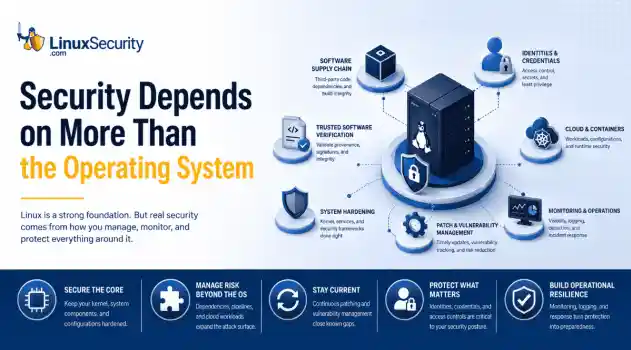
 If more than 12 million enterprise systems can be exposed by flaws in a security control designed to harden Linux, it's probably worth asking whether Linux gives people a false sense of security. That's a question that has come up repeatedly throughout 2026. . This year alone, researchers have disclosed privilege-escalation vulnerabilities, root-level kernel flaws, and multiple supply-chain compromises affecting Linux environments. That doesn't mean Linux suddenly became insecure. It means...
 Jun 15, 2026
  security advisory attack
 A Linux server gets cleaned up after an intrusion. The suspicious process is terminated, credentials are rotated, and the system is rebooted during maintenance. Everything seems secure. A few hours later, the same outbound connection appears again. . Situations like that point to persistence . The attacker no longer needs the original exploit because something on the host continues restoring access behind the scenes. Finding that mechanism is often more important than understanding how the...
Jun 08, 2026 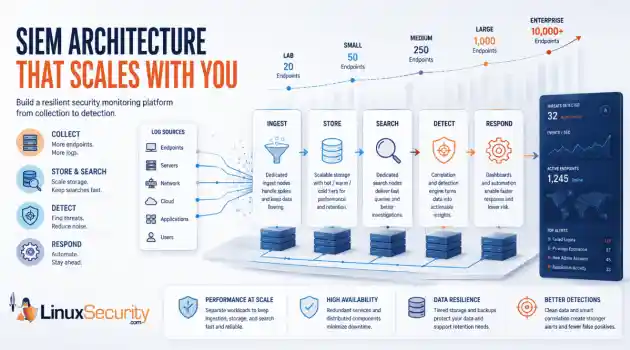 threat detection scalability
 Building a SIEM is easier than scaling one. Most open-source deployments start as a simple "all-in-one" server. It is easy to set up, but that design rarely survives the transition from a lab to a production workload. . A SIEM watching 20 endpoints is not doing the same job as one watching 500. More endpoints mean more logs; more logs require more storage; more storage makes search heavier. Eventually, the very architecture that made your lab easy to deploy becomes the reason your production...
Jun 04, 2026  security advisory apache
 A newly disclosed attack technique called HTTP/2 Bomb is drawing attention because it targets the software that sits at the front of much of the Linux internet. Apache HTTP Server, NGINX, Envoy, and the ingress layers that many Kubernetes environments depend on can be forced into consuming disproportionate amounts of memory using relatively small amounts of attacker traffic. . For Linux administrators, the concern is not the HTTP/2 protocol itself. It is the possibility that a single...
Jun 04, 2026  security advisory important
 The compromise of Nx Console shows how much infrastructure now sits behind a single developer account. GitHub repositories, CI/CD pipelines, container build systems, Terraform projects, Kubernetes deployments. None of those systems was the initial target. The workstation was. . Attackers did not need a Linux privilege escalation bug or a remote code execution chain. They needed developers to trust a tool they were already using. For many organizations, that was enough. What Happened? Federal...
Jun 03, 2026  Refine features
X Clear Filters Get the latest News and Insights
Get the latest Linux and open source security news straight to your inbox.
Community Poll
What got you started with Linux?
Loading...
Explore Latest Linux Security features
We found -3 articles for you...
102
 open-sourcesecurity integrationapplication development
Low-Code Platform Benefits for Secure Open Source App Development
What if your team could build an app in days, not months—without needing a single line of code? Well, now it’s possible. . Low-code platforms are shaking up how businesses think about software development. They make building apps simple—even if you’re not a coding expert. With drag-and-drop tools, reusable components, and easy integrations, these platforms help solve all kinds of business problems. This article delineates the top ten most common business problems that can be solved by low-code platforms: accelerating productivity, optimizing workflows, and driving innovation. The Growing Need for Agile Business Solutions Agility and speed are the most valued aspects of the fast-moving business world. Traditional software development is challenging to apply for companies that would like to compete in such an environment since it mainly costs a lot of time and is expensive. Low-code platforms make a difference for companies seeking innovativeness in solving their problems without relying solely on IT teams. Features such as workflow automation and data integration enable a business to run smoothly. Companies can easily create and acquire apps matching their changing requirements with regular security updates that give more protection. Companies find it highly strategic to allow technical and non-technical teams to develop apps for business as the usage of low-code platforms rapidly grows worldwide. A recent market study shows that in 2028, the low-code development market will reach US$94.75 billion, a reasonable indication that interest in more usable development tools will keep growing. Let me point out ten problems that low-code systems can help within business. Workflow Automation to Boost Productivity Manual processes are a hassle—slow, error-prone, and full of delays. Businesses waste tons of time on repetitive tasks, which creates bottlenecks and confusion. Low-code platforms, therefore, enable the organization to stop this inefficiency in its tracks and lay the groundworkfor an effective alternative in workflow automation. Further, seamless integration of these platforms with open-source tools brings flexibility to businesses when building custom solutions. Drag-and-drop tools and prebuilt templates let companies create automated workflows that do the drudge work. For example, one insurance company used a low-code platform to enhance workflow automation for greater efficiency. By automating processes, the company shaved a large margin off the time it needed to handle cases, thus keeping clients much happier overall. Rapid Prototyping of New Ideas and Innovation Most of them need help materializing their innovative ideas quickly. More often than not, traditional software building takes quite a long time, making it quite challenging to test new ideas or prototypes within a very short period. Low-code platforms for rapid prototyping can fix the inability to test new ideas or prototypes quickly. Such low-code platforms facilitate creating and testing minimum viable products of a business without necessarily seeking big development teams. For example, one store used a low-code tool to prototype a customer loyalty application. Under these conditions, the ability to make rapid changes in response to user feedback reduces overall development costs and time to market. With the rapid prototyping capability, business customers can respond to frequently changing market conditions and customer needs. Traditional development takes too much time. Equipping Non-Technical Teams in the Face of a Developer Shortage This includes the demand for more qualified developers, which is generally a challenge for businesses, especially small ones that cannot afford, such as large IT teams. In this manner, low-code platforms save the day by freeing up and empowering non-technical personnel, also called citizen developers, to develop applications even without extensive programming knowledge. In such a way, dependency on IT is reduced, and non-developer scores can be used to solve theirchallenges. Additionally, routine security updates help maintain integrity as apps are developed by non-specialists. For example, a healthcare provider developed an appointment-scheduling application using a low-code platform. Its team was primarily composed of nontechnical personnel who, after a bit of training, could deliver a fully functional application to solve their peculiar needs. Such capabilities encourage businesses to embrace remote work collaboration, as they allow geographically distributed teams to work seamlessly. Extending and Modernising Legacy Systems Legacy systems are often too complex to customize or extend, making it difficult for companies to address constantly changing business needs. Replacing these systems is expensive and disruptive. Low-code platforms simplify the process by enabling data integration between old systems and new functionalities. One financial institution used a low-code platform to renovate an outdated loan management system. The bank developed custom modules for integrating the infrastructure to bypass an expensive replacement project and add additional functionality needed to improve customer service. Custom Solutions for Enhancement of Customers' Service Customer service inquiries may be one of the most critical pain points any organization can have if that team needs the proper equipment to serve all queries efficiently. The low-code development platform may create a custom portal for customer service inquiries or even build chatbots, strengthening the overall customer experience and response times. For example, an e-commerce company developed a chatbot on a low-code platform that fielded frequent inquiries into the status of orders and returns. The company's automation of these processes freed resources for other, more complex work that the customer service representatives could attend to, thereby improving customer satisfaction. Solving Data Integration Challenges for Better Insights Most companies have data locked in several silosand lack system integrations. This presents inefficiencies in operations, making getting a unified view of operations difficult. This is where the low-code platforms come in: to ensure that these various databases and applications are integrated, enabling smooth facilitation of data flow. A logistics company needed help managing integrated data from suppliers, warehouses, and transportation partners. Using a low-code platform, they developed custom connectors that integrated all their systems. They utilized reverse ETL to push analyzed insights from their central data warehouse back into operational tools, such as CRM and logistics software. This, in turn, empowered better decision-making and operational efficiency. Streamlining Employee Onboarding Processes Onboarding new employees is a lengthy affair, from the paperwork to approvals. Delaying onboarding reduces new employee productivity. Low-code platforms can automate these processes to create an onboarding portal, making onboarding swift and smooth. The HR department developed an onboarding portal using the low-code platform. This portal would automate form submissions, approvals, and training schedules. New hires could do everything online, reducing time and making the process much smoother. Creating Custom Solutions for Expense and Resource Management Company expense management can be pretty cumbersome, especially when done manually. Low-code development platforms allow a business to tailor a tracking and approval system to manage expenses and resources, ensuring accuracy and efficiency. A consulting firm developed its expense management system through the low-code platform, through which employees could submit their expenses through a mobile app. Turnaround: Managers could now quickly review and approve the expense payment time. This means speedier approval processing and improvement in budget management. Facilitating Remote Work Collaboration Due to growing trends, the number of employees working remotely is growing, butmanaging teams remotely and facilitating their effective collaboration is a big challenge yet. Using low-code platforms, you can create collaboration tools or custom dashboards to monitor work progress and encourage teams to communicate. This software development company utilized a low-code platform to design a project management dashboard for remote teams. Through the dashboard, team members can track project milestones, communicate updates, and keep everyone on the same page to help maintain productivity and connectedness among the dispersed workers. Enhancing Business Agility in a Rapidly Changing Market When markets keep on changing, businesses have to be quick to compete. A typical development cycle from requirements to going live is too rigid for quick changes. Using low-code platforms lets the business quickly adjust processes or applications that involve more agility and responsiveness toward changing conditions. This manufacturing company used the low-code platform to adjust its inventory management system when a supply in the chain was suddenly disrupted. It could make such adjustments in the shortest time and sustain production without any costly delay. Adaptability is an essential capability that Harden says all businesses must master if they want to lead market trends. Security Enhanced by Controlled Access The more businesses start exploring low-code platforms, the more critical a need becomes to ensure their security. Controlled access within such a platform is a sure way to secure your applications. This happens because most low-codes come equipped with built-in security that controls who accesses what in your application and who can make changes. With Keycloak used, for example, for authentication, rest assured that your system has robust user authentication and authorization. Hence, your data is safe. Integration of Open Source Tools But you can leverage even more functionality and security by adding open-sourced tools to your low-code applications. Tools such as OWASP ZAP support the identification of vulnerabilities in applications before they go live, thus ensuring that only secure apps are released. Through it, continuous monitoring and fixes of security issues in open-sourced dependencies add another essential layer of security to your development process. Regular Updates and Patches The most critical step in protecting the security of your applications using your low-code platform involves routine updates and patching of those applications. Tools like Dependabot automatically update your dependencies with the latest security patches. By updating your low-code platform and its various components, you proactively take a crucial step toward safeguarding your applications from threats. Development for All With low-code platforms, they democratize application development. You can do something great, even if you are not a techie. Just think: for instance, there was this case of a healthcare provider who wanted to create an appointment scheduling app using a low-code platform. The team was primarily composed of nontechnical personnel; they did it with just a little training. Breathing New Life into Old Systems Or are you working with a legacy system that can't be upgraded easily? Low-code platforms' functionality helps you add new features without rebuilding, which saves time and money. Automation of Workflows These platforms then enable the automation of mundane manual processes, freeing time for more important tasks and enhancing efficiency. Driving Innovation for the Future with Low-Code Platforms Low-code platforms solve many common business challenges with great versatility and cost-effectiveness, from workflow automation to improving customer service and integrating data. Such platforms drive quick business innovation sans large development teams. They also foster collaboration between IT and nontechnical teams, establishing an innovative organizational culture. Low-code platforms are continuously being updated to integrate AIwith advanced analytics, thus allowing businesses to create even more sophisticated applications: predictive maintenance tools, intelligent customer support systems, and data-driven decision-making dashboards. The flexibility and scalability of these solutions mean low-code is here to stay as an enabler for businesses looking to innovate and expand. Studying low-code platforms may yield a solution to these challenges facing your business. With their agility and ease of use, low-code platforms offer a way to innovate and be agile in an ever-changing business environment. Keep learning about the low-code platforms. Low-code development platforms are moving away from being hype to becoming the required tool that enables businesses to try to outpace each other. The low-code platform market is seeing an unprecedented growth pace that is likely to reach $94.75 billion by 2028. Companies can use these platforms to build secure and scalable applications using integrated open-source tools, enabling them to meet their needs while ensuring a high-security threshold. The bottom line is that if being innovative and agile is important in business, then it's worth taking some time to consider low-code platforms. They can be flexible, user-friendly, and conducive to team prosperity across industries. . Low-code platforms revolutionize software development for agile solutions, increasing productivity and enhancing security practices.. build, months—without, needing, single. . MaK Ulac
 Dec 03, 2024 •
102
 linux solutionssecurity featurescost management
Business Intelligence with Open-Source Tools for Linux: Secure Solutions
Business intelligence platforms are specific technologies based on creating a system that enables companies to monitor and analyze data like never before. What is the goal of these systems? . It is simple to collect data from multiple sources onto a single platform (a great solution, especially for the lazy!). This data can include sales, financial data, accounting, and more. The data is then organized and sorted into a visualization that makes it easy to understand, often with the help of data visualization tools, enabling companies to make strategic decisions using insights derived from real-time data analytics and efficient data integration tools. Why organizations need BI platforms To succeed in the dynamic corporate world, today's organizations must be data-driven and foster a data-driven culture. For this to be possible, leaders need a modern business intelligence platform that enables everyone to observe and understand data. Business intelligence platforms go beyond business analytics software packages. They support the organization's BI strategy by making accessing and analyzing data easier. Basic analytics platforms import, clean up, analyze, and forecast data. On the other hand, business intelligence platforms are more effective and dynamic and adapt to the development of your BI strategy. Standard features of BI platforms A platform for enterprise use supports business agility without compromising governance or security. Here are five aspects to consider when evaluating a modern BI platform. Total cost of ownership without surprises Open Open-source BI tools are often customizable and work seamlessly with data integration tools to support complex business environments. Many organizations, especially smaller ones, switch to open-source software to meet their data mining and ad hoc reporting needs. When evaluating platforms, however, consider the total cost of ownership. Do not decide based on the price alone. Do a complete comparison. To all the other extra elements, add theneed to make that “free” platform work in your business environment (today and in the future). Free tools are anything but free and can contribute to a sizeable total cost. Often, they make other products, subjects, and infrastructure necessary to meet enterprise-wide requirements. Although there are online resources for learning how to use open-source software, those resources will not tell you how to use the platform for your organization's specific needs. In other words, no matter how customizable, an open-source solution cannot be as flexible as your organization is dynamic. In contrast, superior commercial open-source BI tools have built-in resources, support, and enterprise scalability. Dynamic dashboards One of the most popular features of a BI platform is the ability to create and customize dashboards. People can create forms, charts, and graphs that can be updated almost in real-time. It is also possible to publish dashboards on separate internal platforms. One should choose a platform offering self-service capabilities, allowing users to leverage data visualization tools to create intuitive and interactive dashboards. This way, everyone can access the data, create their analytics , and assist the organization in creating a culture of analytics. Intuitive visual analytics Choose an intuitive visual analytics platform. This allows you to explore data, offering visual information wherever you are visually. The platform should also allow you to share results by creating beautiful visualizations, all from the same intuitive interface, without switching between different products for different types of analytics. Do not just watch a demo. Sign up for a free trial version and test the platform. Try answering multiple questions to test the processing power and efficiency of the tool. The power to drive your BI strategy Even the most potent BI reporting platform is only valid if it can easily connect to the data. The right analytics platform provides optimized native connections to thedata, and it does not matter if you are in Hong Kong or Beijing. You can easily access analytics wherever you are. The platform must allow access and analysis of data in real-time without downloading it, and it must be possible to run a query with little or no coding effort quickly (we do not like to overwork ourselves!). The BI platform must also allow you to deploy analytics wherever you want: in the cloud, on the local server, or hosted off-site. The platform must also integrate seamlessly with your existing data strategy, combining real-time data analytics and data integration tools to revolutionize your current data infrastructure. In addition, it must be easily integrated into other companies' portals and business applications. In this way, you can cater to users wherever they are. This flexibility is critical when evaluating business intelligence programs and choosing a BI platform. Tools that are not flexible increase the total cost of ownership. Data Integrity and Security with Open Source BI Tools As Linux admins, we know that securing our systems is a top priority. Data protection is critical when it comes to open-source BI tools. While open-source platforms may seem risky, many tools like Apache Superset and Metabase have robust security features. They allow us to store and transmit encrypted data, ensuring our analytics are as secure as any commercial offering. These tools help us maintain data integrity and protect our insights, all while ensuring compatibility with modern business intelligence platforms for seamless performance. Managing Total Cost of Ownership with Open Source BI Tools Open-source BI tools might appear free, but we Linux admins recognize there can be hidden costs. Sometimes, additional products or infrastructure are needed to meet all business needs. However, great tools like KNIME and Redash scale well and integrate advanced data visualization tools and real-time data analytics for optimal performance. These features help us predict and managecosts better than some proprietary solutions. By leveraging these tools, we avoid unexpected expenses and get the support we need without blowing our budgets. Flexibility and Integration of Open Source BI Tools Flexibility is critical in our dynamic business environments. Open-source BI tools like Metabase and KNIME shine here, offering powerful data integration tools that align perfectly with leading business intelligence platforms. They integrate smoothly with other business applications and portals, making our lives easier. We can cater to users wherever they are without compromising performance or security. These tools are adaptable, helping us keep up with ever-changing business demands without being locked into a rigid system. Examples of Open Source BI Tools As Linux administrators, understanding and implementing the right open-source BI tools can significantly transform your data analysis and decision-making processes. This section explores industry-leading options like Apache Superset, with its cutting-edge data exploration capabilities; Metabase, known for its intuitive, user-friendly analytics interface; KNIME, which excels in comprehensive, scalable data workflows; and Redash, celebrated for its effortless data connectivity and query execution. By diving into these tools, you'll learn how each can enhance your data infrastructure, making it more secure, scalable, and efficient. Discovering these BI solutions' unique strengths and features will empower you to make informed choices that drive better insights and business outcomes, ensuring you're equipped with the best tools to handle the complexities of modern data environments. Apache Superset Apache Superset is a modern and intuitive platform for exploring and visualizing data. It integrates real-time data analytics with user-friendly data visualization tools. It is easy to navigate, supports a wide range of data connectors, and very skillfully handles high-volume data. Its flexibility and solid security features make it agreat choice for embedding powerful analytics into our setups. Metabase Metabase lets us ask questions and get answers from our data quickly. It’s designed to be simple so everyone in our organization can use it, not just the data experts. It also secures data access, ensuring only authorized users can view sensitive information. KNIME KNIME is perfect for data analytics and integration. It's scalable, which means it grows with our team’s needs. KNIME offers robust security features, so we can be confident our data transformation processes stay protected. Redash Redash helps democratize data access while emphasizing secure sharing, making it a perfect addition to any organization's suite of business intelligence platforms. It connects multiple data sources and supports real-time interaction, making it a versatile and safe option for all our data needs. It Makes Us More Efficient Users While Keeping Data Secure The right platform for your organization must enable everyone to interact with and benefit from the data, regardless of skill level. It allows your organization to foster a data culture, putting data at the center of everyone's business decisions. To maximize the value of your data, you must deploy controlled self-service analytics on a scale. In addition, to make the entire organization more efficient, you need an analytics tool that the business loves and the IT department trusts. The right business intelligence software allows the organization to equip itself with a business-centric, IT-enabled approach to analytics. It enables the IT department to establish a secure and controlled environment that protects data and ensures its integrity without compromising business agility and innovation. . Explore how open-source BI tools enhance data management with secure solutions for Linux admins to drive insights and efficiency.. business, intelligence, platforms, specific, technologies, based, creating, system, enables. . MaK Ulac
Nov 25, 2024 • 

Get the latest News and Insights
Get the latest Linux and open source security news straight to your inbox.
Community Poll
What got you started with Linux?
Search Topics
Powered By

Linux Security - Your source for Top Linux News, Advisories, HOWTOs and Feature Releases
QUICK LINKS
subscribe to newsletters!
Like staying secure? So do we.
Sign up for updates, tips, and alerts!
Discover faster search, smarter navigation, and deeper Linux security insights. Read More