


Stay Ahead With Linux Security Features
 security advisory risk management
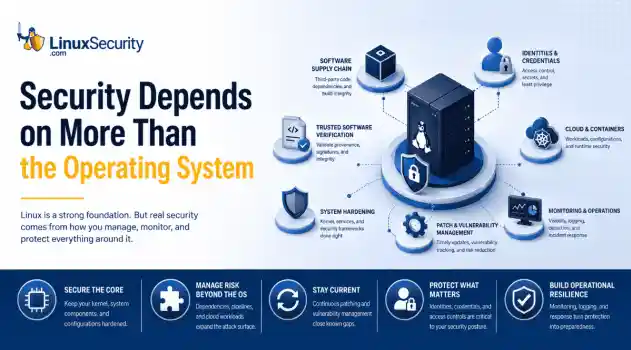
 If more than 12 million enterprise systems can be exposed by flaws in a security control designed to harden Linux, it's probably worth asking whether Linux gives people a false sense of security. That's a question that has come up repeatedly throughout 2026. . This year alone, researchers have disclosed privilege-escalation vulnerabilities, root-level kernel flaws, and multiple supply-chain compromises affecting Linux environments. That doesn't mean Linux suddenly became insecure. It means...
 Jun 15, 2026
  security advisory attack
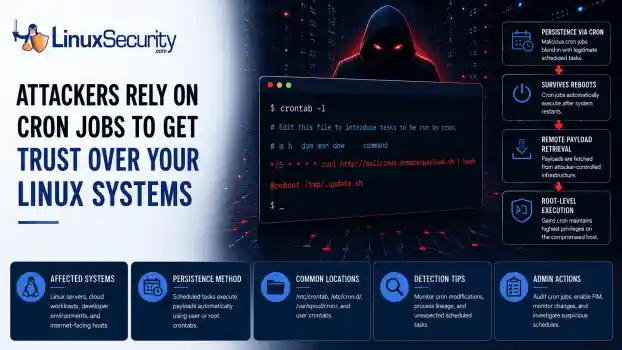
 A Linux server gets cleaned up after an intrusion. The suspicious process is terminated, credentials are rotated, and the system is rebooted during maintenance. Everything seems secure. A few hours later, the same outbound connection appears again. . Situations like that point to persistence . The attacker no longer needs the original exploit because something on the host continues restoring access behind the scenes. Finding that mechanism is often more important than understanding how the...
Jun 08, 2026 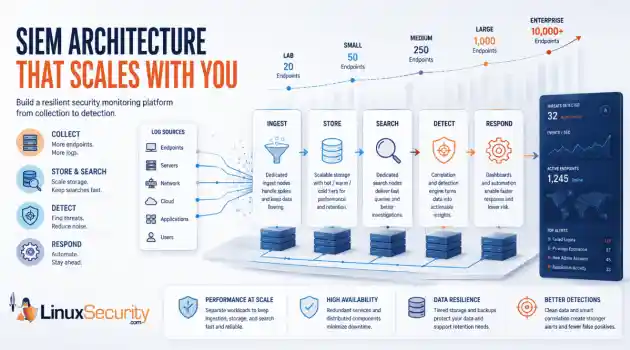 threat detection scalability
 Building a SIEM is easier than scaling one. Most open-source deployments start as a simple "all-in-one" server. It is easy to set up, but that design rarely survives the transition from a lab to a production workload. . A SIEM watching 20 endpoints is not doing the same job as one watching 500. More endpoints mean more logs; more logs require more storage; more storage makes search heavier. Eventually, the very architecture that made your lab easy to deploy becomes the reason your production...
Jun 04, 2026 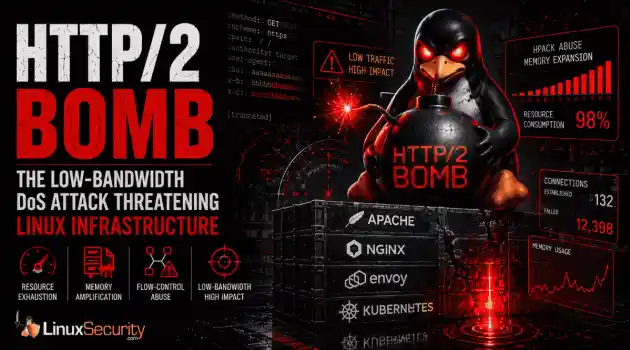 security advisory apache
 A newly disclosed attack technique called HTTP/2 Bomb is drawing attention because it targets the software that sits at the front of much of the Linux internet. Apache HTTP Server, NGINX, Envoy, and the ingress layers that many Kubernetes environments depend on can be forced into consuming disproportionate amounts of memory using relatively small amounts of attacker traffic. . For Linux administrators, the concern is not the HTTP/2 protocol itself. It is the possibility that a single...
Jun 04, 2026  security advisory important
 The compromise of Nx Console shows how much infrastructure now sits behind a single developer account. GitHub repositories, CI/CD pipelines, container build systems, Terraform projects, Kubernetes deployments. None of those systems was the initial target. The workstation was. . Attackers did not need a Linux privilege escalation bug or a remote code execution chain. They needed developers to trust a tool they were already using. For many organizations, that was enough. What Happened? Federal...
Jun 03, 2026  Refine features
X Clear Filters Get the latest News and Insights
Get the latest Linux and open source security news straight to your inbox.
Community Poll
What got you started with Linux?
Loading...

Explore Latest Linux Security features
We found -4 articles for you...
102
 security advisoryintrusion preventionimportant
Intrusion Detection Systems vs Prevention Systems Snort Overview
Intrusion detection and prevention systems are often treated as interchangeable. IPS is often described as IDS with blocking turned on. That sounds simple, but the moment traffic runs inline, mistakes start breaking real connections. IDS watches traffic and reports what looks suspicious, while IPS sits in the path and can block connections as they happen. Let’s walk through that shift using simple Snort examples. The goal is to show what breaks once blocking is enabled and why that changes how you operate the system. . Who Is Responsible for the Impact of IDS vs IPS Decisions? IDS and IPS often run the same detection engine . The same rule fires, the same signature matches, and the system reaches the same conclusion about the traffic. The rule logic stays the same. What changes is what happens when it fires. An IDS, or intrusion detection system , can reuse that detection logic safely because it only observes traffic. When the same rules are used inline, responsibility shifts immediately. You can reuse the same rules in both modes. But once you turn on blocking, someone owns the outages. A simple framing helps clarify the difference. IDS tells you something is wrong. IPS decides whether users feel it. IDS Observes traffic out of band Generates alerts for review Preserves availability when rules are wrong Supports human decisions before action is taken IPS Modifies traffic inline Drops or resets connections automatically Enforces decisions without review Owns the impact when something breaks The operational takeaway is that insight and enforcement are different jobs. IDS can generate alerts that turn out to be harmless. IPS can block legitimate traffic. Many teams make this explicit with a responsibility contract during design reviews. The artifact is simple, but it forces a necessary question before blocking is enabled: Who owns the outcome when detection becomes enforcement? What Happens When an IPS Blocks Traffic Inline? Whenan intrusion prevention system blocks traffic inline, it sits directly in the network path and makes a decision on every packet as it passes through. Traffic is inspected in real time and either allowed, dropped, or reset before it reaches the destination. There is no copy of the traffic and no later review. Whatever decision is made is immediately visible to users. Inline placement is the part that changes everything. A passive IDS watches a mirrored stream and cannot affect delivery. An inline IPS is different. All traffic must pass through it to get anywhere, which means if the rule is wrong, traffic breaks immediately. This is the point where the difference shows up. Inline packet flow looks like this: Client → eth0 → Snort (inspect + decide) → eth1 → Server There is no buffer in that path. No rewind. No second chance to reinterpret the decision. If the IPS misclassifies traffic, the application feels it immediately. Under the hood, every packet follows the same simple loop: Inspect the traffic Decide on a rule match Allow, drop, or reset the connection Both modes inspect traffic and match rules. The difference is whether the packet keeps moving. In detection mode, the outcome is an alert. In prevention mode, the outcome is broken or preserved connectivity. Here is a basic Snort inline configuration: snort -Q \ --daq afpacket \ --daq-mode inline \ -i eth0:eth1 \ -c /etc/snort/snort.conf The -Q flag is the turning point. It puts Snort inline instead of passive . Drop and reject rules only work here because Snort is no longer just watching traffic. It’s deciding whether packets move forward or not. At that point, detection stops being an alerting tool and starts actively controlling traffic. Once traffic is inline, a bad rule affects everyone using that connection. There is no “observe first” safety net. A bad rule doesn’t just generate an alert. It interrupts traffic. For wiring details and DAQ behavior, see the Snort inlinedeployment guide, but the risk is already visible here. Enforcement happens in the packet path, and mistakes affect traffic. Does an IPS Still Work If Systems Aren’t Fully Patched? Most IPS deployments quietly assume you already know what is vulnerable. That assumption rarely holds up for long. Patch data drifts, inventories lag, and services change faster than signatures do. IPS rules assume something about the system they’re protecting. A specific endpoint exists. A bug behaves a certain way. A fix has not been applied yet. When those assumptions are accurate, blocking can be precise. When they are not, the IPS is still forced to act, and enforcement turns into educated guessing. This is where people misunderstand intrusion prevention systems. IPS does not compensate for weak patching. It reflects it. When patch data is accurate, you can scope rules tightly. When it isn’t, you end up blocking more traffic than you intended. Consider a basic drop rule tied to a known vulnerable path: drop tcp $EXTERNAL_NET any -> $HOME_NET 443 ( msg:"IPS DROP - CVE-2023-XXXX exploit attempt"; flow:to_server,established; content:"/vulnerable_path"; http_uri; classtype:attempted-admin; sid:3000001; rev:1; ) From the IPS point of view, this rule is simple. If that request shows up, drop it. The problem is that the rule has no idea whether the target is actually vulnerable. Testing it is trivial: curl -k https://TARGET/vulnerable_path> If the service is fully patched, the request should not succeed anyway. Dropping it does not change real behavior, and nobody notices. This is the best-case scenario for intrusion detection prevention. If the service is unpatched, the IPS genuinely prevents exploitation. The request never reaches the application, and the risk is reduced, at least temporarily. If patch data is stale or wrong, the IPS blocks traffic that is no longer dangerous. Users experience breakage, not protection. From the outside, it looks arbitrary. From theinside, the IPS is doing exactly what it was told. This is where IDS and IPS behave very differently. Detection can live with uncertainty and still be useful. IDS can log something questionable and let you investigate later. IPS has to decide right now, even if it’s not fully sure. The less confidence you have in patch state, the more likely you are to block traffic that doesn’t need to be blocked. Why Do IPS Blocking Rules Fail So Quickly on Encrypted Traffic? They fail because once traffic is encrypted, the IPS can’t see what the request actually is anymore, but it still has to make a decision. TLS hides the URL, the path, the parameters, and any exploit string that would normally trigger a clean match. What’s left is the connection itself. At that point, an intrusion prevention system only sees where the traffic is coming from, where it’s going, and which port it’s using. IDS can live with that and log it. IPS can’t. It’s inline, so every session still has to be allowed, dropped, or reset. When blocking is required, and there’s nothing useful left to inspect, rules get written against the few fields that still exist. That usually means ports and direction, not behavior. You see rules like this show up: drop tcp $EXTERNAL_NET any -> $HOME_NET 443 ( msg:"IPS DROP - blunt port-based enforcement"; sid:3000009; rev:1; ) This rule doesn’t look inside the connection. It can’t. It just drops traffic headed to 443 based on where it’s coming from. Once traffic is encrypted, there isn’t much else to match on. In a lab, this often looks fine. Traffic is controlled. Applications are known. Nothing unexpected crosses the rule. It appears to work. Production environments are different. Almost all traffic is encrypted. Browsers, APIs, agents, background services. A rule this broad starts dropping legitimate sessions. When the IPS can’t see the request but still has to enforce a decision, real traffic gets blocked. Do TCP Resets and Session DropsActually Stop Attacks? They solve different problems. A drop blocks traffic. A reset interrupts a connection. Neither one guarantees prevention. What a drop does Packets are silently discarded The connection hangs until it times out Some clients retry automatically What a reset does A TCP RST is sent back The connection closes immediately Failures show up faster to users A basic Snort reset rule looks like this: reject tcp $EXTERNAL_NET any -> $HOME_NET 80 ( msg:"IPS TCP RESET demo"; flow:to_server,established; content:"test"; sid:3000002; rev:1; ) Resets feel cleaner, but they come with tradeoffs. Under load, attackers can send data before the RST arrives, so some traffic still reaches the application. The practical takeaway is simple. Resets interrupt sessions. Drops block packets. Both can reduce impact, but neither guarantees an attack is fully stopped once traffic volume climbs. Can You Tune an IPS Without Creating Permanent Blind Spots? Every IPS tuning change may create a potential blind spot if not done carefully, but proper methods exist to minimize or avoid that. Tuning usually starts when the IPS flags traffic that turns out to be legitimate. The alerts are technically correct, but they don’t reflect real risk. To stop the interruptions, a rule is added to let that traffic pass without inspection. That is what a bypass rule does in practice: pass tcp $HOME_NET any -> $HOME_NET 8443 ( msg:"BYPASS - internal API traffic"; sid:5000001; rev:1; ) Once this rule is in place, traffic on that port is no longer inspected. It does not generate alerts. It does not get checked by later rules. The IPS simply steps aside and lets it through. There are a few details that matter here. Pass rules are usually evaluated before drop rules. If the pass is broad, inspection is removed entirely for that traffic. If the rule order is wrong, nothing else has a chance to run. Over time, these exclusions tend tostick around. The service changes, the environment changes, but the bypass stays. Attackers don’t need to break the IPS if the IPS has already been told to ignore a path. That’s the trade you make when you start bypassing traffic. Every time you add a bypass rule, you remove inspection from that traffic. For a deeper look at how this plays out as environments grow, see IDS false positives and performance. Why Do IPS Configuration Changes Cause Outages So Easily? Because when an IPS is inline, config changes affect live traffic immediately. You’re not changing a policy in the background. You’re changing how packets are handled right now. If a rule is wrong, traffic starts dropping as soon as the process reloads. If the config is invalid, Snort may not come back up at all. Either way, users feel it before you finish checking logs. The usual workflow looks like this: # Validate config before reload snort -T -c /etc/snort/snort.conf # Restart inline Snort systemctl restart snort If you skip the test step, you’re guessing. A bad config can stop the service or load in a broken state, and because the IPS is inline, that guess turns into a traffic problem immediately. Even when the config is valid, timing matters. Restarting during active traffic means every mistake shows up at full volume. There’s no quiet failure mode. That’s why rollback planning has to come first. There’s very little room for mistakes once it’s inline. If you don’t already know how to bypass or revert the change, you find out the hard way, usually from users, not monitoring. How Is IPS Most Commonly Misused in Production Environments? Most IPS outages are not caused by bugs. They come from how blocking is turned on. The most common mistakes look like this: Using IPS to make up for systems that are not fully patched Treating alerts as final decisions instead of signals Enabling blocking without assigning clear ownership Having no rollback or kill switch when something breaks In production, an inline intrusion prevention system must have a way to step out of the path. Hardware bypass NICs or a software kill switch are recommended for fail-safe operation in production IPS deployments. If the IPS process fails, traffic should continue to flow. If there’s no bypass, one bad rule can take down traffic. When Does an Intrusion Prevention System Work? An intrusion prevention system is not always wrong. It just works in a narrow set of conditions. IPS works best when you know exactly what services are running, and they don’t change much. Services are fully inventoried. Patch status is accurate. Traffic paths are stable and predictable. When those pieces line up, blocking can be targeted instead of disruptive. A few things usually need to be true at the same time: You know which services are exposed and why Patch data reflects reality, not last quarter Traffic flows are consistent Someone owns rollback decisions The team accepts some false positives Turning on blocking doesn’t mean you’re more advanced. It means you’re prepared to deal with traffic being interrupted. If any of these pieces are missing, risk increases immediately. The IPS is still inline, and uncertainty shows up as broken traffic. Is Moving from IDS to IPS a Security Maturity Upgrade? No. IDS does not “graduate” into IPS. They solve different problems and fail in different ways. IDS and IPS carry complementary responsibilities. IDS focuses on visibility and understanding what is happening on the network. IPS focuses on enforcement and stopping traffic in real time. One helps you learn. The other forces you to act. Neither replaces the other. The failure modes are different, too. When IDS is wrong, you get noise. When IPS is wrong, users get blocked. That difference does not disappear as teams get more experienced. IDS remains foundational even in environments that use blocking. You still need visibility, context, and a way to respond withouttouching live traffic. That’s why IDS response and countermeasures matter alongside prevention, not after it. Prevention does not replace visibility. It depends on it. Why IPS Blocking Fails Without Certainty IPS has to decide immediately. It doesn’t get time to double-check whether the rule is perfectly accurate. When that decision is wrong, users notice right away. Detection can log something questionable and let you investigate later. IPS has to act even if it isn’t fully sure. That uncertainty gets enforced inline, and small mistakes turn into dropped traffic instead of alerts. IPS only works if someone validates the assumptions behind each blocking rule and is willing to own the impact. If you’re unsure about your rules, blocking doesn’t fix that. It just pushes the consequences onto live traffic. . Explore the dynamics between IDS and IPS, Snort's capabilities, and the risks associated with blocking traffic inline.. Snort, Intrusion Prevention, Network Traffic, Security Systems, Enforcement. . MaK Ulac
 Mar 12, 2026 •

Get the latest News and Insights
Get the latest Linux and open source security news straight to your inbox.
Community Poll
What got you started with Linux?
Search Topics
Powered By

Linux Security - Your source for Top Linux News, Advisories, HOWTOs and Feature Releases
QUICK LINKS
subscribe to newsletters!
Like staying secure? So do we.
Sign up for updates, tips, and alerts!
Discover faster search, smarter navigation, and deeper Linux security insights. Read More