


Stay Ahead With Linux Security Features
 security advisory risk management
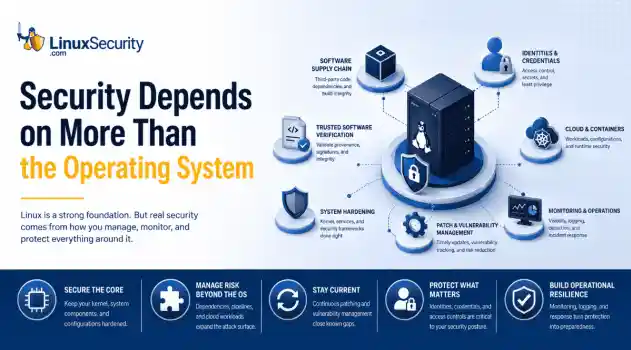
 If more than 12 million enterprise systems can be exposed by flaws in a security control designed to harden Linux, it's probably worth asking whether Linux gives people a false sense of security. That's a question that has come up repeatedly throughout 2026. . This year alone, researchers have disclosed privilege-escalation vulnerabilities, root-level kernel flaws, and multiple supply-chain compromises affecting Linux environments. That doesn't mean Linux suddenly became insecure. It means...
 Jun 15, 2026
  security advisory attack
 A Linux server gets cleaned up after an intrusion. The suspicious process is terminated, credentials are rotated, and the system is rebooted during maintenance. Everything seems secure. A few hours later, the same outbound connection appears again. . Situations like that point to persistence . The attacker no longer needs the original exploit because something on the host continues restoring access behind the scenes. Finding that mechanism is often more important than understanding how the...
Jun 08, 2026 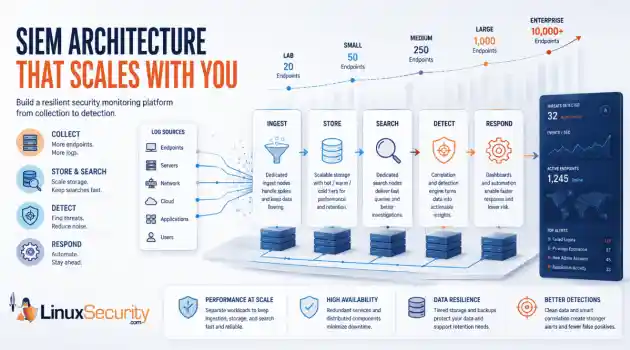 threat detection scalability
 Building a SIEM is easier than scaling one. Most open-source deployments start as a simple "all-in-one" server. It is easy to set up, but that design rarely survives the transition from a lab to a production workload. . A SIEM watching 20 endpoints is not doing the same job as one watching 500. More endpoints mean more logs; more logs require more storage; more storage makes search heavier. Eventually, the very architecture that made your lab easy to deploy becomes the reason your production...
Jun 04, 2026  security advisory apache
 A newly disclosed attack technique called HTTP/2 Bomb is drawing attention because it targets the software that sits at the front of much of the Linux internet. Apache HTTP Server, NGINX, Envoy, and the ingress layers that many Kubernetes environments depend on can be forced into consuming disproportionate amounts of memory using relatively small amounts of attacker traffic. . For Linux administrators, the concern is not the HTTP/2 protocol itself. It is the possibility that a single...
Jun 04, 2026  security advisory important
 The compromise of Nx Console shows how much infrastructure now sits behind a single developer account. GitHub repositories, CI/CD pipelines, container build systems, Terraform projects, Kubernetes deployments. None of those systems was the initial target. The workstation was. . Attackers did not need a Linux privilege escalation bug or a remote code execution chain. They needed developers to trust a tool they were already using. For many organizations, that was enough. What Happened? Federal...
Jun 03, 2026  Refine features
X Clear Filters Get the latest News and Insights
Get the latest Linux and open source security news straight to your inbox.
Community Poll
Is automated patching safe for servers?
Loading...
Explore Latest Linux Security features
We found -3 articles for you...
102
 system updateroot accessdisk encryption
Enhance Security On Ubuntu 22.04: Encrypt Drives, Update, And More
Thanks to the fact that Linux is open-source, it is one of the most secure operating systems available . However, it is not perfect—like any software, it is open to exploits and there is a lot that can be done to improve its security. Improving the operating system is not just for experienced users—there are some simple things that everyone can do to make Ubuntu Linux more secure. . Encrypt Your Hard Drive While a strong password is important for keeping your computer locked, it is not a foolproof way to keep your files secure—an experienced Linux user can access the files from a stolen laptop without a password. However, encrypting your hard drive makes it so that the password is not just a key to your computer but a code that is essential to accessing your files—without the password, any files that a hacker steals are impossible to read. Unlike the other tips in this article, full hard drive encryption must be done during Ubuntu’s installation—while it is possible to encrypt partitions after installation, it is not as straightforward—plus, it is not all-encompassing like full hard drive encryption. Below, we have a brand new image of Ubuntu 22.04. When you boot up your machine, whether it be on a physical device or a virtual machine, follow the set up as normal until you reach the screen shown below: After reaching this screen, make sure to click on the “advanced features” option under “Erase disk and install ubuntu”. Once you do so, you should be greeted with the following screen: Once the advanced features menu opens up, make sure to select the “Use LVM…” option as well as the Encryption option. Once you do so, hit OK and click the Install Now option. Afterwards, you should see a screen similar to the one below: Here, we want to establish a security key as well as a recovery key in case you forget the initial security key. For additional security, you can overwrite the empty disk space and being that this is all done at installation, your diskshould be empty. Once you have that all set up, you can continue with installation as normal and you should be all set, you now have disk encryption enabled! Update your Operating System Regularly While operating system updates are seen as a nuisance by many, keeping an operating system up to date is one of the most important measures that can be done to keep a system safe. A perfect example of the dangers of out-of-date software is the infamous WannaCry attack, in which a North Korean ransomware infected over 200,000 computers and caused hundreds of millions of dollars in damages in 2017. WannaCry only affected Windows computers that did not have the latest security update. While not all of the widely used versions of Windows had this update available, according to research from the Kaspersky Lab , 98% of users affected by WannaCry were using Windows 7, which did have the security update available. If these users simply updated their computers, they would not have been affected by one of the largest ransomware attacks. While Linux is generally more secure than Windows, it is just as important to regularly update Linux. Since Linux is open-source, anyone can search its code for bugs and help to fix them. This means that once an exploit in Linux is found, it will generally be fixed quickly, but it also means that it is important to update as soon as possible because the exploit will be known to the public. The easiest way to update Ubuntu is to run the software updater application. To update via the terminal, enter the command “sudo apt update && sudo apt upgrade -y.” Disable Root Access Linux is a command-heavy operating system—while an average user can use Linux and never see the terminal, it is still a powerful tool that can potentially give attackers full access to a computer. The unrestricted ability to run any command in Linux is known as “root access,” and can be safely disabled since it is not really needed most of the time. If root access isever needed, it can always be locked behind a password. To lock root access behind a password, open the terminal and enter “sudo -i.” When the next line, a # prompt, appears, enter “password.” This will give you the prompt for setting a root password. Disable unnecessary services Because Linux has been around for so long, it contains many leftover features that are outdated and no longer necessary. If allowed to run, these features can be a security flaw, especially if they provide access to ports. To list all services that are running in Linux, open the command line. See the below resources for more information on this: tldp How to List Services in Ubuntu Server / Desktop Safe Internet Browsing Nowadays, most browsers make a profit by selling their users’ data to advertisers. While this is usually unnoticeable by users, allowing websites to install data-collecting third-party cookies can make users open to attacks, phishing, and identity theft. Ubuntu comes with Firefox installed as the default browser. While Firefox is already a great browser for privacy, it is always good to disable third-party cookies. Additionally, browser extensions such as Adblock, HTTPS Everywhere, and NoScript can help make browsing the internet more secure. Adblock Adblock extensions disable advertisements on websites, making browsing the internet easier by hiding obstructing ads. They also prevent users from seeing malicious scam advertisements and disable third-party cookies. Popular adblock extensions include Adblock, AdBlock Plus, and uBlock Origin. HTTPS Everywhere Even though most people do not write “ before URLs anymore, the Hypertext Transfer Protocol is still used to connect to every website. Since 2008, websites have started to switch to the Hypertext Transfer Protocol Secure, or HTTPS, which encrypts traffic between the user and the site, and sites that only use HTTP are considered insecure. HTTPS Everywhere automatically switchesHTTP connections to HTTPS connections whenever it is available, helping keep internet traffic safer. NoScript While websites are still primarily built using HTML and CSS, they often have a lot of behind-the-scenes code written in languages such as JavaScript and Java. While there are many legitimate uses for these scripts, they are also one of the main tools used by malicious sites and hackers to run malware. NoScript disables scripts that are not from sites that users declare that they trust. Conclusion While Linux is a secure operating system by default, its ability to be customized allows for a multitude of ways to make it more secure. Making Linux more secure is something that anyone, not just cybersecurity experts, can and should do for the best and safest experience. . Fortify your Ubuntu system’s security by implementing drive encryption, ensuring regular updates, and managing root permissions meticulously.. Encrypt Hard Drive, Secure Ubuntu, Internet Browsing Tips, Linux Practices, OS Update Strategies. . Brian Gomez
 Oct 10, 2022 •
102
 data protectionbrowser securityinternet safety
Effective Methods To Hide Your IP Address And Secure Online Privacy
While the internet provides many benefits, it also brings new risks and challenges. One of the most common and notable of these is the threat to our privacy. Some users might think that they are protected by their browser, search engine and antivirus programs. However, the truth is that most of us aren’t doing nearly enough to keep websites from tracking us. . This article will look at how websites and other platforms track you and why you are being tracked. We’ll also discuss seven different ways to hide your IP address and keep websites from tracking you. Keep reading to find out the best ways to hide your IP, protect your online browsing and ensure you aren’t being tracked. How Are You Being Tracked? Before we can understand how to protect ourselves, we need to know how we’re tracked. There are a few different ways users can be tracked, this includes reverse email lookup . Here are four commonly used methods that websites use to track visitors. IP Address Permissions Emails Search History IP Address Your IP address is the unique identifier for your network. An IP address is critical for the internet to work as it’s responsible not just for identifying your network but also for communication between your network and the web. An IP address can easily be tracked and give the tracker a clear idea of you. From your IP address, trackers can get your location, details about your connected devices, where you go, and lots more. If you don’t hide your IP address, details of your personal preferences can be gathered by many different websites and hackers. Permissions We often give apps permissions they may not need just to start using the app. But this can be a way for the app to collect your data and track your preferences. For example, why would a navigation app need access to your contacts or photos? Or why would a game need access to your camera? These are all sly ways that apps use to legally collect information on you. Emails Emails contain a lot ofinformation. Not only could it contain sensitive information about you or your business. But, there are many other details attached to emails that users may not be aware of that can be tracked. Email trackers aren’t exactly a new concept, and they have been used by email marketers, individuals, phishers and spammers for years. Email tracking software allows the user to see exactly when an email was opened, who opened it, and their location. Search History There is a reason why clearing your search history is recommended. And no, it’s not just to keep sensitive information from your parents or significant other. The bigger reason is that your search history provides search engines and websites with a clear picture of your browsing practices and preferences. From your search history, search engines can see when you browse the web, where you’re located ( geo-tagged websites ), how long you spend on different websites and the types of sites you enjoy visiting. Who Is Collecting Your Data? Data is a very broad term. It can refer to personal identifiers such as your name, email address, social security number and financial information. It can also describe your browsing patterns, history and preferences. This data can be valuable to different people for different reasons. Businesses, websites and app developers want more data to refine and personalize their marketing strategies. By knowing more about their target audience, they can curate ads that lead to better conversions. As annoying as this may be for us, it is a legitimate way for businesses to do market research and gain valuable insights for marketing. One of the main reasons websites and apps collect your data is either for marketing purposes or because it’s a lucrative side hustle. By tracking what website you visit, where you shop and what you buy, a business can create targeted marketing strategies aimed at you. Have you ever wondered why you suddenly start seeing ads for items on special shortly after searching online for thatspecific item? Or why do you suddenly see ads for health and wellness apps after searching for healthy recipes? Alternatively, some individuals track you and collect your data for more nefarious purposes. These purposes can include stalking, launching DDoS attacks , identity theft, and even spreading ransomware. 7 Ways To Keep From Being Tracked Data breaches, websites tracking your every move, and other individuals looking to collect your data for different reasons may make browsing the internet safely seem impossible. However, you do have control over your information, and there are ways to protect yourself. Using Multiple Browsers You can use multiple browsers to confuse search engines and keep them from tracking you. Different browsers have different access to your data through your IP address. By switching browsers often, you can obscure any data collected. Also, make sure that you enable the ‘Do Not Track’ settings on any of your chosen browsers. While this option does not guarantee that you won’t get tracked, it becomes more valuable when combined with other measures. When choosing browsers, make sure that you use only secure browsers that state that they don’t track your data. On computers, you can use private browsers like Tor. Tor is also available on Android devices, or you can look at Orbot. If you need a private browser for iOS devices, the Onion browser is a good option. Using Rotating Proxies A rotating proxy is one of the best tools to hide your IP address . A proxy acts as a middleman between the user and the internet. Before accessing the internet, the user’s IP address is replaced by an IP address of the proxy. There are many different types of proxies available from reliable providers. Choosing the type of proxy you need will depend on your needs. When it comes to hiding your IP address, a rotating proxy is one of the best options. A rotating proxy uses a vast pool of residential proxies. It changes the user’s IP address with each new request, making itimpossible for anyone to track you using your IP address. Mixing User Agents User agents are essential for communication between you and the webserver. The user agent provides the website with important information such as the browser you’re using, your operating systems and the rendering engine. The webserver can then show a website optimized to these specifications with this information. This is why certain websites look different if you access them from another device. You can use a user-agent switcher to change the details of your user agent easily. This will make it appear to the website that you are using a different browser or operating system. Changing this frequently makes any tracking difficult. Use Browser Add-Ons To Identify Trackers Aside from user-agent switchers, there are also many other browser add-ons and extensions that you can use to avoid being tracked. If you are switching browsers, make sure that you get additional security and privacy measures for all the browsers you use. Privacy Badger is an add-on for Opera, Firefox and Chrome. With this extension enabled, you can clearly see third parties and ad networks tracking you. This helpful add-on also has an auto-block feature that you can use when you find someone tracking you. Disconnect is another useful browser extension available on Chrome, Firefox, Safari and Opera. This extension visually shows you which websites are tracking you in real-time. These often invisible trackers can also be blocked directly from the extension. Blur is another great extension for Chrome and Firefox. It can be used as a password manager and generator, ad-blocker, and offers additional encryption. If you sign up for the premium version, you also get access to masked cards. These throw-away virtual cards can be used for online shopping in place of your debit or credit cards. Check And Adjust All Privacy Settings Make sure to check that all of your social media apps are set to private. By default, some of them are set topublic, which means that anyone can legally collect the data from your profile without your permission. This includes personal details such as an address, names, date of birth, and other information such as music preferences, where you work, your photos and more. Make it a habit to check your apps regularly to ensure they are all set to private. Use Different Passwords And Update Them Passwords can be hacked and bypassed. This is why it’s essential to change your passwords frequently. Also, make sure that you choose a complex password consisting of letters (both cases), numbers and symbols. Also, never use the same password across multiple accounts. If you use the same password, a hacker that breached one account can get easy access to all of your other accounts as well. As such, use different passwords for different accounts, and change them often. Use Services That Remove Data From Brokers Another safety measure that should form part of your privacy arsenal is using services to remove your data from any brokers or listings. If you keep getting spam calls, obnoxious ads or even spam emails, the chances are that your name is on a list somewhere that’s available to these businesses or individuals. By using one of these services (or sometimes multiple), you can remove your name and information from these lists and start protecting your privacy. Unfortunately, you may need to repeat this now and again because information has a way of getting out. A few services that remove data from brokers include DeleteMe, Safe Shepherd and Catalog Choice. Final Thoughts Technology and the internet are continually evolving. This means that it’s challenging to know precisely how you’re being tracked. As such, you must take as many measures as possible to protect yourself. Hide your IP, use multiple browsers and never use Facebook, Google or similar apps to register new accounts on other websites. By implementing a few different measures, you can browse the internet safely without being tracked. . Thisarticle will look at how websites and other platforms track you and why you are being tracked. . while, internet, provides, benefits, brings, risks, challenges. . Brittany Day
Jul 04, 2022 • 

Get the latest News and Insights
Get the latest Linux and open source security news straight to your inbox.
Community Poll
Is automated patching safe for servers?
Search Topics
Powered By

Linux Security - Your source for Top Linux News, Advisories, HOWTOs and Feature Releases
QUICK LINKS
subscribe to newsletters!
Like staying secure? So do we.
Sign up for updates, tips, and alerts!
Discover faster search, smarter navigation, and deeper Linux security insights. Read More