


Stay Ahead With Linux Security Features
 security advisory risk management
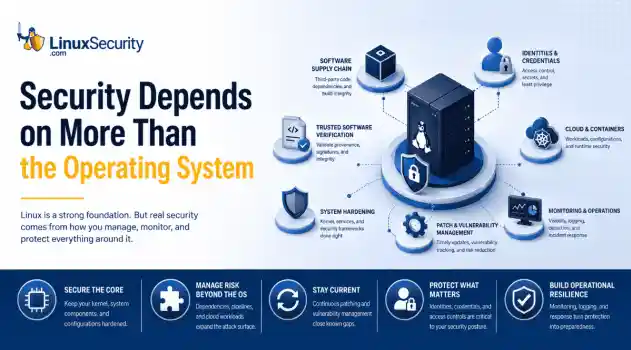
 If more than 12 million enterprise systems can be exposed by flaws in a security control designed to harden Linux, it's probably worth asking whether Linux gives people a false sense of security. That's a question that has come up repeatedly throughout 2026. . This year alone, researchers have disclosed privilege-escalation vulnerabilities, root-level kernel flaws, and multiple supply-chain compromises affecting Linux environments. That doesn't mean Linux suddenly became insecure. It means...
 Jun 15, 2026
  security advisory attack
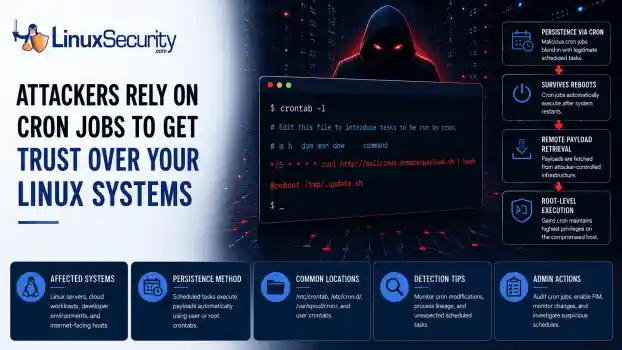
 A Linux server gets cleaned up after an intrusion. The suspicious process is terminated, credentials are rotated, and the system is rebooted during maintenance. Everything seems secure. A few hours later, the same outbound connection appears again. . Situations like that point to persistence . The attacker no longer needs the original exploit because something on the host continues restoring access behind the scenes. Finding that mechanism is often more important than understanding how the...
Jun 08, 2026 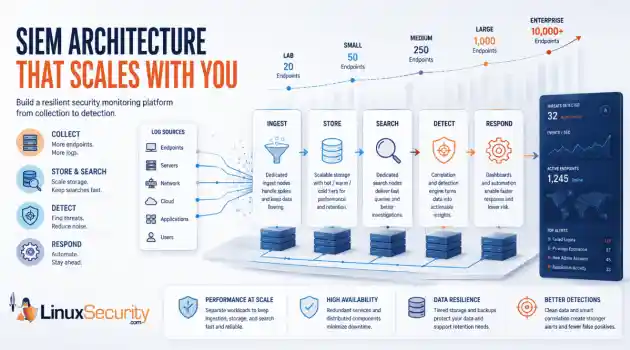 threat detection scalability
 Building a SIEM is easier than scaling one. Most open-source deployments start as a simple "all-in-one" server. It is easy to set up, but that design rarely survives the transition from a lab to a production workload. . A SIEM watching 20 endpoints is not doing the same job as one watching 500. More endpoints mean more logs; more logs require more storage; more storage makes search heavier. Eventually, the very architecture that made your lab easy to deploy becomes the reason your production...
Jun 04, 2026 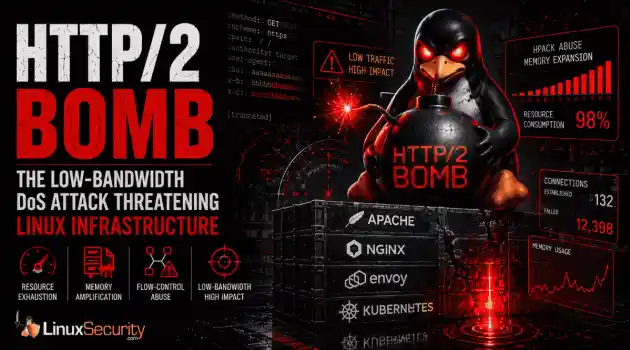 security advisory apache
 A newly disclosed attack technique called HTTP/2 Bomb is drawing attention because it targets the software that sits at the front of much of the Linux internet. Apache HTTP Server, NGINX, Envoy, and the ingress layers that many Kubernetes environments depend on can be forced into consuming disproportionate amounts of memory using relatively small amounts of attacker traffic. . For Linux administrators, the concern is not the HTTP/2 protocol itself. It is the possibility that a single...
Jun 04, 2026  security advisory important
 The compromise of Nx Console shows how much infrastructure now sits behind a single developer account. GitHub repositories, CI/CD pipelines, container build systems, Terraform projects, Kubernetes deployments. None of those systems was the initial target. The workstation was. . Attackers did not need a Linux privilege escalation bug or a remote code execution chain. They needed developers to trust a tool they were already using. For many organizations, that was enough. What Happened? Federal...
Jun 03, 2026  Refine features
X Clear Filters Get the latest News and Insights
Get the latest Linux and open source security news straight to your inbox.
Community Poll
What got you started with Linux?
Loading...
Explore Latest Linux Security features
We found -3 articles for you...
102
 network securitysecurity controlsdata encryption
Strategies To Secure Data Warehouses In Linux Environments
The world of enterprise solutions relies heavily on effective data management. Standard systems, which work great for small businesses, simply break down once you have thousands of moving components operating worldwide - if not hundreds of thousands. Maintaining unstructured data, primarily if your business operates on a global scale, isn’t just a waste of resources; it’s also a risk to your company. . Understanding how to properly organize and secure your information in a data warehouse within a Linux system can help you prevent cyberattacks from inside and outside your company while keeping your data safe. So, where do you get started? Let's begin by examining what a data warehouse is and what may put yours at risk. I’ll then share practical measures for improving data warehouse security. What is a Data Warehouse? Data warehouses are one of the prime options for large enterprises to sort, secure, and silo their data so that it can quickly be processed, analyzed, and used for more in-depth insights and recommendations. This is because a data warehouse works beyond simply structuring your most recent data; it provides a framework that allows you to store historical versions of documents alongside their modern counterparts. They work by regularly transferring data from operational system databases like ERPs or CRMs, apps, social media, the Internet of Things, and more. This produces a histography of the data you need for your business, allowing you to tackle current issues and better map trends as they adapt over the years. Why Does Your Large-Scale System Need a Data Warehouse? There are several reasons why building a data warehouse to structure and store your data should be the number one step when it comes to securing your data on Linux, especially when it comes to cloud-based warehouses: Historical documents are automatically sorted. Data is automatically duplicated and backed up on multiple servers. Centralized data is easier to keep track ofand secure. Access controls are a breeze to implement. What’s Putting Your Data Warehouse at Risk? Linux systems are known for their security and scalability. Thanks to the open-source nature of the system itself, which is constantly being updated and provides more user access control for businesses, you are right on track for securing your large datasets (and their historical versions). Before we get into what steps you can take to prevent data breaches in a Linux system further, let’s recap just what type of threats you’re defending against: Data Breaches : Unauthorized access to confidential data often leads to the exposure or theft of sensitive data, such as financial or personal information. Financial loss, reputational damage, and legal consequences are all possible outcomes. Ransomware: Ransomware is malicious software that encrypts a victim's files and demands payment for the key to decrypt them. Data loss, disruption of operations, and financial extortion are all possible consequences. SQL Injection: SQL injection is a code injection technique that exploits vulnerabilities within a web application’s database layer through malicious SQL queries. Its impacts include unauthorized data access and manipulation and potential database corruption. Insider threats : Insider threats are security risks that originate within an organization. They usually involve employees or contractors misusing their access to systems and data. Data breaches, intellectual theft, and operational sabotage could be severe consequences of insider threats. DDoS attacks: Distributed denial-of-service attacks overwhelm a system, network, or service with internet traffic and make it unusable for users. Service downtime, user distrust, and financial losses are all possible consequences. Implement these Key Methods to Boost Data Warehouse Security You will next need to take proactive steps towards securing your data warehouse. This willfurther minimize the risk of cyberattacks or insider attacks from harming your business. Implement Robust Access Controls The first step will always be to implement robust access controls . Think of these controls as keys to a building. Users should only be able to access the rooms available and no one else’s. This prevents large-scale data breaches and potential insider attacks from interfering with your operations. To do this, you will need to define: Users and Roles : Everyone who has access to your data warehouse must have a unique user identification, and each user must have a defined role (level of access). Permissions : You need to define and set more than just the level of access. You also need to set each user’s permissions, which refer to what they can do with the data they can access. Examples of permissions include read-only, access, or edit. Create Access Controls You can create these access controls using Role-Based Access Control, which works wonders for businesses employing hundreds or thousands of people. In this approach, each role is clearly defined beforehand, and the level of access is locked. You can also use services like OpenLDAP, which allows you to manage user accounts centrally, group those accounts, and create access control policies for your data warehouse. This approach works to simplify your administration efforts and provides consistent access levels across your entire network. Encrypt Data in Transit and at Rest Data is at risk in transit (during a download or upload) and at rest (in your data warehouse). The best way to secure data in both situations is to encrypt it. This way, if someone intercepts the data at any stage, they will need a decryption key to make sense of the information. Organizations that routinely exchange sensitive documents with external stakeholders should also implement secure file sharing practices that maintain encryption, access controls, and auditability throughout the documentlifecycle. Dedicated virtual data room platforms can help ensure confidential files remain protected while still allowing authorized users to collaborate, review, and share information efficiently. The open-source tools you will want to look at to accomplish this encryption include: LUKS : Linux Unified Key Setup (LUKS) provides full disk encryption if you store data on-site. SSL/TLS Protocols : This protocol encrypts data as it is transferred over a network, essential when managing a cloud-based warehouse. PostgreSQL: If you are looking for a built-in encryption solution, PostgreSQL encrypts your entire database or specific columns containing sensitive data. Implement Top-Notch Network Security Several security solutions must be standard to protect your Linux system and data warehouse. Firewalls Firewalls are the security guards that protect your entire network. They work to filter incoming traffic to block out suspicious users and connections before they even have a chance to peek at your data. Thankfully, Linux has top-notch firewall options available, but you are likely to use the below: iptables : this is the built-in firewall option for Linux. While powerful, you will need a technical expert to configure your settings based on your needs fully. ufw (Uncomplicated Firewall) : This is just a user-friendly frontend for iptables, so if you need a simplified solution to implement Linux’s iptables firewall system, use this option. Establishing rules beforehand is good practice when setting up your firewall. This can mean only allowing traffic from certain IP addresses or endpoints while blocking everything else. You can also filter services, allowing access only to essential services like database ports through your firewall. VPNs Virtual Private Networks (VPNs) are essential for Linux administrators to secure remote access to data stores. VPNs create encrypted tunnels that ensure data is transmitted securely betweenusers and data warehouses. Selecting a VPN that uses robust encryption algorithms like AES-256 and supports multi-factor authentication (MFA) is essential. These measures enhance security significantly by preventing eavesdropping and making it unlikely that unauthorized access will occur even if login credentials have been compromised. Administrators should also focus on network segmentation and monitoring. They should log VPN connections to detect any unusual activity. It is important to keep VPN software up-to-date with the latest security updates to minimize vulnerabilities. Linux administrators can secure sensitive data and comply with regulatory requirements by implementing a robust VPN. They can also ensure business continuity via secure remote access. A well-managed VPN is essential to maintaining data warehouse security and integrity. Intrusion Detection Systems (IDS) Intrusion Detection Systems (IDSs) are essential in providing data warehouse security by constantly monitoring network traffic and system activities for signs of malicious behavior, such as port scans, malware communications, or hacking attempts in real-time and alerting administrators immediately with immediate alerts that enable swift responses. IDS is available both Network-based (NIDS) for network traffic monitoring and Host-based (HIDS) for individual devices. Administrators should regularly update signatures to recognize emerging threats and fine-tune rules to limit false positive alerts so alerts remain meaningful and actionable, ensuring data warehouse security is maintained. IDS also helps meet regulatory compliance by providing logs and reports on security incidents. They're indispensable tools for proactive threat detection, incident response management, risk analysis, risk mitigation, and improved data warehouse operations security and integrity. Conduct Regular Penetration Tests and Security Audits Penetration testing (pentesting) is an essential security practice that simulates cyberattacks toidentify and exploit vulnerabilities within data warehouse environments, with the objective being to uncover security gaps before malicious actors exploit them. Effective pentesting requires an in-depth knowledge of internal and external attack vectors, such as network security issues, application vulnerabilities, and configuration weaknesses. This involves both automated tools and manual techniques mimicking potential attack scenarios to assess your security posture. Pentesting is essential to increasing data warehouse security as it gives administrators actionable insights into vulnerabilities and their potential impact. By addressing these vulnerabilities, they can implement targeted security measures to strengthen the warehouse further. In addition, regular pentesting helps administrators ensure compliance with regulatory standards and industry best practices, taking a proactive approach to risk management while increasing security awareness among IT teams and helping protect data integrity and confidentiality for long-term storage within warehouses. Use These Security Frameworks and Standards There are several famous Linux-friendly security frameworks and standards in which to invest. By building such a structured approach, you cover all your bases, ensure your business is protected with industry best practices, and reduce the risk of a cyberattack. Just a few of the frameworks and standards you should have in your Linux system to protect your data include: ISO/IEC 27001 : This international standard outlines the best practices for security management. To properly secure your data, follow this framework’s instructions. NIST Cybersecurity Framework (CSF) : This framework provides a high-level structure for identifying, protecting, detecting, and recovering from cyber-attacks. CIS Benchmarks: This set of configuration recommendations for Linux helps ensure your data warehouse is secure. Consider These Open-Source Security Tools One of the primereasons to invest in a Linux system is the sheer number of open-source tools that allow you to customize every element of your setup. When it comes to securing your data specifically, however, you’ll want to look at these options: Security Information and Event Management (SIEM): This tool centralizes log data across all security measures, from firewalls to servers. It’s used to identify security events and suspicious activity in real-time. Endpoint Detection and Response (EDR): Endpoints, or devices, are a significant security threat. EDR works on securing those endpoints and monitoring suspicious activity to minimize threats. Network Security Monitoring (NSM): This tool analyzes network traffic to identify suspicious activity and potential threats. Our Final Thoughts on Improving Data Warehouse Security Unstructured data is a big red target on your back. Compiling all that information into a data warehouse allows you to use your data more intelligently while also making it easier to protect yourself with the array of Linux security and open-source solutions available. Implement the best practices discussed in this article and rest easy knowing your critical data is secure from tampering, theft, and compromise. . Enhance your Linux data hub security by implementing robust controls, utilizing encryption techniques, establishing network safeguards, and adhering to industry best practices.. Data Warehouse Security, Linux Security Tools, Network Security Best Practices, Encryption Techniques, Cybersecurity Standards. . Brittany Day
 Aug 09, 2024 •
102
 network securityLinux compliancecloud security
Enhancing Data Governance: Open-Source Security and Linux Integration
Data governance consultancy is a compliance tool many businesses have started relying on due to the constantly changing data management environment. These tactics help businesses develop strategies and policies to ensure data and network security, privacy-enhancing technology, and integrity. Open-source security on Linux plays a crucial role in creating cloud security frameworks that provide the protection that every Linux user needs and deserves. . This article will discuss the basics of effective data governance consulting, examine how Linux and open-source security work together for integrity and compliance, and explain a few network security toolkits Linux admins can incorporate to meet such objectives. What Are the Fundamental Principles of Effective Data Governance Consulting? Effective data governance consulting involves a few principles that play a significant role in how organizations manage and utilize their data assets strategically: Understanding a company’s business objectives can help you determine which solutions will align with business objectives and assist the company in the way they need. Develop a solid data governance framework with policies, procedures, and controls that meet the business and environment requirements. Create a culture of openness and teamwork among various departments to keep communication between employees, clients, and consultants open. Attend data governance consulting training to help employees improve their knowledge and skills for working with such a program. Approach the solutions with flexibility and adaptability so you can adjust to technological and operation changes based on a business's priorities. Exploring data governance consulting services can be essential for a business. A comprehensive understanding of these principles can allow organizations to implement them and maximize the value of data assets. This solution provides a harmonious balance between compliance, security, and strategic alignment, which are crucialfor any organization looking to leverage its data effectively and improve its security posture. What Can I Expect from a Data Governance Consultancy? A data governance consultancy can offer various services to users. Here are a few of the ideologies and practices you can expect to receive when working with an agency: Accountability Data governance consulting necessitates employee accountability, so an organization is proactive in all aspects of the consulting process. A governance cloud security framework requires established responsibilities that encapsulate all of the data-related tasks and decisions within a business. Data stewards, owners, and custodians work alongside consultants to determine the best methods for distributing tasks and maintaining quality and compliance. Consultants can assist by protecting an organization's ability to hold employees accountable for specific improvements related to constructing and using performance metrics, administering regular cloud security audits, and monitoring servers. Transparency Having open, proper communication is vital to effective data governance consulting. Consultants can help organizations formulate transparent processes so employees understand collection and documentation. Transparency with your data governance consultancy is essential so stakeholders can determine how to assist users with their concerns and comments. With transparency, organizations can maintain trust among employees, customers, and partners within a suitable data culture. Consistency Organizations work with data governance consultancies to define, classify, and standardize data. Standardization is necessary to integrate different data sources and make analysis more accurate, thus establishing consistency across an organization's data and network security. Consultants teach organizations to create data dictionaries, metadata repositories, and data catalogs that serve as a master reference for all data attributes and terms. Organizations can then reinforce the data'squality, usability, and usefulness in decision-making and strategy-planning processes. Security Strengthen your server against network security threats so that your data governance consultancy appropriately protects your information. Multi-layered, comprehensive data and network security is essential to preventing unauthorized personnel from accessing sensitive information within a server. Implement encryption protocols to protect data in transit and at rest so your credentials remain confidential. Organizations can depend on consultants to develop solid monitoring systems that support data risk detection and network security issues. Consultancies conduct periodic cloud security audits and assessments so users can find weaknesses and mitigate them as needed. A consultancy can help businesses meet data protection regulations, maintain their reputation, and gain user trust between employees and clients. Advocating for private and clean information helps establish a robust organizational culture. Employee training programs and awareness events can help businesses improve their security posture by knowing about recent cloud security breaches, new best practices, and the latest responsibilities for maintaining a secure environment. Consultants assist in generating and cultivating a security-involved environment whereby all individuals in an establishment must actively participate in data and network security safeguarding. How Do Data Governance Consultants Help Organizations Identify and Address Data Governance Gaps? Data governance consultants develop all-inclusive plans for identifying and mitigating gaps in the cloud security framework. A consultant will analyze the policies and practices in an organization by examining documentation, interviewing significant stakeholders, and exploring all data workflows. This analysis can help grasp the condition of the data governance consultancy to improve security posture regarding data quality, compliance, and general governance. Consultants workclosely with organizational stakeholders to develop strategies and solutions customized to the business and industry's policies, practices, and needs. Organizations can then receive the support they need to define roles, execute responsibilities, and guarantee accountability. Consultants help establish and operationalize data standards and classifications to improve data quality. What Is The Intersection Between Data Governance Consulting & Open-Source Security? Open-source security works alongside data governance consultancies to establish a relationship that provides various benefits for a business: Open-Source Ecosystem : Various industries use Linux and Open-Source Software (OSS) because they are cost-effective, customizable, and flexible. Data governance consulting requires OSS to ensure compliance and data and network security. Standards and Compliance : Data governance consultants help organizations adhere to numerous data regulations and industry-specific standards such as GDPR, HIPAA, SOX, and PCI-DSS . Linux and open-source network security toolkits provide practical solutions to meet these compliance requirements. Risk Management : Consultancies focus on identifying and mitigating network security threats associated with Linux. Open-source software can address cybersecurity vulnerabilities , security patching management , and system misconfigurations on your applications. Security Controls and Best Practices : Data governance consultants advise organizations to implement security controls and best practices to assist open-source systems with secure configurations, user and access management, Linux Intrusion Detection Systems (IDS), and encryption. Monitoring and Auditing : Integrate effective cloud security auditing and monitoring solutions on Linux systems so you can promptly detect and respond to data security incidents, cloud security breaches , and other network security issues. Disaster Recovery and Business Continuity : Linux and open-source securitymeasures are essential to an organization's Disaster Recovery (DR) and Business Continuity (BC) plans. Work closely with the IT teams in a consultancy to develop robust DR and BC strategies that minimize downtime and data loss. Incident Response and Management : Data governance consultants often collaborate with Linux security professionals to develop effective incident response plans and processes to handle cloud security breaches that may harm data integrity and availability. What Are the Best Open-Source Data Governance Tools for Linux Admins? Here are some practical steps and open-source network security toolkits that Linux administrators can use to implement data governance and improve the security posture of their Linux systems: System Hardening SELinux : This tool is a mandatory access control system in Linux distributions like RHEL, CentOS, and Fedora. Enable, configure, and enforce SELinux policies to restrict users, applications, and services to a specific set of privileges and resources. CIS Benchmarks : The Center for Internet Security (CIS) has recommendations and guidelines that Linux distributions should follow when completing free security configuration benchmarks. Secure Configurations Ansible : This open-source security automation tool manages system configurations so you can ensure consistent and secure settings across all Linux systems. osQuery : osQuery collects Operating System data and stores it in an SQL database, enabling you to query the data and assess security configurations. Use this network security toolkit to maintain cloud security frameworks and monitor secure configuration baselines. User and Access Management FreeIPA : FreeIPA integrates identity management, authentication, and authorization for Linux systems and helps effectively manage users, groups, and host-based access controls. PAM : Pluggable Authentication Modules (PAM) provide dynamic authentication support for applications and servicesin Linux systems. Configure and customize PAM to enforce strong data authentication policies. Monitoring and Auditing Auditd : The Linux Auditing System collects and logs security-related events. Configure this service to track user activities, privileged actions, and unauthorized access. ELK Stack : Deploy Elasticsearch, Logstash, and Kibana (ELK) for log aggregation, analysis, and visualization. This open-source stack helps monitor system and user activities, detect security incidents, and provide compliance reports. Intrusion Detection Snort : Snort is an open-source Network Intrusion Detection System (NIDS) that monitors network traffic, searching for known attacks in network security and suspicious activities. AIDE (Advanced Intrusion Detection Environment) : AIDE is a file and directory integrity checker for Linux systems that detects unauthorized changes to system files. Vulnerability Assessment and Patch Management OpenVAS : OpenVAS is an open-source vulnerability scanner that helps you identify and manage risks associated with known vulnerabilities in Linux systems. VulnWhisperer : This open-source vulnerability data collector and organizer can implement risk-based management and compliance with their cloud security scanners. Encryption and Data Protection LUKS (Linux Unified Key Setup) : Use LUKS to encrypt sensitive data on your Linux systems, providing additional protection against unauthorized access. GnuPG (GNU Privacy Guard) : Install GnuPG for secure communication, file encryption, and digital signatures. Incident Response TheHive : This open-source Security Incident Response Platform (SIRP) assists in managing security alerts, tracking evidence, and creating incident reports. Final Thoughts on Leveraging Open Source to Achieve Data Governance Objectives In today’s ever-changing data management environment, data governance has never been more crucial for admins and organizationslooking to protect data integrity and ensure compliance. Utilizing these practical steps and open-source network security toolkits helps Linux administrators effectively apply data governance principles, enhance the security of their Linux systems, and guarantee compliance with industry standards and regulations. . Data stewardship foundations are essential for overseeing data resources, highlighting integrity, uniformity, and responsibility.. Data Governance Tools, Open Source Security, Linux Compliance, Network Security Solutions. . Brittany Day
Dec 04, 2023 • 

Get the latest News and Insights
Get the latest Linux and open source security news straight to your inbox.
Community Poll
What got you started with Linux?
Search Topics
Powered By

Linux Security - Your source for Top Linux News, Advisories, HOWTOs and Feature Releases
QUICK LINKS
subscribe to newsletters!
Like staying secure? So do we.
Sign up for updates, tips, and alerts!
Discover faster search, smarter navigation, and deeper Linux security insights. Read More