


Stay Ahead With Linux Security Features
 security advisory attack
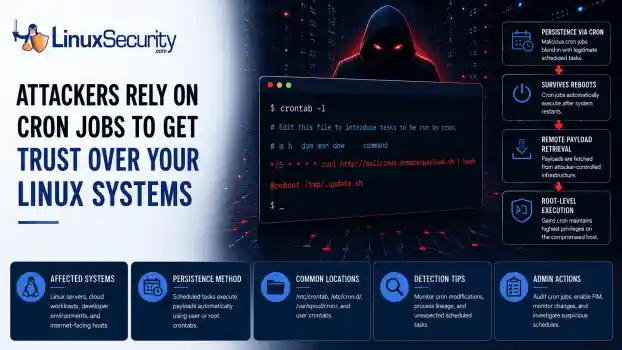
 A Linux server gets cleaned up after an intrusion. The suspicious process is terminated, credentials are rotated, and the system is rebooted during maintenance. Everything seems secure. A few hours later, the same outbound connection appears again. . Situations like that point to persistence . The attacker no longer needs the original exploit because something on the host continues restoring access behind the scenes. Finding that mechanism is often more important than understanding how the...
 Jun 08, 2026
 threat detection scalability
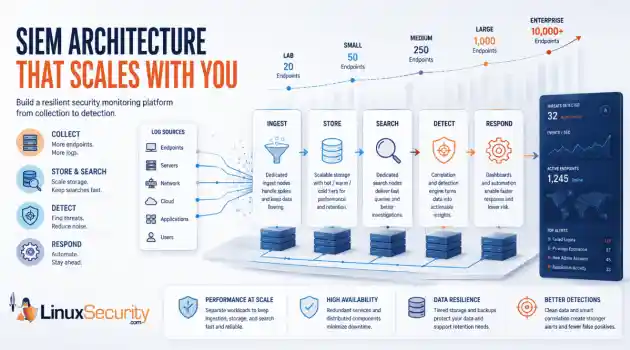
 Building a SIEM is easier than scaling one. Most open-source deployments start as a simple "all-in-one" server. It is easy to set up, but that design rarely survives the transition from a lab to a production workload. . A SIEM watching 20 endpoints is not doing the same job as one watching 500. More endpoints mean more logs; more logs require more storage; more storage makes search heavier. Eventually, the very architecture that made your lab easy to deploy becomes the reason your production...
Jun 04, 2026
 security advisory apache
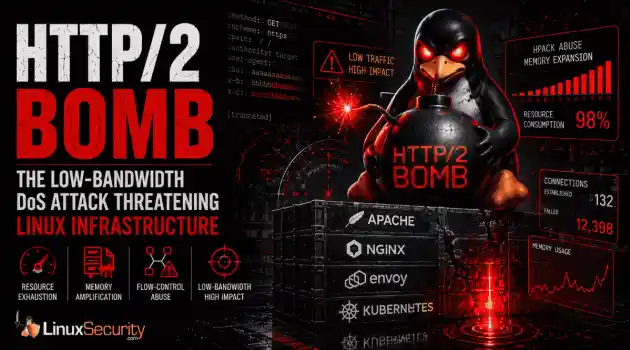
 A newly disclosed attack technique called HTTP/2 Bomb is drawing attention because it targets the software that sits at the front of much of the Linux internet. Apache HTTP Server, NGINX, Envoy, and the ingress layers that many Kubernetes environments depend on can be forced into consuming disproportionate amounts of memory using relatively small amounts of attacker traffic. . For Linux administrators, the concern is not the HTTP/2 protocol itself. It is the possibility that a single...
Jun 04, 2026
 security advisory important
 The compromise of Nx Console shows how much infrastructure now sits behind a single developer account. GitHub repositories, CI/CD pipelines, container build systems, Terraform projects, Kubernetes deployments. None of those systems was the initial target. The workstation was. . Attackers did not need a Linux privilege escalation bug or a remote code execution chain. They needed developers to trust a tool they were already using. For many organizations, that was enough. What Happened? Federal...
Jun 03, 2026
 security advisory open-source
 You remove the malware. You rotate the compromised credentials. You patch the original vulnerability and close the ticket. Two weeks later, the attacker is back. . What happened? You didn't lose the battle at the exploit; you lost it at the cleanup. In many modern Linux intrusions, the malware you found wasn't the main problem—it was the fallback mechanisms left behind. These hooks quietly restore attacker access the moment you look away. If you clean a host but miss these persistence layers,...
Jun 02, 2026
 Refine features
X Clear Filters
Get the latest News and Insights
Get the latest Linux and open source security news straight to your inbox.
Community Poll
What got you started with Linux?
Loading...

Explore Latest Linux Security features
We found -4 articles for you...
102
 security advisorymalwareLinux infrastructure
Linux Infrastructure Under Siege by FamousSparrow Espionage Campaign
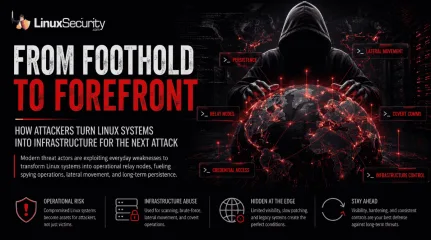
The recent FamousSparrow attacks reportedly relied on exposed web applications, ProxyLogon exploitation, and other well-known server-side vulnerabilities. . None of those intrusion paths is unusual in large enterprise environments. That is exactly what makes these campaigns dangerous. The recent telecom attacks reportedly relied on familiar weaknesses: exposed SSH services, weak credentials, unpatched applications, and poorly monitored edge devices. Once attackers gain foothold access, infected Linux systems can become relay nodes for persistence, scanning, brute-force activity, and covert communications. That should concern anyone running Linux in production environments because telecom networks are often a preview of where advanced threat operations move next. Long-lived infrastructure, inconsistent patch cycles, exposed management services, containerized workloads, and limited visibility at the network edge create ideal conditions for persistence. Once attackers establish foothold access, compromised Linux systems can become relay nodes for scanning, brute-force activity, lateral movement, and covert command infrastructure. The dangerous part is how ordinary the intrusion paths look. SSH exposure. Weak credentials. Unpatched services. A forgotten Tomcat instance is still reachable from the internet. Nothing dramatic. Then the malware settles in and the compromised host stops behaving like a victim system. It becomes infrastructure for the next stage of the operation. Linux Infrastructure Is Becoming Operational Infrastructure The campaign, tied to a China-linked activity cluster tracked as UAT-9244, reportedly relied on multiple malware families operating across Linux and Windows environments. One of the Linux payloads, known as PeerTime, supports several architectures commonly found in embedded and network infrastructure: ARM AArch64 MIPS PowerPC x86 That architecture spread tells you exactly what the operators expected to encounter. Routers. Embeddedappliances. Virtualized infrastructure. Linux systems often sit quietly at the edge of production networks where monitoring is weaker, patching moves slowly, and visibility gaps accumulate over time. The Malware Is Built to Blend Into Infrastructure One detail stands out immediately: the Linux malware reportedly uses peer-to-peer communication methods and BitTorrent-style traffic patterns instead of relying entirely on centralized command-and-control servers. That complicates detection. Security teams often look for outbound traffic heading toward suspicious external infrastructure. Peer-to-peer communications blur those indicators because the traffic can resemble legitimate network behavior, especially in environments already handling massive amounts of east-west traffic and routing activity. The malware also appears designed to turn compromised Linux systems into Operational Relay Boxes , or ORBs. Once foothold access is established, the infected host becomes part of the attacker’s infrastructure: relaying malicious traffic staging brute-force attempts scanning external targets masking the attacker's origin supporting lateral movement At that point, the compromised system is no longer just a victim. It becomes an operational asset for future intrusions. Attackers Are Exploiting Operational Weaknesses, Not Just Vulnerabilities The reporting around the campaign mentions brute-force activity against exposed services such as SSH, PostgreSQL, and Tomcat. This is where Linux infrastructure often breaks down operationally. A forgotten administrative interface stays exposed because removing it would interrupt production traffic. Legacy credentials remain active longer than anyone intended. Containers get deployed quickly while visibility tooling arrives months later. Edge systems stay online for years without a proper security review because nobody wants downtime on a telecom backbone. The environment becomes predictable because most large organizations alreadyhave systems like these sitting quietly inside production networks. Attackers only need one foothold to start building persistence. One exposed SSH service with weak credentials. One management interface is reachable from the wrong segment. One outdated appliance is still using inherited sudo rules from a deployment nobody remembers clearly anymore. Embedded Linux Systems Continue to Be a Blind Spot Most enterprise detection pipelines focus heavily on endpoints, cloud workloads, and centralized servers. Embedded Linux infrastructure rarely receives the same level of visibility. That creates a dangerous imbalance since attackers automate reconnaissance and defenders still struggle with inventory. Many organizations cannot confidently identify every Linux-based edge device connected to their production network. Telecom environments are especially vulnerable because infrastructure tends to accumulate over time: legacy routing appliances vendor-maintained systems virtual network functions container hosts proxy infrastructure monitoring nodes management gateways Some of these systems barely generate logs worth reviewing. Others forward telemetry inconsistently or rotate authentication records before analysts ever inspect them. Meanwhile, the malware adapts across architectures and continues operating normally. Containerized Infrastructure Expands the Attack Surface One report noted that the malware checks whether Docker is installed before execution. Small detail. Important implication. Modern Linux infrastructure increasingly depends on containerized workloads. Once attackers land inside a container host or orchestration environment, the opportunities expand quickly: mounted secrets CI/CD runners orchestration tokens internal registries service credentials management APIs Compromising infrastructure supporting telecom operations creates long-term operational value for espionage groups. They are not looking for immediate destruction; theywant durable access inside environments where traffic flows continuously and administrative changes happen cautiously. Traditional Linux Hardening Is No Longer Enough Basic hardening still matters: Disable unused services Restrict exposed SSH access enforce key-based authentication remove weak sudo configurations patch internet-facing systems aggressively isolate management interfaces But those controls alone do not address infrastructure abuse. Organizations need visibility into Linux systems traditionally treated as “network equipment” instead of monitored compute assets. That includes: embedded Linux appliances telecom routing systems container hosts virtualized network infrastructure jump boxes edge proxies Watch for: unusual outbound peer-to-peer traffic authentication bursts against PostgreSQL or Tomcat SSH activity originating from infrastructure segments long-lived relay connections unexplained process renaming container execution anomalies Most importantly, stop assuming edge infrastructure is low-risk because it does not resemble a traditional endpoint. What Linux Teams Should Audit Right Now Exposed SSH services are reachable externally Dormant administrative accounts Internet-facing Tomcat or PostgreSQL instances Unmonitored Docker hosts Long-lived outbound peer-to-peer connections Infrastructure segments generating unexpected SSH traffic Linux Malware Is Evolving Alongside Infrastructure The telecom sector matters because these environments give attackers exactly what they want: long-lived infrastructure, massive amounts of routing visibility, and operational environments where administrative changes happen slowly and cautiously. That makes Linux infrastructure extremely valuable for espionage operations focused on persistence instead of disruption. The intrusion paths in this campaign were not especially sophisticated. Exposed SSH services. Weak credentials.Unpatched applications. Poorly monitored edge systems. The same operational weaknesses defenders have been dealing with for years. The difference is what happens after the compromise. Once foothold access is established, the infected system stops functioning like a normal victim. It becomes part of the attacker's operational infrastructure. Relay infrastructure. Scanning infrastructure. Infrastructure supporting brute-force activity, lateral movement, and covert communications. And because many of these Linux systems sit quietly at the edge of the network with limited visibility, attackers can maintain that infrastructure far longer than most organizations realize. Subscribe to the Linux Advisory Watch newsletter for the latest Linux security threats, vulnerabilities, and defense guidance before they become tomorrow’s incident. Stay ahead of campaigns targeting SSH, edge systems, containers, and critical Linux infrastructure. Related Reading NoaBot: SSH Brute-Force Attack on Linux Servers Tsunami Botnet Malware Targets Linux SSH Servers Through Brute Force Apache Tomcat Critical RCE Flaw CVE-2025-24813 Exposes Servers Plague: A Stealthy PAM-Based Backdoor Targeting Linux Systems Mitigation Techniques For Espionage Threats On Linux Systems . Attacks exploit common Linux misconfigurations, evolving malware blends into infrastructure, posing espionage risks.. Linux Malware, SSH Exposure, Telecom Security, Malware Espionage, Operational Security. . MaK Ulac
 May 22, 2026
•
May 22, 2026
•

Get the latest News and Insights
Get the latest Linux and open source security news straight to your inbox.
Community Poll
What got you started with Linux?
Search Topics
Powered By

Linux Security - Your source for Top Linux News, Advisories, HOWTOs and Feature Releases
QUICK LINKS
subscribe to newsletters!
Like staying secure? So do we.
Sign up for updates, tips, and alerts!
Discover faster search, smarter navigation, and deeper Linux security insights. Read More