Overly broad permissions can turn one compromised account into a much larger security problem. Learn how to reduce unnecessary access, review privileges, and apply least privilege across modern Linux systems. Review Linux Privileges×


Stay Ahead With Linux Security HOWTOs
How to Secure My Network incident response network traffic
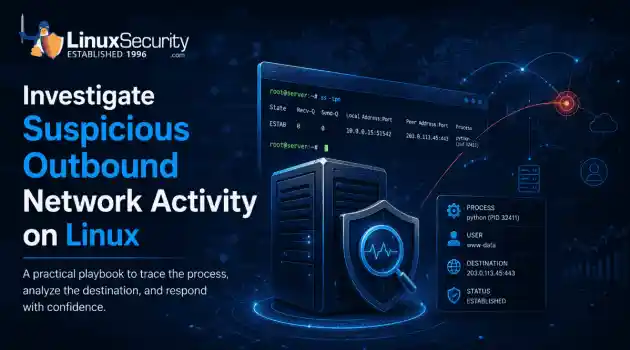
incident response network traffic Imagine logging into a production Linux server for routine maintenance and noticing background network activity connecting to an unfamiliar external IP address. Your endpoint protection agent is not popping up with an alert, there is no service failure, and on the surface, the system appears to be running normally. . For Linux administrators and security teams, such a situation is a moment of truth: Is this activity a sign of active intrusion or just a tool that was overlooked in the course of...
 Jul 21, 2026
How to Harden My Filesystemsystem hardening open source security
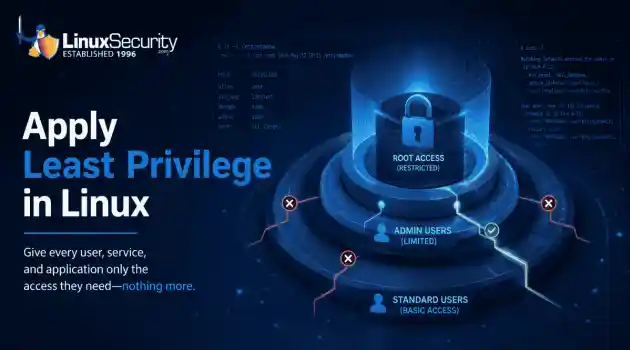
system hardening open source security We all spend a lot of time defending our systems from external threats, but the amount of damage an attacker can cause often depends on what happens after they get in. A single compromised account doesn't always lead to a major incident. The real danger begins when that account has far more access than it actually needs. . That's exactly what the principle of least privilege is designed to prevent. By limiting users, services, and applications to only the permissions required for their jobs,...
Jul 20, 2026
How to Learn Tips and Tricksthreat detection system monitoring
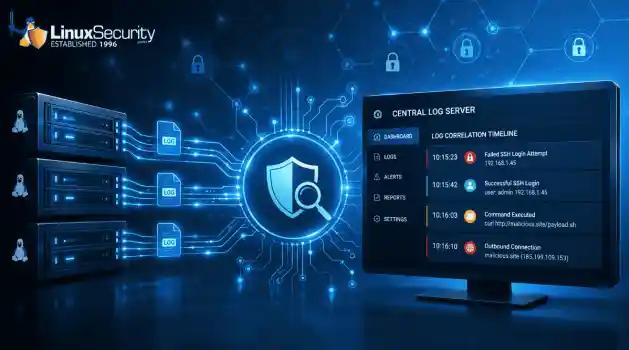
threat detection system monitoring For small security and IT teams, the "enterprise" dream of a fully automated SIEM often feels like a distant luxury. It’s a vision built on massive budgets and dedicated engineering teams—things that, frankly, most of us don't have. But here is the reality: you don’t need a six-figure platform to maintain a secure environment. . Linux systems are, by design, incredibly verbose. Every time a user authenticates, a process executes, or a configuration file changes, your system creates a record of...
Jul 17, 2026
How to Learn Tips and Tricksnetwork security centralized logging
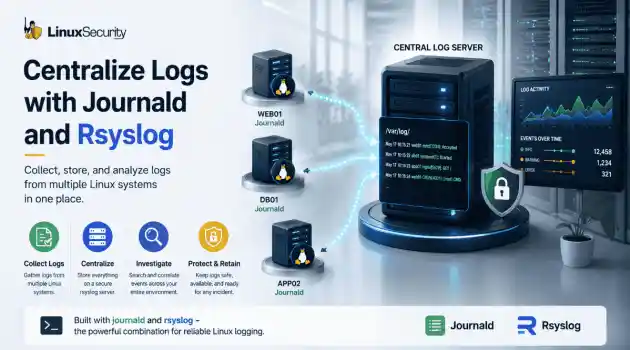
network security centralized logging Linux systems generate a steady stream of authentication, service, kernel, and application logs. On most systems, those logs never leave the machine that created them. If you're responsible for ten or twenty servers, that means checking each one separately. If one disappears before you can investigate it, its logs may disappear with it. Centralized logging solves that by sending log messages to another server as they're created. Instead of searching every machine, you have one place to review...
Jul 15, 2026
How to Secure My Networksecurity advisory audit
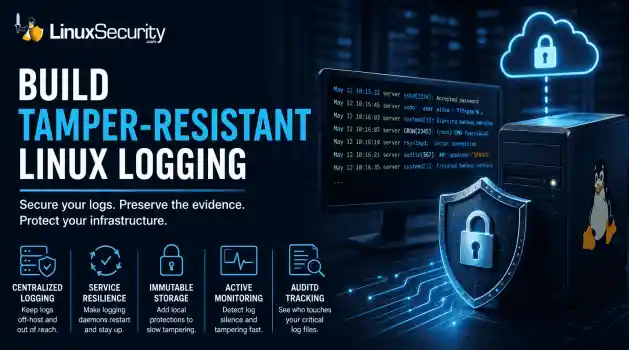
security advisory audit When you’re digging through an incident, your logs are the only thing you can actually trust. The problem is, attackers know that too. If someone gets root on your server, their first move is almost always to delete the evidence and cover their tracks. . If you aren't actively protecting your logs, you're basically flying blind the second a breach happens. It’s a miserable feeling to realize you have no idea what an attacker did because they wiped the logs before you even got there. In this...
Jul 11, 2026
 Refine HOWTOs
X Clear Filters
Get the latest News and Insights
Get the latest Linux and open source security news straight to your inbox.
Community Poll
Should Linux servers automatically install security updates?
Loading...
Explore Latest Linux Security HOWTOs
We found 15 articles for you...
163
 security advisoryserverubuntu
How to Install and Secure MariaDB on Ubuntu 24.04
On Ubuntu 24.04, it doesn’t take much to get MariaDB running. Update the system first so the packages are current. Then install the server with apt install mariadb-server . Once it’s in place, check that the service came up cleanly. To lock it down, run mysql_secure_installation — that’s where you strip out the defaults attackers love to find. . This tutorial explains how to install MariaDB on Ubuntu and secure the configuration so it’s ready for real-world use. You’ll learn how to: Update package indexes before installation Install MariaDB with the apt install mariadb command Check the service status and enable it at boot Run mysql_secure_installation to handle the defaults that leave a fresh install exposed — the test database, anonymous accounts, and remote root logins. Once those are gone, the system is far less attractive to attackers. Installing MariaDB on Ubuntu 24.04 On Ubuntu 24.04, the installation is straightforward. These steps show how to install MariaDB on Ubuntu systems cleanly and securely. Update the package lists, install the server package, and confirm the service is running. The last step is securing the defaults — removing test databases, anonymous accounts, and remote root access — so the system isn’t left exposed. Done in this order, MariaDB installs cleanly and is ready for real workloads. Update Package Indexes Before installing MariaDB, refresh the package indexes so Ubuntu pulls the latest information about software packages: sudo apt update This command only updates package lists; it doesn’t install or upgrade anything. Most administrators also follow with: sudo apt upgrade -y Running an upgrade at this stage keeps the system current and avoids dependency issues when you install MariaDB. Install MariaDB After updating the package indexes, bring in MariaDB with: sudo apt install mariadb-server -y This installs the server package and its dependencies in one step. During setup, you may beasked for confirmation; press “Y” to continue. That single command installs the server and its dependencies. Many admins shorthand this as apt install mariadb when searching for the right syntax. If you’ve used MySQL before, note that mariadb install ubuntu works the same way — it’s designed as a drop-in replacement. Ubuntu 24.04’s default repositories provide MariaDB 10.11 (the current long-term support release). If you need MariaDB 11.x features, add the official MariaDB APT repository — but confirm it supports Ubuntu 24.04 and is production-ready. MariaDB was built as a fork of MySQL and remains fully compatible. In most cases, it can replace MySQL directly without breaking applications that rely on it. Check MariaDB Status and Enable Auto-Start After installing MariaDB, confirm that the service is running: sudo systemctl status mariadb If the output shows the service as active, enable it to start automatically on boot: sudo systemctl enable mariadb For another quick check, run mariadb --version to confirm the installed version, or connect directly with sudo mariadb . Both verify that the server is installed and working properly. With the service confirmed, move on to securing the installation. Secure the Installation Run the secure installation script to close off the defaults that aren’t safe for production: sudo mysql_secure_installation The script covers the basics. It sets a root password, removes anonymous accounts, disables remote root login, drops the test database, and reloads the privilege tables. Each step reduces risk and tightens the configuration. On Ubuntu, the root account usually uses Unix socket authentication, meaning sudo mariadb logs you in without a password. If you only manage MariaDB locally, socket authentication is safe and often easiest. If you plan to connect remotely as root or through tools that require password-based login, switch to mysql_native_password and set a strong password: ALTER USER'root'@'localhost' IDENTIFIED VIA mysql_native_password USING 'your_strong_password'; Setting a root password is useful if you later change authentication methods or allow remote access. Anonymous accounts should never remain in place. They let anyone connect without credentials. The same goes for the test database — it’s open to all users by default and should always be removed. Remote root logins are another weak point. Unless there’s a clear need for remote administration, keep them disabled. When the script finishes, the privilege tables reload and the changes apply right away. The details may differ between environments, but the goal stays the same: reduce exposure and stop unwanted access. Common Questions About MariaDB on Ubuntu Even with the basics covered, a few questions often come up when installing and securing MariaDB. Can MariaDB encrypt data? Yes. MariaDB supports column-level encryption and tablespace/data-at-rest encryption (often called TDE). Availability depends on the build and version — in community editions, some features are limited. Many admins rely on full tablespace encryption when supported, while others use OS-level or disk encryption (e.g. LUKS) if TDE isn’t available. How do I upgrade MariaDB? On Ubuntu, keep MariaDB patched with: sudo apt update && sudo apt upgrade -y This brings in security and point releases. For major upgrades (e.g. 10.x → 11.x), you’ll need to add the MariaDB APT repository and follow the official upgrade steps — these are not always seamless and should be staged and tested first. What’s the best way to back up a MariaDB database? For small setups, mysqldump is quick and dependable. It dumps everything into a file you can restore anywhere. Larger environments run MariaDB’s native backup utilities instead, which handle incremental and full copies without dragging performance down. The tool doesn’t matter as much as the process. Test the backups. A file that’s never been restored isn’ta backup — it’s just a copy. Where can I find more details on MariaDB? The official MariaDB documentation has everything from basic configuration to performance tuning and advanced security. It’s the reference most admins keep open when they’re running MariaDB in production. Final Thoughts: Install and Secure MariaDB on Ubuntu 24.04 MariaDB installs cleanly on Ubuntu 24.04 with apt install mariadb-server , but the real work is in what follows. Updating packages, checking the service, and running the secure installation script take away the weak defaults that make a fresh database easy to target. Most admins will be fine with 10.11 from Ubuntu’s repositories if you need 11.x features, use the official MariaDB repo. Whatever the version, don’t skip the basics: patch the system, test your backups, and review configuration against your environment. Set up this way, MariaDB isn’t just running — it’s hardened enough to handle production or development without leaving obvious gaps. . This tutorial explains how to install MariaDB on Ubuntu and secure the configuration so it’s ready. ubuntu, doesn’t, mariadb, running, update, system, first, packa. . MaK Ulac
 Sep 30, 2025
•
Sep 30, 2025
• How to Secure My Webserver
166
security issuesecurity concernsinstallationInstalling Podman on Rocky Linux for Security and Admin Efficiency
Docker is a popular container runtime engine due to its simplicity. However, Red Hat changed its support for Docker, causing users to switch to Podman . . Red Hat's decision to stop supporting Docker is believed to be due in part to security concerns. Podman can be a good replacement for Docker. Podman allows admins to deploy containers quickly without having root access. Docker and Podman have similar interfaces. If you have never used either technology, the tutorial linked below will walk you through the steps of installing and running Podman in Rocky Linux . . The cessation of Docker assistance by Red Hat underscores potential vulnerabilities. Discover how to set up and operate Podman on Rocky Linux.. Podman Installation, Container Security, Rocky Linux Guide, Admin Tutorial. . Brittany Day
Apr 12, 2024
•
How to Learn Tips and Tricks

167
 open sourcethreat detectionsecurity testing
Installing Metasploit Framework On Ubuntu 22.04: A Comprehensive Guide
Network admins must scan for security vulnerabilities and patch them promptly to prevent attacks and security breaches. Metasploit is an open-source framework for detecting threats and vulnerabilities. . It identifies and exploits vulnerabilities in computer systems, networks, and applications. Metasploit enables security professionals to simulate real-world attacks and test their organization's security posture. It comes with many exploits, and you can also create your own! In the tutorial linked below, learn how to install the Metasploit framework and perform basic testing on an Ubuntu 22.04 system. . Discover the process of setting up the Metasploit Framework on Ubuntu 22.04 to enhance your capabilities in threat assessment and security evaluation.. Metasploit Framework, Ubuntu Security, Threat Detection, Installation Guide, Open Source Tools. . Anthony Pell
Apr 06, 2024
•
How to Secure My Network
162
linux distributionbrowseropen sourceStep-By-Step Waterfox Installation Guide for Linux Users
Waterfox is a lightning-fast web browser that is entirely independent and built on Firefox technology, ensuring absolute data privacy by never accessing your personal information. . You might wonder why we need another privacy-focused browser when Firefox already exists. The answer lies in Firefox’s management by the Mozilla Foundation , which has control over user policies and requires manual adjustments for enhanced privacy settings. Whereas, Waterfox provides all the privacy-oriented features enabled by default, which include a private search engine, anti-tracking, container tabs, private tabs, no telemetry collection, pocket disabled by default, and many more. Overall, you can openly say that Waterfox is better than Firefox for all advanced or regular users looking for a private browser that aligns with their privacy objectives. So today in this article, you will learn how to install Waterfox on your favorite Linux distribution with a few tips to ease your journey. . Waterfox stands out for its strong privacy focus, outperforming Firefox with less data collection, legacy support, customization, and built-in blockers for enhanced security. Waterfox Browser, Privacy Protection, Installing Waterfox, Linux Browser, Open Source Privacy. . Brittany Day
Nov 02, 2023
•
How to Strengthen My Privacy
166
installationsecurity focuslightweight osHow To Install Alpine Linux: A Lightweight Security-Focused OS
Alpine Linux is a lightweight, security-based Linux operating system. It doesn’t use the GNU C Library and instead uses Musl Libc. As a result, it is lightning-fast and perfect for headless servers, embedded systems, and desktop/laptop workstations that require a low footprint. Here’s how to install Alpine Linux on your system. . You’ll need to download Alpine Linux from the official website as an ISO file so that it can be flashed to a USB drive for installation purposes. To get your hands on Alpine, go to the official website. Once you’ve made it to the official Alpine Linux website, click on the menu in the upper-right-hand corner, and select “Downloads.” Choosing “Downloads” will take you to the official Alpine Linux downloads page. On the downloads page, locate “Extended,” and download the version that matches your desktop or laptop best. The ISO image is tiny — under a gigabyte. So the download process should be relatively quick. . Acquire the Alpine Linux ISO file, ideal for minimal resource setups. Discover the steps for installation today!. Alpine Linux Installation, Lightweight OS Guide, Security-focused Linux. . Brittany Day
Aug 19, 2023
•
How to Learn Tips and Tricks
166
 data analysisubuntusearch engine
Installing Elasticsearch On Ubuntu For Superior Data Insights
Here's how you can install Elasticsearch, a powerful search and analytics engine on your Ubuntu machine. . Elasticsearch is a popular search and analytics engine that can be used for multiple applications including endpoint security and AI/ML research. Let's take a look at how you can install Elasticsearch on your Ubuntu system in a few easy-to-follow steps. Elasticsearch is a distributed search and analytics engine. It allows you to store, search, and analyze large volumes of data quickly and in near real-time. Built on top of Apache Lucene, Elasticsearch offers powerful full-text search capabilities and a flexible query language. It is highly scalable, fault-tolerant, and can handle diverse data types. Elasticsearch is widely used for applications like log analysis, monitoring, and more. . Apache Solr is a widely used search platform that serves a range of applications across diverse industries.. Elasticsearch Installation, Search Engine, Data Analytics. . Brittany Day
Jul 04, 2023
•
How to Learn Tips and Tricks
167
 security toolubuntuinstallation
A Beginner's Guide to Installing Metasploit on Ubuntu Effectively
Metasploit is a valuable pentesting tool that doesn't come as part of the Ubuntu desktop, but it's very easy to install on your own. . Metasploit is a widely used penetration testing tool that helps security professionals find vulnerabilities in networks and systems. You can use Metasploit to simulate an attack and expose vulnerabilities. On Kali Linux, Metasploit comes pre-installed, but you can also install it on other Linux distributions. The tool is easy to install, configure, and learn on Ubuntu as well. Metasploit is a security project that helps you gather information about different vulnerabilities. One approach is to simulate an attack in order to test a system’s security. You can also use Metasploit to develop IDS signatures. The Metasploit Framework is a component of the larger Metasploit Project, which is open source and designed to create and execute exploit code against a remote host. Metasploit is mostly used as a penetration testing tool to find loopholes in a system so that they can be fixed later. Additionally, the project includes tools for evasion and anti-forensics. . Kali Linux, a crucial security assessment platform, can be seamlessly set up on Debian to enhance vulnerability analysis.. Metasploit Installation, Penetration Testing, Ubuntu Metasploit. . Brittany Day
Feb 27, 2023
•
How to Secure My Network
166
 access controlsecurity enhancementUbuntu
Step-by-Step Guide to Installing SELinux On Ubuntu for Security
SELinux is a kernel module that injects additional security-focused functionalities into the Linux kernel. Here's how you can install it on Ubuntu. . You can improve the security of your Linux system by installing and implementing SELinux. This provides an extra layer of protection by isolating applications on the system and securing the host. By default, Ubuntu uses AppArmor, another Mandatory Access Control system. To make your Linux system more secure, you can make use of SELinux instead. Let's see how you can install and configure SELinux on Ubuntu using a few basic Linux commands. . Bolster your Linux defense by setting up AppArmor on Ubuntu. Discover straightforward setup procedures along with key command line instructions.. SELinux Installation, Ubuntu Security, Kernel Module Configuration. . Brittany Day
Feb 13, 2023
•
How to Learn Tips and Tricks

Get the latest News and Insights
Get the latest Linux and open source security news straight to your inbox.
Community Poll
Should Linux servers automatically install security updates?
Search Topics
Powered By

Linux Security - Your source for Top Linux News, Advisories, HOWTOs and Feature Releases
QUICK LINKS
subscribe to newsletters!
Like staying secure? So do we.
Sign up for updates, tips, and alerts!