Explore top 10 tips to secure your open-source projects now. Read More
×


How AI-Driven Linux Security Tools Detect Threats Before They Strike
 Jun 11, 2025
•
Jun 11, 2025
•
 MaK Ulac
5 - 10 min read


Topics Covered
As the world becomes more dependent on open-source software, it's critical to ensure that Linux systems stay secure. These systems run everything from enterprise servers to embedded IoT devices, and that reach comes with risk.
Traditional security tools are falling behind. They're built for a different era, where threats were easier to pin down and moved slower. That’s changed. Modern attacks are subtle, fast, and constantly evolving. Manual detection and static rules just don’t cut it anymore.
This is where AI-driven Linux security tools are stepping up. They monitor for unusual behavior, learn from real-world threats, and react in real time—before damage is done. It's not just about responding to incidents. It's about stopping them before they start.
In this article, we break down how these tools work, why they’re effective, and what you need to know to use them in your own environment. If Linux is part of your infrastructure, this matters.
The Rising Nature of Linux Threats
Linux is no longer just for developers or niche servers. It powers a vast majority of web servers, cloud infrastructures, mobile devices (through Android), and supercomputers. With its extensive adoption, it has attracted increased attention from cybercriminals.
Some common threats targeting Linux systems include:
- Rootkits and backdoors
- Privilege escalation exploits
- Container vulnerabilities
- Crypto-jacking malware
- Zero-day vulnerabilities
High-profile breaches like Log4j and attacks on Kubernetes clusters have made one thing clear: Linux systems are in hackers’ crosshairs. And with cyber threats growing faster than ever, old-school security methods just aren’t cutting it anymore.
Why Traditional Security Falls Short
Most conventional Linux security solutions rely on predefined rules, static signatures, and reactive monitoring frameworks. These security systems were made back when cyber threats weren’t as complicated and were easier to spot. It was just simpler to handle back then. But today's attacks are constantly changing shape, with hackers always finding new ways to slip past traditional defenses. While effective against known threats, these tools struggle to detect:
- New malware variants
- Unknown zero-day exploits
- Insider threats with valid credentials
Let's face it - manually tracking threats and responding to incidents is exhausting work. It's slow, it's tedious, and let's be honest, we all make mistakes sometimes. Security teams are overwhelmed by a relentless barrage of alerts and log files, causing critical threats to go unnoticed while they waste time battling false alarms like a never-ending game of whack-a-mole.
How AI Is Redefining Linux Security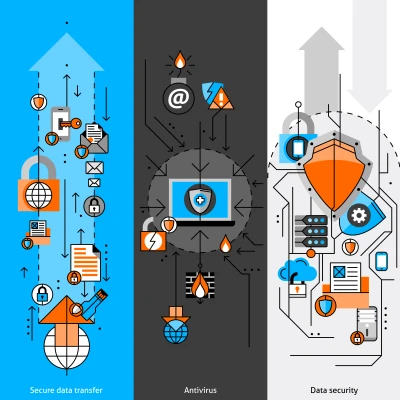
This is exactly why AI security tools are becoming so crucial. Think of them like a super-powered security guard who never sleeps and learns from experience. Instead of just following rigid rules, these smart systems:
- Study past attacks to spot patterns humans might miss;
- Get better at detecting threats the more they work;
- It can actually predict where new attacks might come from.
For instance, if a process begins to interact with system files in an unusual manner—regardless of whether it's a novel type of attack—the AI will promptly trigger an alarm.
Machine learning models are trained on huge volumes of data, including logs, process behavior, network traffic, and more. This helps AI-powered tools:
- Identify anomalies
- Detect advanced persistent threats (APTs)
- Stop lateral movement across systems
- Recognize behavioral patterns of malware
For AI tools to perform well in Linux security environments, having access to reliable, labeled datasets is essential. Without it, models may miss threats or generate false alarms. The better the quality of the data, the smarter and more accurate these tools become.
Core Functions of AI-Powered Linux Security Tools
AI-driven Linux security tools perform several key tasks that help keep systems safe:
- Behavioral Analysis: Monitor how applications and processes usually behave, then detect when they act strangely.
- Threat Hunting: Search for threats proactively rather than waiting for alerts.
- Anomaly Detection: Use unsupervised learning to find outliers in log files, network activity, or system usage.
- Automated Response: Block processes, quarantine files, or isolate containers in real time.
- Policy Enforcement: Automatically apply and adapt security policies based on observed risks.
These tools work silently in the background, learning and protecting around the clock.
As more automated systems take action inside production environments, Agentic AI security is becoming critical for controlling how autonomous processes behave and what they can touch.
Key Technologies Powering AI-Based Linux Defense
Several technologies enable the success of AI in Linux security:
- Machine Learning (ML): Trains models to understand normal behavior and detect anomalies.
- Natural Language Processing (NLP): Helps tools understand system logs or support ticket language to detect risks.
- Deep Learning: Leveraged for sophisticated behavior modeling and malware classification.
- Big Data Analytics: Handles and processes massive log files and event streams.
- Edge Computing: Allows threat detection to happen on devices close to the data source, improving response times.
Together, these make AI-driven Linux security tools intelligent, adaptable, and proactive.
Top AI-Driven Linux Security Tools
|
Tool Name |
Core Features |
Use Case Example |
AI Capabilities |
|
CrowdStrike Falcon |
Endpoint detection, behavioral analytics, cloud-based AI |
Protecting enterprise Linux servers |
Threat graph, pattern learning |
|
Darktrace |
Network and endpoint monitoring, anomaly detection |
Securing Hybrid Cloud environments |
Self-learning AI |
|
CylancePROTECT |
Lightweight agent, pre-execution threat blocking |
Endpoint protection on resource-light devices |
Predictive AI engine |
|
Sophos Intercept X |
Anti-exploit, deep learning detection |
Full-stack protection for Linux workloads |
Deep learning model |
|
SentinelOne |
Real-time protection, autonomous response |
Threat prevention in cloud-native setups |
Behavioral AI, auto-remediation |
|
Trend Micro XDR |
Extended detection and response, container monitoring |
Comprehensive server and container security |
Cross-layer AI analytics |
|
Elastic Security |
Open-source threat hunting, SIEM |
Real-time monitoring and analysis |
ML-powered detection rules |
|
Palo Alto Cortex XDR |
Correlation across endpoints, networks, and users |
Advanced investigation and response for Linux |
Behavioral analytics, ML-based threat scoring |
Check out this comparison of some of the best tools out there that are really making waves. These tools are popular across different industries because they can easily adjust and give quick responses when needed. Their features are designed for all kinds of organizations, whether you're a small business or a big enterprise. They offer smart and flexible protection that's customized for different Linux needs.
For sure, the growth of AI in cybersecurity is changing the game for security pros when it comes to spotting and dealing with threats, especially on Linux systems. More tools are beginning to integrate AI and machine learning models to cope with increasingly complex threat vectors.
For deeper insight into how AI tools shape modern defenses, IBM provides a useful perspective on AI in cybersecurity. Their research discusses how machine learning and analytics are enhancing real-time protection.
Where the Industry Is Headed
The need for stronger Linux security has grown rapidly as cyber threats continue to evolve. Grasping the tactics employed by attackers is essential for safeguarding your personnel, data, and infrastructure. We really need to check out the IBM X-Force 2025 Threat Intelligence Index. It’s loaded with insights from watching over 150 billion security events every day from more than 130 countries! According to the report, in 2024, cybercriminals still liked to use valid accounts to break into victim environments the most. This method accounted for about 30% of all the incidents X-Force dealt with. Besides, X-Force observed an 84% uptick in phishing emails delivering infostealers on a weekly basis.
Another study by CrowdStrike revealed that 71% of attacks now include fileless techniques—methods that traditional antivirus solutions struggle to detect. AI-driven Linux security tools are exceptionally equipped to tackle these threats, as they have the capability to detect suspicious activities without relying on traditional malware signatures.
As AI models become more refined through access to high-quality datasets, their accuracy improves significantly. Models trained on diverse, real-world Linux logs have demonstrated an impressive capability, achieving detection rates of up to 98% for known threats and exceeding 80% for new and unknown exploits. This represents a huge leap from traditional methods, which often struggle to detect previously unseen attacks.
When you look at the numbers, it's pretty obvious: Linux systems are facing more threats these days, and companies are starting to rely more on AI to deal with it. AI-powered Linux security tools aren't just about protecting systems; they also help teams react quicker and more accurately than they've ever been able to.
Challenges Facing AI-Driven Linux Security
Although AI holds great potential, it is not without its flaws. AI-driven Linux security tools still face an expanding set of challenges:
- False Positives: AI may flag legitimate behavior as malicious.
- Training Data Quality: Bad or limited training data leads to poor detection.
- Resource Use: AI tools can be heavy on CPU/RAM, especially on older systems.
- Black Box Problem: Certain AI models lack transparency, making it challenging to discern the reasons behind triggered alerts.
- Adversarial AI: Attackers may attempt to deceive the AI through misleading actions.
- Bias in Training Data: If the training data employed to build models includes biased or unbalanced examples, the tool may mistakenly classify legitimate activities as malicious or vice versa.
- Privacy Concerns: The collection and analysis of extensive system behavior data can raise significant privacy issues, especially in environments that manage personal or sensitive information.
- Integration Complexity: Many AI-driven tools demand extensive setup or integration efforts, particularly within legacy or hybrid environments.
- Skills Gap: Effectively managing and optimizing AI-driven security tools often requires specialized expertise in both machine learning and cybersecurity—knowledge that not all teams possess.
Nonetheless, with appropriate tuning, regular updates, and effective oversight, AI-driven tools significantly enhance Linux system security.
The rise of AI in cybersecurity is reshaping how defenders detect anomalies, prioritize alerts, and respond to threats at machine speed.
The Future of AI in Linux Security
AI-powered Linux security tools aren’t a silver bullet, but they’re getting close. They bring speed, scale, and adaptability to a space that desperately needs all three. When you're up against threats that don’t follow the rules, tools that can learn and adjust are no longer optional—they’re essential.
These systems aren’t just reacting to yesterday’s problems. They’re watching for subtle signs of tomorrow’s attacks, flagging the activity that doesn’t look quite right, and stepping in fast. That’s the kind of help that makes a difference when you're managing complex systems under constant pressure.
Sure, there are limitations. False positives, integration headaches, the need for clean training data—none of that goes away. But when implemented well, these tools do what humans can’t: detect the undetectable and act in milliseconds.
The threats facing Linux environments are only getting more aggressive. The smartest move is to implement technology that’s just as relentless. AI helps you do that. When it’s running alongside skilled human oversight, it becomes a force multiplier—not just for defense but also for resilience.
 PREVIOUS

 NEXT
NEXT



Powered By

Linux Security - Your source for Top Linux News, Advisories, HOWTOs and Feature Releases
QUICK LINKS
subscribe to newsletters!
Like staying secure? So do we.
Sign up for updates, tips, and alerts!