


Security Trends  security update mobile security
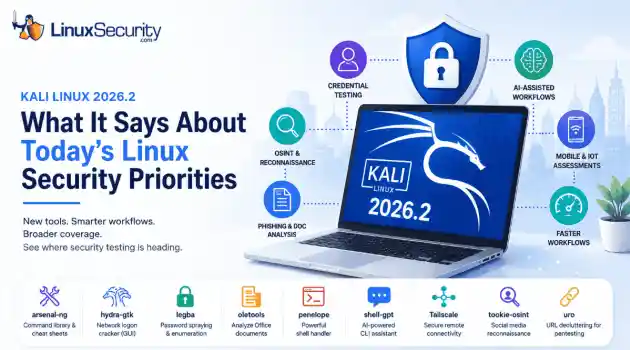
security update mobile security Offensive Security just dropped Kali Linux 2026.2 , and at first glance, it looks like a standard quarterly refresh. You’ve got the usual kernel bumps, desktop environment updates, and a handful of new utilities. But don't write this off as just another routine version update. If you look past the changelog, this release highlights several capabilities that continue to be important in offensive security. From AI-assisted workflows to credential testing and mobile assessments, Kali Linux 2026.2...
 Jun 30, 2026
Security Projectssecurity advisory vulnerability management
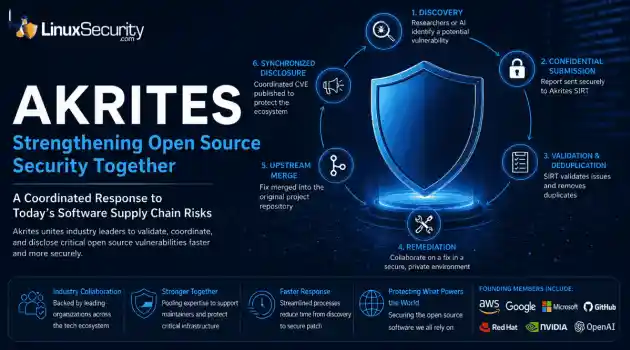
security advisory vulnerability management The Linux Foundation has officially launched Akrites , a coordinated industry initiative designed to improve how critical open source vulnerabilities are validated, coordinated, and disclosed before patches reach downstream users. Backed by a diverse coalition—including AWS, Google, Microsoft/GitHub, Red Hat, NVIDIA, and OpenAI—Akrites establishes a shared Security Incident Response Team (SIRT) to streamline the validation, remediation, and disclosure of vulnerabilities in the foundational...
Jun 29, 2026

Server Securitydenial of service open-source
denial of service open-source A process with a stable workload shouldn't keep growing its resident memory. When it does, the first question isn't how much RAM is available. It's where the allocations stopped being released. On Linux, that answer isn't always obvious because the kernel, allocator, and application all influence what memory usage looks like from the outside. . Separating normal allocation behavior from an actual leak takes more than watching top or container metrics. Heap growth, allocator caches, mapped...
Jun 26, 2026
Security ProjectsLinux security security assessment
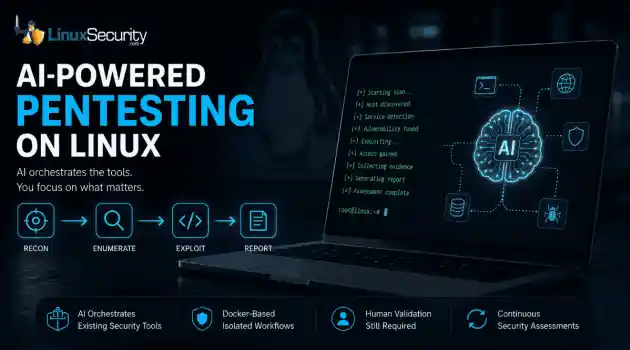
Linux security security assessment AI is beginning to reshape how penetration testing workflows are organized. For years, the penetration tester’s workflow has been a labor-intensive ritual: scan, enumerate, research, exploit, and report. But new frameworks are attempting to codify that intuition, turning the "human-in-the-loop" process into a machine-coordinated workflow. But is this a genuine evolution in how we secure Linux environments, or just a sophisticated wrapper around the same old tools? . Dark Moon is an open-source...
Jun 26, 2026
Security Trends open-source linux development
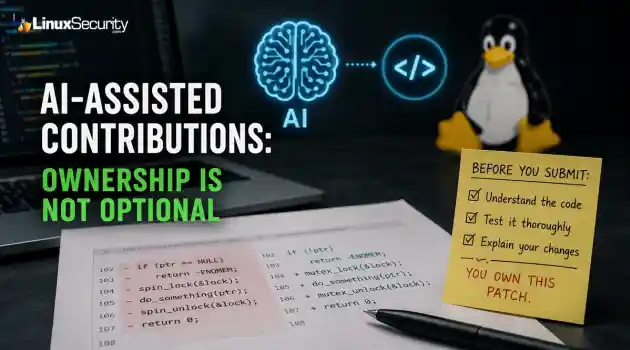
open-source linux development AI-assisted patches are already showing up across open source. Small GitHub projects, package updates, kernel-adjacent tools, system libraries. It’s not a future problem anymore. . Maintainers are going to see more of this code, and most of them aren’t trying to ban it outright. They’re trying to figure out what happens when a contributor submits a patch they didn’t fully write and may not fully understand. That’s where the review process gets messy. Linux development depends on trust, but...
Jun 25, 2026
 Refine news
X Clear Filters
Get the latest News and Insights
Get the latest Linux and open source security news straight to your inbox.
Community Poll
Can sandbox isolation stop malware?
Loading...

Explore Latest Linux Security news
We found -4 articles for you...
83
 malware detectionLinux utilitiesthreat research
Investigating Frequently Misapplied Linux Commands by Cyber Attackers
Uptycs' threat research team has observed several instances of Linux malware where attackers leverage the inbuilt commands and utilities for a wide range of malicious activities. This article explores Linux commands and utilities commonly used by attackers and how you can use Uptycs EDR detection capabilitiesto find if these have been used in your environment. . In Linux, several utilities and commands are configured by default. Once an adversary gains access to the system, they can leverage these commands and utilities to get their malware up and loaded quickly with full system privileges. And since these commands and utilities are used by users on a daily basis, it can be extremely difficult to detect malicious activities if they have been used for malicious purposes. Using the data sources from customer telemetry, MITRE mapping of the detection alerts, threat intelligence systems and our in-house osquery-based sandbox, we identified around 25 commands and utilities that are most commonly used by attackers. The link for this article located at Uptycs Blog is no longer available. . Linux systems are common targets for attackers, making it vital to understand commands used in attacks and how to detect them for better security with Uptycs EDR. Linux Malware Detection, Attack Command Utilities, Threat Research Insights. . LinuxSecurity.com Team
 Jun 14, 2021
•
Jun 14, 2021
• Hacks/Cracks

Get the latest News and Insights
Get the latest Linux and open source security news straight to your inbox.
Community Poll
Can sandbox isolation stop malware?
Search Topics
Powered By

Linux Security - Your source for Top Linux News, Advisories, HOWTOs and Feature Releases
QUICK LINKS
subscribe to newsletters!
Like staying secure? So do we.
Sign up for updates, tips, and alerts!
Discover faster search, smarter navigation, and deeper Linux security insights. Read More