Overly broad permissions can turn one compromised account into a much larger security problem. Learn how to reduce unnecessary access, review privileges, and apply least privilege across modern Linux systems. Review Linux Privileges



Security Vulnerabilities  security advisory moderate
security advisory moderate For organizations that run a self-hosted Git platform, it’s no longer just about hosting static code repositories. Today, Git servers are responsible for deployment pipelines, API tokens, SSH keys, package repositories, and the automation scripts that push code directly. Confirm that the upgrade addresses known vulnerabilities but also provides production environments. . That makes them trusted systems within the development environment and attractive targets for attackers looking to move...
 Jul 20, 2026

Server Securitydata privacy automation
data privacy automation Every system admin has lived through the same Monday morning ritual. A queue of forty tickets, half of them password resets, permission errors, or disk space warnings that any experienced technician could resolve in under two minutes. The other half require actual judgment. For years, automation promised that software would eventually sort the two apart on its own. That promise is now being tested in production Linux environments. . Early results are reshaping how IT teams think about tier-1...
Jul 17, 2026

Privacydata collection automation
data collection automation You're running a web scraping project to collect pricing data from e-commerce sites. You set up a pool of datacenter proxies, launch your scripts, and within minutes — banned . CAPTCHAs everywhere. Your data pipeline stops before it really begins. . It's a frustrating scenario that plays out daily in ad verification, market research, and multi-account management. The website doesn't know you're doing legitimate research or monitoring. It just sees traffic coming from IP ranges it recognizes as...
Jul 17, 2026

Security Trends security advisory social engineering
security advisory social engineering Business Email Compromise used to be a numbers game — mass-blasted emails, broken English, an obvious "URGENT WIRE TRANSFER" subject line. That era is over. Generative AI has turned BEC into a tailored, low-noise operation that mimics writing style, voice, and even video presence. This piece looks at what's actually changed under the hood, what defenders are testing in response, and why so many organizations are still structurally unprepared for it. . The Infrastructure Problem Nobody Wants to...
Jul 17, 2026

Security Trends cybersecurity Linux documentation
cybersecurity Linux documentation Linux operating systems have gained prominence due to their stability, adaptability, and excellent security options. In the case of developing documentation, designing cybersecurity dashboards, or educational material, visuals are of vital importance when it comes to making things clear. The use of icons allows one to understand the message regarding alerts, authorization, encryption, authentication, or the state of the system just by looking at the visual cue without having to read long...
Jul 17, 2026
 Refine news
X Clear Filters
Get the latest News and Insights
Get the latest Linux and open source security news straight to your inbox.
Community Poll
Should Linux servers automatically install security updates?
Trending News
Loading...
Explore Latest Linux Security news
We found 8 articles for you...
215
 security advisorydata protectionopen-source
Linux Desktop Adoption Surges to 5% with Security Gaps Identified
Linux just cleared 5% of the U.S. desktop market, based on recent Linux adoption statistics. That’s small in absolute terms but meaningful if you’ve watched the curve over the years. Linux used to sit in racks and lab machines — out of sight, mostly stable, rarely targeted. Now it’s on more workstations, inside environments that weren’t built with it in mind. . That change raises a real question. As adoption grows, are we tracking the risk that comes with it? We’re entering a new era for Linux security as desktop use expands, and the monitoring gap is obvious. The attack surface keeps spreading while most frameworks still assume the desktop is someone else’s problem. It’s not just another market-share bump. It’s a shift in how exposure looks on a normal network — one that blurs what used to be a clean line between server and endpoint. Next, we step back and look at what’s happening across the broader landscape that’s feeding this shift. Ransomware in Trends 2025 and How Linux Systems Became a Target Ransomware is still driving most large incidents in 2025. It moves easily between Windows, Linux, and cloud workloads because the tooling has matured to that point. Crews don’t rebuild for each platform anymore. They reuse the same encryption methods, the same persistence scripts, just compiled for different targets. That overlap is why Linux security now sits inside the same threat picture as everything else, not apart from it. We’re seeing that play out in the data. Ransomware’s New Frontier: Linux Systems Face Intensifying Attacks Ransomware’s New Frontier: Linux Systems Face Intensifying Attacks (2025) documents how groups like LockBit, Royal, and BlackCat maintain dedicated Linux ransomware payloads. These aren’t test runs; they’re built into active ransomware operations. Operators deploy them against hypervisors, file servers, and storage nodes to hit the core of virtualized infrastructure. It’s efficient: compromise one management layer,encrypt hundreds of systems below it. That kind of reach explains why attackers keep investing in Linux tooling. The same payloads that lock storage arrays also run on bare-metal servers, and with small changes, they can reach developer workstations too. StatCounter’s June 2025 data shows Linux crossing 5% of the U.S. desktop market, enough to make those endpoints visible to groups that already know the environment. They don’t have to pivot far to start targeting them. The same groups running ransomware on servers now include developer and user systems in scope. Linux shows up in daily work, not just in back-end infrastructure, and that shift changes how exposure looks inside real environments. To see what that means in practice, we can look at the limited evidence available on Linux desktop attacks. What We Know About Linux Desktop Attacks Ransomware on Linux servers is well-documented. What’s still unclear is how often those attacks reach desktops. The evidence is there, but scattered. Most of what we know about Linux malware on endpoints comes from isolated investigations, not consistent telemetry, which leaves a gap in how Linux security is tracked and understood. Research presented at DFRWS 2025 took one of the few direct looks at this problem. The team analyzed confirmed intrusions where attackers used purpose-built Linux malware to collect data from desktop environments. These weren’t proof-of-concept samples — they were operational tools found during live investigations. Findings from that work and other field data show a few consistent points: Linux desktop infections tend to focus on espionage or data theft, not encryption. Samples are limited, and no dataset tracks how widespread they are. Researchers describe the field as “largely unexamined.” There’s proof of capability, but no reliable measure of scale. That lack of scope is the real issue. We can confirm incidents, but we can’t see the trend line behind them. For Linux desktop security,that means detection and defense still depend on anecdotal evidence rather than sustained visibility — a gap that shapes how every response team approaches the platform. More Linux Users but Less Visibility in Desktop Security Linux keeps spreading into daily work, but the visibility hasn’t followed. There’s still no dataset that tracks what happens on Linux desktops. Most of what gets collected comes from servers or managed enterprise systems — the parts already wired for reporting. Everything else sits off the grid. That’s what happens when a platform grows faster than the tools watching it. The security stack built around Linux started in data centers, not on personal machines. The same focus is carried forward. Endpoint agents, SIEM connectors, and even the open-source telemetry feeds all center on infrastructure. So when Linux showed up on developer laptops and office machines, it slipped past the coverage meant to protect it. You can see the effect in how incidents get logged. Server breaches flow into shared datasets. Desktop compromises rarely do. They get handled quietly, or not at all. The end result is a version of Linux security that looks stable because it’s missing half the picture. The DFRWS 2025 research cracked that open a little. Investigators found working Linux malware running on desktops — not concept code, but live tools built for espionage and data collection. The numbers were small, and that’s the problem. Proof exists, but it doesn’t scale. The researchers called the field “largely unexamined,” which still fits. That’s the pattern repeating underneath the growth curve. More users, same blind spots. Linux adoption rises every quarter, but the visibility line stays flat. We can count installs, not compromises. And that’s the part that keeps slipping behind. Why Enterprise Linux Endpoint Protection Falls Short for Desktops The irony is that Linux already has strong defenses — just not where they’re needed most. Enterprise systemsrun on hardened builds with strict policies baked in. Kernel integrity checks, audit logging, mandatory access control, and least-privilege enforcement — the layers are there, and they work when maintained. It’s the same base operating system, but a completely different level of attention. At the enterprise level, those defenses form a complete Linux hardening guide. The model typically includes: Kernel integrity validation: verify modules, restrict unsigned code, monitor for tampering. Access control enforcement: Use SELinux or AppArmor in enforcing mode. Audit and logging: collect detailed activity records and feed them into centralized systems. Privilege management: limit administrative rights and require escalation for high-risk actions. Every one of these controls assumes managed devices, centralized oversight, and staff to keep them current. Desktops sit outside that framework. A personal or developer machine might share the same kernel, but it runs without policy enforcement or continuous monitoring. Logs stay local, updates depend on habit, and privilege boundaries loosen over time. The protections aren’t missing — they’re dormant. That’s the divide taking shape as adoption spreads. Enterprise Linux endpoint protection has matured into a dependable model for systems under management, but its reach ends there. Desktops carry the same attack surface without the structure that keeps those defenses alive. Why Linux Adoption Is Rising and How It Impacts Open Source Security Linux is growing because it finally feels finished. The installation is simple, drivers load automatically, and updates happen quietly in the background. It behaves like any other desktop now, which is why the Linux adoption statistics keep moving up. What changed wasn’t marketing — it was standardization. Flatpak, Snap, and other packaging systems made applications portable across distributions. Interfaces stopped fighting for defaults, and hardware vendors couldsupport one consistent target instead of ten. The work described in Linux for Everyone showed how these shared standards lowered the entry bar for everyone, not just experienced users. That ease brought new faces with different habits. Admins and developers aren’t the only users anymore. It’s students, contractors, small offices — people who treat Linux like a normal workstation. They install what they need, skip updates, reuse passwords, and download software from wherever it’s convenient. Simplification drew them in; it also added new human-factor risks that Linux security hasn’t adapted to yet. That’s where planning has to change. The controls built for enterprise systems don’t reach this broader base. We need lighter, automatic protections and better guidance for people who won’t configure their own defenses. Open-source security depends on collective upkeep, but the crowd has changed. The code stayed resilient; the users didn’t get the same training. Linux adoption will keep rising. The question now is whether Linux security — and the education that supports it — can scale fast enough to match the growth. How the Linux Community Can Close the Desktop Security Gap We can see where this is heading. Linux use keeps climbing. Ransomware crews are already built for it, and desktop compromises surface even if most never reach shared data. The defenses exist in the enterprise but rarely reach the systems people actually use. Standardization made Linux easier to run and also made the weak spots easier to miss. What’s missing is connection. We can track adoption, but not what follows it. There’s no shared dataset linking growth to attacks, no baseline that shows where pressure really sits. The quiet isn’t safety; it’s what happens when visibility stops halfway through the stack. Closing that gap takes the same kind of work that built Linux in the first place: Share what’s found. Desktop incidents stay buried in local logs. The community needs to seethem to learn from them. Study what’s changing. Researchers, vendors, and analysts should map Linux security beyond infrastructure—the desktops, the edge cases, the missed updates. Watch what’s normal. Extend telemetry from servers to endpoints. Even light monitoring helps show how Linux security holds up in daily use. Teach what’s missing. New users aren’t experts. They need clear defaults and reminders that openness cuts both ways. The pieces are already here. Tools. People. The habits that keep open-source security alive. They just haven’t been lined up to cover the desktop yet. Extending that focus from kernel to user space isn’t new work—it’s the next part of the same job. . As Linux adoption rises to 5%, the security gap widens. Explore the risks and strategies to enhance desktop security.. Linux desktop, ransomware risks, open source security, security gap, endpoint protection. . MaK Ulac
 Nov 10, 2025
•
Nov 10, 2025
• Desktop Security
82
 security advisorylinuxattack surface
Austria: Enhancing Military IT Security and Sovereignty with LibreOffice
Austria’s Armed Forces have confirmed a major shift in military IT: 16,000 systems have been migrated from Microsoft Office to LibreOffice on Linux desktops. Finalized in 2025, the rollout is one of Europe’s largest open-source deployments, carried out on a military scale. . Officials stressed this wasn’t a financial move. It was about resilience. By dropping Microsoft Office, long targeted through macro malware and phishing campaigns, Austria eliminated a key attack vector, reduced dependency on foreign vendors, and reinforced digital sovereignty. Microsoft Office is now restricted to special cases where legacy macros require it. Austria didn’t just adopt LibreOffice; it invested in it. Officials confirmed the Armed Forces contributed more than five man-years of upstream development during the transition. In other words, this isn’t just procurement — it’s participation in strengthening the ecosystem. For defense, that’s part of the strategy: tie sovereignty to open platforms, and secure them through Linux. Austria Makes Security the Priority Austria didn’t frame this migration as an IT refresh. Leaders were explicit: it was a security-first move designed to close vulnerabilities that Microsoft Office introduced into military operations. For years, Office macros and VBA were among the most exploited attack vectors in phishing and malware campaigns. Removing them from daily use wasn’t just an upgrade — it was shutting down an entire class of threats. But the migration went further than blocking macros. By building its defense desktop environment on Linux and LibreOffice, Austria established a foundation where patching is transparent , updates are controlled locally, and foreign telemetry is no longer embedded into sensitive workflows . In defense terms, that shift is about trust: trust in the code being run, trust in when and how it’s updated, and trust that national data won’t leak outside sovereign control. How Austria Strengthened Linux Security One ofthe most apparent advantages of Austria’s migration was the reduction of its attack surface . By removing Microsoft Office and its reliance on VBA macros, the Armed Forces shut down one of the most exploited vectors in modern cyberattacks. Pairing LibreOffice with Linux desktops further reduced exposure, leaving adversaries with far less to target. It also meant fewer zero-days to manage. Windows plus Office 365 remains one of the most attractive global targets for attackers, which forces constant firefighting with emergency patches. In contrast, Linux paired with LibreOffice presents a smaller footprint, giving Austria more predictable operations and fewer disruptions from critical vulnerabilities. Transparency in patching was another major gain. With Linux, Austria’s IT teams can audit code directly, review fixes, and decide when to apply them. Security is no longer tied to a vendor’s opaque release cycle, and defense IT staff regain visibility and control at every stage. Update management also shifted in Austria’s favor. Office 365 enforces cloud-driven pushes that often arrive without warning, a liability in defense environments. By contrast, Linux and LibreOffice allow updates to be scheduled and deployed locally, on the Armed Forces’ own terms. Finally, sovereignty became inseparable from security. By moving away from Office 365 telemetry and AI features such as Copilot, Austria ensured that sensitive defense data remains fully under its own control. The shift reinforced a core principle: resilience depends on maintaining independence at the platform level. For Austria’s defense planners, this was the real point: Linux security isn’t just about software choice. It’s about sovereignty, resilience, and control in an environment where IT decisions directly impact national defense. Europe’s Path to Linux Security in Defense Austria’s move capped a continent-wide trend where open source and Linux moved from local pilots to national and then defense adoption. Germany, 2023 – State Pilot : Schleswig-Holstein began migrating 30,000 PCs to LibreOffice with Linux desktops in scope. Security and sovereignty were cited as the drivers. Denmark, 2024 – National Plan : Denmark announced a phased transition away from Microsoft Office, explicitly calling it a “breaking dependency”. Linux desktops were included in agency roadmaps. EU, 2024–2025 – Institutional Backing : The European Union strengthened support for open source in its digital sovereignty and cybersecurity strategies through initiatives such as EU OS and EuroStack. Austria, 2025 – Military Execution : The Austrian military adopted LibreOffice across approximately 16,000 systems, part of one of Europe’s largest open-source deployments. However, the migration focused on office software rather than a full Linux rollout. By 2025, Linux security was no longer a peripheral IT project. It had become a pillar of Europe’s digital sovereignty agenda. U.S. Policy vs. Europe’s Linux Security Execution The United States has embraced open source through policy, but it has stopped short of following Europe into visible desktop migrations. Linux is entrenched in federal infrastructure, but not in user-facing platforms. 2016 – Federal Source Code Policy : Required reuse and transparency across agencies. Many tools were Linux-compatible. 2017 – GSA OSS Policy : Proved open source could scale at the agency level, with pipelines running on Linux. 2022 – DoD CIO Memo + FAQ : Called open source the “bedrock” of defense software, but framed it mainly in terms of Linux servers, hardened builds, and containers. 2023 – NSA & CISA Best Practices : Linked OSS security to critical infrastructure — most of it Linux-based — but again, not desktops. Across Europe, Linux is moving into defense operations, though deployments remain country-specific rather than continent-wide. The U.S. has a policy, but remains tied to Microsoft at the userlevel. NATO now faces coordination challenges where workflows must bridge Microsoft and LibreOffice stacks. Defense Lessons From Austria’s Migration Austria’s migration was not seamless, and the obstacles it encountered carry important lessons for any government seeking to reduce Microsoft dependency. One of the first challenges was macro compatibility. Many legacy defense files still relied on VBA-heavy documents, which forced Austria to create special permissions and workarounds to ensure operational continuity. Interoperability with NATO partners also surfaced as an issue. Since most allies continue to rely on Microsoft Office, exchanging documents and maintaining smooth collaboration introduces friction. This underscored how deeply Microsoft remains embedded in defense workflows across the alliance. Managing Linux desktops at scale brought its own set of difficulties. Patch and fork maintenance demanded disciplined cycles and close oversight to prevent security drift. Austria’s experience shows that without tight coordination, even Linux security can weaken over time. User retraining was another major hurdle. Soldiers and staff needed to adapt to new tools, and inadequate training could easily turn into a security risk. Mistakes made under pressure or unfamiliarity with workflows carry consequences in a defense setting that go beyond lost productivity. The takeaway: these aren’t reasons to avoid migration, but challenges that must be anticipated. Why Austria’s Move Redefines Linux Security Worldwide Austria’s decision carries implications far beyond its own armed forces. Within Europe, Austria’s adoption demonstrates how open-source software like LibreOffice can operate in demanding government and defense environments. What began as state-level pilots has matured into national strategies, with digital sovereignty now embedded directly into IT infrastructure. For the United States, the contrast is clear. Federal agencies have adopted strong open-source policies andrely heavily on Linux in backend systems, but desktops remain tied to Microsoft. This leaves the U.S. lagging behind allies who have taken the leap to full-stack Linux security. Differences in office suite adoption across European institutions highlight potential interoperability challenges, even as NATO relies on its own secure systems. For the global Linux community, Austria’s success is both validation and a warning. The rollout shows Linux meeting stringent military requirements. At the same time, experts note that high-profile deployments often increase visibility, which could attract adversary interest. Patching, auditing, and upstream collaboration become even more critical as Linux moves from infrastructure to the front lines of defense IT. What Comes Next The rollout underscores that open-source adoption in defense is no longer theoretical — it is running in production at scale, even if focused on productivity tools rather than full operating system migrations. For Europe, it signals a new era where digital sovereignty isn’t just policy language but IT infrastructure. For the United States, the challenge is clear: policy without execution leaves dependency intact. The world is watching whether other nations treat Linux security as strategic infrastructure or remain tethered to Microsoft. Austria has already chosen its path. For defense IT everywhere else, the clock is ticking, and the choice is between Microsoft dependency or Linux security as strategic infrastructure. . Austria's Armed Forces shift to LibreOffice on Linux for enhanced security and sovereignty in military IT.. Linux Security, LibreOffice Migration, Digital Sovereignty, Defense IT. . MaK Ulac
Oct 03, 2025
•
Government

79
 security advisorypatchlinux distribution
Linux BPF Update: Speculation Barriers Against Spectre Threats
In our ongoing quest to combat sophisticated security vulnerabilities, we Linux admins are always looking for innovative new tools and techniques to safeguard our systems. On Monday, a "request for comments" patch series introduced key Spectre mitigations by adding speculation barriers specifically for Berkeley Packet Filter programs. . Spectre vulnerabilities continue to pose a significant Linux security threat. Thus, these patches aim to close any security holes within BPF programs, which are widely used for dynamic network monitoring, tracing, and various low-level Linux system operations. To help you understand these proposed patches and their potential impact on your security posture, I'll explain the role of speculation barriers in mitigating the risk of Spectre flaws, the potential impact of these patches, and my predictions for the future of BPF security. Let's begin by understanding Spectre vulnerabilities and how they are exploited. Understanding Spectre and Speculative Execution Bugs To fully grasp the significance of the recently proposed patches for Spectre vulnerabilities , it's essential to understand their nature. Modern CPUs use "speculative execution" as a performance-boosting strategy. This involves making educated guesses about which path code might take to execute instructions before actual CPU instructions confirm them. While this helps programs run more quickly, it also introduces security issues. Spectre flaws exploit this behavior to access sensitive information like passwords and encryption keys that should remain out of reach to unauthorized users. Examining The Role of Speculation Barriers in Mitigations Recent patches aim to address these issues by implementing speculation barriers - safeguards that stop CPUs from speculatively executing code paths that could expose sensitive information. By strategically placing these barriers within BPF programs, developers can ensure any potentially dangerous speculative execution is immediately stopped before itcauses harm. From a security perspective, this significantly reduces the attack surface and disrupts speculative execution processes, making it much harder for attackers to exploit vulnerabilities and access sensitive information. This is particularly significant in BPF programs, as they regularly manage and monitor system operations. The Potential Performance Impact of These Patches Though speculation barriers increase security, they do come with potential downsides. One major concern is their impact on performance, as speculation barriers can add unnecessary overhead that delays certain operations from being executed efficiently and swiftly - especially in environments that rely heavily on BPF programs for their efficiency and speed. To prevent potential performance degradation, admins must ensure they test patches thoroughly in their environments to gauge the full extent of their performance implications. Achieving an appropriate balance between improved security and acceptable performance is essential, including tweaking configuration settings or optimizing other areas to lessen their effect. Compatibility and Planning for Updates Administrators can ensure a seamless transition by verifying compatibility between patches and their current kernel versions and identifying which versions include updates that must be planned for. This is especially critical in systems handling sensitive information, as staying current with security patches is integral to maintaining a secure environment. Promptly implementing updates is of utmost importance, as delays in applying security patches could expose systems to attacks. Therefore, Linux admins must devise an update strategy that includes testing patches in non-production environments before rolling them out gradually to production servers to minimize disruption while simultaneously applying all relevant patches. The Importance of Continuous Monitoring and Adaptation Regardless of recent efforts to implement speculation barriers, cyberthreats are ever-evolving and new vulnerabilities emerge daily while attackers devise novel methods of exploiting system weaknesses. Therefore, constant monitoring and adaptation are vital to maintaining robust security. Administrators must focus on installing current patches and pay close attention to future developments. This means staying informed with recent security research findings, attending relevant conferences, and joining community discussions to anticipate emerging threats and be better positioned when they arise. Admins should regularly conduct security audits and vulnerability assessments as part of their security strategy, alongside applying patches. These audits allow us to detect potential weaknesses that have been overlooked or have arisen due to changes in the environment, giving an opportunity to proactively address such weaknesses to maintain a strong security posture. Balancing Security and Performance Linux administrators face an ongoing struggle between security and performance regarding speculation barriers - while they are critical in mitigating Spectre vulnerabilities, they may negatively affect BPF programs essential to various system operations. To achieve balance, administrators should consider employing additional performance optimization techniques. These could include fine-tuning system configurations, augmenting hardware capabilities to better work within new security constraints, or optimizing code to function more efficiently within these parameters. By monitoring system performance closely and making necessary adjustments, they can ensure that security improvements do not significantly compromise overall functionality. Looking Ahead: The Future of BPF Security Introducing speculation barriers into BPF programs is just the first step on a long road toward more secure systems. As cybersecurity advances, new techniques and tools will emerge to combat emerging threats. We Linux administrators must remain aware of these developments to secure oursystems. One area of focus should be the ongoing development of BPF itself. As more sophisticated programs and uses arise for BPF executions, their need for robust security measures increases exponentially - possibly including new types of barriers or entirely novel approaches for protecting executions of the service. Collaboration among security communities will be essential in shaping BPF security going forward. By sharing knowledge, insights, and best practices, the community can work collectively toward strengthening BPF programs and their supporting systems' security. Our Final Thoughts on Mitigating Spectre Vulnerabilities in BPF Programs Recent patches introducing speculation barriers for BPF programs represent a substantial step toward protecting Linux systems against Spectre vulnerabilities. By understanding their role and planning for potential performance impacts and compatibility concerns, Linux administrators can effectively enhance system security. By monitoring new threats as they emerge and working with the security community to adapt systems against them, administrators will also ensure a robust environment where sensitive data remains safe while performance is optimized. . Meltdown exploits represent a serious risk; updates incorporate speculative safeguards to enhance Windows protection.. BPF Security, Linux Admin Strategies, Spectre Mitigations, Performance Optimization, System Security Strategies. . Brittany Day
Feb 27, 2025
•
Security Projects
210
 security advisorykernel patchlocal exploit
Ubuntu 21.04 Kernel Update: 17 Critical Fixes and Enhancements
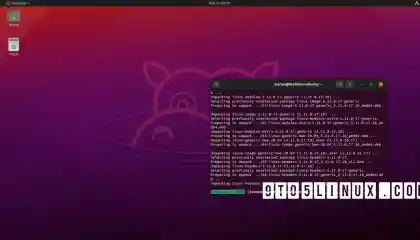
Canonical has released a new major Linux kernel security update for Ubuntu 21.04 (Hirsute Hippo), patching a total of 17 security vulnerabilities! . The new Linux kernel security patch is here about a month and a half after Ubuntu 21.04’s first kernel update and fixes no less than seven security vulnerabilities ( CVE-2020-24586 , CVE-2020-24587 , CVE-2020-24588, CVE-2020-26139 , CVE-2020-26141 , CVE-2020-26145 , CVE-2020-26147 ) discovered by Mathy Vanhoef in Linux kernel’s Wi-Fi implementation, which could allow a physically proximate attacker to inject packets, decrypt fragments, exfiltrate selected fragments, expose sensitive information or cause a denial of service (system crash). The new Ubuntu 21.04 kernel update also patches a race condition ( CVE-2021-32399 ) and a use-after-free flaw ( CVE-2021-33034 ) discovered in Linux kernel’s Bluetooth subsystem and Bluetooth HCI driver respectively. These issues could allow a local attacker to cause a denial of service (system crash) or execute arbitrary code. The link for this article located at 9 to 5 Linux is no longer available. . The latest kernel update on Ubuntu 21.04 addresses 15 security vulnerabilities, significantly reinforcing system defenses against potential threats.. Linux Kernel Update, Ubuntu Security Patches, Kernel Critical Updates. . Brittany Day
Jun 25, 2021
•
Security Vulnerabilities
83
 cyber threatsinformation securityexploitation
The Exposed Attack Surface of Twitter and Facebook Platforms
Twitter is one of my favorite social platforms. As a journalist, I get news from it, but I also get to interact with my peers and friends. But Twitter, like every other social platform, has an interesting attack surface; one that criminals have been exploiting for years.. The object of social media, as one would expect, is to encourage people to be social. This is why Twitter and Facebook seem to be force multipliers when it comes to the spread of news, and gossip. But, as mentioned, this instant connection to information can be turned against the masses. While all social platforms can be abused, the two that are the easiest mess with are Facebook and Twitter. The link for this article located at CSO Online is no longer available. . Social media like Twitter and Facebook can be exploited by criminals to misuse user data and manipulate interactions, promoting phishing and disinformation schemes. Social Media Security, Cyber Threats, Information Exploits, Cyber Awareness. . LinuxSecurity.com Team
Sep 08, 2014
•
Hacks/Cracks
79
server securitysecurity tipsattack surfaceEssential Tips for Strengthening Your Linux Server Security
The best way to ensure that your Linux server is secure is to build it from scratch with a minimum amount of code that can be exploited by a hacker -- a custom compiled kernel and the bare minimum of packages needed for the server to do its intended job.. But what if you already have Linux servers running in your business? If that's the case then here are some simple steps you can take to improve security that take just a few minutes to implement: Remove unnecessary software to minimize your attack surface - The more code your server is running, the more likely it is that a hacker will be able to find a vulnerability to exploit. Go through all the packages installed on your system and remove any that aren't necessary. The link for this article located at eSecurity Planet is no longer available. . Explore proven strategies to bolster the defense of your Linux servers, implementing immediate actions for improved safeguarding.. Linux Hardening Techniques, Server Security Best Practices, Custom Kernel Optimization, Software Minimization. . LinuxSecurity.com Team
Aug 22, 2011
•
Security Projects
79
malicious activitysoftware exploitdefense strategySandboxing Techniques To Mitigate Software Attacks And Exploits
Exploitation of just ONE software vulnerability is typically all that separates the bad guys from compromising an entire machine. The more complicated the code, the larger the attack surface, and the popularity of the product increases the likelihood of that outcome. Operating systems, document readers, Web browsers and their plug-ins are on today. Visit a single infected Web page, open a malicious PDF or Word document, and bang The link for this article located at ZDNet Blogs is no longer available. . Visit a single infected Web page, open a malicious PDF or Word document, and bang The link for this . exploitation, software, vulnerability, typically, separates. . LinuxSecurity.com Team
Dec 22, 2010
•
Security Projects
77
database securitysecurity flawsbest practicesTop 10 Database Weaknesses And Essential Security Strategies
Protecting databases is hardly an easy task, but it is often the attacks that go after the simplest vulnerabilities that are most successful. Enterprises that stick to the basics will generate the most bang for their database security bucks. . According to Alex Rothacker, manager of AppSec's Team SHATTER (Security Heuristics of Application Testing Technology for Enterprise Research), his team has found that are 10 common database vulnerabilities that keep plaguing organizations over and over again. The common thread in this list is that databases rarely ship security-ready, and their configuration is not a fire-and-forget operation for database administrators. Organizations must continually assess packages to determine if they are really necessary and disable those they don't need to reduce attack surfaces. They need to be vigilant about keeping on the lookout for default or weak log-in credentials. They have to put sound privilege and authentication practices into play. And most important, they need to patch regularly. The link for this article located at Dark Reading is no longer available. . Organizations face database vulnerabilities that can lead to breaches. Discover 10 common issues and key practices for risk mitigation today. Database Security, Vulnerability Assessment, Configuration Management, Authentication Practices. . LinuxSecurity.com Team
Nov 03, 2010
•
Server Security

Get the latest News and Insights
Get the latest Linux and open source security news straight to your inbox.
Community Poll
Should Linux servers automatically install security updates?
Trending News
Search Topics
Powered By

Linux Security - Your source for Top Linux News, Advisories, HOWTOs and Feature Releases
QUICK LINKS
subscribe to newsletters!
Like staying secure? So do we.
Sign up for updates, tips, and alerts!