


Cloud Security  incident response Linux administration
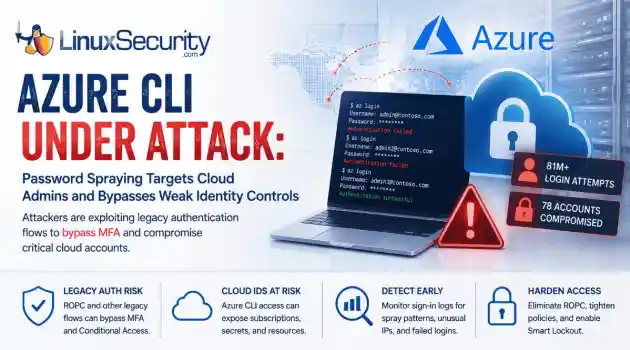
incident response Linux administration Over the span of just 14 days, threat actors unleashed more than 81 million login attempts against Microsoft’s Azure command-line interface (CLI). The campaign , which security researchers at Huntress identified as an ongoing, automated password-spraying effort, successfully compromised at least 78 Microsoft accounts across 64 organizations between June 12 and June 26, 2026. . While the scale is massive, the underlying strategy is surprisingly surgical. Attackers aren't exploiting a flaw in...
 Jul 01, 2026
Security Trends security update mobile security
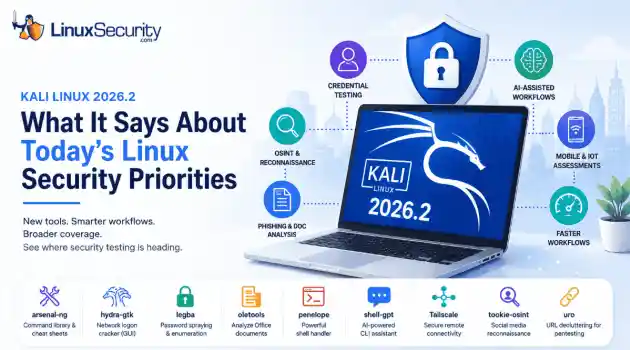
security update mobile security Offensive Security just dropped Kali Linux 2026.2 , and at first glance, it looks like a standard quarterly refresh. You’ve got the usual kernel bumps, desktop environment updates, and a handful of new utilities. But don't write this off as just another routine version update. If you look past the changelog, this release highlights several capabilities that continue to be important in offensive security. From AI-assisted workflows to credential testing and mobile assessments, Kali Linux 2026.2...
Jun 30, 2026
Security Projectssecurity advisory vulnerability management
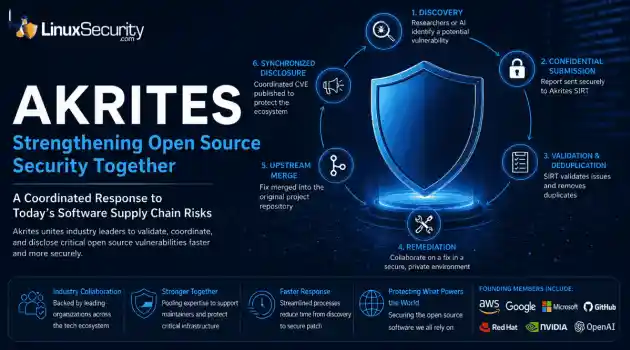
security advisory vulnerability management The Linux Foundation has officially launched Akrites , a coordinated industry initiative designed to improve how critical open source vulnerabilities are validated, coordinated, and disclosed before patches reach downstream users. Backed by a diverse coalition—including AWS, Google, Microsoft/GitHub, Red Hat, NVIDIA, and OpenAI—Akrites establishes a shared Security Incident Response Team (SIRT) to streamline the validation, remediation, and disclosure of vulnerabilities in the foundational...
Jun 29, 2026
Server Securitydenial of service open-source
denial of service open-source A process with a stable workload shouldn't keep growing its resident memory. When it does, the first question isn't how much RAM is available. It's where the allocations stopped being released. On Linux, that answer isn't always obvious because the kernel, allocator, and application all influence what memory usage looks like from the outside. . Separating normal allocation behavior from an actual leak takes more than watching top or container metrics. Heap growth, allocator caches, mapped...
Jun 26, 2026
Security ProjectsLinux security security assessment
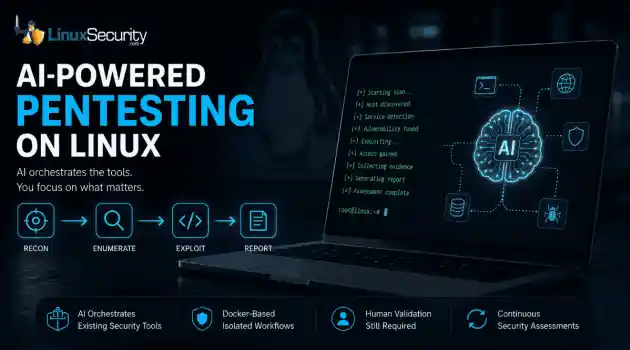
Linux security security assessment AI is beginning to reshape how penetration testing workflows are organized. For years, the penetration tester’s workflow has been a labor-intensive ritual: scan, enumerate, research, exploit, and report. But new frameworks are attempting to codify that intuition, turning the "human-in-the-loop" process into a machine-coordinated workflow. But is this a genuine evolution in how we secure Linux environments, or just a sophisticated wrapper around the same old tools? . Dark Moon is an open-source...
Jun 26, 2026
 Refine news
X Clear Filters
Get the latest News and Insights
Get the latest Linux and open source security news straight to your inbox.
Community Poll
Can sandbox isolation stop malware?
Loading...
Explore Latest Linux Security news
We found 46 articles for you...
76
 security advisoryrisk managementimportant
CISSP: Bridging Linux Security and Organizational Compliance Needs
Linux security professionals spend most of their time on concrete problems. Hardening SSH. Configuring SELinux or AppArmor. Building secure CI/CD pipelines. Managing patches across server fleets. The work is technical, hands-on, and measurable. . Then someone from finance asks for a security budget increase. Or compliance announces the organization needs SOC 2 certification. Or leadership wants to know how the security program aligns with business risk. Suddenly, the technical work doesn't matter as much as the ability to translate it. Executives don't care about iptables rules. Auditors don't care how elegant container security implementations are. They want to see frameworks, documentation, and risk assessments. Most Linux admins hit this wall eventually. The technical skills that make them valuable don't help them communicate that value to people who make budget and compliance decisions. The Certified Information Systems Security Professional (CISSP) certification fills that translation gap. Not by teaching Linux professionals how to secure systems—they already know that—but by teaching them how to frame security work in terms that organizations actually understand and require. Where Technical Work Meets Organizational Reality Open source security professionals operate in environments driven by tools and implementation. Fix vulnerabilities. Automate security checks. Lock down access. The feedback loop is immediate and technical. Organizational security operates differently. It requires documented procedures, formal risk assessments, compliance evidence, and governance structures. Without that layer, day-to-day security work can be solid and still fall apart the moment someone asks you to prove it. This creates friction. A Linux admin might have excellent vulnerability management practices. But when SOC 2 auditors show up, they don’t just want to hear “we patch fast.” They want policies, evidence, and a trail that shows it happens the same way every time. The workwas done. The documentation just isn’t there in a form that auditors recognize. CISSP helps security professionals put structure around that work and explain it in the language that audits and leadership expect. Not as busywork. As evidence that security exists as a managed program, not just ad-hoc technical fixes. Where CISSP Provides Practical Value The certification becomes useful in specific situations that Linux security professionals encounter regularly. Budget justification: Organizations allocate security budget based on risk reduction and compliance requirements, not technical elegance. CISSP teaches professionals to frame infrastructure hardening in terms of quantifiable business risk. It connects Linux fleet security directly to regulatory requirements and insurance coverage. Compliance requirements: ISO 27001, SOC 2, and PCI DSS all require specific security controls with proper documentation. Open source tools like OpenVAS / Greenbone and Wazuh (OSSEC) can help support compliance efforts. But organizations still need security professionals who understand which controls these tools actually satisfy and how to document them appropriately. CISSP covers the governance structures and control frameworks that compliance audits expect to see. Cross-functional communication: When organizations outsource security operations and need to interface with SOC providers, internal teams need a common vocabulary. CISSP provides a shared language between technical staff, vendors, auditors, and leadership. How Linux Experience Maps to CISSP Domains Linux security professionals already perform work that aligns with CISSP domains. The certification formalizes existing knowledge into recognized frameworks. Security Operations: Daily work with log analysis tools like Elastic or Graylog, incident playbooks, and vulnerability scanning directly maps to CISSP security operations concepts. The certification adds formal structure around incident classification, response coordination, anddisaster recovery that organizations expect to see documented. Asset Security: Managing server inventories, enforcing encryption, and handling sensitive data are standard Linux admin tasks. CISSP connects these activities to data lifecycle management and retention policies that auditors look for during compliance reviews. Software Development Security: Linux professionals securing CI/CD pipelines are already implementing DevSecOps principles. Modern DevSecOps embeds controls like role-based access, signed artifacts, and SBOM generation directly into code delivery pipelines. CISSP formalizes how these practices fit into secure software development lifecycle frameworks that organizations use to demonstrate security maturity. Risk Management: Every decision about vulnerability prioritization or patch scheduling represents risk management. CISSP gives professionals a more formal way to document those decisions using standard risk methods. That kind of documentation matters when auditors or executives need evidence that security decisions aren’t being made on gut instinct. When CISSP Doesn't Make Sense The CISSP certification takes real time. Eight domains of study. Five years of paid experience across at least two domains, with a one-year waiver possible if you have a degree or an approved credential. For professionals managing production systems full-time, this represents months of preparation. CISSP may not provide value when: Security roles focus exclusively on technical implementation with no governance responsibilities Organizations maintain dedicated governance, risk, and compliance teams that handle all framework alignment Career paths prioritize deep technical specialization over breadth Work environments don't require compliance certifications or formal security program documentation CISSP provides measurable value when: Security professionals need to justify investments or headcount to non-technical leadership Organizations pursue ormaintain compliance certifications like SOC 2, ISO 27001, or PCI DSS Career progression leads toward positions managing both technical teams and organizational security programs Roles require interfacing with auditors, insurance providers, or executives who expect industry-standard security frameworks Organizations operate in environments where compliance frameworks like SOC 2, HIPAA , and ISO require consistent, traceable evidence The Real Value Proposition Linux expertise makes security professionals technically capable. Governance knowledge makes them organizationally effective. Kubernetes and cloud-native practices require integrating security into every layer, working closely with developers from the outset. This integration demands both technical implementation skills and the ability to communicate security requirements across organizational boundaries. CISSP provides the frameworks and vocabulary for that cross-functional communication. It doesn't replace technical knowledge. It extends the impact of that knowledge into contexts where technical details matter less than documented security programs. Most Linux security professionals eventually face situations where their technical competence is assumed, but their ability to frame that competence organizationally determines outcomes. Budget approvals. Compliance audits. Leadership discussions. Insurance reviews. CISSP addresses those situations by teaching security professionals how to translate technical work into organizational language. The certification demonstrates that technical competence exists within a managed security program framework, not as isolated technical wins. . CISSP training enhances Linux security professionals' ability to translate technical work into organizational language effectively.. Linux Security, CISSP, Risk Management, Compliance, Open Source. . MaK Ulac
 Dec 24, 2025
•
Dec 24, 2025
• Organizations/Events
77
 security controlscompliancelinux
Boosting Linux Security with DevOps Platforms for Automation and Compliance
Most production workloads still land on Linux. That hasn't changed. What's shifted is how teams manage those systems at scale—especially when speed and compliance need to keep pace. That's where DevOps platforms come in. They help unify code, configuration, and control under one roof. . In the past, patching a fleet of Linux VMs meant SSH keys, custom scripts, and tribal knowledge. Today, modern DevOps platforms let teams automate those same tasks, codify enforcement, and reduce drift across environments, which means fewer blind spots and faster triage when something breaks. Uptime isn’t the only concern. Linux systems face continuous risk from user missteps, exposed packages, or untracked changes. Once environments are managed as code, changes become testable, repeatable, and enforceable across every system. That shift has made infrastructure more predictable—and made it easier to spot when something breaks the pattern. What Do DevOps Platforms Actually Do? At the core, they bundle infrastructure-as-code, CI/CD, policy enforcement, and access control into a single interface. Some go wide—trying to cover the whole software lifecycle. Others go deep, focusing on infrastructure and IaC orchestration. DevOps platforms integrate tightly with tools Linux sysadmins already rely on: Terraform, Pulumi, and Ansible. That’s not fluff. It’s a way to automate what used to be manual—provisioning, audit trails, secure approvals—all baked into the same workflow. With IaC tied into every step of delivery, these systems eliminate a lot of the friction between teams. You’re not emailing JSON files or hoping someone runs the script in the right order. It’s versioned, tested, and enforced with every commit. DevOps vs DevSecOps: Why It Matters Most people working in Linux security have seen the shift. Security used to be a gate at the end. Now it's part of the code commit. DevSecOps isn’t a buzzword here. It’s the practice of embedding security controls—likerole-based access, signed commits, and automated scans—into the same pipelines that ship code. These aren’t just overlays. When properly integrated, DevSecOps tools validate infrastructure and application state at build time, block deploys that violate policy, and inject verification steps without halting delivery. You don’t need a separate pipeline. You don’t need a separate team to bless each commit. It also means reducing context-switching. Developers don’t need a security team to manually review every update. The rules are codified. Violations get flagged immediately, and enforcement is automated where it makes sense. How This Plays Out in Linux Environments Take patching. With everything-as-code, you don’t just push a fix—you update a definition. That definition rolls out predictably across every Linux node tied to your pipeline. If someone tries to change it manually, the platform flags it. Or blocks it outright. Same with permissions. You can’t edit /etc/ssh/sshd_config without triggering a policy check. And because access is logged, you know who made what change, when, and through which method. Even kernel settings , user limits, or container runtime configs can be managed this way. Instead of assuming consistency, you verify it continuously. Not just at deploy time but during runtime audits, compliance scans , and incident response. And in cloud-heavy Linux environments, where resources are spun up and torn down daily, those definitions ensure baseline security isn’t left behind in the rush. Centralized Control Without Bottlenecks Linux security often breaks down at the edges—stale keys, undocumented servers, unmanaged cron jobs. DevOps systems clean that up by making infrastructure changes traceable and testable. Every change runs through the same versioned workflow. It’s not just safer. It’s faster. Teams ship infrastructure updates the same way they deploy apps. No special access needed. No waiting on someone else’s calendar. And becauseit’s all version-controlled, you can roll back safely. You know exactly what changed and how to revert it without hunting through chat logs or shell history. This reduces operational friction. Changes become less about access and more about process. You’re not relying on someone’s memory of what changed—you’re relying on the audit trail. Why This Helps with Compliance Too Most compliance standards—SOC 2, ISO 27001, PCI-DSS—don’t require you to be slow. They require you to be consistent. DevOps platforms make that possible. Immutable infrastructure, auditable pipelines, codified policy—all of it aligns naturally with how these frameworks are evaluated. And for Linux shops especially, where uptime is sacred and change windows are tight, the ability to run compliant workflows without grinding velocity to a halt? That’s real leverage. Some platforms even let you simulate changes against compliance policy before they’re applied. You catch violations earlier, track every exception, and avoid falling out of scope because of a single undocumented change. You also centralize evidence collection. Compliance teams aren’t chasing screenshots or logs from five systems. The pipeline itself becomes proof. Handling Secrets and Credentials in DevOps Workflows Credentials are the weak point. Always have been. Hardcoded secrets, misconfigured permissions, and rogue tokens show up in post-incident reviews more than most teams would like to admit, especially in Linux environments, where service accounts and scripts often live longer than anyone expects. Modern infrastructure depends on countless service accounts and automated agents, making non-human identities essential for keeping machine-driven access under control. DevOps platforms help here by integrating secret management directly into the pipeline. Whether it’s via native integrations with tools like Vault, or scanning commits for embedded secrets before they hit main, these controls reduce the chance of credentialsprawl. You can restrict access to environment variables, rotate credentials automatically, and block deployments if secrets are exposed. And because access to secrets is logged and versioned, it’s easier to audit who had access and when. For teams managing cloud infrastructure on Linux, this alone can close off entire classes of privilege escalation paths . Especially when combined with zero trust principles and short-lived tokens. Secrets management isn’t a side task. It’s one of the most practical ways to cut lateral movement paths inside Linux-heavy environments. Final Thought DevOps platforms aren’t just for app teams. They’re a strong foundation for Linux security, especially at scale. When you treat infrastructure like code, you can move fast without losing control. That’s the goal. And with tools like Spacelift building that into the workflow from day one, the tradeoff between speed and safety stops being a tradeoff at all. It becomes the default mode of working—where secure, consistent, compliant delivery is just part of the push. . DevOps platforms enhance Linux security by automating processes, ensuring compliance, and managing secrets effectively.. DevOps platforms, Linux security automation, infrastructure as code, compliance in DevOps. . MaK Ulac
Nov 19, 2025
•
Server Security

77
 data protectioncompliancecybersecurity best practices
Cybersecurity Best Practices for Email Templates Enhancing Data Security
Template email is more than a design tool in the campaign of consistent communication; it also has a hidden danger. . Recycled within the same department or a different campaign context, they are likely to include placeholders, links, and formatting that may unintentionally disclose aspects that are confidential. Unless secured appropriately, templates may bleed internal data like customer IDs, account numbers, or system-generated tokens. Those are weak points that cybercriminals try to use, especially knowing that many companies don’t perform template auditing. That is why adopting cybersecurity best practices for creating, storing, and exchanging templates is essential. A thought-out template helps build trust. An ill-managed one can become an open gateway to phishing or even data loss. Becoming aware of this relationship is where it should begin to secure both brand reputation and customer data. Core Risks in Email Templates That Expose Data The risks hidden within email templates don’t always seem obvious. Any template built for convenience may carry vulnerabilities that attackers are happy to exploit. Cases in point: unmasked personal details or hard-coded credentials in a draft that bypass normal review. Another recurring problem? Incorrect use of merge fields. Placeholders for names, account balances, or case numbers might be exposed or misconfigured, delivering the wrong or unintended data to recipients. Busted or outdated links are also dangerous, especially when hijacked by malicious actors. A single vulnerability in one template can scale across thousands of messages. These aren’t hypotheticals. Attackers look at corporate templates for openings that are often left by employees, unaware of the risk. That’s why adopting principles of secure email design and cybersecurity best practices becomes critical. Templates should be built with safeguards from the start, not patched after the fact. Cybersecurity Best Practices for Safe Email Template Content Organizations need to implement practical rules that cover template design, governance, and employee behavior to ensure templates are secure. Central and Pivotal Information Never hard-code confidential information like passwords, account details, or internal codes into a template. If dynamic content is essential, placeholders should pull from trusted sources only. Governance and Control Edit privileges should be limited; templates shouldn’t be modified freely by unvetted staff. Version control is also critical: changes should be logged and reversible. That way, when a mistake happens, it doesn’t escalate. Templates are time-saving and promote consistency, but when unchecked, they’re dangerous. With clear policies on content, administration, and access, companies can turn templates into secure communication channels, not data leakage traps. A structured process promotes compliance, protects clients, and makes organizations more resilient to evolving threats. Testing and Ongoing Review of Email Templates No email template is ever “done.” To stay secure, they need continuous review. Threats change fast. Even minor tweaks in email client behavior or the arrival of a new phishing campaign can turn a once-safe template into a liability. That’s why templates should be revisited regularly, especially those that don’t see frequent use. Reviews should check for placeholder issues, incorrect redirects, and attachments that no longer behave as expected. Scanners help, but automation has limits. Contextual errors, the kind that make sense to humans but not machines, are often caught only by trained eyes. Many organizations do quarterly reviews. Risk-heavy sectors like finance may need to do them more often. Keeping a log of template changes improves accountability and helps trace incidents if a breach occurs. Templates are living things. If treated that way with care and regular checks, they’re far less likely to turn into security liabilities. Staff and CustomerAwareness Around Templates Technology alone won’t solve this. People are the last line of defense and often the first point of failure. Designers and senders need to know what a placeholder does, when not to embed sensitive data, and what happens when a message goes to the wrong address. Real-world examples like fake delivery notifications or internal request impersonation should be part of training. Basic rules work when they’re repeated. Never ask for passwords in email. Never send links to non-verified domains. Always check that the sender address matches the brand. And it’s not just staff. Customers need guidance, too. Trust is built through consistency: clean design, sender domains that match the company name, and links that go where they’re supposed to. Some companies go further, offering reporting buttons or phishing hotlines. When both customers and employees are educated, attackers lose their easiest entry points, and the organization becomes much harder to reach. Summary of Cybersecurity Best Practices for Email Templates Email templates aren’t just a convenience; they’re a risk vector. Over time, they grow bloated with reused placeholders, outdated links, and assumptions about who’s sending what to whom. That’s exactly why cybersecurity best practices need to be part of how they’re created, stored, and reused, especially in organizations running Linux-based infrastructure where templates often live on mail servers managed through the command line. Securing templates starts with limiting what’s inside them. No embedded credentials. No hard-coded IDs. And no trust that merge fields will behave without checking. Every placeholder should be pulled from a reliable source, and every link should be tested regularly. On Linux systems, where many mail setups rely on Postfix, Exim, or Sendmail, that also means controlling file permissions and locking down who can edit or deploy templates in the first place. Templates shouldn’t be floating around in a sharedfolder; they should sit behind proper access controls, just like code or config files. Then there’s behavior. The best-designed template still needs regular inspection; automated scans help, but human review is what catches the strange logic or the token that slipped into the subject line by mistake. Logging and versioning are also part of that. On Linux, that can mean using auditd, git-based storage, or even cron-scheduled checks that flag anomalies in template usage or edits. None of this works without people. Mistakes don’t come from bad code; they come from habits, and attackers know it. That’s why cybersecurity best practices need to include awareness: designers who know what a placeholder actually does, admins who understand what’s getting pulled from where, and customers who’ve seen enough phishing to know what a legitimate message looks like. On Linux systems or elsewhere, email templates aren’t static assets. They’re living, shifting parts of how your organization communicates, and without the right controls, they quietly become one of the easiest ways in. Why Cybersecurity Best Practices Must Include Template Security The security of email template management can’t rely on ad hoc solutions. A scalable system should store templates centrally, establish an approval process, and check for security issues before emails ever go live. Compliance with GDPR , HIPAA , or other regulations ensures personal information is handled legally, protecting both clients and the organization itself. Maintaining a documented update cycle also proves accountability in audits. When governance, scalability, and compliance are aligned, leaks are minimized, and trust is earned. Templates become more than formatting; they become part of your long-term security resilience, built on consistent cybersecurity best practices. . Understand the hidden risks in email templates and implement best practices to protect sensitive data through secure design and management.. template, email, design,campaign, consistent, communication. MaKenna Hensley. MaK Ulac
Aug 28, 2025
•
Server Security
74
 security advisoryremote accesscompliance
ZTNA and Security Control in Linux Environments for CISOs
In 2025, the CISO’s job isn’t just about stopping breaches—it’s about enabling business without compromising security. Whether it’s remote access to Linux servers, meeting new compliance mandates, or defending against constant phishing attempts, ZTNA provides the control and flexibility needed to adapt. . The old perimeter is gone. Linux is everywhere. And Zero Trust is no longer optional. Let's take a closer look at what drives the transformation, and why ZTNA has shifted from trend to survival strategy for the highly interconnected, rapidly changing times we work and live in. The Perimeter Is Dead—and Has Been for a While One of the biggest wake-up calls in corporate security was the overnight, explosive rise of work-from-home and cloud adoption. Employees overnight were not just working at home, but were transporting sensitive corporate assets along with them to coffeehouses, airports, hotel rooms, and anywhere Wi-Fi was accessible. Applications shifted to the cloud, information started to pass through hybrid environments, and third-party vendors needed access as urgently as did full-time employees. In such a situation, relying on a hardened perimeter around a network made decreasingly little sense. Attackers weren’t knocking nicely at the door—they were already inside the network, invisibly lingering for months. ZTNA responds to that by saying, in effect: nobody receives default trust, and all access must first be tested, authenticated, and regularly re-validated. For CISOs, that’s a much more realistic and controllable model. Phishing Is Here to Stay, and ZTNA Can Limit the Blast Radius It's no surprise that phishing remains such an effective attack vector. One incorrect click, one stolen credential, and someone gets in. That the breach happens at all is only the first problem—how quickly an attacker can laterally move after gaining entry continues to be the larger issue. ZTNA does not stop phishing directly, but it does have a significant role to playwhen it comes to damage control. Because the user has access to very limited resources, even when the credentials are compromised, the attacker cannot simply move about anywhere in the environment. That level of segmentation implies the potential fallout when a breach occurs is considerably lower, buying the security team precious time to respond. This is especially critical in Linux-heavy environments, where a single compromised credential—such as for an SSH session—can lead to privilege escalation and lateral movement across core systems. ZTNA’s fine-grained access controls help limit access at the application or service level, reducing risk even when attackers breach the first line of defense. Why ZTNA Matters More in Linux Environments Linux is everywhere—from cloud servers to DevOps pipelines to embedded systems. It's the backbone of modern infrastructure, and with that reach comes unique security challenges. Native tools like auditd, SELinux, and role-based access controls are powerful, but they weren’t designed for today’s distributed, identity-centric world. ZTNA adds what Linux alone can’t: centralized, policy-driven control over who can access what, from where, and when. It reduces the attack surface by limiting access at the application and service level—especially critical in environments where SSH access can open the door to full-blown privilege escalation. Rather than leaving access in place indefinitely, Just in Time Provisioning helps teams grant permissions only when they are actually needed and retire them quickly afterward. For CISOs managing Linux-heavy infrastructure, ZTNA offers something rare: real containment. Even when credentials are compromised, lateral movement is curtailed, visibility is preserved, and policy enforcement remains intact—no matter where the workload lives. Regulatory Pressure Is Increasing Compliance is another catalyst for CISOs doubling down on ZTNA. Data protection laws are getting tighter all over the globe. Whether GDPR in the EU, CCPA for the state of California, or the rising number of sector-specific guidelines, organizations have to show that data security is important to them—and that includes knowing precisely who has access to what. In Linux-based environments , those expectations can be difficult to meet using native tools alone. While Linux offers strong logging via auditd and role-based restrictions with tools like SELinux, ZTNA adds a policy-driven access layer that simplifies compliance. It makes it easier to prove who accessed what, when, and under what conditions—without relying on manually parsing system logs. That kind of transparency and control is exactly what auditors want to see. Legacy VPNs Are Becoming a Liability VPNs were the standard response to remote access for a long time. But today, they are becoming ever more like a bludgeon. VPNs provide total network access, which isn't what you want when you want to constrain movement as much as you can. And they are a favorite target for hackers, a surprising percentage of whom use unfixed vulnerabilities in old VPN applications. Remote administration becomes far safer when privileged remote access is used to control how elevated sessions are initiated, approved, and recorded. ZTNA, on the other hand, grants application-level access that's controlled and fine-grained. You don't need to unleash the entire network when the user only needs to interact with a single app. Organizations taking this approach often extend it through SASE implementation , which combines ZTNA with cloud-native network security controls to deliver consistent access policy enforcement across every environment. And because ZTNA offerings are cloud-native, they are easier to upgrade, scale, and maintain—something that's urgently relevant for security professionals, who are always required to do more with fewer resources. ZTNA’s principles align with the foundational framework defined in NIST SP 800‑207 , which formalizes ‘never trust, alwaysverify’ as the core of a zero‑trust architecture—shifting security focus from network perimeters to continuous authentication and authorization of users and devices. For practical implementation guidance, NIST's NCCoE practice guide SP 1800‑35 offers 19 example ZTA deployments using off-the-shelf technologies, along with lessons learned from industry collaboration. This makes it an invaluable resource for organizations planning real-world ZTNA rollouts. Hybrid Work is the New Default One of the biggest cultural shifts in the corporate workplace has been the expectation of hybrid work. Employees desire flexibility, and employers who desire the best employees need to offer it. But to a CISO, it brings a giant security question mark. ZTNA perfectly complements that new model. It supports secure access anywhere, any device, any network. And it provides a measure of consistency to the access experience, reducing the friction to the user and the headache to the IT department. You don't have to have a group of VPN clients, segments of the network, or distinct branches of the office. Everything gets handled at the identity and policy level. Conclusion: ZTNA Is the New Security Baseline As we go deeper into 2025, the role of the CISO continues to evolve—from gatekeeper to enabler. It's no longer enough to prevent breaches; the job now requires supporting remote teams, defending complex Linux environments, meeting compliance demands, and keeping pace with threats that mutate faster than ever. ZTNA meets that challenge head-on. It reduces risk without adding friction, aligns with modern infrastructure, and gives security teams the control they need—without slowing anyone down. That’s why ZTNA isn’t just a line item in the budget anymore. It’s the foundation of a forward-looking security strategy. . Explore how ZTNA addresses security challenges anticipated in 2025, enhancing Linux systems with sophisticated access management and regulatory compliance measures.. ZTNASecurity, Linux Remote Access, CISO Compliance, Zero Trust Network Access. . MaK Ulac
Aug 13, 2025
•
Network Security
76
 security insightsopen sourcesoftware management
Significance Of SPDX 3.0 For Software Management And Security Insights
The SPDX 3.0 release marks a significant milestone in software management, particularly for Linux admins, infosec professionals, internet security enthusiasts, and sysadmins. The SPDX community, in collaboration with the Linux Foundation , has evolved the widely used Software Bill of Materials (SBOM) communication format with a comprehensive set of updates, introducing new features and enhancements tailored to modern system use cases. . This article presents the benefits of SPDX 3.0, offering valuable insights into its implications for the security and management of software systems. What Is the Significance of the SPDX 3.0 Release? One of the most intriguing aspects of SPDX 3.0 is the introduction of profiles, which offer tailored information for popular use cases such as security, software build attestation, precise licensing, AI model training, and data set provenance. These profiles are gateways to facilitate the straightforward use of SPDX for specific scenarios, empowering developers, security engineers, data scientists, and legal professionals to leverage SPDX effortlessly for their specific use cases. This sparks curiosity for tech enthusiasts seeking to understand how SPDX 3.0 can enhance their software management practices. The significant impact of SPDX 3.0 on the software ecosystem must be highlighted, emphasizing the community-driven development process and its alignment with ISO governance standards. The involvement of key industry experts and organizations in evolving SPDX as a user-centric SBOM format shows its potential to address diverse needs, paving the way for enhanced software package management, improved compliance with licensing obligations, streamlined security practices, and optimized software build processes. Users and developers are prompted to ponder the long-term consequences of adopting SPDX 3.0 and its potential implications for mitigating risks, building trust, and demonstrating commitment to industry best practices. Industry leaders, such as Arm,Chainguard Labs, EPAM Systems, Huawei, Intel, GitHub, Google, Microsoft, MITRE, and others, have expressed their support and recognition of SPDX 3.0's importance in software supply chain security . Our Final Thoughts on SPDX 3.0 We aim to shed light on the importance of SPDX 3.0 in revolutionizing software management, bringing attention to its relevance for security practitioners and technology professionals. If you want to stay abreast of the latest advancements in open-source and Linux security, be sure to subscribe to our newsletters . Stay informed and secure, fellow Linux users! . Explore the benefits of SPDX 3.0 and its influence on software governance and security protocols for industry experts.. SPDX 3.0, Software Bill of Materials, Linux security, software management, open source compliance. . Brittany Day
Apr 17, 2024
•
Organizations/Events
79
 security advisoryDebianthreat
Debian 10 EOL: Security Gaps and Compliance Risks Ahead
Debian 10, known as “Buster,” was first released on July 6, 2019, and has earned the reputation of being a reliable Linux distribution for individuals and businesses alike. However, the security support for this version of Debian is ending, with Debian 10 reaching its End of Life (EOL) on June 30, 2023. . The end of support for Debian 10 poses significant security concerns for those who fail to upgrade to Debian 11. Without security updates , vulnerabilities found after the end of life will remain unpatched, making systems more susceptible to attacks and compromise. As security threats evolve, using an outdated operating system is increasingly dangerous, potentially leading to data breaches and jeopardizing system integrity. Complying with industry standards and regulations is crucial for organizations, and compliance frameworks often mandate the use of systems with the latest patches applied to ensure data security and protect consumers. Failing to comply due to using an outdated OS may result in legal penalties and severe reputational harm. To mitigate the security risks of Debian 10 EOL, it is crucial to upgrade to Debian 11 (Bullseye), which is supported until June 30, 2026. You can also upgrade to the latest release, Debian 12 (Bookworm). Both versions offer the latest security bug fixes and improved features, contributing to a secure and compliant Linux environment. Stay up-to-date on the latest Linux security advisories, information, and insights required to secure your systems by subscribing to our weekly newsletters. Have additional questions about upgrading your Debian systems? Connect with us on X @lnxsec - we're here to help! Stay safe out there, fellow Debian users! . The cessation of updates for Debian 10 brings serious security vulnerabilities for users who neglect to migrate to a current release.. Debian End Of Life, Security Risks, Compliance Frameworks, Upgrade Issues. . LinuxSecurity.com Team
Dec 29, 2023
•
Security Projects
209
 software assurancecyber attackscompliance
Using Static Analysis for Continuous Assurance in Open Source Security
Open Source lends itself to a new way of certifying software: Continuous Assurance. In this approach, automated tools and processes ensure that, as code changes, it continually satisfies compliance, quality, and security requirements. "Continuous Assurance integrates directly into development and benefits from the always-up-to-date nature of cloud services, making it a perfect match for Open Source." . Sonatype’s 2020 State of the Software Supply Chain Report found that next generation cyber-attacks actively targeting open-source soft- ware projects increased 430% over the past 12 months. Industry and the Open Source communities recognize heightened security risks and are working to solve these. For example, in August 2020 the Linux Foundation launched the Open Source Security Foundation (OpenSSF), billing itself as “a cross-industry collaboration that brings together leaders to improve the security of open-source software.” The Foundation notes how pervasive open source has become, and how critical it is to bring together open-source security initiatives and those who support them to advance open-source security for all stakeholders. . Continuous Assurance and static analysis play crucial roles in enhancing open source security and ensuring compliance throughout the software development lifecycle. open source security, static analysis, cyber attacks, software compliance, Continuous Assurance. . Brittany Day
Nov 04, 2020
•
Security Trends
81
 data privacycomplianceuser rights
Understanding the CCPA: An Overview of California’s Data Privacy Law
The most sweeping data-privacy law in the country kicks in Jan. 1. The CCPA, short for the California Consumer Privacy Act, gives residents of the Golden State the right to learn what data companies collect about them. It also lets Californians ask companies to delete their data and not to sell it. Learn more about CCPA in a comprehensive CNet article: . The full impact of these new rights isn't entirely clear because the regulations used to enforce the law are still being finalized. Still, companies inside and outside California are already scrambling to become compliant so that they can continue to do business in the country's most populous state. Nearly two years in the making, CCPA has prompted other states to consider their own privacy laws, some of which have already passed. The law is often compared to the European Union's General Data Protection Regulation, currently the benchmark for online privacy. Here's what you need to know about CCPA and how it will affect you. The link for this article located at CNet is no longer available. . Residents of California acquire enhanced protections through the CCPA; discover key insights on data usage, removal, and adherence developments surrounding this landmark legislation.. California Privacy Rights, Data Collection Policies, Privacy Compliance Trends. . LinuxSecurity.com Team
Dec 27, 2019
•
Privacy

Get the latest News and Insights
Get the latest Linux and open source security news straight to your inbox.
Community Poll
Can sandbox isolation stop malware?
Search Topics
Powered By

Linux Security - Your source for Top Linux News, Advisories, HOWTOs and Feature Releases
QUICK LINKS
subscribe to newsletters!
Like staying secure? So do we.
Sign up for updates, tips, and alerts!
Discover faster search, smarter navigation, and deeper Linux security insights. Read More