Overly broad permissions can turn one compromised account into a much larger security problem. Learn how to reduce unnecessary access, review privileges, and apply least privilege across modern Linux systems. Review Linux Privileges×



Desktop Security security advisory vulnerability
security advisory vulnerability GNOME is officially shortening its standard vulnerability disclosure window from 90 days to 30 days, a change that impacts upstream maintainers, downstream Linux distributions, and system administrators in how they handle software vulnerabilities. The policy shift, announced by long-time security coordinator Michael Catanzaro , addresses modern software patching realities and a growing influx of automated submissions. . Because GNOME is the default desktop environment on several major Linux...
 Jul 21, 2026

Security Vulnerabilities security advisory moderate
security advisory moderate For organizations that run a self-hosted Git platform, it’s no longer just about hosting static code repositories. Today, Git servers are responsible for deployment pipelines, API tokens, SSH keys, package repositories, and the automation scripts that push code directly. Confirm that the upgrade addresses known vulnerabilities but also provides production environments. . That makes them trusted systems within the development environment and attractive targets for attackers looking to move...
Jul 20, 2026

Server Securitydata privacy automation
data privacy automation Every system admin has lived through the same Monday morning ritual. A queue of forty tickets, half of them password resets, permission errors, or disk space warnings that any experienced technician could resolve in under two minutes. The other half require actual judgment. For years, automation promised that software would eventually sort the two apart on its own. That promise is now being tested in production Linux environments. . Early results are reshaping how IT teams think about tier-1...
Jul 17, 2026

Privacydata collection automation
data collection automation You're running a web scraping project to collect pricing data from e-commerce sites. You set up a pool of datacenter proxies, launch your scripts, and within minutes — banned . CAPTCHAs everywhere. Your data pipeline stops before it really begins. . It's a frustrating scenario that plays out daily in ad verification, market research, and multi-account management. The website doesn't know you're doing legitimate research or monitoring. It just sees traffic coming from IP ranges it recognizes as...
Jul 17, 2026

Security Trends security advisory social engineering
security advisory social engineering Business Email Compromise used to be a numbers game — mass-blasted emails, broken English, an obvious "URGENT WIRE TRANSFER" subject line. That era is over. Generative AI has turned BEC into a tailored, low-noise operation that mimics writing style, voice, and even video presence. This piece looks at what's actually changed under the hood, what defenders are testing in response, and why so many organizations are still structurally unprepared for it. . The Infrastructure Problem Nobody Wants to...
Jul 17, 2026
 Refine news
X Clear Filters
Get the latest News and Insights
Get the latest Linux and open source security news straight to your inbox.
Community Poll
Should Linux servers automatically install security updates?
Trending News
Loading...
Explore Latest Linux Security news
We found 27 articles for you...
81
 data protectionfacial recognitionregulatory compliance
Regulatory Investigation into Clearview AI’s Data Practices
Are you a privacy advocate? Have you heard that global privacy regulators have announced an investigation into controversial facial recognition firm Clearview AI? . “The Office of the Australian Information Commissioner (OAIC) and the UK’s Information Commissioner’s Office (ICO) have opened a joint investigation into the personal information handling practices of Clearview AI Inc., focusing on the company’s use of ‘scraped’ data and biometrics of individuals,” a brief statement read. “The investigation highlights the importance of enforcement cooperation in protecting the personal information of Australian and UK citizens in a globalized data environment.” . International authorities are scrutinizing Clearview AI, particularly regarding its management of personal information and biometric data.. Privacy Investigation, Data Protection, Clearview AI, Biometric Data. . LinuxSecurity.com Team
 Jul 09, 2020
•
Jul 09, 2020
• Privacy
79
 data protectionsecurity enhancementbiometric security
Linux Foundation Growth: New Members Enhance Facial Recognition Security
A new data-security group founded by the Linux Foundation — and a new school of thought on data protection — has won new adherents, including AMD, Nvidia and Accenture. The expansion could provide facial recognition a new layer of security - potentially mollifying those who oppose the biometric technology. . Monday, the Confidential Computing Consortium said its newest members are Anjuna, Anqlave, Cosmian, iExec, IoTeX, R3 and the three information technology giants mentioned above. The consortium is a Linux Foundation project pushing an equally recent proposal designed to protect data in use. . The Confidential Computing Consortium welcomes new contributors such as Intel and ARM to enhance privacy for AI-driven voice recognition.. Facial Recognition, Data Protection, Biometric Security, Linux Foundation, Confidential Computing. . LinuxSecurity.com Team
Jul 01, 2020
•
Security Projects

81
 law enforcementtechnology policyfacial recognition
IBM Stops Developing Facial Recognition Technology For Ethical Enforcement
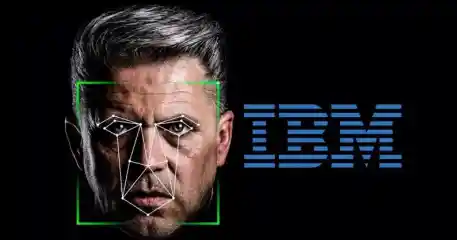
IBM has announced that it won’t offer or develop general-purpose facial recognition technology to encourage responsible usage of tech by law enforcement. The company has been a major player in the field for years, offering several solutions. . In a letter to Congress , IBM’s CEO, Arvind Krishna, addressed the deaths of George Floyd, Ahmaud Arbery, and Breonna Taylor, and said the company would like to work with officials to achieve racial equality. Krishna suggested that there need to be key policy changes through police reform, responsible use of technology, and broadening skills and educational opportunities. The link for this article located at The Next Web is no longer available. . Microsoft declares a halt on advancements in biometric identification systems, prioritizing responsible deployment in policing efforts.. Facial Recognition, Responsible Technology, Law Enforcement Policy, IBM Technology, Ethical Usage. . LinuxSecurity.com Team
Jun 09, 2020
•
Privacy
81
 security technologyprivacy risksdigital surveillance
Facial Recognition Systems Amid COVID-19: Pros and Privacy Risks
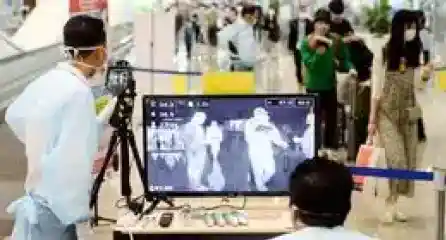
Security companies are updating their technology to recognize people wearing masks and measure temperatures, and are making the argument that facial recognition could become widely sought as a global security solution. However, this technology still has serious privacy-threatening implications that need to be considered. . With fears of spreading the coronavirus at the forefront of everyone’s minds, security companies are arguing that facial recognition systems may be a safer, cleaner option than traditional biometric access control systems. The claim is not coming without controversy, as fingerprint scanners have become increasingly common as access control solutions at facilities around the world. But as organizations like the Metropolitan Transportation Authority and New York Police Department shut down their typical employee fingerprint scanning protocols due to the pandemic, facial recognition could become a more attractive option to businesses. The link for this article located at Security Today is no longer available. . The pandemic has hastened the use of facial recognition technology, enhancing security while igniting privacy debates over its role in monitoring and health tracking.. Facial Recognition, Biometric Systems, COVID-19 Security, Privacy Implications, Access Control. . LinuxSecurity.com Team
Mar 26, 2020
•
Privacy
209
security flawimage analysisfacial recognitionSignificant Issues in Facial Recognition Methods Using Anthropometry
There is a serious flaw with facial recognition systems that use what’s called anthropometry: the measurement of facial features from images. . How is it that our brains – the original face recognition program – can recognize somebody we know, even when they’re far away? As in, how do we recognize those we know in spite of their faces appearing to flatten out the further they are from us? Cognitive experts say we do it by learning a face’s configuration – the specific pattern of feature-to-feature measurements. Then, even as our friends’ faces get optically distorted by being closer or further away, our brains employ a mechanism called perceptual constancy that optically “corrects” face shape… At least, it does when we’re already familiar with how far apart our friends’ features are. But according to Dr. Eilidh Noyes, who lectures in Cognitive Psychology at the University of Huddersfield in the UK, the ease of accurately identifying people’s faces – enabled by our image-being-tweaked-in-the-wetware perceptual constancy – falls off when we don’t know somebody. The link for this article located at Naked Security is no longer available. . Facial recognition systems, especially those using anthropometric methods, struggle with accurately measuring facial features due to diverse ethnic variations in structure. Facial Recognition Systems, Anthropometry, Image Analysis, Security Flaw. . Brittany Day
Mar 03, 2020
•
Security Trends
81
 legislationprivacy rightsgovernment regulation
Senate Proposes Temporary Halt on Federal Facial Recognition Technology
Two Democratic senators want to temporarily pause the government’s use of facial recognition technology while a commission develops regulations. . A pair of Democratic senators have introduced legislation to temporarily pause the federal government’s use and purchase of facial recognition technology until Congress passes regulations. Sens. Cory Booker (N.J.) and Jeff Merkley (Ore.) announced the move on Wednesday , reflecting a growing movement to regulate and even ban the use of facial recognition technology by law enforcement, government agencies like Customs and Border Protection and private corporations. The link for this article located at Security Today is no longer available. . Two Democratic congressional members advocate for a freeze on the federal implementation of facial recognition technology until appropriate regulations are established.. Federal Facial Recognition Regulation, Biometric Privacy Laws, Senate Bill Facial Recognition. . LinuxSecurity.com Team
Feb 19, 2020
•
Privacy
81
 government oversightfacial recognitiondata ethics
Coalition Asks Oversight Board To Halt Government Facial Recognition Use
Over 40 groups have sent a letter to the Privacy and Civil Liberties Oversight Board asking the agency to recommend that the executive branch put a moratorium on facial recognition. What are your thoughts on this initiative? . A number of advocacy groups are pressuring the Privacy and Civil Liberties Oversight Board -- an independent government agency that advises the presidential administration on privacy matters -- to recommend that the federal government suspend use of facial recognition while accuracy and privacy issues are addressed. Forty groups led by the Electronic Privacy Information Center signed a letter on Monday that called for the agency to stop government use of facial recognition “pending further review,” citing a recent New York Times report ona massive facial recognition databaseas one reason why the PCLOB should recommend the suspension to the Secretary of Homeland Security and President Trump. The report found that more than 600 law enforcement agencies across the U.S. were using a database of social media photos built by Clearview AI, a little-known startup. The link for this article located at Security Today is no longer available. . Civil liberties organizations call for a halt to state-sponsored facial recognition due to privacy threats and reliability doubts.. Privacy Oversight Board, Facial Recognition Ban, Government Technology, Civil Liberties. . LinuxSecurity.com Team
Feb 03, 2020
•
Privacy
81
 law enforcementtechnologyprivacy
London's Facial Recognition Rollout: Privacy vs. Crime Prevention
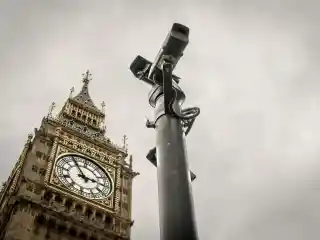
Facial recognition cameras are set to be deployed across London for the first time, the Metropolitan Police has announced. The Police say the technology will help fight crime - but critics warn that the 'privacy destroying' scheme amounts to oppressive surveillance. What is your opinion on this decision? . The roll out of the live facial recognition technology is expected to begin within a month and is designed to help the police tackle serious crime by locating and arresting wanted suspects – but privacy groups have already criticised the decision. The technology will be deployed in what's described as 'intelligence-led' specific locations around London and will be used to scan the faces of people passing through the area, with the aim of identifying wanted individuals. The link for this article located at ZDNet is no longer available. . The local authorities in Manchester plan to implement drone surveillance systems for public safety, igniting debates over citizen's rights.. Facial Recognition, Surveillance Technology, London Crime, Privacy Issues, Law Enforcement. . LinuxSecurity.com Team
Jan 24, 2020
•
Privacy

Get the latest News and Insights
Get the latest Linux and open source security news straight to your inbox.
Community Poll
Should Linux servers automatically install security updates?
Trending News
Search Topics
Powered By

Linux Security - Your source for Top Linux News, Advisories, HOWTOs and Feature Releases
QUICK LINKS
subscribe to newsletters!
Like staying secure? So do we.
Sign up for updates, tips, and alerts!