


Security Projects security advisory vulnerability management
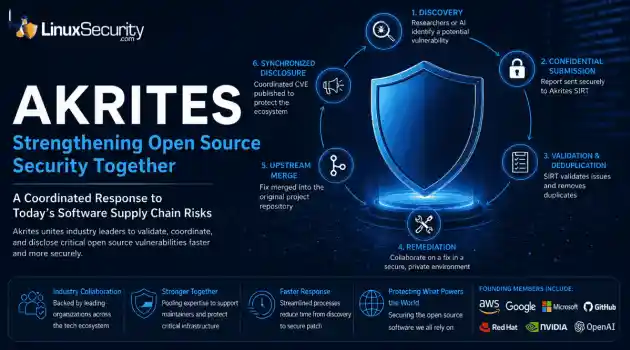
security advisory vulnerability management The Linux Foundation has officially launched Akrites , a coordinated industry initiative designed to improve how critical open source vulnerabilities are validated, coordinated, and disclosed before patches reach downstream users. Backed by a diverse coalition—including AWS, Google, Microsoft/GitHub, Red Hat, NVIDIA, and OpenAI—Akrites establishes a shared Security Incident Response Team (SIRT) to streamline the validation, remediation, and disclosure of vulnerabilities in the foundational...
 Jun 29, 2026

Server Securitydenial of service open-source
denial of service open-source A process with a stable workload shouldn't keep growing its resident memory. When it does, the first question isn't how much RAM is available. It's where the allocations stopped being released. On Linux, that answer isn't always obvious because the kernel, allocator, and application all influence what memory usage looks like from the outside. . Separating normal allocation behavior from an actual leak takes more than watching top or container metrics. Heap growth, allocator caches, mapped...
Jun 26, 2026
Security ProjectsLinux security security assessment
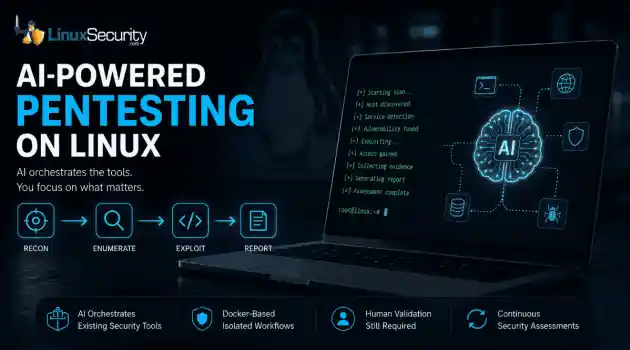
Linux security security assessment AI is beginning to reshape how penetration testing workflows are organized. For years, the penetration tester’s workflow has been a labor-intensive ritual: scan, enumerate, research, exploit, and report. But new frameworks like Dark Moon are attempting to codify that intuition, turning the "human-in-the-loop" process into a machine-coordinated workflow. But is this a genuine evolution in how we secure Linux environments, or just a sophisticated wrapper around the same old tools? . Dark Moon is...
Jun 26, 2026

Security Trends open-source linux development
open-source linux development AI-assisted patches are already showing up across open source. Small GitHub projects, package updates, kernel-adjacent tools, system libraries. It’s not a future problem anymore. . Maintainers are going to see more of this code, and most of them aren’t trying to ban it outright. They’re trying to figure out what happens when a contributor submits a patch they didn’t fully write and may not fully understand. That’s where the review process gets messy. Linux development depends on trust, but...
Jun 25, 2026
Vendors/Productssystem update Linux application
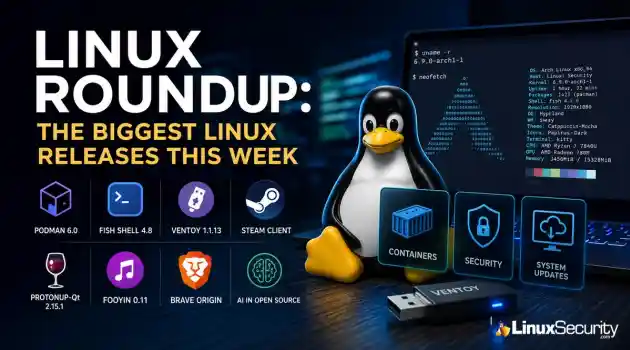
system update Linux application Most weeks in Linux are about new features. This one is about avoiding problems before they happen. Several projects shipped updates that quietly change how systems behave behind the scenes. None of them are particularly flashy, but if you're responsible for containers, workstations, gaming systems, or recovery media, these releases are worth paying attention to. Here's what stood out this week. . Podman 6.0 Is a Major Upgrade, Not a Routine Package Update If your infrastructure depends on...
Jun 25, 2026
 Refine news
X Clear Filters
Get the latest News and Insights
Get the latest Linux and open source security news straight to your inbox.
Community Poll
Can sandbox isolation stop malware?
Loading...
Explore Latest Linux Security news
We found -3 articles for you...
79
 system integritylinux distributionsecurity enhancements
Chainguard OS: Innovative Integrity & Updates for Linux Security
Chainguard OS is poised to transform Linux security practices with its innovative approach to system integrity and updates. Developed with the guidance of top Linux maintainers, Chainguard OS does away with traditional patching methods. Instead of applying patches, the entire operating system is replaced when updates are needed. This ensures that systems always run the latest, most secure version without the risk of patching errors or incomplete fixes. . Additionally, Chainguard OS employs an automated build system, Chainguard Factory, which constructs a streamlined OS with minimal dependencies, significantly reducing the attack surface. Its zero-trust architecture and immutable infrastructure guarantee that every component is continuously verified, maintaining system integrity and security against potential supply chain attacks. For us, Linux security admins, Chainguard OS represents a robust, secure, and incredibly efficient way to manage and protect our environments. Let’s delve deeper into what makes this distro stand out and how it can reshape your Linux security practices. No Traditional Patching: A Game Changer One of Chainguard OS’s most revolutionary features is its approach to system updates. Traditional Linux distributions rely heavily on patching , a process where individual vulnerabilities are addressed by applying patches. While this has been a standard practice for years, it has drawbacks, including risks of incomplete fixes and potential for errors during patch application. Chainguard OS takes a different and bold approach—when a security update is needed, the entire OS is replaced instead of patched. This method ensures that your systems consistently run the latest, most secure operating system version. It reduces the painstaking manual labor associated with tracking, testing, and applying individual patches. This comprehensive updating approach minimizes the risk of leaving any vulnerabilities unchecked, offering a solid shield against potential threats. This meansless time spent on patch management and more time focusing on strategic security initiatives. Chainguard Factory: An Automated Build System Its automated build system, known as Chainguard Factory , is at the core of Chainguard OS's security model . This automated build system plays an integral part in upholding the OS's integrity by producing an extremely minimalist version of Linux. Unlike traditional OS versions, which contain unnecessary software and dependencies that slow performance down considerably, Chainguard Factory ensures only essential components are present on every build run. Reduced bloat means improved performance and a significantly decreased attack surface. With fewer components, attackers have fewer entry points to breach your OS environment. Chainguard Factory makes building and deploying an OS far less error-prone, significantly decreasing risks from human error during deployment. It also provides reliable management for admins to create lean, secure operating system environments. Zero-Trust, Immutable Infrastructure Chainguard OS's security is further strengthened by its zero-trust architecture and immutable infrastructure. Zero trust security adheres to a philosophy known as "never trust, always verify", where every part of a system must continuously prove itself trustworthy before being trusted unconditionally, compared with traditional models, which place trust unconditionally once established. Chainguard OS features an immutable infrastructure that prevents changes after deployment. This stops unapproved modifications from taking effect and maintains consistent security levels over time. Any updates or changes must replace all systems before individual updates occur, ensuring modifications remain controlled and verified by Chainguard OS administrators. Security admins will greatly benefit from adopting an approach characterized by Zero Trust and immutability. This approach removes worries over insider threats or unapproved changes and gives peace of mindthat their infrastructure maintains its integrity, offering robust defenses against various attack vectors, such as supply-chain attacks. Our Final Thoughts: Embracing the Future of Linux Security with Chainguard OS Chainguard OS represents a revolutionary step in protecting Linux environments. By going beyond traditional patching with automated, minimalistic build systems and zero-trust infrastructures that immutably protect systems from vulnerabilities, Chainguard OS offers security administrators a formidable ally against emerging cyber threats. Adopting Chainguard OS can transform how organizations approach security. It ensures systems remain up-to-date, lean, and verified, increasing security posture and making more efficient use of IT resources. As threats continue emerging, innovative solutions like Chainguard OS will be essential to stay one step ahead and maintain solid defenses. Overall, Chainguard OS offers Linux security admins practical and advanced security measures, providing a more secure environment with greater resilience for years to come. Have you given Chainguard OS a try? We'd love to hear your thoughts @lnxsec! . Skyshield OS reinvents Linux defense through a streamlined, automated compilation framework that guarantees current and authenticated systems.. Chainguard OS, Security Enhancements, Automated Build System, Immutable Infrastructure. . Brittany Day
 Apr 07, 2025
•
Apr 07, 2025
• Security Projects
212
 security architecturecommunity supportautomated updates
Exploring Flatcar OS: A Game-Changer in Linux Container Security
As we Linux security admins continually seek robust and streamlined solutions to enhance our containerized environments , the open-source Flatcar OS emerges as a standout contender I'm eager to introduce! Designed with a laser focus on security, Flatcar OS offers a minimalistic footprint, effectively reducing the attack surface by stripping away unnecessary packages and delivering automated, immutable updates. . This means fewer manual interventions, reduced vulnerabilities, and a more secure infrastructure. Furthermore, its integration with industry-standard tools and cloud environments like Azure and AWS enables smooth deployment and management at scale, making it an attractive solution for tech professionals navigating multi-cloud ecosystems. Flatcar OS is customized and adaptable, offering support for ARM64 servers, AI workload integrations, system extensions, and similar enhancements to meet specific organizational needs without compromising security. As part of the CNCF Incubating Project Portfolio, Flatcar leverages the collective power of an open-source community, ensuring ongoing innovation and support. Via its automated atomic update mechanism, security admins can effortlessly maintain system integrity without risk while prioritizing security within their operational strategy. Let's have a closer look at how Flatcar OS could improve the security of your containerized Linux environment! A Security-Focused Architecture Flatcar OS is designed with a principal focus on security, making it an optimal choice for environments where safeguarding data integrity and availability are paramount. Traditional Linux distributions often come with numerous packages and services out of the box, many of which might remain unused and potentially increase the system's vulnerability profile. In contrast, Flatcar OS follows a minimalistic approach, including only the essential components needed for running containers. This reduced footprint inherently limits potential attack vectors,making it easier to maintain a secure environment. Furthermore, Flatcar employs a zero-touch provisioning method, streamlining the deployment process. This automation reduces the need for manual intervention, often where configuration errors and potential vulnerabilities can be introduced. Flatcar enhances security through consistency and repeatability by eliminating these manual processes, ensuring that each deployment adheres strictly to predefined security policies. Embracing Immutable Infrastructure One of the standout features of Flatcar OS is its immutable infrastructure . Unlike traditional operating systems where files and configurations can be modified, Flatcar operates with a read-only filesystem that is cryptographically secured. This setup significantly reduces the risk of post-deployment changes that could compromise the system. Immutable infrastructure ensures that its configuration cannot be tampered with once a system is deployed, providing a consistent environment reinforcing security measures. Node configurations in Flatcar are defined during the initial boot process and treated as immutable, effectively curbing configuration drift —a common issue in large-scale deployments. This approach not only makes the system more secure but also simplifies management, as administrators can rely on the consistency of their infrastructure. Automated and Atomic Updates Maintaining an up-to-date system is crucial for security, and Flatcar OS excels in this area with its automated and atomic update mechanisms. Updates are delivered as validated images and applied in an atomic fashion, meaning that updates are either fully applied or do not affect the system. This atomicity ensures that any issues encountered during the update process do not compromise the system. Moreover, Flatcar can automatically revert to a previous, stable state in the unlikely event of an update failure. This rollback capability provides an additional layer of assurance, minimizing downtime and maintainingsystem integrity. For admins, this means less time spent manually managing updates and greater confidence in the security of their deployments. Customization and System Extensions Flatcar OS also offers flexibility through system extensions (sysexts), which allow administrators to customize and extend the base operating system. These extensions enable adding specific functionalities or security features necessary for particular environments without altering the core, immutable system. This modularity is particularly beneficial in security-conscious settings where tailored configurations are often required to meet compliance and policy requirements. Recent updates to Flatcar have expanded its support to ARM64-based servers and GPUs for AI workloads , demonstrating its adaptability to various computing environments. This adaptability ensures that security admins can deploy Flatcar across a wide range of infrastructures, from traditional data centers to cutting-edge AI research environments, all while maintaining consistent security practices. Seamless Integration with Modern Environments Flatcar OS's compatibility with modern cloud environments further enhances its appeal. It integrates smoothly with major public cloud platforms like Azure, AWS, and VMware , supporting Ignition-based deployments. This seamless integration simplifies the management of containerized workloads in multi-cloud setups, allowing administrators to deploy and manage applications across diverse infrastructures efficiently. The integration with Cluster API, an essential tool for Kubernetes administrators, further demonstrates Flatcar's readiness for modernized deployment strategies. By leveraging these integrations, security admins can maintain secure, scalable, and manageable environments across various platforms, benefiting from unified monitoring and consistent security policies. Backed by the Community and Ecosystem Support As part of the Cloud Native Computing Foundation (CNCF) incubating projectportfolio, Flatcar OS benefits from the open-source community's robust support and continuous innovation. This backing ensures Flatcar remains at the forefront of container-focused operating systems, with ongoing updates, security enhancements, and feature developments. For Linux security admins, the community-driven approach translates to a dependable and continuously improving platform. The collective expertise and contributions from the community help identify and address security vulnerabilities swiftly , ensuring that Flatcar remains a resilient and up-to-date choice for containerized environments. Our Final Thoughts: Why You Should Give Flatcar OS a Test Drive! Flatcar OS has emerged as a powerful tool for Linux security admins seeking a secure, efficient, and adaptable platform for managing containerized applications. Its security-focused design, emphasizing minimal footprint and immutable infrastructure, aligns perfectly with the critical needs of modern IT environments. The automated atomic updates and system extensions offer both reliability and customization, while its seamless integration with cloud environments and support from the CNCF community ensure ongoing relevance and innovation. By adopting Flatcar OS, security admins can enhance their operations, ensuring that systems are secure, consistent, and efficiently managed. In a landscape where security and efficiency are paramount, Flatcar OS provides a practical, reliable, and forward-thinking solution for today’s container-centric world. Are you using Flatcar OS? How has your experience been? Let us know @lnxsec! . Flatcar OS boosts Linux container security with automated updates, easy management, and community support, reducing vulnerabilities and enhancing defenses.. Flatcar OS, container security, immutable infrastructure, cloud integration, automated updates. . Brittany Day
Jan 06, 2025
•
Cloud Security


Get the latest News and Insights
Get the latest Linux and open source security news straight to your inbox.
Community Poll
Can sandbox isolation stop malware?
Search Topics
Powered By

Linux Security - Your source for Top Linux News, Advisories, HOWTOs and Feature Releases
QUICK LINKS
subscribe to newsletters!
Like staying secure? So do we.
Sign up for updates, tips, and alerts!
Discover faster search, smarter navigation, and deeper Linux security insights. Read More