



Cloud Security  incident response Linux administration
incident response Linux administration Over the span of just 14 days, threat actors unleashed more than 81 million login attempts against Microsoft’s Azure command-line interface (CLI). The campaign , which security researchers at Huntress identified as an ongoing, automated password-spraying effort, successfully compromised at least 78 Microsoft accounts across 64 organizations between June 12 and June 26, 2026. . While the scale is massive, the underlying strategy is surprisingly surgical. Attackers aren't exploiting a flaw in...
 Jul 01, 2026
Security Trends security update mobile security
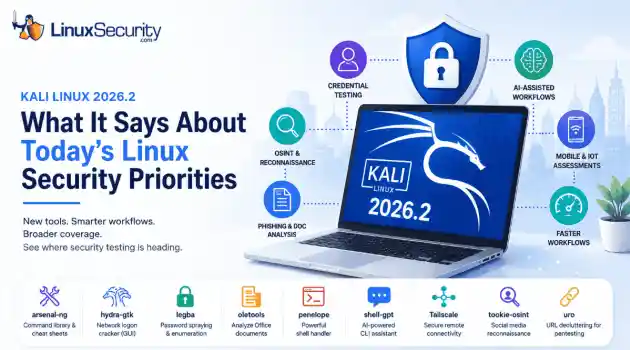
security update mobile security Offensive Security just dropped Kali Linux 2026.2 , and at first glance, it looks like a standard quarterly refresh. You’ve got the usual kernel bumps, desktop environment updates, and a handful of new utilities. But don't write this off as just another routine version update. If you look past the changelog, this release highlights several capabilities that continue to be important in offensive security. From AI-assisted workflows to credential testing and mobile assessments, Kali Linux 2026.2...
Jun 30, 2026
Security Projectssecurity advisory vulnerability management
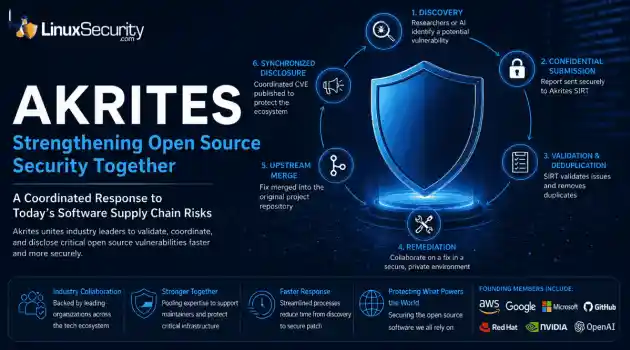
security advisory vulnerability management The Linux Foundation has officially launched Akrites , a coordinated industry initiative designed to improve how critical open source vulnerabilities are validated, coordinated, and disclosed before patches reach downstream users. Backed by a diverse coalition—including AWS, Google, Microsoft/GitHub, Red Hat, NVIDIA, and OpenAI—Akrites establishes a shared Security Incident Response Team (SIRT) to streamline the validation, remediation, and disclosure of vulnerabilities in the foundational...
Jun 29, 2026

Server Securitydenial of service open-source
denial of service open-source A process with a stable workload shouldn't keep growing its resident memory. When it does, the first question isn't how much RAM is available. It's where the allocations stopped being released. On Linux, that answer isn't always obvious because the kernel, allocator, and application all influence what memory usage looks like from the outside. . Separating normal allocation behavior from an actual leak takes more than watching top or container metrics. Heap growth, allocator caches, mapped...
Jun 26, 2026

Security ProjectsLinux security security assessment
Linux security security assessment AI is beginning to reshape how penetration testing workflows are organized. For years, the penetration tester’s workflow has been a labor-intensive ritual: scan, enumerate, research, exploit, and report. But new frameworks are attempting to codify that intuition, turning the "human-in-the-loop" process into a machine-coordinated workflow. But is this a genuine evolution in how we secure Linux environments, or just a sophisticated wrapper around the same old tools? . Dark Moon is an open-source...
Jun 26, 2026
 Refine news
X Clear Filters
Get the latest News and Insights
Get the latest Linux and open source security news straight to your inbox.
Community Poll
Can sandbox isolation stop malware?
Loading...
Explore Latest Linux Security news
We found 44 articles for you...
79
 security advisorykey managementmemory protection
Linux Kernel 6.14: Critical Security Fixes and Networking Updates
Linux kernel version 6.14 has been released with essential updates that Linux security admins won't want to miss. This version, unveiled on March 24, 2025, brings crucial optimizations and security improvements to provide a smoother and more secure computing experience. With a focus on key vulnerability patches, such as those addressing use-after-free issues in the key management system, every system admin's role in maintaining secure, reliable environments just got a little easier. . Moreover, this release brings significant enhancements in networking security, including critical fixes for Bluetooth connections and IPv6 stability, ensuring that network operations remain resilient against potential threats. Alongside these network improvements, memory management and protection have been boosted with better initialization processes. These advancements not only enhance the stability of the kernel but also shore up defenses against unauthorized memory access, making this release a must-adopt for security-conscious admins. Let's examine some key highlights of the Linux kernel 5.14 release and their impact on your security and productivity. Improved Key Management Systems One of the standout features of this release is the critical fix addressing a vulnerability in the kernel's key management system. The patch , expertly developed by David Howells, targets a Use After Free (UAF) condition in the key_put() function. This vulnerability posed a serious security risk as it could allow an attacker to exploit freed memory, leading to unpredictable behavior or even the execution of malicious code. This fix enhances the security handling of key management systems by ensuring that keys are managed more safely and effectively, preventing inappropriate memory access. For system administrators, this means a more robust defense against potential exploits arising from improper handling of cryptographic keys. By safeguarding this kernel aspect, version 6.14 ensures more reliable and secure key operations,a critical component of any security strategy. Strengthened Networking Security Linux kernel 6.14 brings several crucial updates that significantly enhance network security and stability. One of the noteworthy fixes addresses a Bluetooth security issue. Before this release, there was a persistent problem concerning the connection between Low Energy (LE) and non-LE Bluetooth adapters. Arkadiusz Bokowy's patch resolves this issue, ensuring smooth and secure communication between Bluetooth devices. This improvement is significant for environments that rely on Bluetooth technology for secure communication and data transfer, fortifying the reliability and safety of Bluetooth interactions by addressing potential connection vulnerabilities. Another significant networking enhancement involves IPv6 improvements. Implemented by Felix Fietkau, the fix addresses a critical issue around TCP General Segmentation Offload (GSO) in Network Address Translation (NAT) environments. This improvement is pivotal for ensuring stable and secure network operations, particularly in systems where efficient packet processing is crucial. By fixing the segmentation handling in NAT environments, this update ensures that network performance is optimized and secure against potential exploits that could arise from improper packet segmentation. Advanced Memory Management and Protection The Linux kernel 6.14 also introduces significant advancements in memory management and protection, vital for maintaining system stability and security. Kirill A. Shutemov's patch addresses a noteworthy issue in memory allocation processes. His fix ensures that memory is initialized correctly before the system's watermarks are set, preventing the kernel from accepting memory in an uninitialized state. This enhancement is crucial for preventing unauthorized memory access and ensuring the safe initialization of memory. Proper memory management is a cornerstone of system security, and this fix contributes to a more robust kernel that canbetter protect against memory-related vulnerabilities. This means an added layer of protection and reliability, ensuring our systems operate smoothly without the risk of unexpected memory-related issues. A Holistic Approach to Kernel Security The updates in Linux kernel 6.14 reflect a holistic approach to security, addressing key areas that could be exploited. The attention to detail in key management, networking security, and memory management highlights the ongoing commitment of the Linux kernel development community to provide a secure and stable platform for users and administrators. By addressing and patching known vulnerabilities, the kernel developers ensure that Linux systems are equipped to handle persistent and emerging security threats. This is a testament to the strength of the open-source community, where collaborative efforts lead to robust solutions that benefit all users. Practical Implications for System Administrators The practical implications of these updates are profound for system administrators. The enhanced key management system allows for more secure cryptographic operations, essential for protecting sensitive data and ensuring secure communications. The improved networking security features, including the Bluetooth and IPv6 enhancements, ensure that networked environments remain safe and reliable, reducing the risk of exploits that target network vulnerabilities. Advances in memory management and protection offer peace of mind, knowing that the kernel is better equipped to handle memory allocation securely. This reduces the likelihood of unauthorized memory access and potential system instability. These updates empower administrators to maintain safe, efficient, and stable systems. Embracing the New Kernel As with any new kernel release, administrators must thoroughly test these updates in a controlled environment before deploying them across production systems. This ensures compatibility with existing configurations and allows for identifying any potentialissues that may arise from the new kernel. In addition to testing, admins should stay informed about the latest patches and updates from the kernel development community. Regularly applying security updates and staying abreast of new developments is essential for maintaining a secure and reliable Linux environment. Our Final Thoughts on the Linux Kernel 6.14 Release Linux kernel version 6.14 brings important updates that significantly enhance security and performance. The key management system improvements, networking security fixes, and advanced memory management enhancements highlight the ongoing efforts to provide a robust and secure kernel. For security-conscious administrators, this release offers vital tools and improvements essential for maintaining a safe and stable Linux environment. By embracing these updates and integrating them into our systems, we can ensure that our systems continue to operate securely and efficiently in the face of evolving security challenges. . Linux kernel 6.14 rolls out essential security enhancements, boosting access control, network protocols, and memory safeguards.. Linux Kernel Updates, Security Fixes, Network Security Enhancements, Key Management Enhancements. . Brittany Day
 Mar 26, 2025
•
Mar 26, 2025
• Security Projects
74
 security enhancementkey managementlinux kernel
TCP-AO Support Nears Completion in Linux Kernel for Improved Security
One of the new Linux networking features we've been looking forward to seeing in the kernel is TCP Authentication Option (TCP-AO / RFC5925) as a means of improving TCP security and authenticity. The eleventh iteration of the TCP-AO patches were posted today for the Linux kernel with it looking like work on this network addition potentially wrapping up soon. . TCP-AO is an upgrade over the existing TCP-MD5 spec for allowing stronger authentication algorithms, improved key management, design considerations for long-lived TCP connections, and related enhancements. There's been a number of Linux networking subsystem developers working on the TCP-AO support, which is some five thousand lines of new core networking code in the kernel. The v11 patches posted overnight address the last three items brought up during the prior round of code review from mid-August. The link for this article located at Phoronix is no longer available. . TCP-AO boosts security for TCP by implementing advanced authentication methods and refining key management processes within the Linux kernel.. TCP Authentication Option, TCP Security, Linux Networking, Authentication Algorithm, Key Management. . Brittany Day
Sep 12, 2023
•
Network Security

67
 security advisorykey managementSSH keys
GitHub: SSH Key Update After Disclosed Private Key Error
GitHub has updated its SSH keys after accidentally publishing the private part to the world. Whoops. . A post on GitHub's security blog reveals that the biz has changed its RSA SSH host keys. This is going to cause connection errors, and some frightening warning messages, for a lot of developers, but it's all right: it's not scary hackk0r activity, just plain old human error. Microsoft subsidiary GitHub is the largest source code shack in the world, with an estimated 100 million active users . So this is going to trip up a lot of people. It's not the end of the world: if you normally push and pull to GitHub via SSH – which most people do – then you will have to delete your local GitHub SSH key, and fetch new ones. As the blog post describes, the first symptom is an alarming warning message: @@@@@@@@@@@@@@@@@@@@@@@@@@@@@@@@@@@@@@@@@@@@@@@@@@@@@@@@@@@ @ WARNING: REMOTE HOST IDENTIFICATION HAS CHANGED! @ @@@@@@@@@@@@@@@@@@@@@@@@@@@@@@@@@@@@@@@@@@@@@@@@@@@@@@@@@@@ IT IS POSSIBLE THAT SOMEONE IS DOING SOMETHING NASTY! For almost everyone, this warning is spurious. It's not that you're being attacked – although that is always a remote ( ha ha, only serious ) possibility – it's that GitHub revoked its old keys and published new ones. . GitHub has rotated its SSH keys following the accidental exposure of a private key, leading to connectivity problems for some users.. GitHub SSH Keys, Secure Shell Update, Hosting Key Change. . LinuxSecurity.com Team
Mar 28, 2023
•
Cryptography
67
 network securitysecurity practiceskey management
Mastering SSH Key Management for Enhanced Network Security
SSH keys play a critical role in server and network security, yet are too often overlooked by admins, IT professionals and security teams. . SSH keys are everywhere. However, despite their widespread use and high-privilege access, they’re often overlooked by IT and security teams. Meanwhile, malicious actors seek to exploit unmanaged and unprotected keys to perform SSH attacks and spread through networks undetected. In this blog, we’ll discuss the underlying problem of SSH key sprawl and how to prevent emerging SSH attacks, such as FritzFrog and Lemon_Duck, by implementing proper key management and security practices. The link for this article located at Security Boulevard is no longer available. . API tokens, frequently disregarded, facilitate major breaches. Discover how to secure tokens and strengthen defenses against vulnerabilities.. SSH Key Management, Network Security, Attack Prevention. . LinuxSecurity.com Team
Sep 16, 2020
•
Cryptography
78
 data protectionencryptionkey management
Enhancing Cloud Security with OpenStack Barbican Key Management
Whether you're following your internal information security policy or trying to meet regulatory requirements such as GDPR, ANSSI, PCI DSS, HIPAA, or NIST, you are likely looking for ways to protect the privacy and integrity of your data and software. That solution can be found in encryption. . OpenStack provides all the ingredients necessary to deploy privacy and integrity solutions, but it is up to the operator to deploy them securely. This requires a key-management solution (KMS) to manage and protect the encryption keys. The link for this article located at Opensource.com is no longer available. . OpenStack provides all the ingredients necessary to deploy privacy and integrity solutions, but it i. whether, you're, internal, information, security, policy, trying, regulatory. . LinuxSecurity.com Team
Oct 14, 2018
•
Vendors/Products
67
data protectionkey managementprivacy toolsA Comprehensive Guide to Key Management in End-To-End Encryption
Plenty of companies brag that their communications app is encrypted. But that marketing claim demands a followup question: Who has the key? In many cases, the company itself holds the cryptographic key data that lets it decrypt your messages. But increasingly, privacy-conscious communications tools are rolling out a feature known as The link for this article located at Wired is no longer available. . End-to-end encryption (E2EE) reshapes digital communication, ensuring messages are readable only by intended recipients and enhancing privacy and security against threats. End-to-End Encryption, Key Management, Data Protection, Privacy Tools. . LinuxSecurity.com Team
Nov 25, 2014
•
Cryptography
67
data protectionkey managementdata encryptionEnsuring Data Security with Automation in Cloud Architectures
Cloud computing is the ideal environment for processing big data. For databases that scale horizontally, sometimes with a million or more fields and reaching multiple petabytes in size, it's possible to chunk up the data and spread it across hundreds or thousands of servers for parallel processing and analytics. It's an efficient and effective use of cloud technology.. Of course, if you put data in the cloud, you will want to protect it with encryption, especially if the data includes any sensitive customer or financial information. However, the very thought of generating and managing all the encryption keys for hundreds of separate data files can be a problem. And, if your data is in a public cloud, you wouldn't want to give access to the keys to the root user, who is often an administrator for the cloud provider. The link for this article located at Network World is no longer available. . Securing confidential information in cloud systems through automated encoding is crucial for safety and regulatory adherence.. Data Encryption, Cloud Security, Automated Encryption, Cloud Management, Data Protection. . LinuxSecurity.com Team
Apr 09, 2012
•
Cryptography
67
data protectionsecurity practicesencryptionEffective Encryption Strategies And Key Management For Data Safety
Encryption can make up for a litany of security snafus -- from a bad firewall to an unrelenting hacker to a lost laptop. Once data is encrypted, criminals can't use or sell it. Plus, if encrypted data goes missing, companies are protected from disclosure requirements in most states. . No wonder 38% of companies surveyed by Forrester Research have already adopted full-disk encryption technology. But data protection doesn't stop there. Encryption keys and digital rights also must be well orchestrated and secured, or else encryption protection goes out the window. For instance, encryption keys kept in a predictable place are like house keys left under a welcome mat: They're easy prey for intruders. . Over 40% of organizations implement complete drive encryption to protect sensitive information from unauthorized access and potential theft.. Encryption Security, Data Protection, Cyber Defense. . LinuxSecurity.com Team
Mar 26, 2012
•
Cryptography

Get the latest News and Insights
Get the latest Linux and open source security news straight to your inbox.
Community Poll
Can sandbox isolation stop malware?
Search Topics
Powered By

Linux Security - Your source for Top Linux News, Advisories, HOWTOs and Feature Releases
QUICK LINKS
subscribe to newsletters!
Like staying secure? So do we.
Sign up for updates, tips, and alerts!
Discover faster search, smarter navigation, and deeper Linux security insights. Read More